When Emily Hermans started her own clothing line in 2004, she did something kind of genius: She found a local knitwear factory in Eindhoven that would let her produce her own textile designs on its knitting machines, and then slowly convinced its owner to take her on as a partner. He would get equity in her line — MLY — and she could crank out prints to her heart’s content without paying a premium. There was only one catch: The factory made downmarket acrylic uniforms and sports paraphernalia, and from time to time, she’d be asked to design things like corporate gifts for Dutch banks and pencil companies. But it was okay, because she made those beautiful, too, and her clothing line flourished.
Because so few people do the kind of work Hermans does, it helps to picture Missoni: Thin, colorful knits in simple, body-conscious silhouettes, with the patterns woven directly into the fabric rather than digitally printed on top of it. Thin because Dutch people happen to hate thick knits; woven because printing is so “been there done that,” says the 31-year-old. “It’s hard to do something new with knitwear.”
If anyone would know, it’s Hermans — she had two internships while attending fashion school in Amsterdam, one at a London studio that designed and sold textile swatches to chains like H&M and Mango, who would then ship them to factories in China for mass-production, and another at a decidedly unfashionable Dutch knitwear company catering to middle-aged people. Both jobs taught her what she wanted to do by teaching her what she didn’t.
Now she shows at Dutch fashion week, where she’s known for her bold, graphic textiles inspired by everything from the Bauhaus to African prints to Chinese painting techniques. Her next collection, which she’ll present in February, will depict themes from her childhood, which was spent on a farm in a tiny Dutch village called Broekhuizenvorst. Hermans took a break from designing it to show us around her factory, sports jerseys and all.
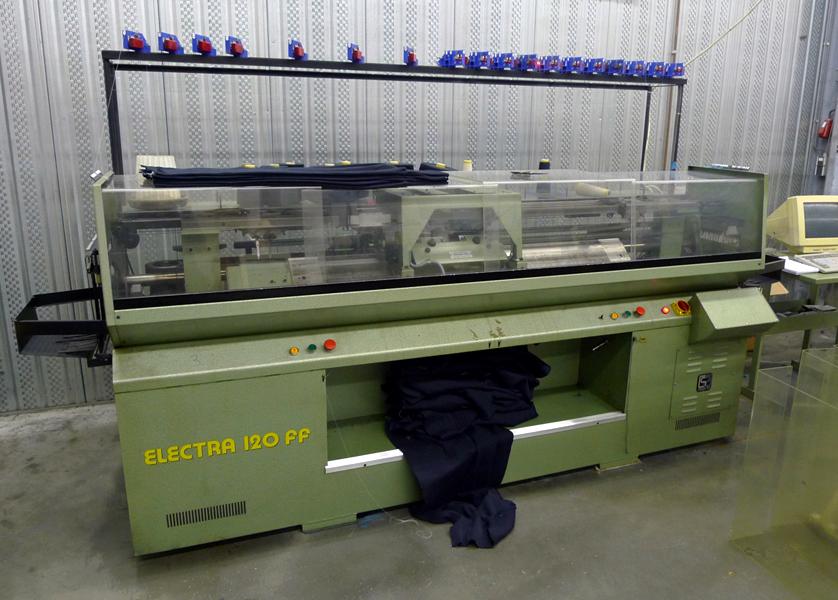
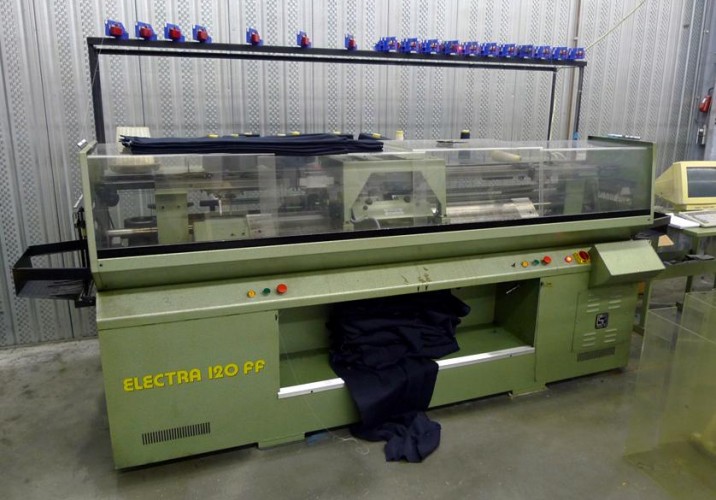
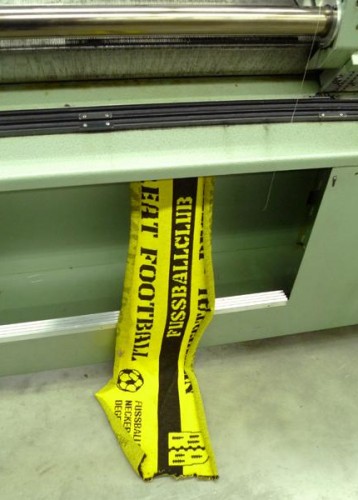
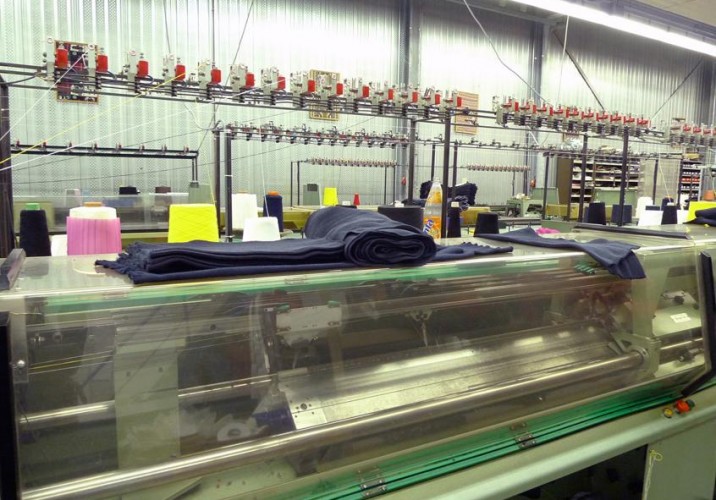
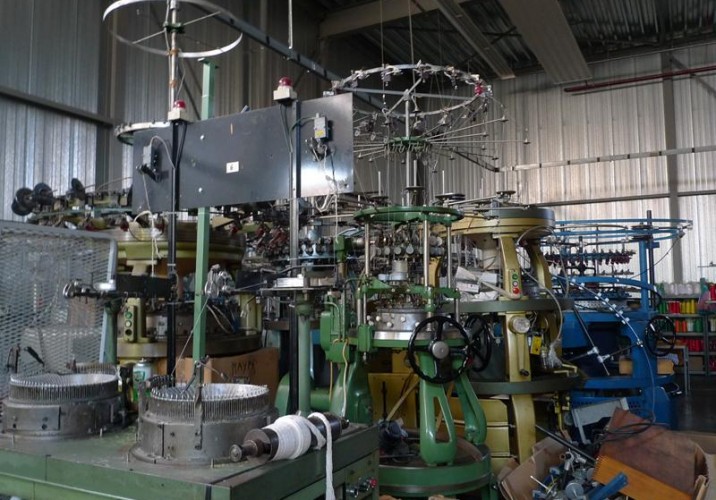
One of 10 knitting machines at the Eindhoven factory where Emily Hermans designs and produces custom textiles for her clothing line, MLY.
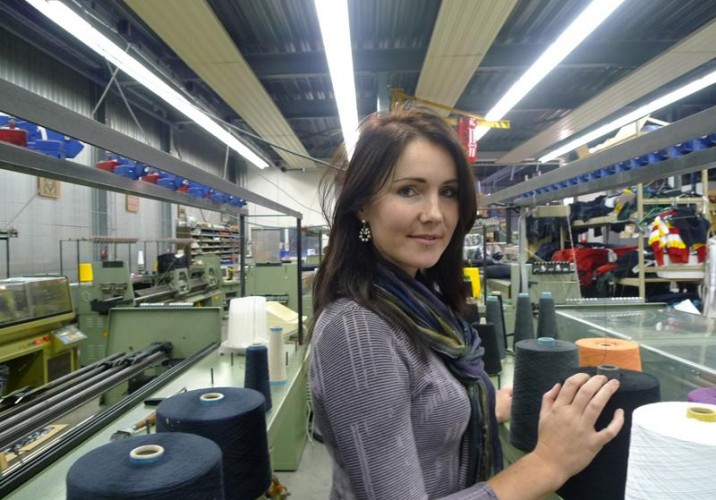
Hermans in the factory. “I’m more a textile designer than a form designer,” she says of her work. “I would never choose a plain woven fabric.” The fact that she studied graphic design before she went to fashion school helps.
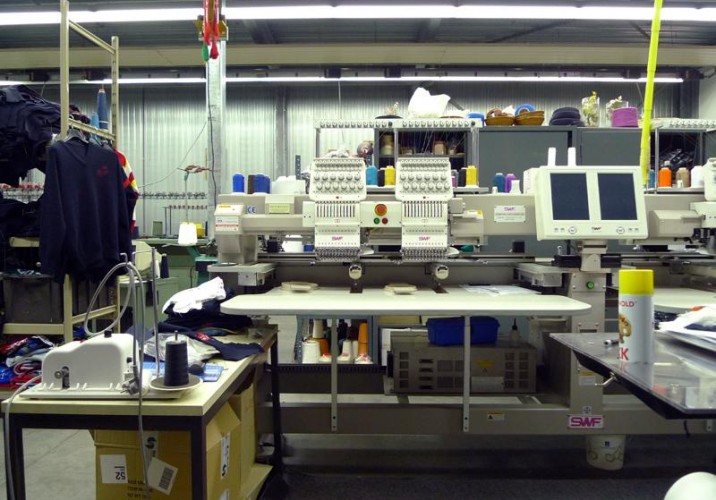
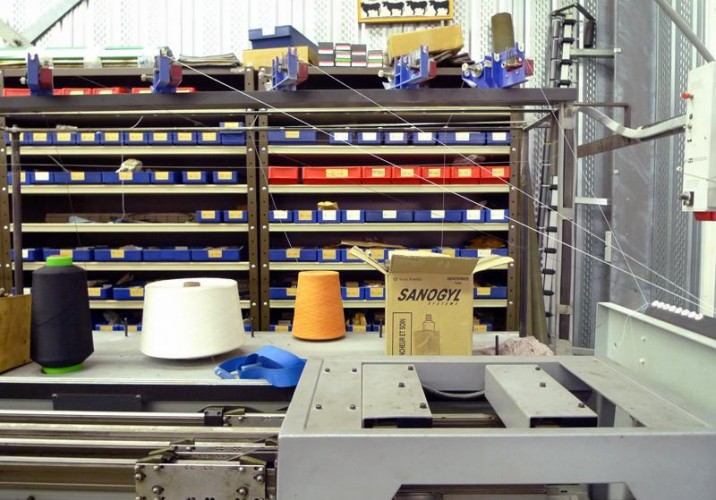
The factory floor is relatively small, and most of the equipment, like the embroidery machine at the center of this photo, is used for the other half of the business—uniforms and sports gear.
Hermans estimates that at any given time, seven of the ten knitting machines are usually busy cranking out soccer jerseys and such.
But the three that work for MLY make all the difference to Hermans’s business. They give her more freedom than the average knitwear designer, but she also notes that “part of being creative are the limits of the machines,” which can only incorporate 2 to 3 colors in any horizontal pass, for example.
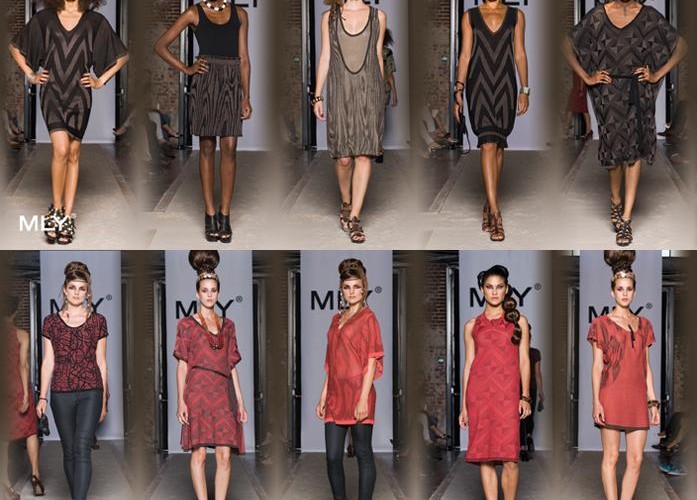
Accordingly, most of her clothes are either one color plus a neutral, or two-tone. Which is fine, she says, because most of her customers like matching her pieces with black, white, or grey. Above is a selection of looks from her current spring/summer collection, called Getting Lost, which was inspired by a trip to Egypt.
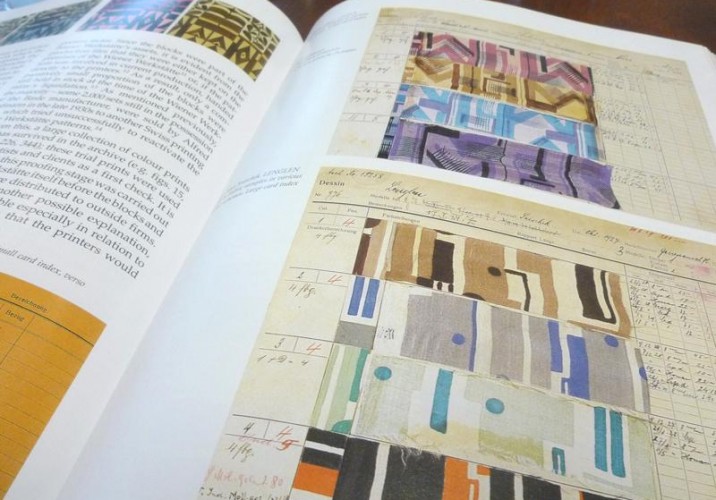
Hermans says she isn’t influenced by other designers’ work—first she establishes the theme and colors of a line, then she consults textile trend books. She also finds inspiration in history books, like her favorite, Textiles of the Wiener Werkstätte (Thames & Hudson). “They were all about the combination of fashion, art, and textiles,” she says.
Back in the factory, her production process starts with the yarn—tricot, wool, inox, bamboo—80 percent of which she buys as-is and 20 percent of which she has custom-dyed in colors like ink blue and whiskey.
The knitting machines can produce 10 to 20 inches per minute, depending on the type and thickness of the knit. A single-face fabric with a relatively open weave is quickest; double-faced patterns or anything with relief takes more time. Afterwards the fabric can be further altered with felting or with burnout, which Hermans says will be her next experiment.
A 14-gauge machine for making thin, finely woven knits. Hermans maintains that Dutch people hate thick knits, which makes her life more difficult—thin, body-consicous knits need to be cut that much more precisely to fit properly.
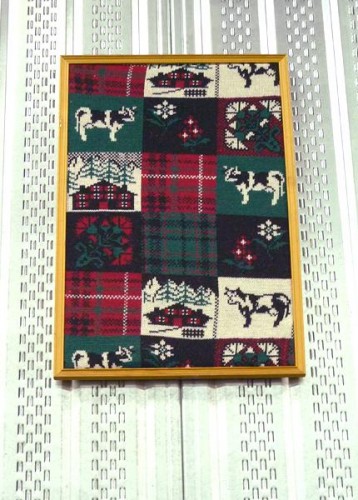
A sampler hanging on the wall behind the knitting machines looks like a transplant from an L.L. Bean factory.
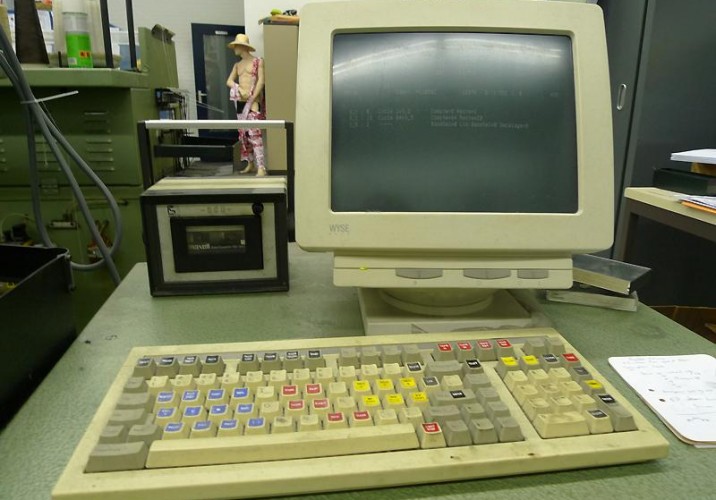
Other moments on the factory floor seem like ’80s flashbacks, including the computers used to run the machines (and the Maxell tape in the cassette player at left, whose purpose we did not confirm).
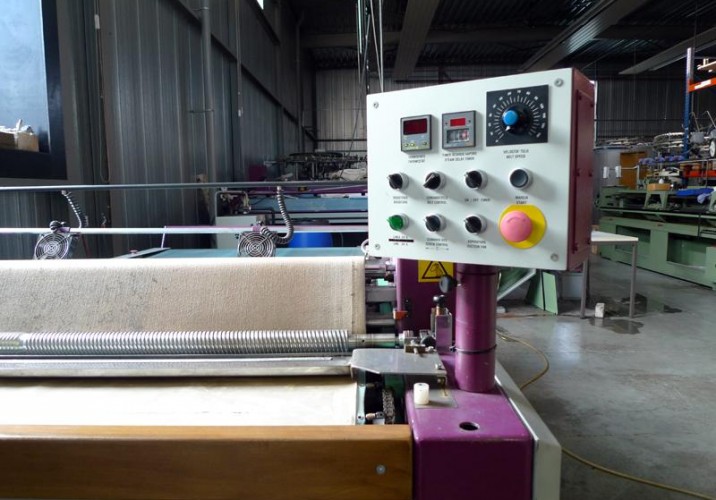
After a length of fabric comes out of the knitting machine, it’s put through the steaming machine, which washes and presses it, preshrinking it and flattening it out for cutting.
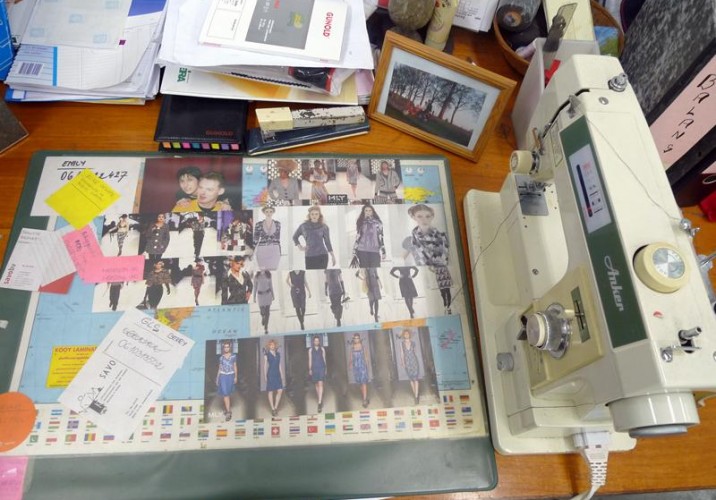
Eva, the factory’s production planner, also does all the steaming. She was too shy to have her picture taken, so we shot her desk instead. She keeps photos of favorite MLY pieces alongside photos of her family.
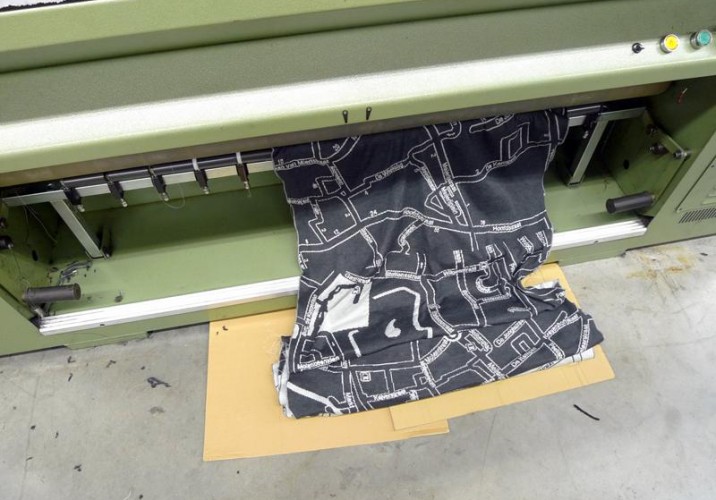
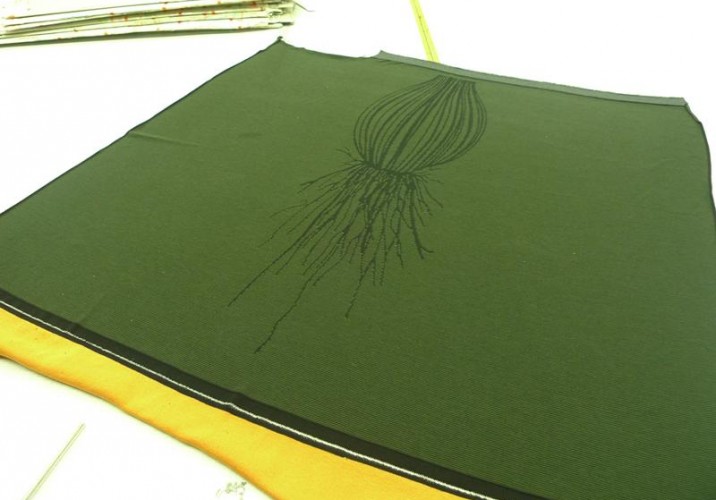
Post-steaming, the fabrics are ready to be cut. This one, with an onion pattern, is from Hermans’s next collection, Color Me Out. It’s inspired by her childhood on a farm in south Holland, but the name is more revealing: “I felt like an outsider as a child, which often happens when you’re creative,” she says. “I was always coloring outside the lines. As a child that’s not a good thing, but now it is.”
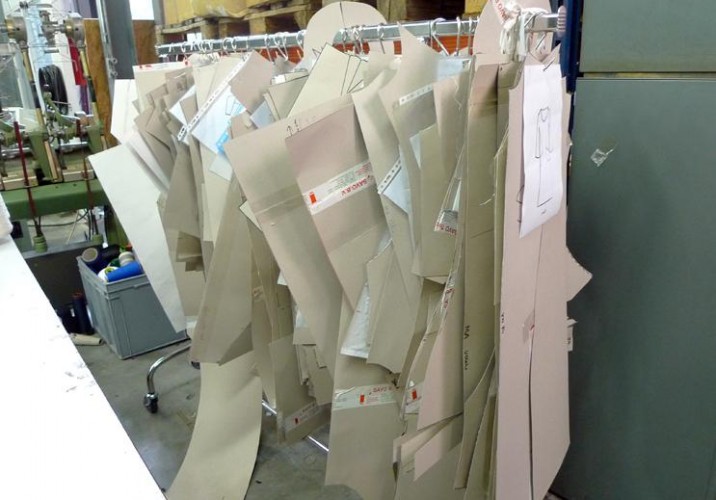
Her patterns tend to be more straightforward and can recur from collection to collection. With knitwear, it sometimes makes sense to err on the safe side, because proper fit is such a challenge. Though all of her cuts are modern, Hermans confines most of her experimentation to the textile design itself.
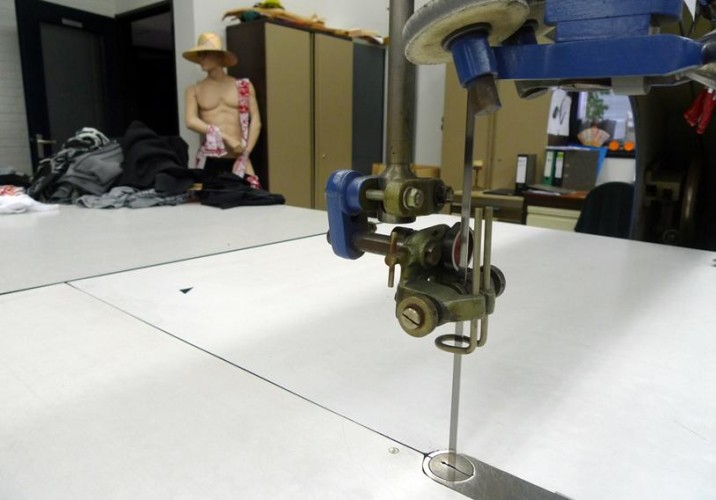
The blade used to cut the fabric is actually a continuous loop, which wears down slightly every time it’s used. It’s been known to snap without warning, which can get “a bit tricky” to deal with, says Hermans. “Luckily I still have my face.”
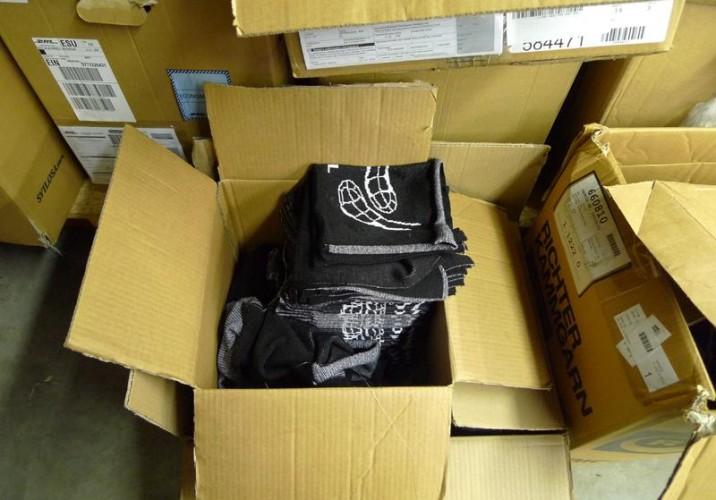
A box full of hats which are cut but need to be assembled. Since Hermans is a partner in the factory, her textile production costs are about the same as they’d be in China, but the sewing is much more expensive. She has a team of students that sews the 50 or so samples for each collection, but the other 450 production pieces have to be outsourced locally.
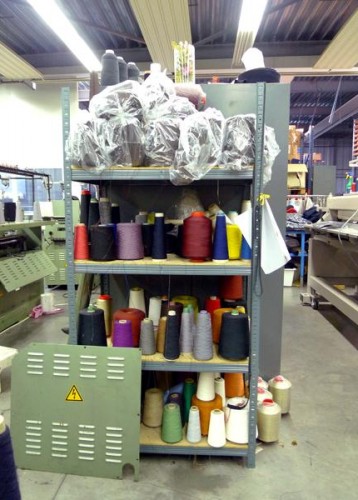
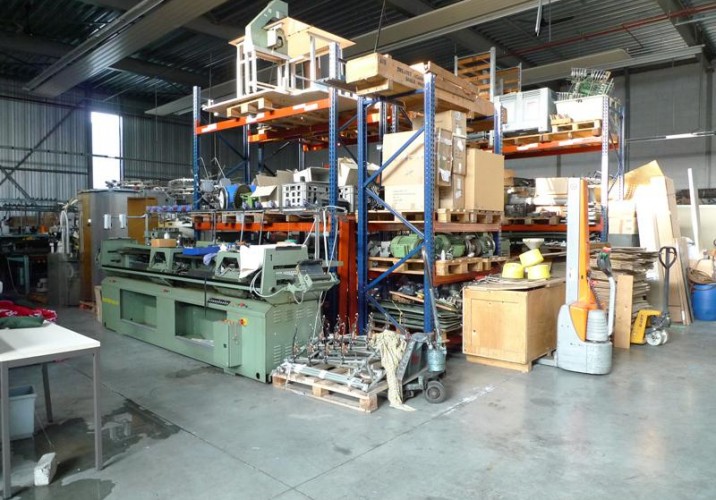
The back half of the factory is a stockroom.
It’s also a storage space for the antique machines Hermans’s partner inherited from his father, who owned a separate factory dating back to the 1950s. It manufactured factory machinery. “He kept an archive,” says Hermans. “And he was bad at throwing things away.” For special requests, Hermans and her partner can fire up the antique machines, some of which are nearly 80 years old.
Once or twice a year, Brooklyn furniture designer Paul Loebach gets out his straw hat and bandana, ties on a pair of crappy old sneakers, drags out his huge canvas tote, and drives up to Massachussetts, where dealers from all over the Northeast gather every spring, summer, and fall for the Brimfield Antique Show.
For more than three years, the Argentinean sisters Sol Caramilloni Iriarte and Carolina Lopez Gordillo Iriarte kept a design studio on the second floor of a building in Barcelona, handcrafting an eponymous line of leather bags in relative privacy. Sol, 32, was working part-time as a set designer for films; Carolina, 25, had just finished a year apprenticing under her friend Muñoz Vrandecic, the Spanish couture shoemaker. Called Iriarte Iriarte, it was a modest operation. Then in June, fate intervened.
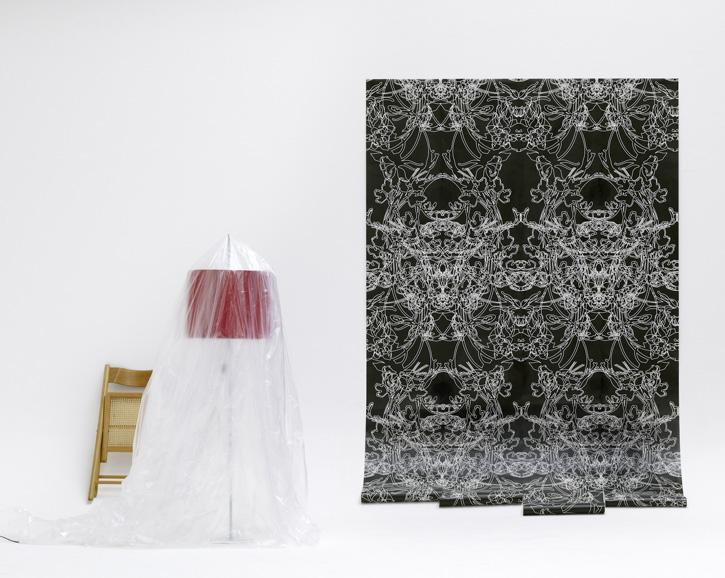
As I walked the Tendence gift fair in Frankfurt this summer, Iris Maschek appeared to me like an oasis of glam in a desert of practicality. There she was, surrounded by clocks and soaps and clever ceramic jugs with customizable chalkboard labels, dressed all in black and perched in a cool mid-century rattan chair against this gorgeously baroque Rorschach-like backdrop: A specimen from her very first wallpaper collection.