When most of us get a package in the mail, it’s the book we ordered from Amazon, or a birthday gift from our parents. When Bec Brittain gets a package, it’s usually full of dead bugs. She orders them in bulk off the internet for a dollar a pop, then chops them into pieces and transforms them into hybrid bug-monsters, often splicing on outsized crab claws or little incongruous bone fragments. She does this in her spare time while serving as creative director for New York lighting designer Lindsey Adelman, with whom she crafts chandeliers from metal and mouth-blown glass. Torn between a reverence for fine art and an obsession with materials and processes that keeps leading her back to product design, her creative persona is not unlike a longhorn beetle wearing grasshopper wings.
Brittain spent most of her childhood in the D.C. suburb of Potomac, Maryland, where “I always knew we weren’t normal,” she says. Her mother, an abstract artist, filled the house with cow skulls, taxidermy, and weird plants. Her grandmother was an architect and a sculptor who made papier-mâché bones. After starting a Parsons undergrad design degree in 1999, Brittain abruptly switched to philosophy, feeling “grossed out” by the idea of adding more products to the world. “I would want to make a cup, but felt it was wrong to make a cup, that I should make a sculpture instead,” she says. “I grew up in a family where art was the greatest highest good — there had to be a concept behind everything.” She went on to get an architecture degree at the AA school in London even though she “never cared about buildings,” followed by a yearlong stint at the New York firm WorkAC that should have been a dream job but made her miserable instead.
It was around then that she started making bugs, as a kind of escape. It started with a tiny plastic person from one of her architectural models whose head had snapped off. She replaced it with the head of a dead fly she found on her desk and gave the results to her then-boyfriend. Now she has a show at the Lower East Side gallery Ramiken Crucible featuring her mini-monsters alongside the work of her husband Joe Brittain, an up-and-coming artist who shares a studio in Brooklyn with Bec’s mother. Her own studio is inside the couple’s Bushwick home, where — ever since she began working a year and a half ago for Adelman, her kindrid spirit — whimsical objects coexist happily alongside useful ones, like lamps and cups and jewelry. “It suddenly seems reconcilable that a sculpture could also light up,” she says. “After ten years of meandering, I feel comfortable in design again.”
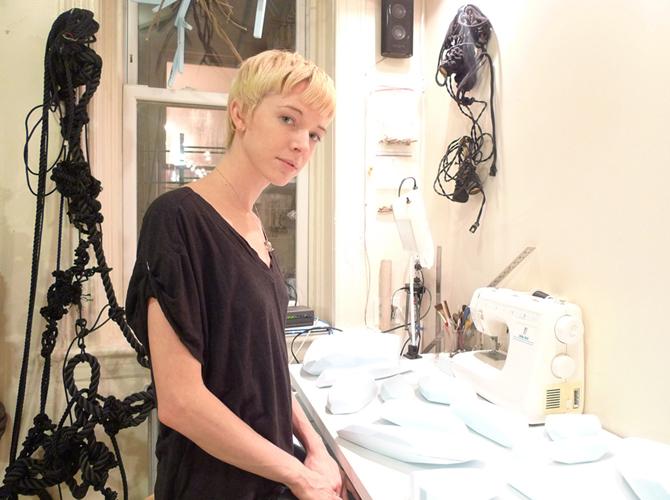
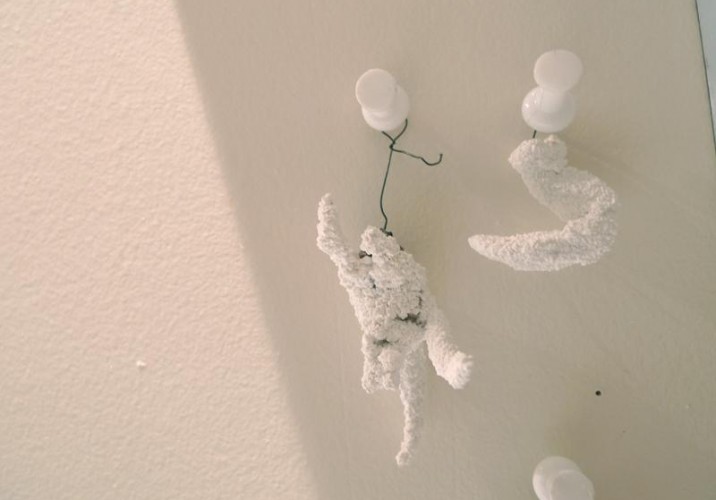
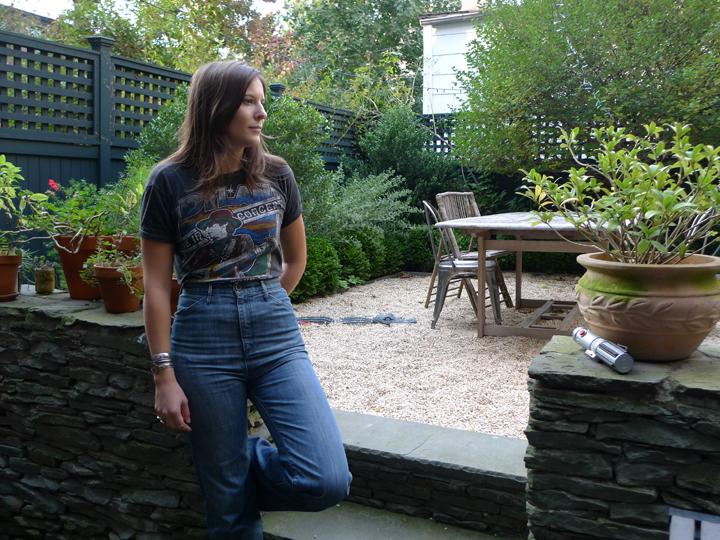
Bec Brittain in her Bushwick, Brooklyn, home studio. Behind her is one of two knotted-rope “waterfalls” now on view in the Ramiken Crucible show, where they’re continuously bathed with crystal solution and should eventually crust over.
The waterfalls are, in addition to her bug monsters, Brittain’s way of experimenting with the idea of growth, particularly “abnormal, fucked-up growth,” she says. She’s also interested in the difference between what’s natural and what’s unnatural, and how our perceptions often confuse the two.
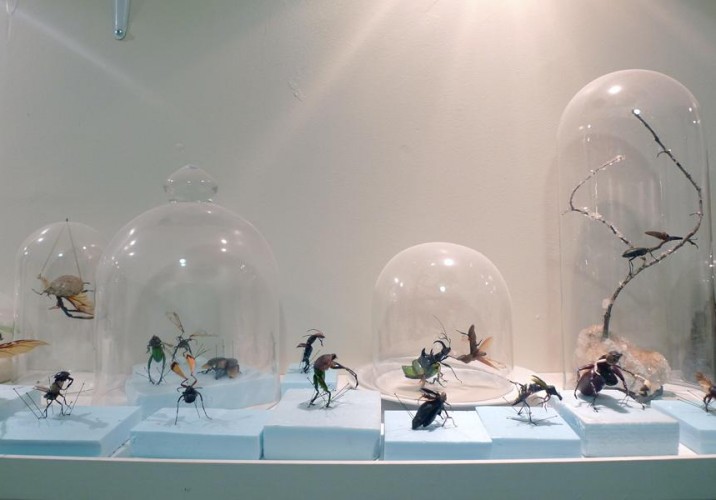
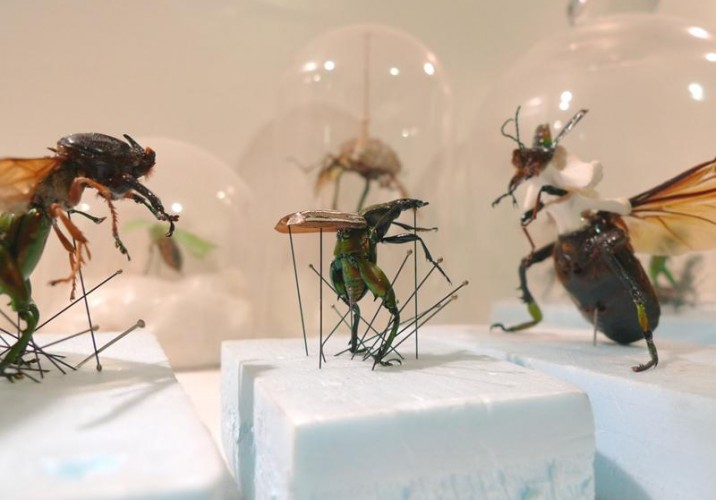
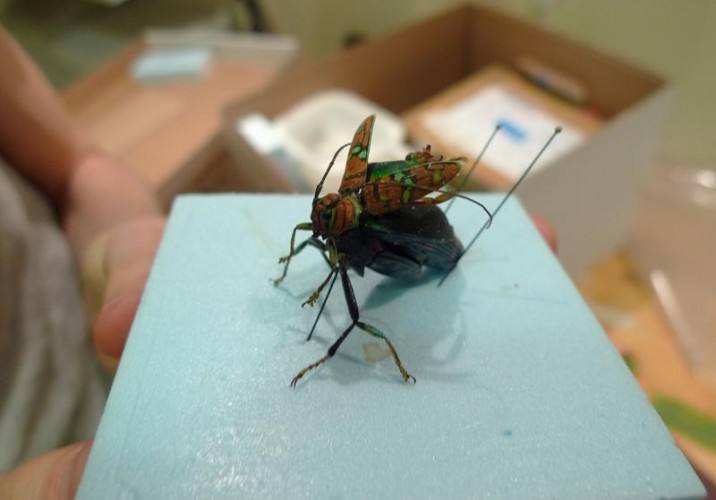
Brittain constructs her bugs in a way that makes them seem alive again, propping them with specimen pins on top of blue modeling foam, a holdover from her architecture days. “It’s such an alien color and material,” she says. “But at the same time it acts like a green screen, so you don’t see it, you just see the bugs.”
For the Ramiken Crucible show, called Psychic Neighbors, Brittain stuck with the foam as a display, but cut it into rock crystal-like shapes. She did the cutting in her studio — and as a consequence, both she and it were covered in blue dust for days.
Experiments with dipping bugs into a borosilicate crystal solution, which forms a “weird cancerous growth” around them.
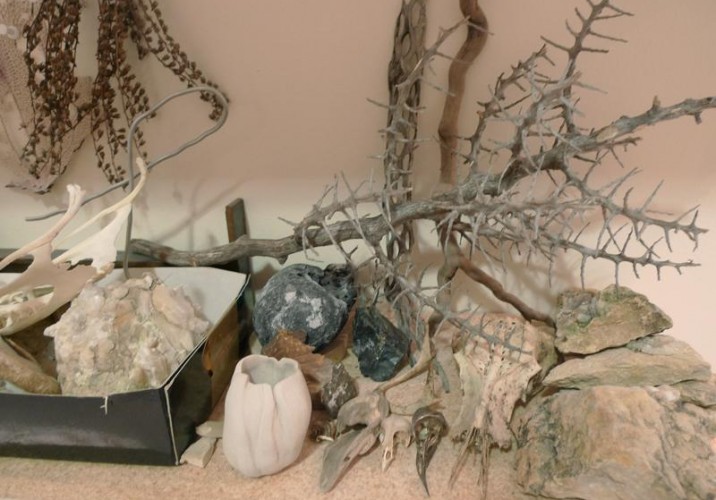
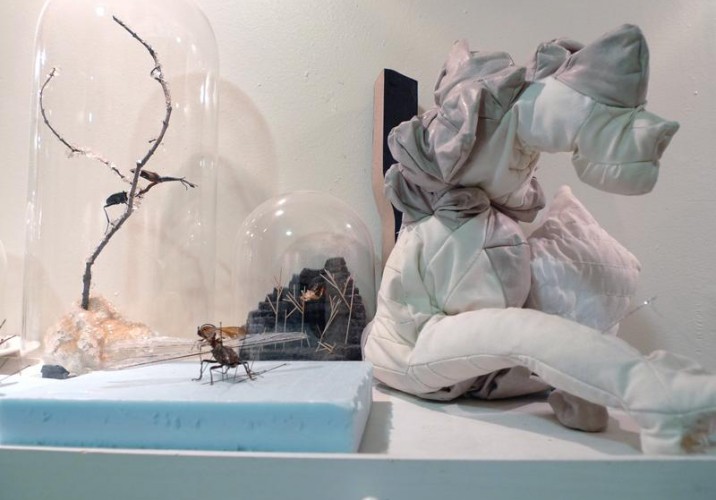
There are more direct references to the natural world in her studio, like the branches and bones on this shelf. In the foreground is one of Brittain’s current prototypes — a slip-cast tea cup in the shape of a barnacle.
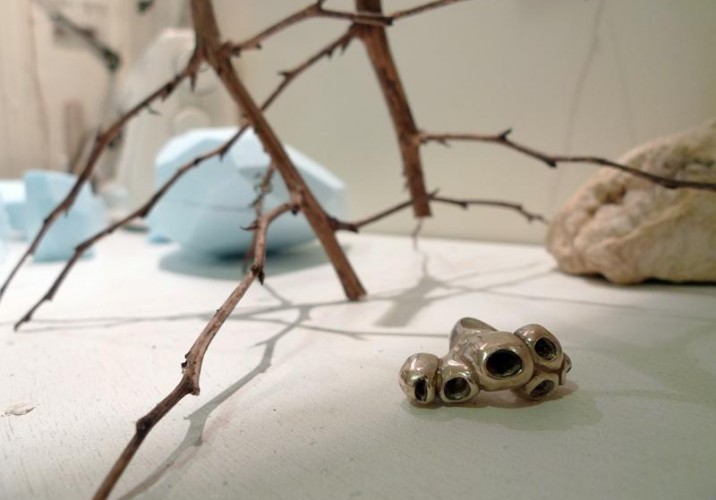
A cast-metal prototype for a barnacle ring. Lindsey Adelman also makes lamps in the shape of barnacles — Brittain admits that the line between Adelman’s work and her own can get blurry at times because their inspirations and working methods are so intertwined. She jokes that she thought about naming her collection “Bec Loves Lindsey,” but changed her mind.
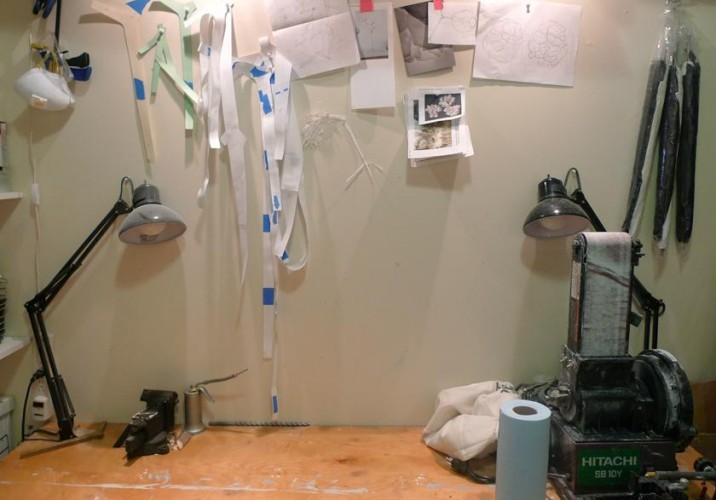
In fact, half of her small workspace is devoted to take-home work from the Adelman studio. The long strips of paper dangling at left refer to the branch-like arms of Adelman’s recent Agnes chandelier.
“It’s the best job I’ve ever had,” Brittain says of her position as Adelman’s second-in-command.
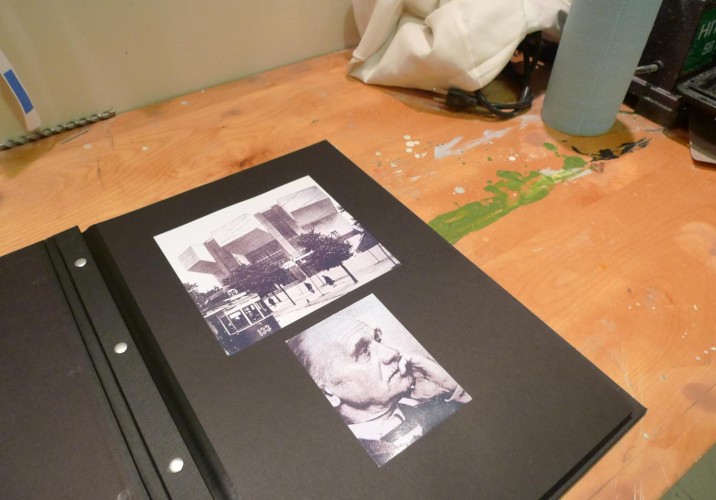
Even though Brittain isn’t currently practicing architecture, the mutant themes she now explores in her personal work stretch back to projects she was doing at the AA school. Pictured here is what she considers to be her first “monster”—a concept for a Russian factory workers’ club she imagined being taken over by American Express, creating a morally disturbing hybrid building.
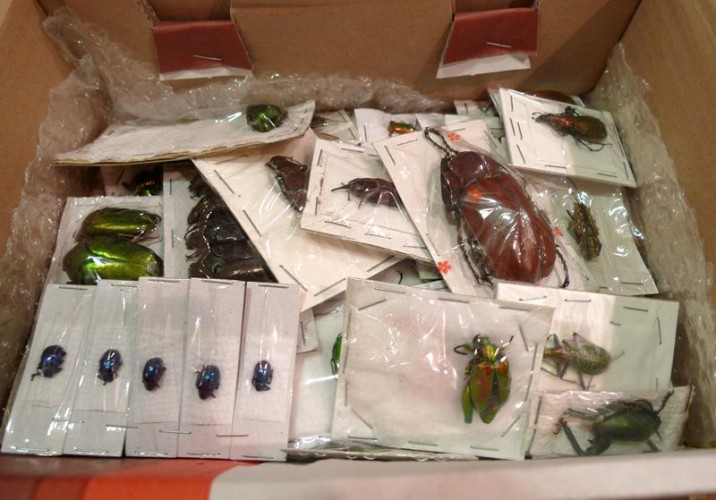
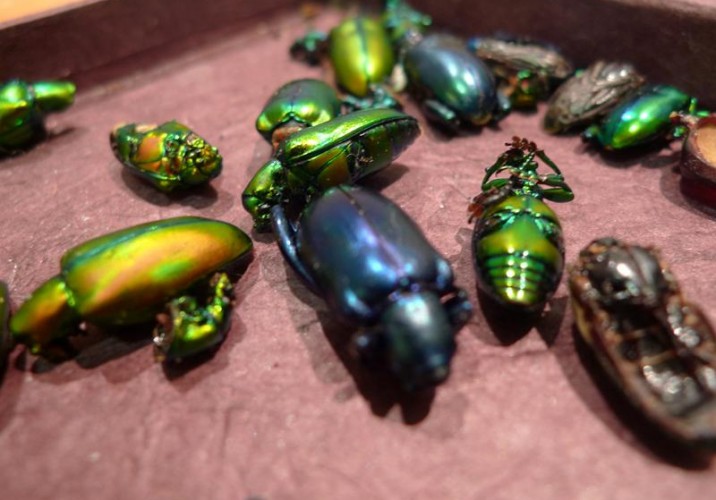
Now her raw material begins here, with boxes of bugs she orders from internet dealers. Collectors’ items can sell for $100 to $200 each, but Brittain takes the imperfect specimens and for the most part pays only $1 per bug.
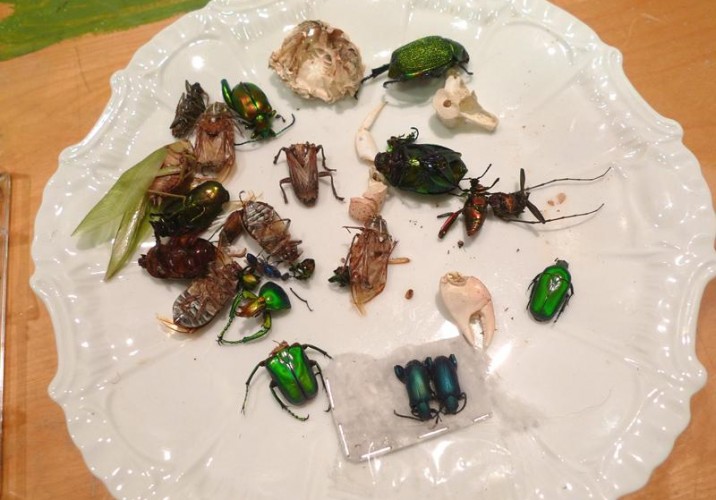
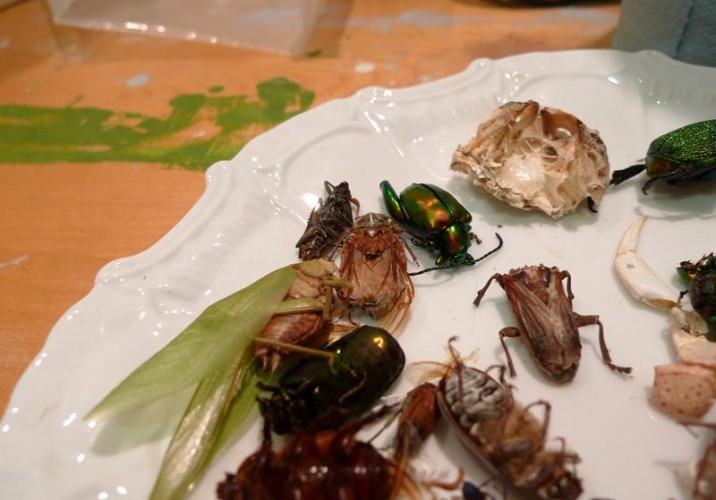
The specimens shown here include Sagra beetles, juvenile rhino beetles, a longhorn beetle head, striped hissing beetles her parents brought her from New Mexico, and a katydid she found in a friend’s backyard.
She also collects fish vertebrae and crab parts.
Southeast Asian beetles are Brittain’s favorites because of their complex forms and prominent legs. “Most beetles are modular, but some blow their wad on a beautiful shell and aren’t as interestingly shaped,” she explains.
The bugs are dipped in alcohol as a preservative before they’re shipped, but in order to work with them, Brittain has to soak them in water, which brings out their organic smell. “At that point it’s hard to ignore that they’re animals,” she says. “Sometimes they look so alive, which gives me a wretched pang of sadness — why aren’t you walking in a tree? Why are you here? And am I okay with that?” So far she’s still not sure, but the work persists nonetheless.
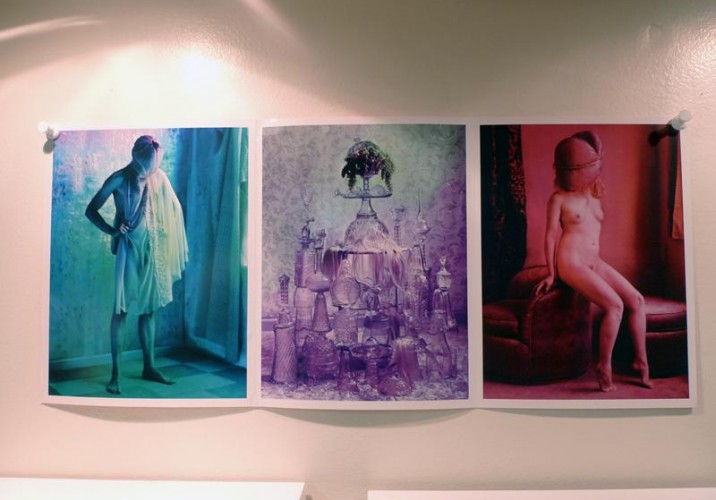
Photos shot by Jeff Bark are kept for inspiration.
One of Brittain’s latest creations is a series of stuffed fabric monsters, which serve as a kind of antidote to her bugs — they let her work on a larger scale and without the gross-out factor, while allowing her to create her own shapes from scratch. Plus, she says, “for once I get to hold something and not break it.”
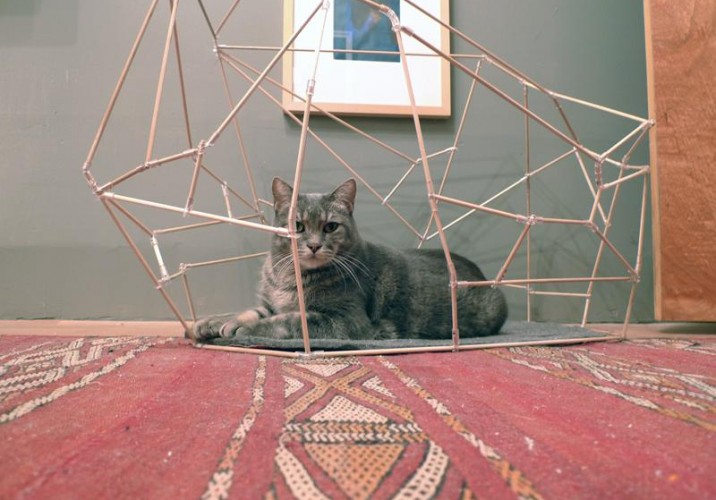
Since her studio is at home, her work tends to spill out into the rest of the apartment. This cardboard structure is a model she once made for a client’s roof cabana. Her cat, Lyndon Baines Johnson, ended up moving in. (Brittain has named her cats after presidents since she was five, starting with Abraham Lincoln and Thomas Jefferson.)
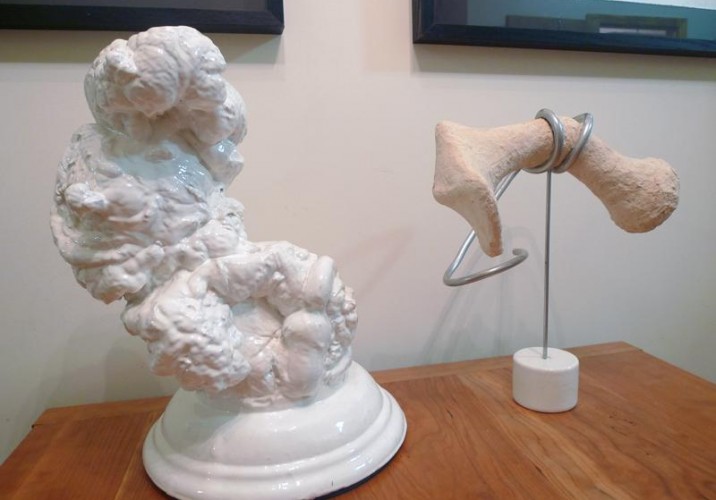
Her husband’s work also abounds. Atop the kitchen table, to the left of one of her grandmother’s papier-mâché bones, is a ceramic representation of a plume of smoke that Brittain says plays with movement, solidifying the ephemeral. “Joe has ideas that are larger than the material he’s using,” she says. “It’s not because he wants to put shiny against matte. Whereas I make because I want to see shiny against matte.”
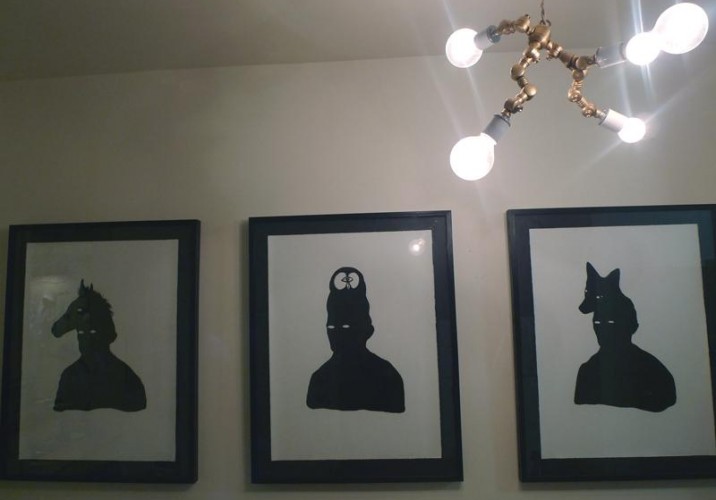
Above the table is a chandelier Brittain made, plus a triptych of silhouettes by the British artists’ collective Le Gun. They were a wedding present from the couple’s friend Michael Smythe, the curator of the art commissioning program Nomad.
Mise en scene.
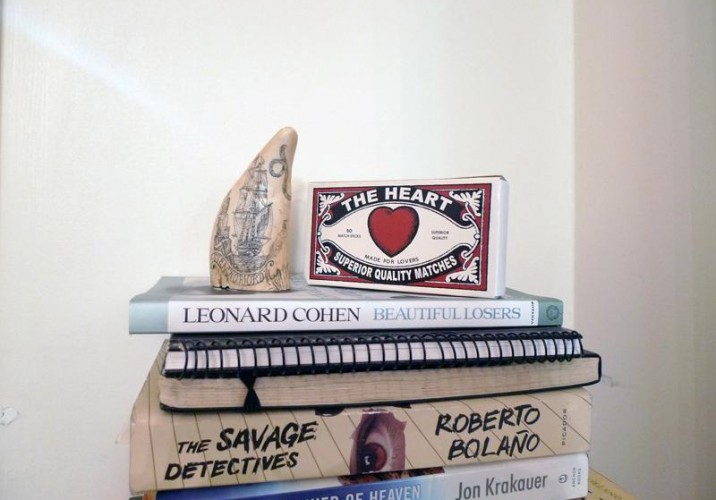
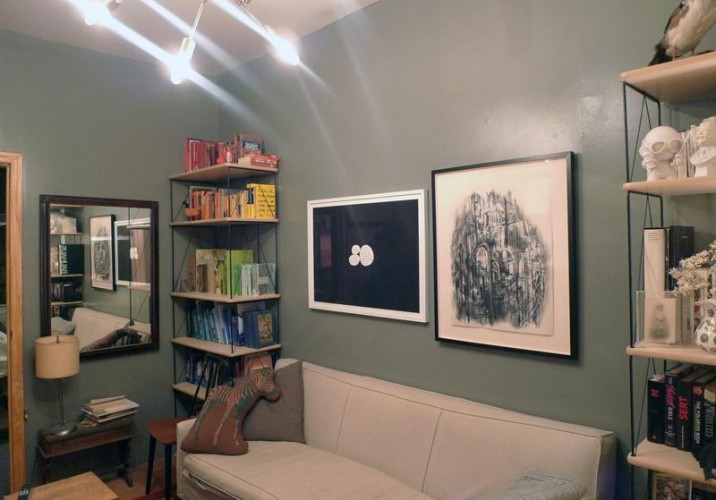
In the couple’s living room, the books are color-coordinated, and more artwork by friends and family lines the walls.
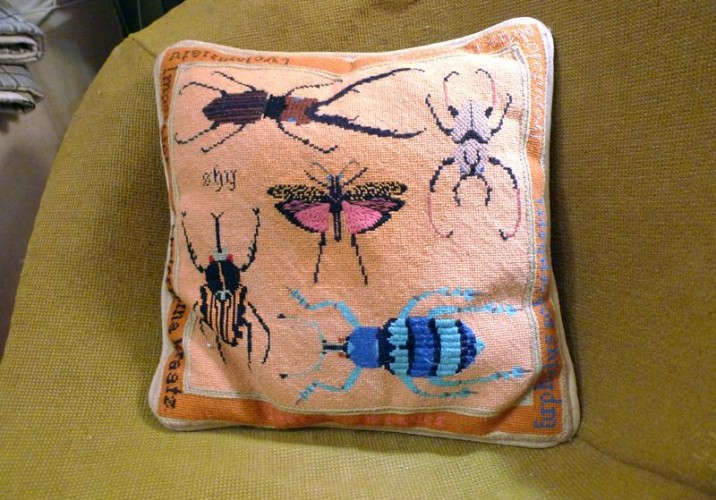
Brittain’s grandmother made her this pillow in honor of her bug obsession. The name of each insect on the pillow is woven into its border.
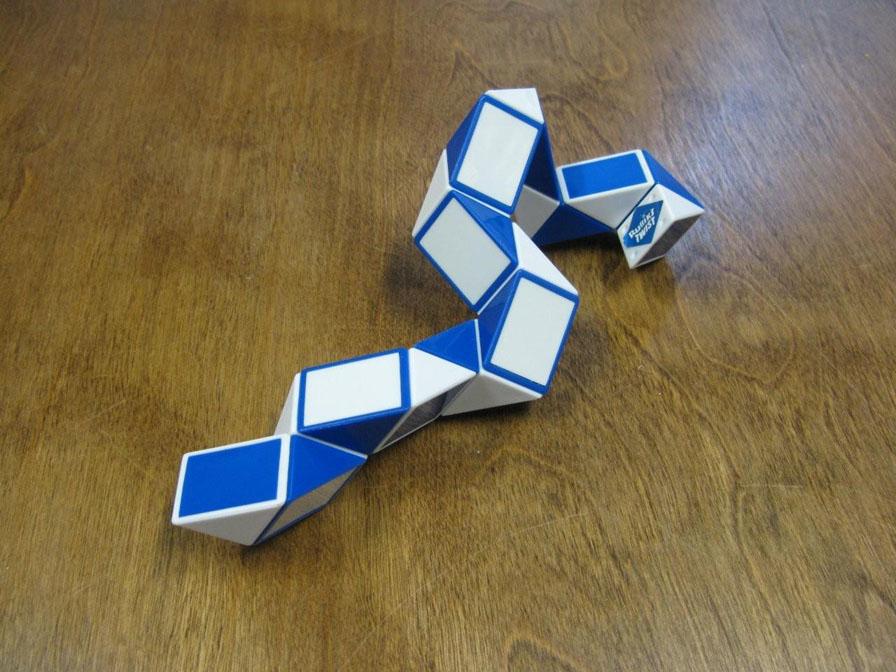
This story was originally published on November 3, 2009. A year and a half later, Dror Benshetrit unveiled at the New Museum a simple, scalable structural joint system called QuaDror, which just may turn out to be his magnum opus. It takes obvious inspiration from the kinds of toys he shared with Sight Unseen here. // Some furniture expands if you’re having extra dinner guests, or folds if you’re schlepping it to a picnic. But most of it just sits there, content to be rather than do. This drives New York–based designer Dror Benshetrit crazy. “Static freaks me out,” he’s said, and so the Design Academy Eindhoven graduate has spent the entirety of his young career making things that either capture a state of transformation (his progressively shattered series of vases for Rosenthal) or actually transform themselves (the Pick Chair and Folding Sofa that flatten using simple mechanics). When I first saw Dror’s latest project, a trivet for Alessi whose concentric metal arcs are magnetized so they can be reconfigured endlessly — and even, the designer enthusiasticaly suggests, worn as a necklace — I thought: If he can’t even let a trivet sit still then his fascination with movement must be more than a design philosophy, it’s probably coded in his DNA. I was right. Dror has been obsessed with kinetic toys since he was a child.
“I grew up going to pow-wows and stuff” isn’t the first thing you expect Annie Lenon to say as she’s puttering around the garden apartment and studio she shares with her boyfriend in a brownstone in Brooklyn’s Fort Greene. But then you recall that the 25-year-old jewelry-maker and Pratt grad hails from Bozeman, a city of 27,000 located in the southwestern corner of Montana — a state that with its prairies and badlands and Indian reservations seems downright exotic to most New Yorkers — and you realize she’s working from an entirely different reference point.
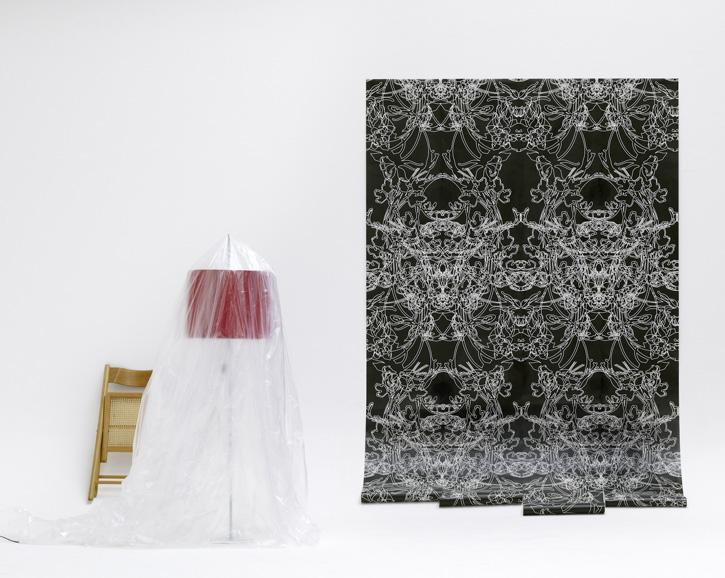
As I walked the Tendence gift fair in Frankfurt this summer, Iris Maschek appeared to me like an oasis of glam in a desert of practicality. There she was, surrounded by clocks and soaps and clever ceramic jugs with customizable chalkboard labels, dressed all in black and perched in a cool mid-century rattan chair against this gorgeously baroque Rorschach-like backdrop: A specimen from her very first wallpaper collection.