In the mountains north of Barcelona, deep in the heart of Catalonia, a renowned gastronomer toils in an experimental food lab, researching and testing dozens of flavors each year. Beloved by his peers, he has thousands of loyal fans. But he is not Ferran Adrìa.
Sandro Desii is the jolly, 55-year-old patriarch behind an eponymous brand of artisanal pastas and ice creams that in Spain is considered to be among the best in the world. From a small factory in Esparreguera, at the base of Montserrat mountain, Desii leads a staff of 30, which includes his sisters Loretta, Christine, and Patricia. It’s a family business through and through, passed down from his parents, who owned a small pasta-making workshop and ice cream dispensary first in Turin, then for years in Barcelona. The Sandro Desii arm of the company was founded 25 years ago, and since then, the Italian has worked hard to bring his parents’ recipes to life and to honor the pasta-making traditions of his native country.
On our visit to the factory this summer, the company’s communications manager Virginia Jedlicki — who also served as translator and straight man for her boss — explained: “Most people consider fresh pasta to be authentically Italian, but fresh pasta became popular only in the north of Italy, where there was too much rain to dry it in the sun, as was the ancient tradition in the south.” Pasta isn’t dried in the sun anymore, in any case — it’s far too expensive — but Desii mimics the technique in his factory by drying pasta for several hours at a very low temperature.
It’s an expensive way to do business, but it has paid off. For his innovative tastes and textures, and for his unending passion for gastronomy, Desii has earned the respect of Spain’s best chefs, from Miguel Arzak to Adrìa himself. And the brand has earned a small but loyal following outside of Spain as well, leading the company to look into expanding its distribution channels. We got the inside scoop this summer on just how Desii’s carefully crafted delicacies make it to market.
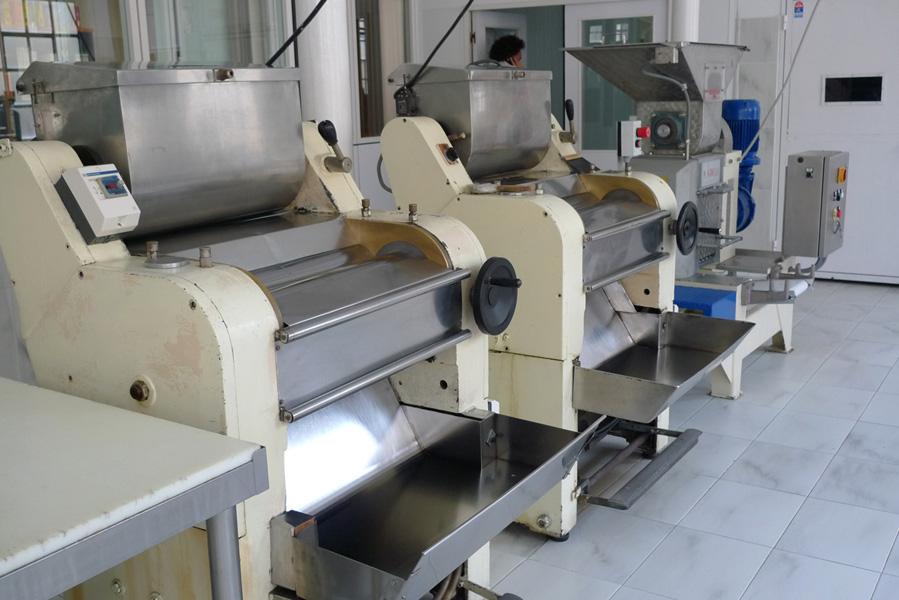
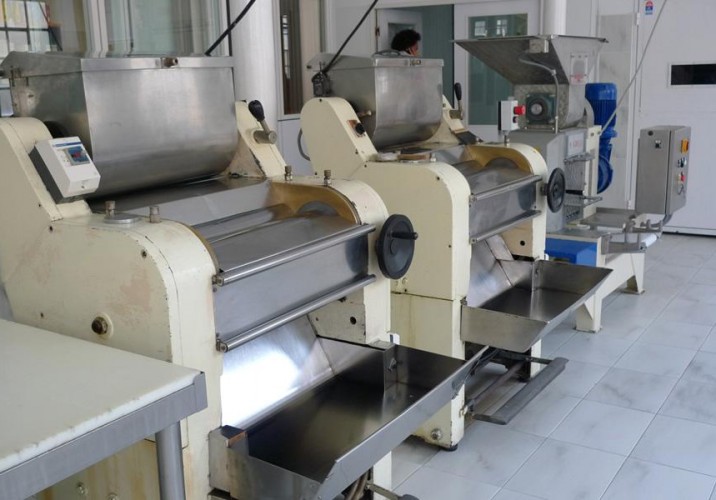
Sandro Desii’s laminated pastas are made on machines nearly as old as the company itself. The dough — a mix of semolina flour and egg, plus high-quality ingredients that range from death trumpet mushrooms to fresh chives — is poured into metal tanks, then roller-pressed into thin sheets three times over to achieve the perfect texture and thickness.
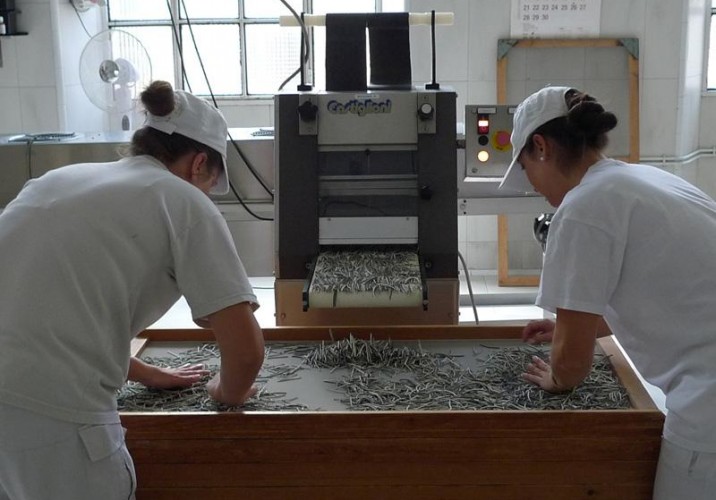
The pasta then rests. Shown here are Desii’s Angulas de Trigo, a double-sided pasta whose pressed layers of wheat and squid ink are meant to mimic the look of baby eels.
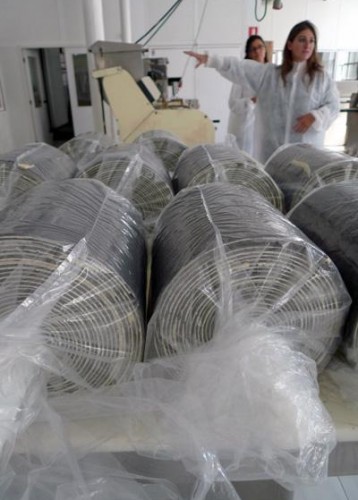
Once cut, the pasta is hung from wooden dowels (or, in the case of the Angulas de Trigo shown here, scattered by hand on a wooden frame) which are then stacked on metal carts and rolled into the drying chamber, where hot air circulates at 85-95º F — the better to mimic the heat of a Southern Italian sun. By contrast, most industrial pasta is dried at temperatures upwards of 200º F.
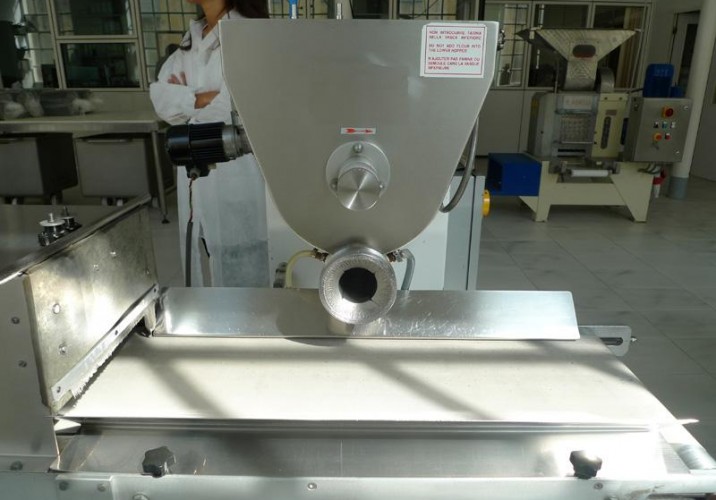
Beyond fusilli: Desii’s pressed pastas are squeezed onto a conveyor belt through swappable custom molds shaped like beehives, snails, or water lilies.
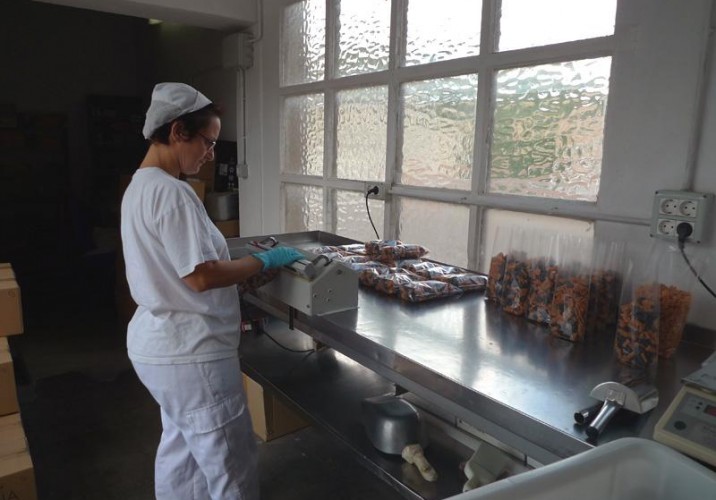
Pasta dried at a low temperature is far more fragile than its industrial counterparts, so each box of pasta is bagged and boxed by hand. An insert printed with the Sandro Desii story and an original recipe is included with each package.
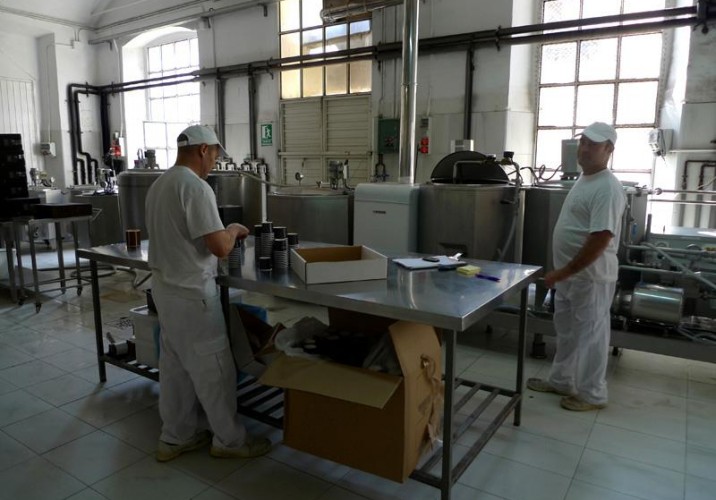
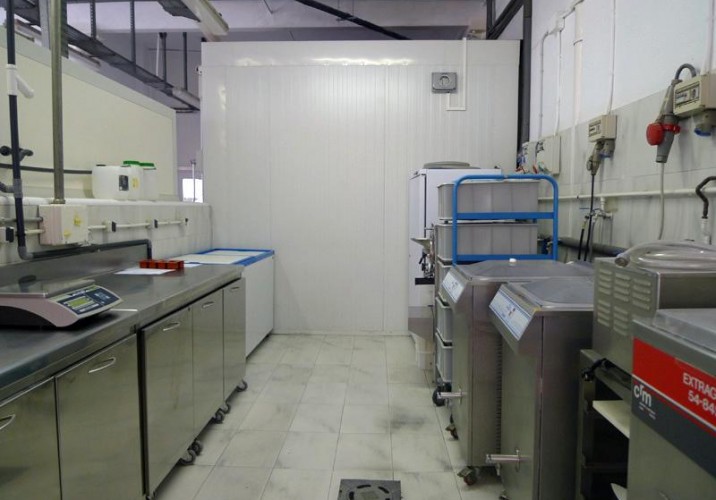
The ice cream is produced and packaged in a small room just off the factory’s pasta-making center. “The difference between our artisanal ice cream and industrial ice cream is that ours has very little air,” says Jedlicki. “When it melts, it stays at the same level rather than sinking in the cup.”
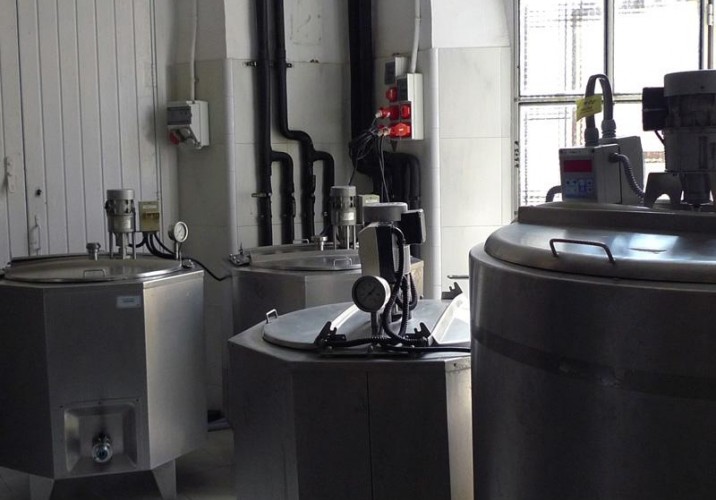
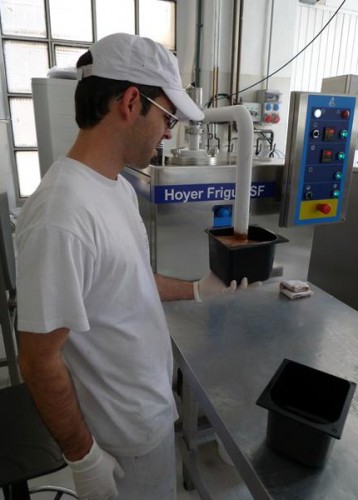
The ingredients are first placed in the machine at right to pasteurize. After being heated to a high temperature and resting for a few hours, the mixture travels through a closed circuit to another drum, where it’s churned to achieve a texture like whipped butter.
After the semi-solid cream is packaged, it’s sent to a freezing chamber where the temperature is taken down to minus 136º F. Throughout the storage and delivery process, Desii maintains a temperature of at least minus 75º F.
Desii studied ice-cream making for two years. “It’s his real passion,” says Jedlicki. “On the weekend, you can find him sitting on the internet thinking about what new thing he can make ice cream from.” New flavors — usually about 20 per year — get small-batch tryouts here in the lab.
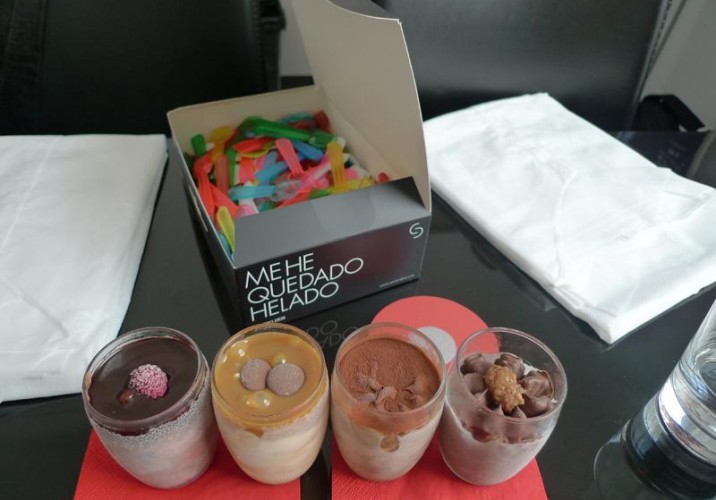
A new Desii innovation: single-serving sundaes that come six to a box, ready to eat from miniature glass vessels. The flavors include tiramisu, white chocolate with caramelized violets, and a fusion of orange, lemon, celery, and carrots streaked with raspberry cream.
Desii is a jokester and a romantic — “Into the ice cream goes my tears,” he proclaims. He is also something of a gastronomic savant, introducing risky but delicious flavors every month, and taking under-performing flavors out of rotation twice a year.
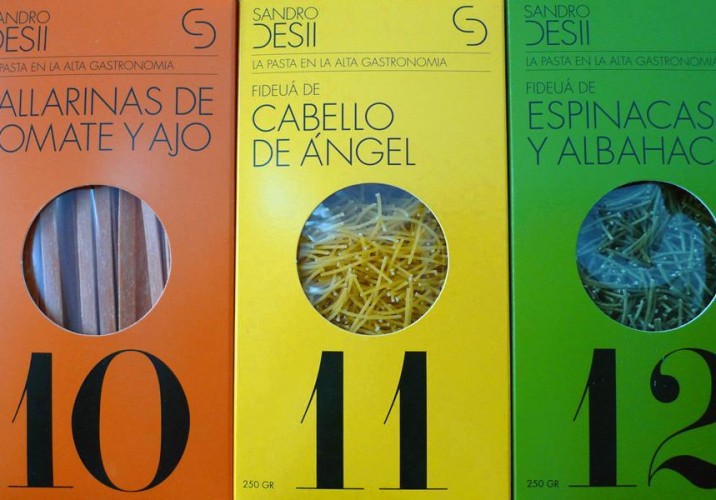
In 2007, the Sandro Desii brand was redesigned by Borja Martínez of the hip Barcelona graphics firm LoSiento. Since then, Martínez has had a hand in everything from point-of-purchase displays to cardboard shipping boxes.
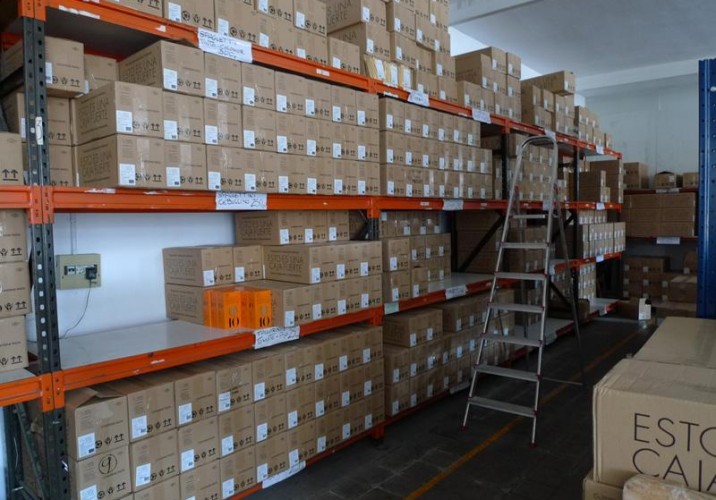
These 250g boxes are bound for specialty shops around Spain, Germany, Belgium, and the UK. But Desii’s biggest customers are in fact restaurants that source the company’s high-quality pastas and ice creams, like Barcelona’s Rias de Galicia or Casa Fernandez.
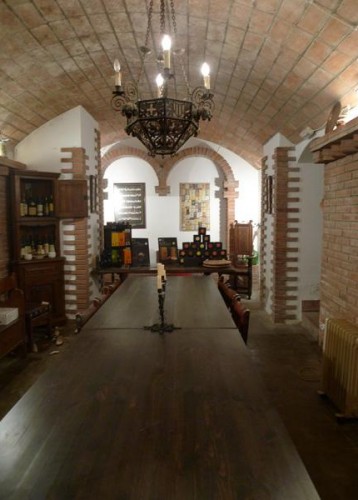
Underneath the factory is an events room referred to as “The Cave.” When building the cave, workers discovered a chain of tunnels leading to the village of Esparreguera that date back to the Spanish Civil War. “For special customers or events, we will make custom flavors,” says Jedlicki. “We did an event recently with a cava brand, and we made sherbet with a rosé cava and pasta boiled in cava and served in a cup.”
“Yo soy anti-mierda,” Desii says jokingly of his approach, but it’s a fair assessment: Most ingredients are sourced locally, although Desii will travel far afield if he believes a supplier is the best. His chocolate, for example, comes from Guatemala’s Antonio Chávez.
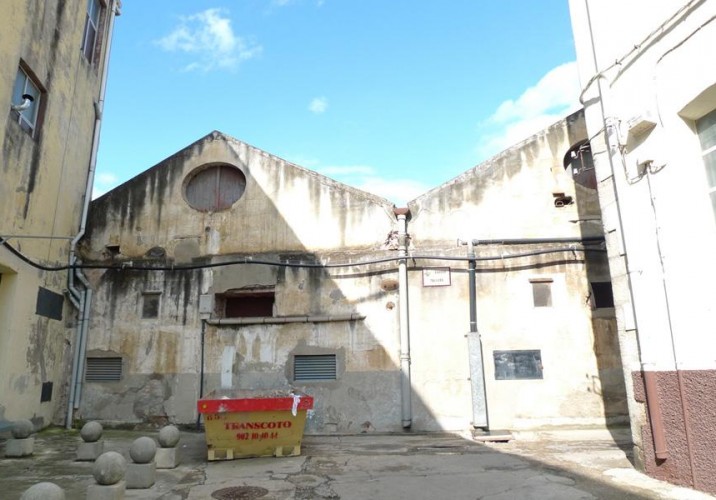
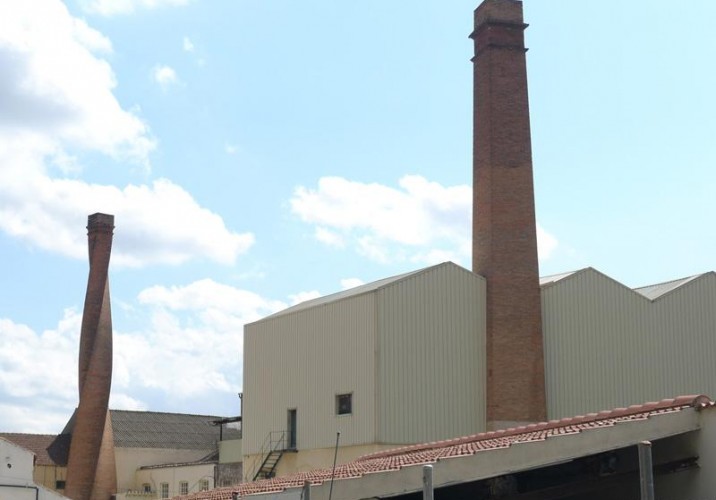
The headquarters are located in an old textile factory in the heart of Can Sedo, the oldest industrial area in Catalonia.
The town is mostly filled with other factories that make construction materials, and all of the streets are named after professions.
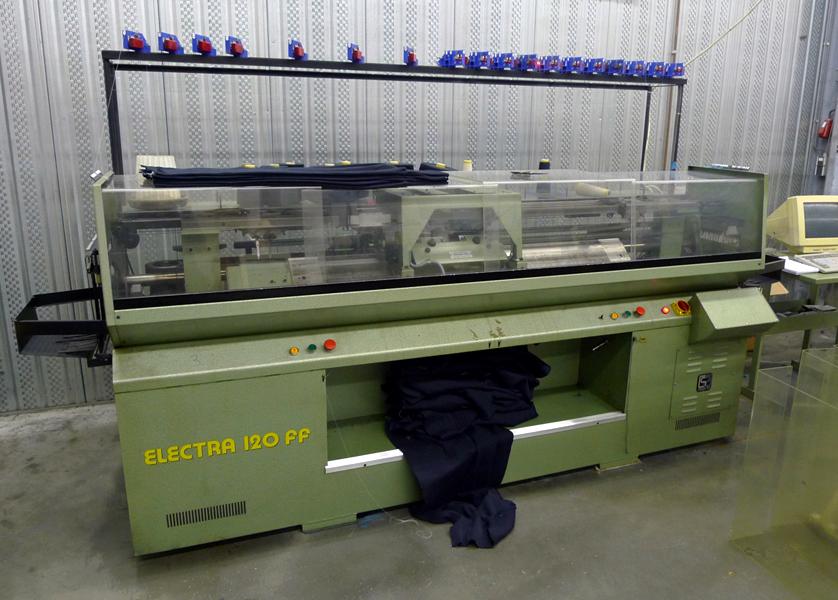
When Emily Hermans started her own clothing line in 2004, she did something kind of genius: She found a local knitwear factory in Eindhoven that would let her produce her own textile designs on its knitting machines, and then slowly convinced its owner to take her on as a partner. He would get equity in her line — MLY — and she could crank out prints to her heart’s content without paying a premium. There was only one catch.
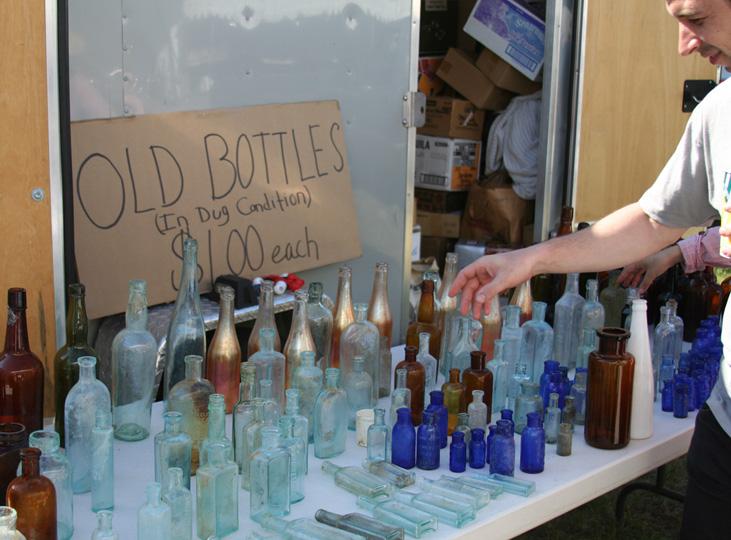
Once or twice a year, Brooklyn furniture designer Paul Loebach gets out his straw hat and bandana, ties on a pair of crappy old sneakers, drags out his huge canvas tote, and drives up to Massachussetts, where dealers from all over the Northeast gather every spring, summer, and fall for the Brimfield Antique Show.
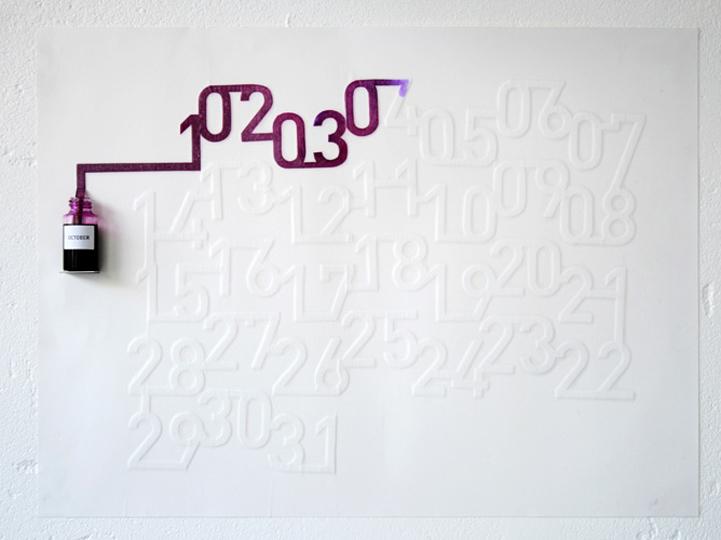
The scientific process behind many of life’s workaday phenomena is something called capillary action, which is the molecular attraction that makes liquid flow through a porous medium, for those in need of a high-school refresher. It’s what makes tears flow through your lachrymal ducts, what gives micro-fiber its super-absorbent properties, and why groundwater naturally spreads into areas of dry soil. It’s also what powers the Ink Calendar by Oscar Diaz.