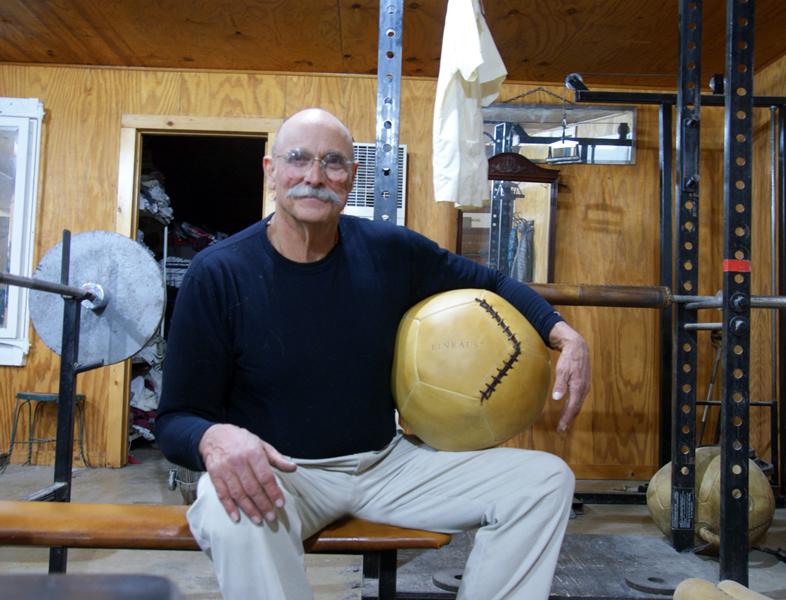
Lineaus Hooper Lorette makes $650 leather medicine balls in a workshop just outside the desert art mecca of Marfa, Texas. He sells the balls to college athletic departments and “very rich men,” many of whom admire them for their old-school charm. (Mick Jagger once bought four.) But Lorette isn’t a hipster, nor is he an artist. He’s a radical leftist accountant in his 60s with a fanciful white mustache, a large collection of political art, and a local reputation for muckraking. He’s running for county judge. He thinks he might actually have a shot at winning this time, despite his avowed Communist leanings. Of his side business, Lineaus Athletic Company, he says: “At this point in my life it’s my craft. All CPAs want to do something honest for a living.”
Lorette began teaching himself how to make medicine balls in the early ’80s, after knee injuries prevented him from running, his favored form of exercise. The director of the local YMCA introduced him to the classic training tool, typically thrown back and forth by football and baseball players in order to improve quickness and grip strength, but he wasn’t able to find any nice ones at the sporting goods stores. Rubber balls were too hard to catch — they chafed your hands something fierce — while leather balls were either flimsy and prone to breakage, or filled with sand and thus too dense to be comfortable.
By 1986, he’d perfected his own fabrication methods enough to start a company, through which he sold not only the balls, but also leather training bags and medicine bars, all made by hand. “For five or six years they didn’t sell at all, and then the internet happened and people could find me,” Lorette says. But his products are so high-quality — lasting at least 30 years, if not forever — that he makes very few resales. “I almost went out of business several times,” he admits. Each time, the coaches who swear by his products stepped in to save him.
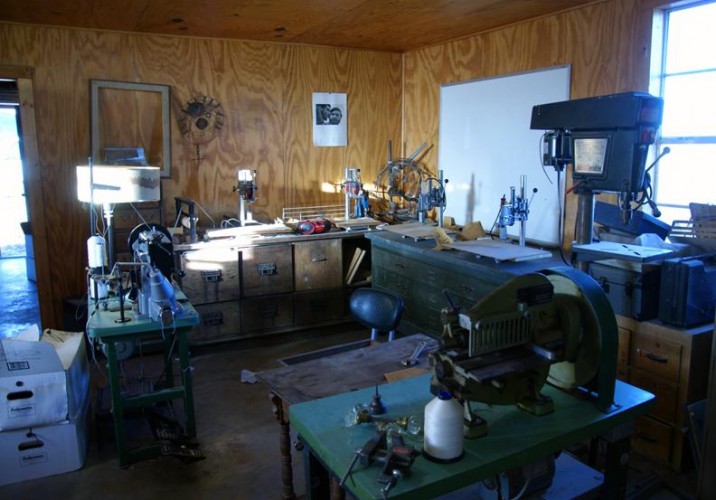
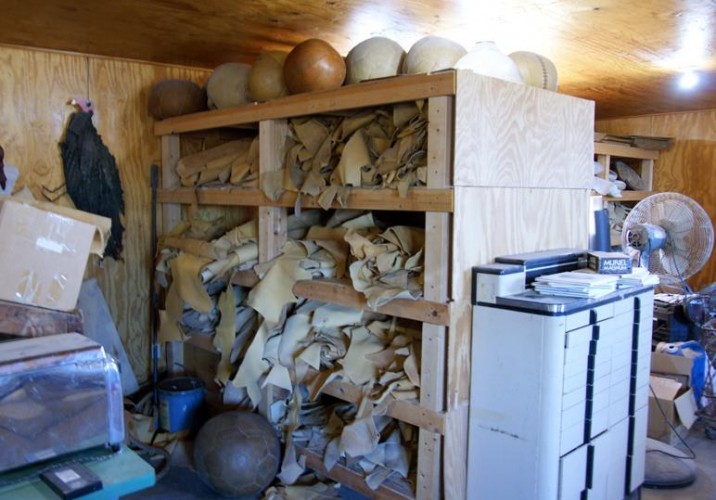
Lorette still operates out of the same long, narrow corrugated metal shed stationed behind the desert home his parents built, the main house being the place where he keeps the bulk of his art collection. It’s filled with Maoist figurines and other propaganda, plus wacky light sculptures and masks made by local artists. His late mother, Richey Hooper Lorette, was a painter, and her work is displayed there, too. But Lorette himself makes nothing besides his prized sporting goods. He took a break from campaigning to show us his studio, and to explain why Lineaus medicine balls are considered the world’s best.
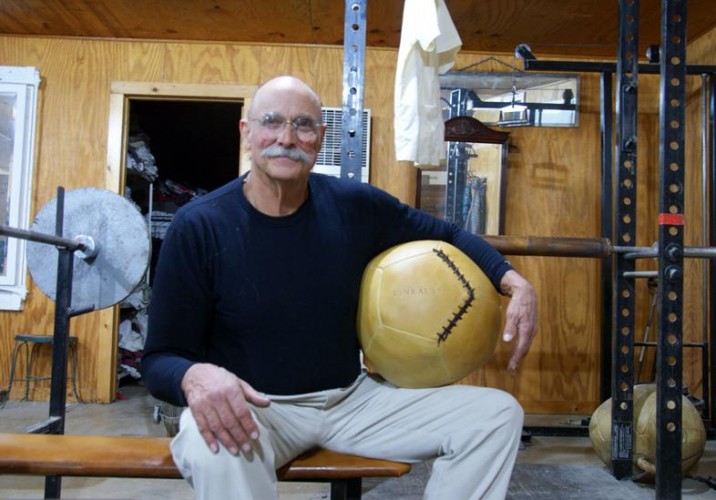
Lineaus Hooper Lorette in his Ft. Davis workshop, just outside Marfa, Texas. The front of the studio is where he makes Lineaus Athletic Company balls, bars, and bags, while the back — a weight room — is where he uses them. He’s sold medicine balls to nearly every national football championship team. “You’re looking at the world’s best,” he says. “No one puts the investment into making them that I do.”
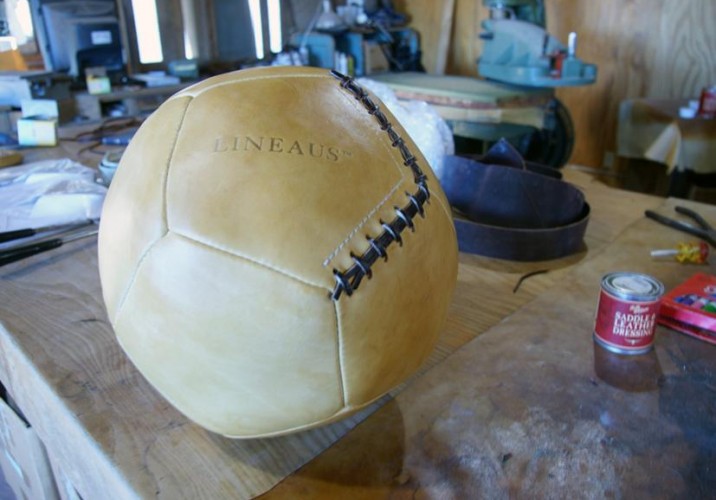
Each medicine ball is sewn and numbered by Lorette, and each costs between $325 and $650. Weighted balls have been used in athletic training for 3,000 years, though he says modern medicine balls were “invented” in 1898 by the director of the Boston YMCA, who named them after medicine bags because of a Native American revival going on at the time (he also invented the “indian club“). They had a renaissance in the late ’70s after the publication of a seminal East German track and field training manual, and now you’ll seldom find a college or pro team that doesn’t employ them regularly. Among other benefits, throwing a medicine ball helps extend the arm muscles.
Lorette’s workshop isn’t very big, but because he makes the balls himself from start to finish, he’s the only one who’s ever in it. Besides, of course, his dogs, of which he has dozens — one, a black Belgian shepard, used to belong to Donald Judd. The rest are all named after revolutionary heros.
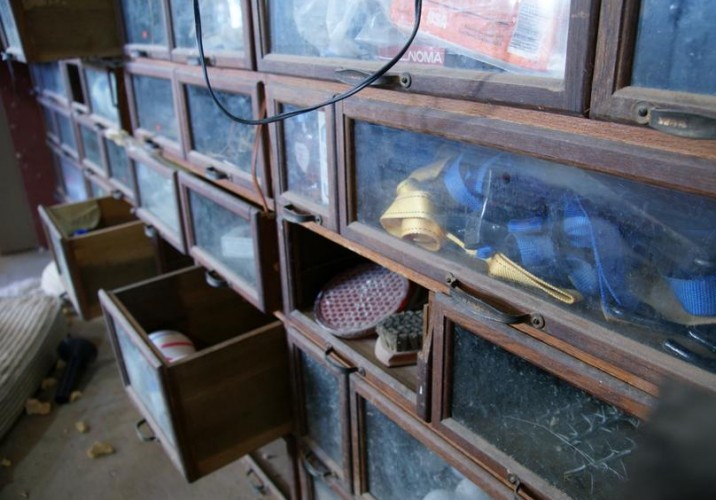
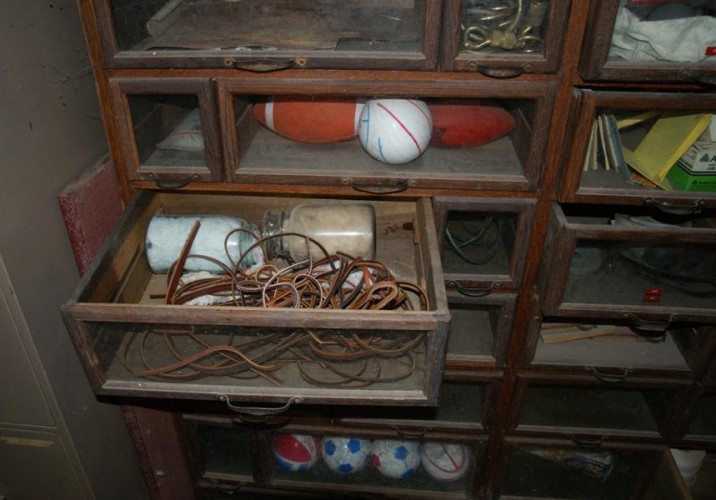
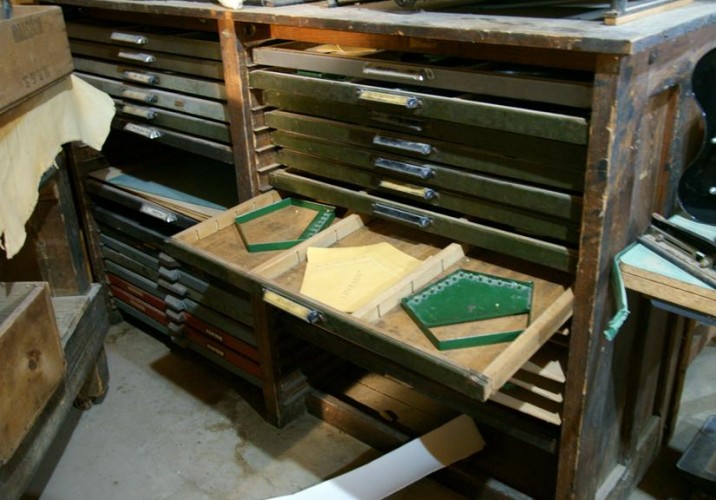
A massive, dusty antique wooden cabinet, which Lorette says he acquired when he once bought a general store, is filled with inspirational bits and bobs.
There are plastic football and soccer balls, leather laces of the kind he uses to stitch his balls’ seams closed, and strangely shaped seed pods and burrs collected from the Texas landscape.
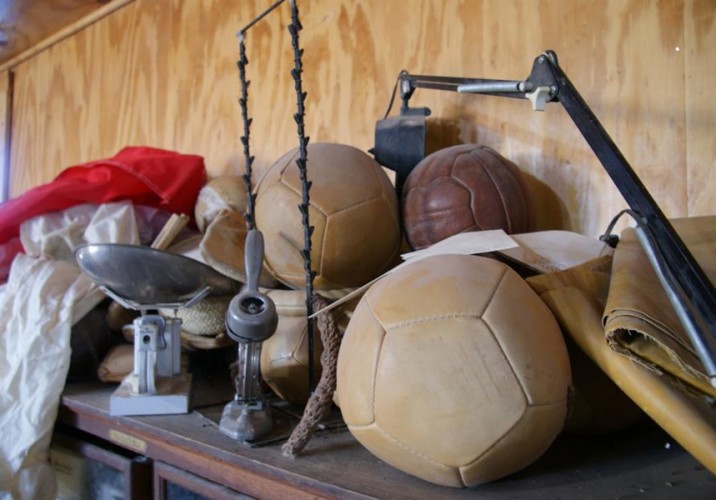
On top of the cabinet are piles of old balls and test balls. At one point Lorette experimented with using a soccer ball pattern — which has 32 panels instead of the 12 he uses now — but gave up after the work proved too tedious. Apart from a few minor improvements to his football-shaped medicine ball, his designs have stayed exactly the same since he started the company in 1986.
Originally he hired someone else to do all the sewing while he did the stuffing, but then he taught himself how to do that, too, by making test pillows which he gave away to friends. “When I was a kid they taught boys how to work on cars while only girls knew how to sew,” he says. “But my mother was a teacher, and she taught me I could learn any craft I wanted to learn.”
His wares all start here, with top-grade, 5-ounce cow leather which he buys by the truckload from a ranch in Wisconsin. Full-grained leather — which is thicker and nicer than most leather that’s been split in half — starts at $2 per square foot. His leather is tanned just for him using a special formula and costs $8 per square foot, which is why his medicine balls have proven too expensive to wholesale. Chrome-tanned leather of this kind is also used for baseball gloves, and since it hasn’t been dyed or sealed, you can oil it to keep it soft and supple.
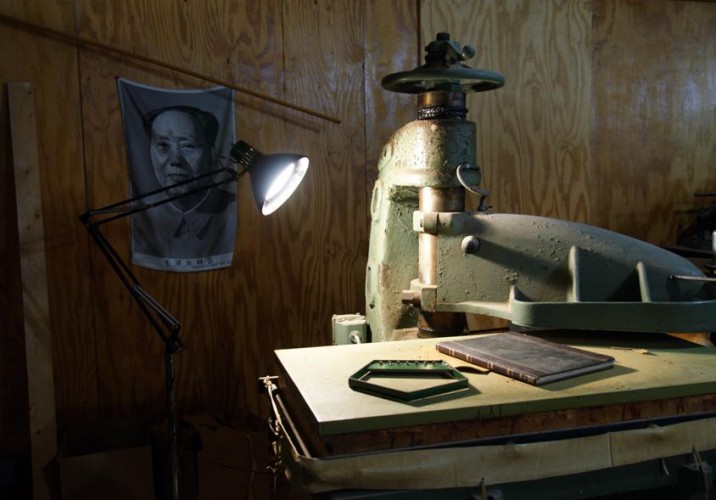
Lorette uses metal dies to stamp out the leather panels that make up his medicine balls, of which he offers eight different shapes and sizes, each with three to five different weight options. Back when he was teaching himself how to make them, he grabbed a pattern right out of the encyclopedia. “It’s an Archimedian solid, a dodecahedron,” he says of his standard ball. “There are simpler ways to do it, but this is the only way to make so many different sizes efficiently. The panel design stays the same.”
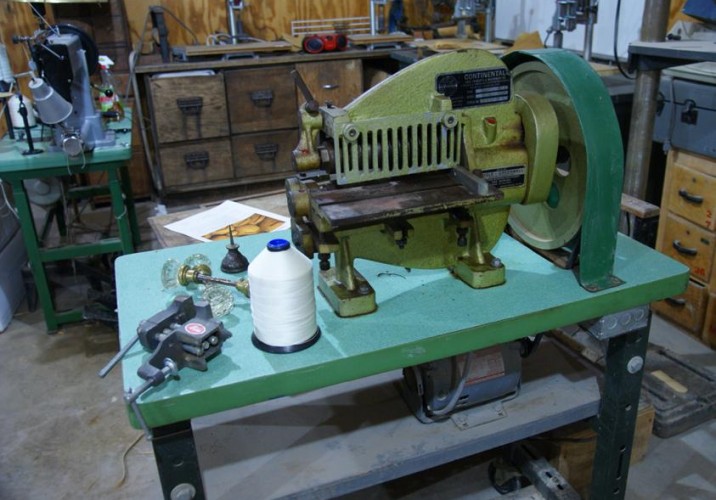
The dies are stamped using a clicker press, behind which hangs a poster of Chairman Mao, one of two in the studio.
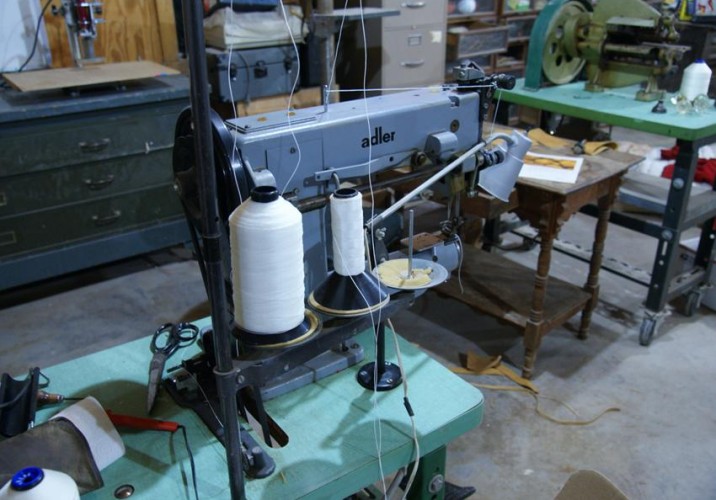
Lorette double-sews the seams of all his medicine balls. “It’s hard to hurt them,” he says. They’re constructed inside-out, like pillows, with a small hole left in the seam for stuffing.
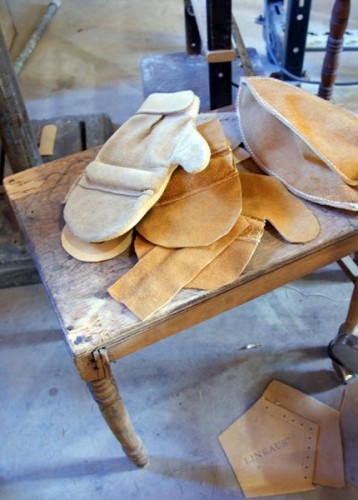
A football-shaped medicine ball shell, plus some glove experiments.
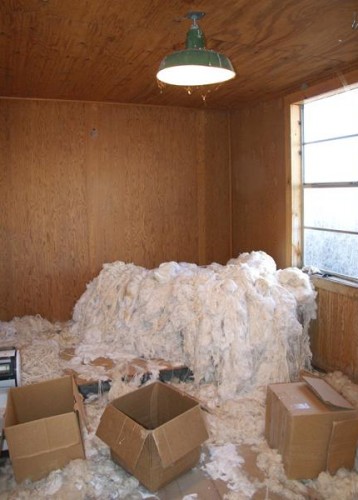
Lorette keeps a separate room in the back of the workshop reserved for stuffing, since the process is so diabolically messy. There are two types of stuffing in each ball: cotton-poly thread waste salvaged from clothing manufacturers, and Kapok, a soft, resilient fiber made from shredded tropical bean husks.
The Kapok, which lines the outside of each medicine ball and training bag, is much more expensive than the thread waste — albeit much lighter in weight. Lorette once tried pricing his lighter balls higher than his heavy ones, because they used more Kapok, but had to stop because his customers didn’t quite get it. He stuffs the ball covers using a long screwdriver, which is extremely hard work. “That’s how I got such big shoulders,” he says.
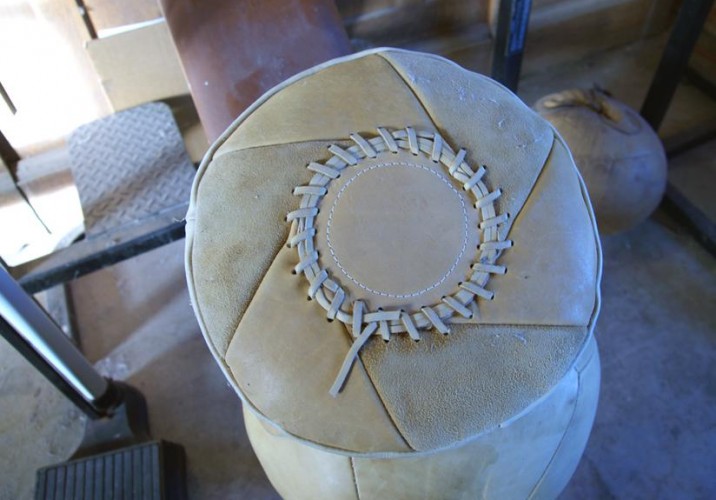
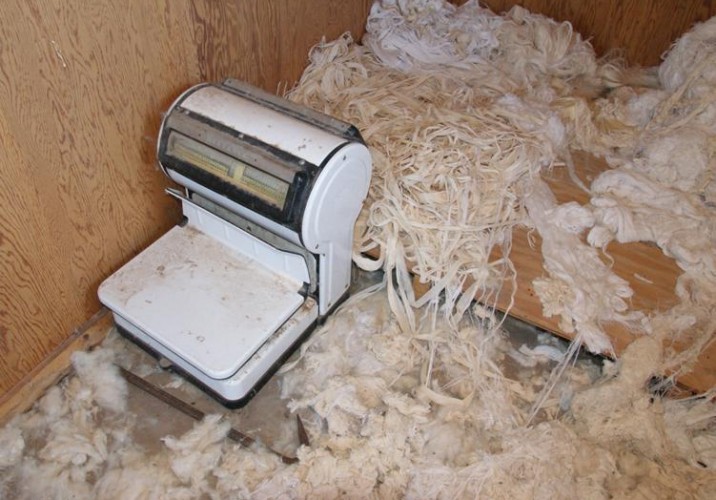
After the medicine balls are stuffed, Lorette laces up the stuffing hole with thick leather straps cut by this machine. In the background are the machines that stamp “LINEAUS” on every ball using heated brands.
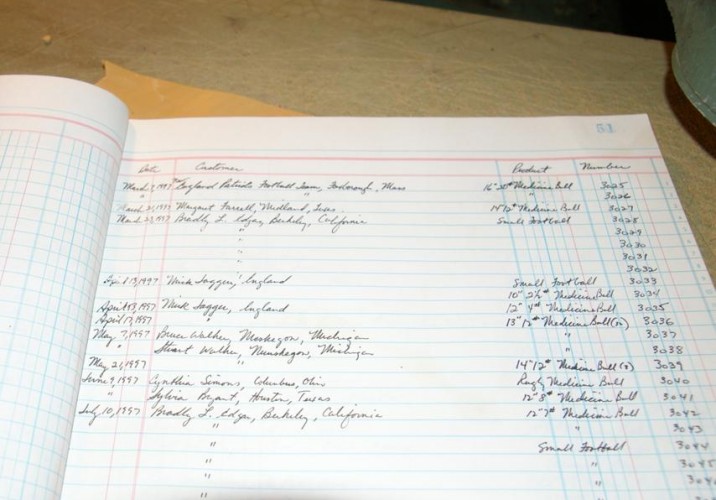
Lorette has recorded all 1,302 of his medicine ball sales in a single ledger since 1986, including the four he sold to Mick Jagger in 1997 (pictured here). Jagger had been vacationing in Marfa for a few weeks with Jerry Hall, and after emerging uninspired from Donald Judd’s modern art–filled Chinati complex, he was advised to check out Lorette’s collection. His attempts to buy one of Lorette’s numerous Abby Levine sculptures were rebuffed, so he purchased the medicine balls instead, including one for his kids.
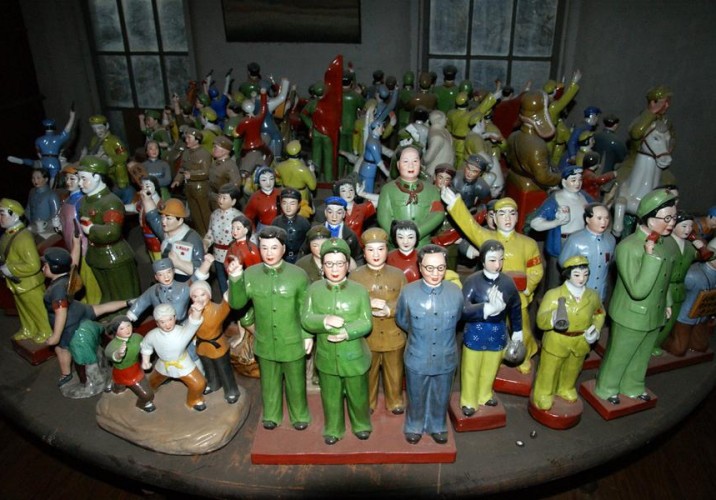
The Levine sculptures share the living room of the main house with Lorette’s massive collection of relics from Mao Zedong’s Great Proletariat Cultural Revolution in China. He has more than 100 figurines, most of which he acquired through a connection in Beijing.
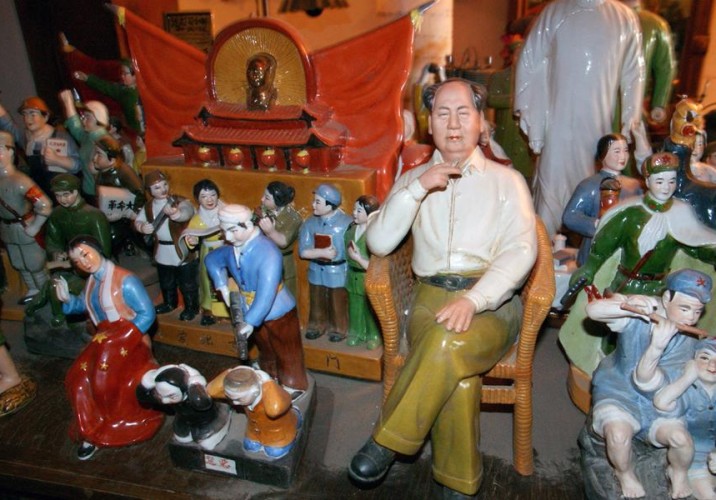
He thinks this one, of Mao smoking a cigarette, might be one of his most rare. The art collection has little to do with the medicine balls, of course, although Lorette does point out that their use emphasizes cooperation rather than competitiveness.
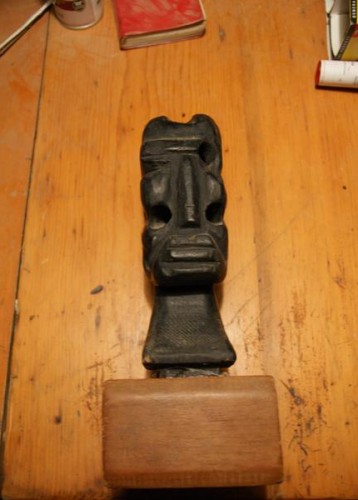
Lorette also collects prison art, like this balsa wood figure made by a man in prison — probably for the rest of his life — in 1968.
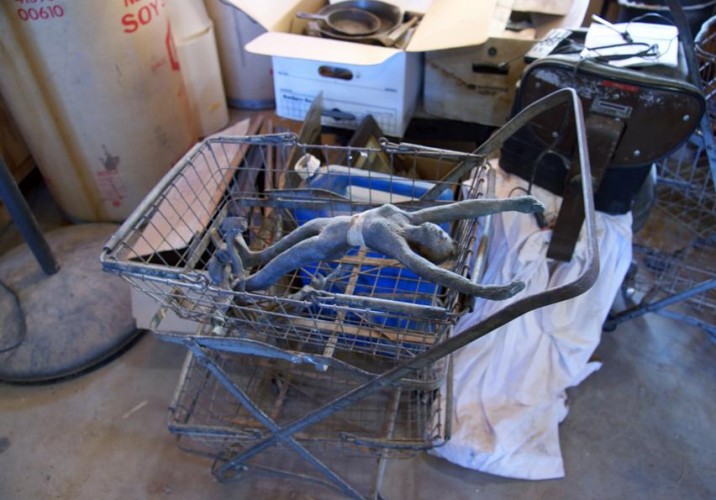
The studio is full of random bits of artwork, too, like this female figure.
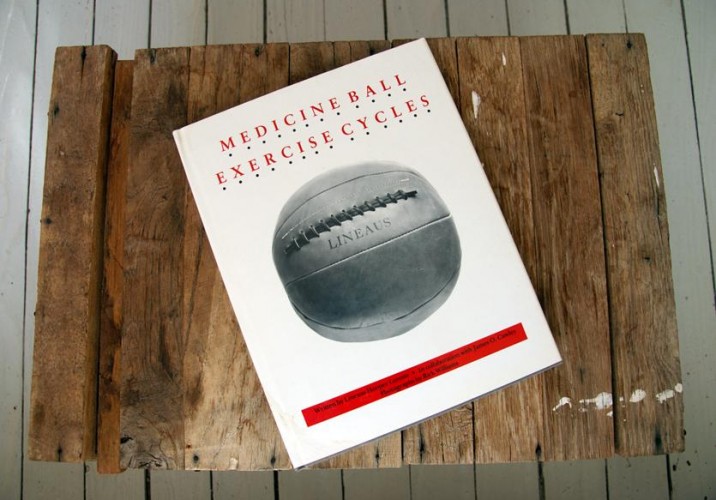
In 1983, before he began Lineaus Athletic Company, Lorette was teaching medicine ball classes at the YMCA when a friend of his convinced him to make this exercise book, which he self-published and which is now out of print. “It was before there were home videos,” he says. “It wasn’t my idea.”
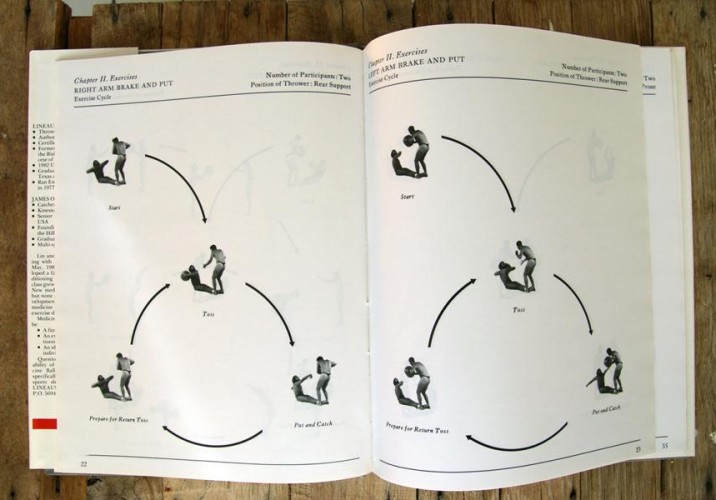
Inside, 28 standard exercises are diagrammed out using photographs of men in thongs. “The nakedness wasn’t my idea, either,” Lorette adds.
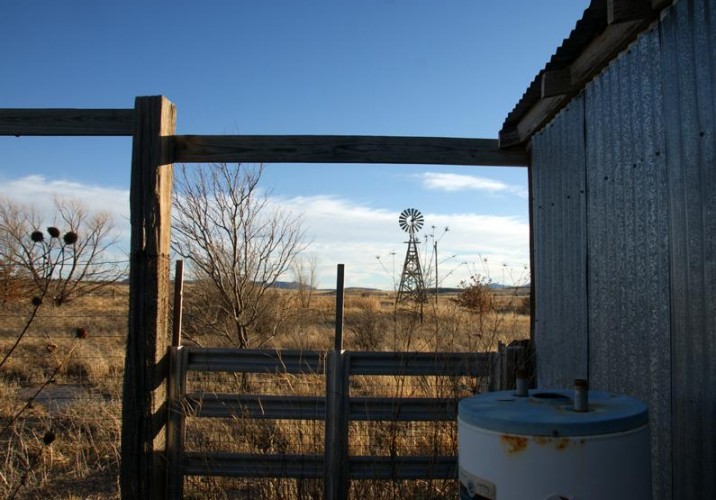
The view outside Lorette’s studio.
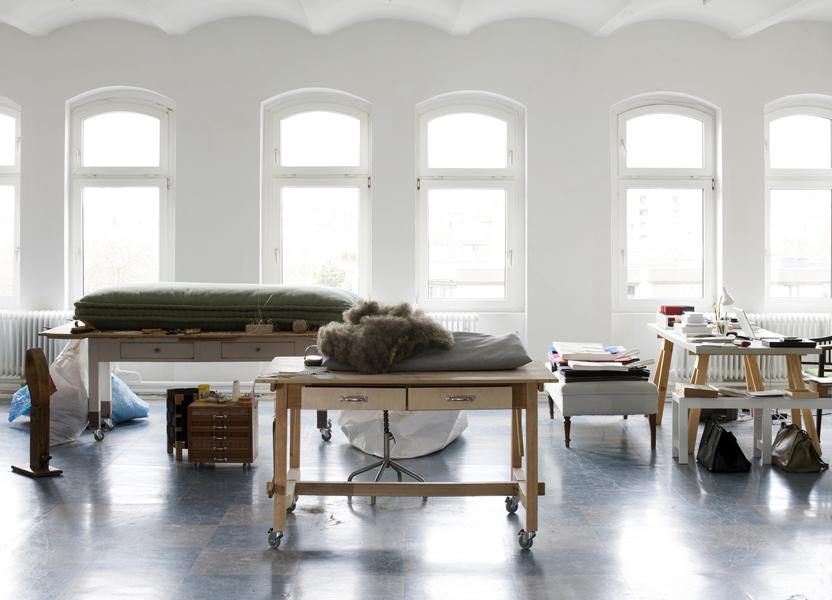
From birth, Daniel Heer was groomed to take over his family's leather- and mattress-making business. He learned the necessary skills early on, honing them through an adolescence spent at the Heer workshop in Lucerne, Switzerland, watching his father and grandfather work. His post-secondary education focused on one thing and one thing only: how to ply his trade. And then when he moved to Berlin at age 20, he left it all behind.
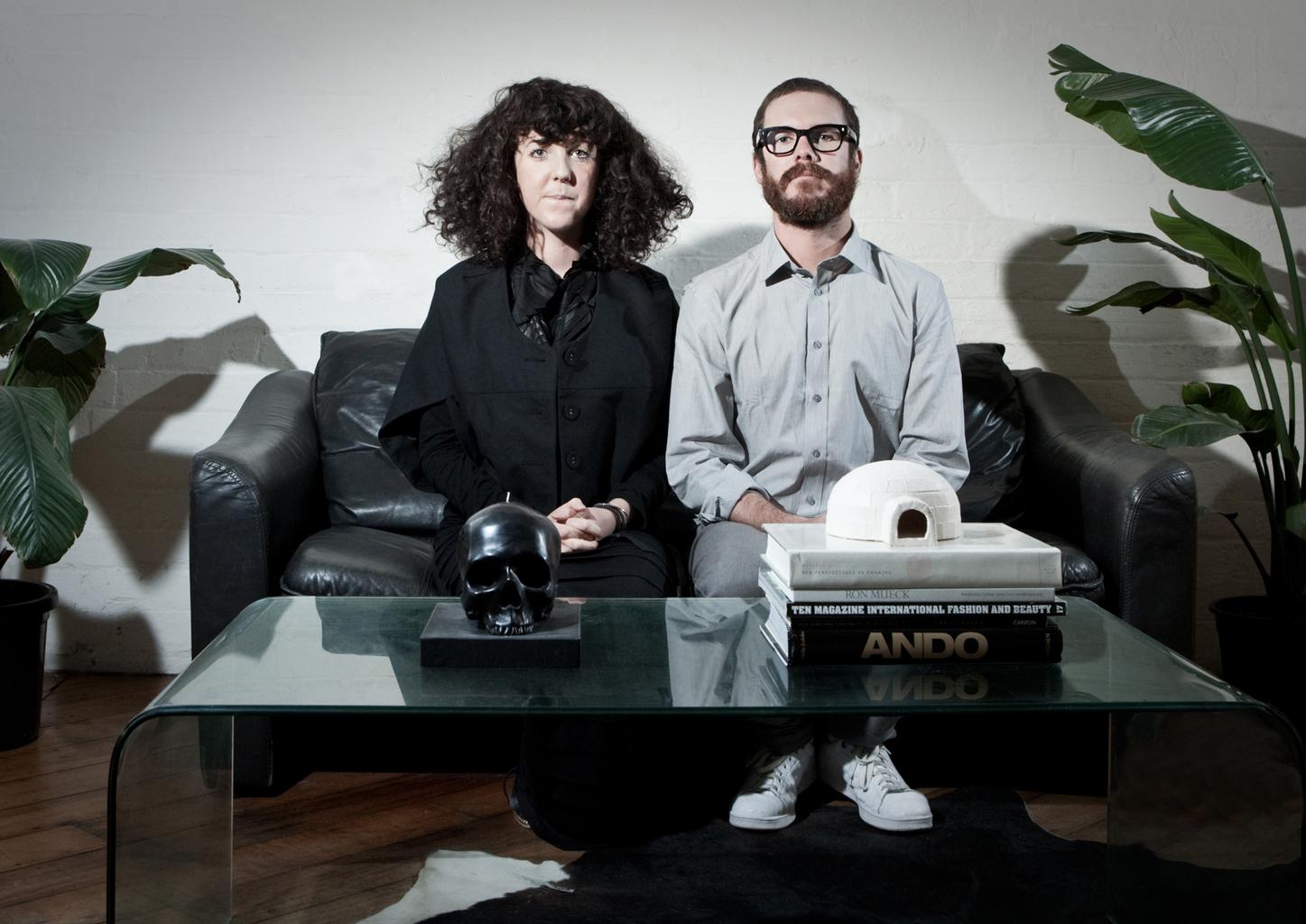
When you're a graphic designer and an aircraft engineer with zero fashion training, and yet you find yourself becoming the go-to clothing line of Melbourne — worn by the likes of Patti Smith, LCD Soundsystem, and Jamie Oliver — you learn to get really good at improvising. And trusting your instincts. So it goes for Alex and Georgie Cleary, the brother-and-sister duo behind Alpha60, who base its designs not on fashion trends but on whatever random pop-culture reference they happen to be into at any given moment.
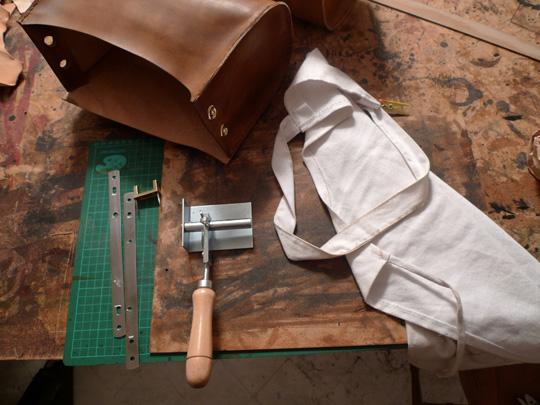
For more than three years, the Argentinean sisters Sol Caramilloni Iriarte and Carolina Lopez Gordillo Iriarte kept a design studio on the second floor of a building in Barcelona, handcrafting an eponymous line of leather bags in relative privacy. Sol, 32, was working part-time as a set designer for films; Carolina, 25, had just finished a year apprenticing under her friend Muñoz Vrandecic, the Spanish couture shoemaker. Called Iriarte Iriarte, it was a modest operation. Then in June, fate intervened.