If you travel all the way from New York to Arnhem just to attend the fashion biennial in this relatively obscure Dutch city, half the size of Pittsburgh, you can expect people to notice. Your waiter will witness your accent — and the fact that you’re not drinking a huge glass of milk with lunch like everyone else — and ask if you came just for the show, and well, did you like it? Your jolly white-haired cab driver will crack a few embarrassing jokes about the Big Apple before waxing poetic about how lovely it is when the festival’s on. And despite Vogue calling the $2.5-million production the “Greatest Fashion Event You’ve Never Heard Of,” it will seem, when you’re there, like Arnhem’s gravitational pull has shifted in some small but significant way.
Of course, that’s exactly what the Dutch government would like you to feel. It has invested heavily in the Arnhem Mode Biennale because, with the world-renowned ArtEZ school as a formidable anchor, it hopes Arnhem could eventually be the Netherlands’s own Antwerp — a European fashion capital with all the associated economic development. And so every other year for eight years running, it has helped the school and the show’s organizers rope in some of the biggest names in the business, like Margiela and Raf Simons, to participate in exhibitions and installations that would seem impressive even in a city six times Arnhem’s size. The novelty factor kind of works, too; one insider I met when I attended the school fashion shows there on Thursday laughed about having been drinking with Nicholas Kirkwood and other glitterati in some strange local dive bar the week before.
While I missed that outing, sadly, I did capture plenty of other highlights from the 2011 Arnhem Mode Biennale. You can view them in the slideshow at right.
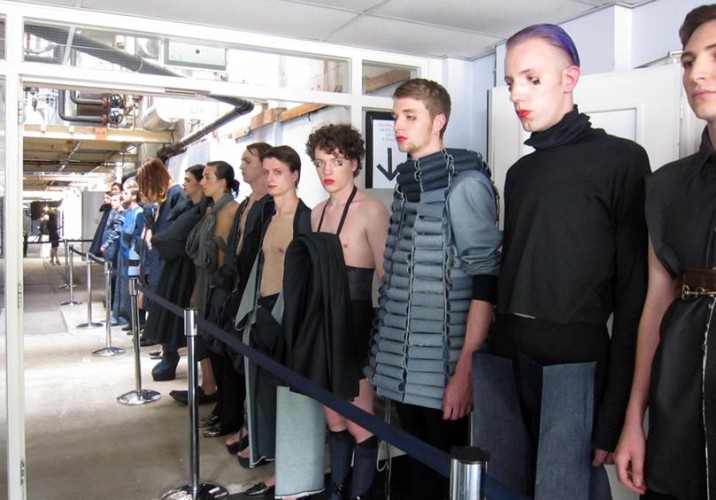
When I first arrived at the actual Biennale exhibition, I caught this group of stone-faced models lined up in the hallway about to walk the runway in the ArtEZ undergraduate show. Their elaborate denim getups were created by the first-year students; I particularly liked the one who resembled corn on the cob.
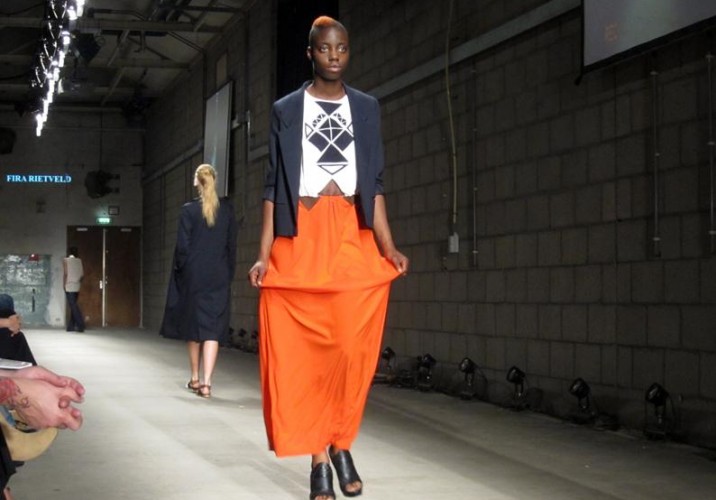
There were some highly conceptual collections in the marathon hour-and-a-half-long show (one made from nylon flags and ripped-up Bob Marley t-shirts), but I made the PR rep from Karla Otto howl with laughter when I admitted to liking the ones that “looked like COS” the best. Here, a look by Fira Rietveld.
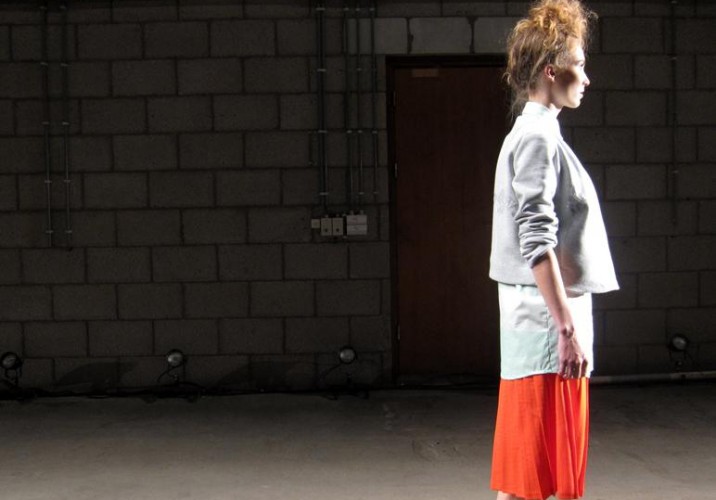
And another look by fellow fourth-year Zonia van Uden. My favorite collections were by Bo van den Heuvel and Simon Visser, but I didn’t manage to take great photos of those. (This is why for students, it pays to put up your own website, even before you graduate!)
There was a separate presentation for the five graduating ArtEZ fashion masters students — Nick Rosenboom, whose work is pictured here, was one of them — but Sight Unseen will devote a separate post to those pieces next week.
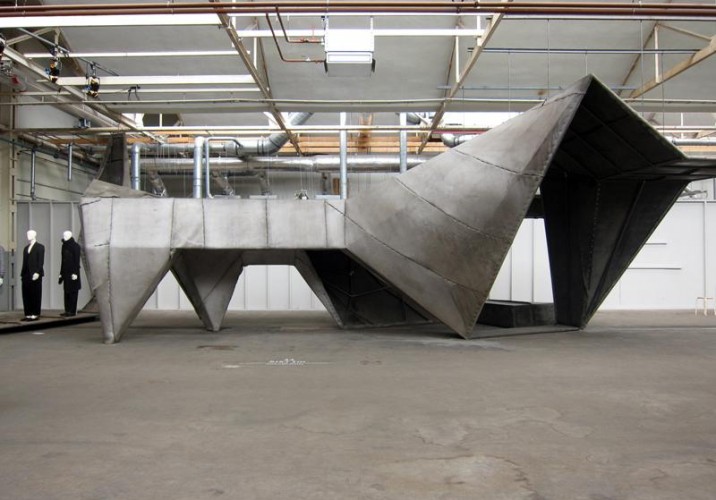
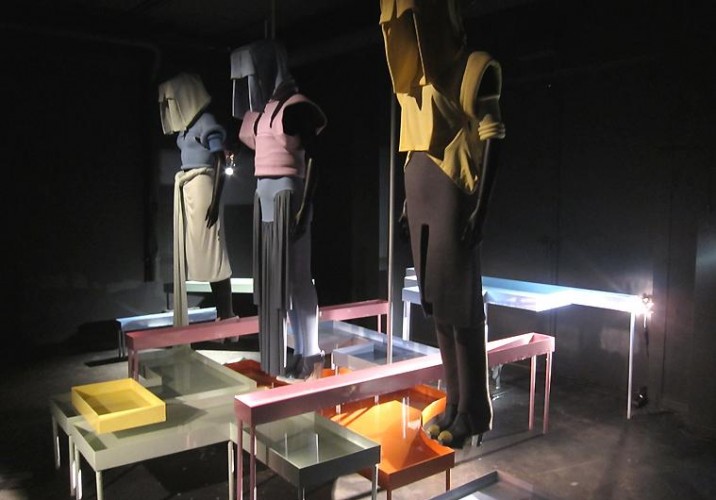
At the Biennale exhibition, top designers were invited to create site-specific installations, many collaborating with architects and artists. On a tour of the show, creative director Joff revealed details like how this concrete-infused canvas structure by Winka Dubbeldam and Siki Im was inspired by the structure of men’s jackets.
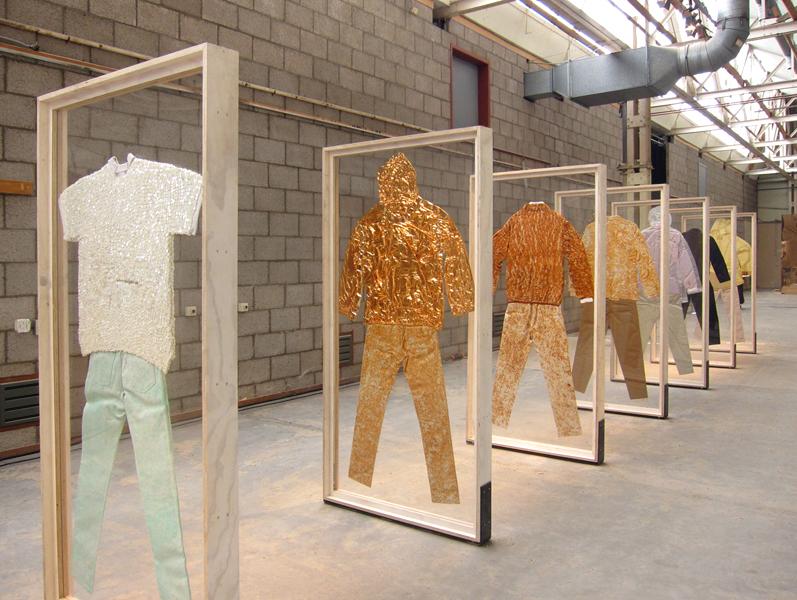
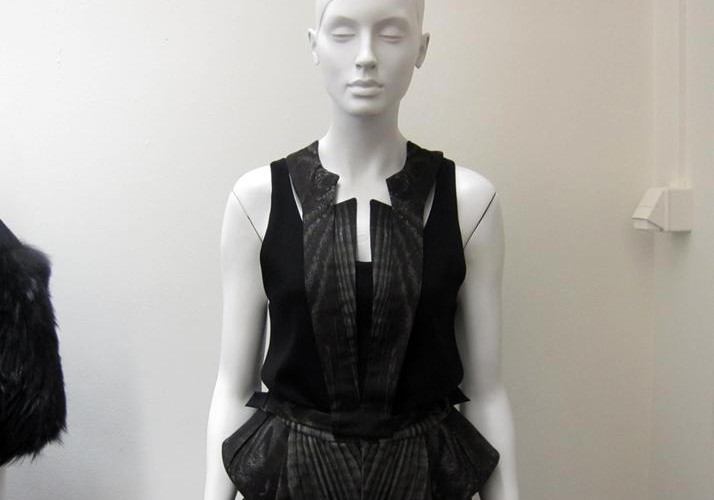
The third outfit from the left in this piece, Patrick Ervell’s, features a jacket punched through with thousands of rusty staples, then paired with pants made from a trompe l’oeil photographic print of the stapled fabric.
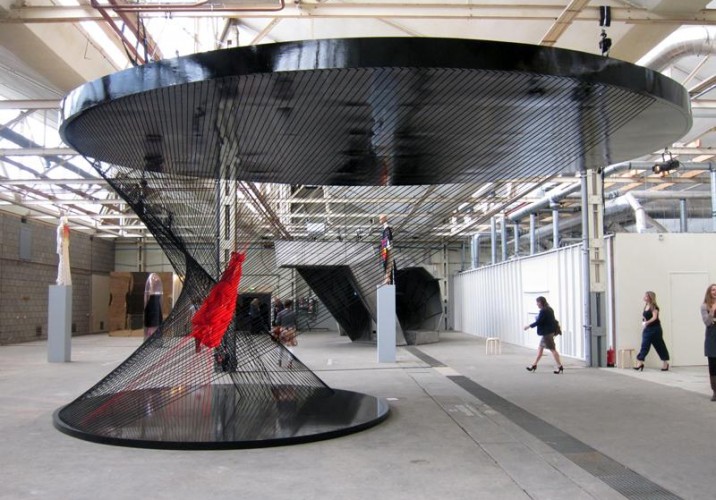
For Threeasfour, New York architect Christian Wassman created this string sculpture with a red dress caught in its web. Behind it to the left is Anne Sophie Back’s 7-foot-tall Plexiglas dildo, which she nicknamed the “fuck machine.” Apparently it was difficult to fabricate, but Back persisted until Joff’s team found a way.
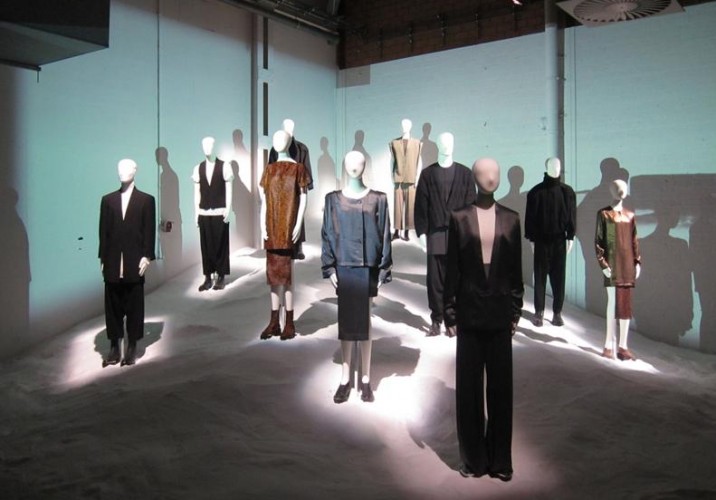
According to Joff, Damir Doma was the only designer to accept the challenge of using one of two materials offered gratis by the show’s sponsor, Akzo Nobel — house paint and salt. Doma created a “white desert” using hundreds of pounds of the latter.
My favorite discovery here was the multi-disciplinary Swedish collective Noman, founded in 2010 by fashion designer Selina Parr, product designer Rosa Roozen, and production designer Lara Tolman. Parr and Roozen both studied at ArtEZ.
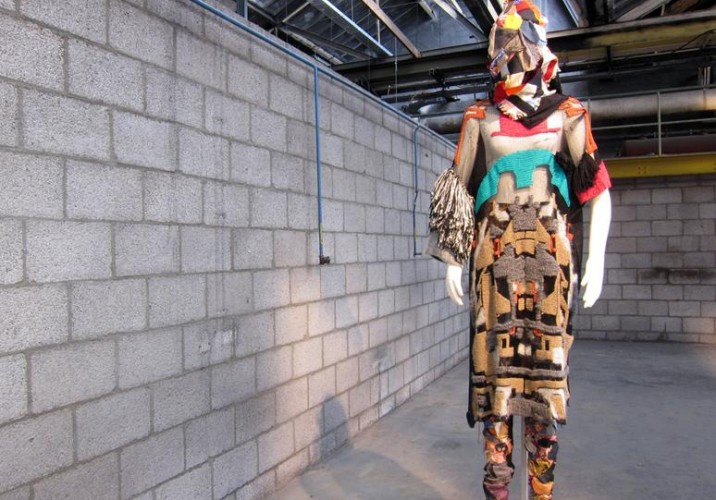
Someone I’ve had my eye on for months, on the other hand, is Jenny Postle, who wowed in the Central Saint Martins graduate show in February and chooses yarns based on what she thinks looks “a bit peculiar and weird.”
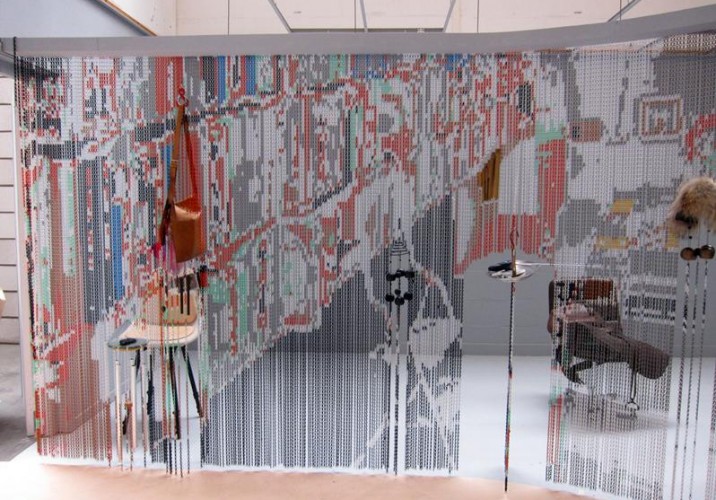
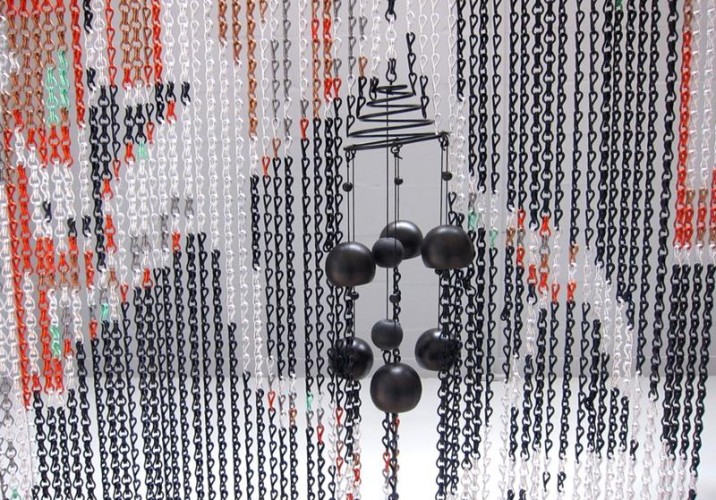
The Bless installation had a great backstory: Apparently the designers originally wanted a rope curtain, but when the fire marshall showed up and held a flame underneath it to test its fire safety, it literally began to melt. Joff had to source a Spanish company who could remake the piece out of metal, post-haste.
Nestled in a section of the curtain was this small mobile, which of course I had a soft spot for.
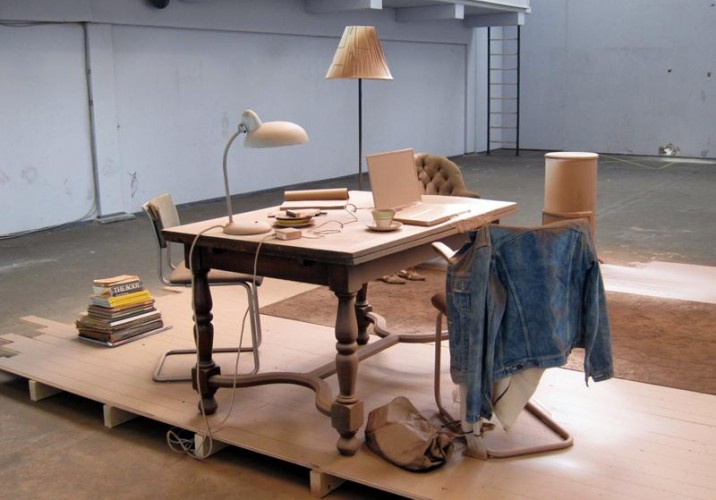
Another great backstory: Illustrator Amie Dicke rounded up possessions she’d been living with many years earlier, when she first decided to work in fashion. She arranged them into a tableau under sprinklers loaded with 100 liters of foundation makeup, sponsored by L’Oreal, then rigged it to rain every 15 minutes.
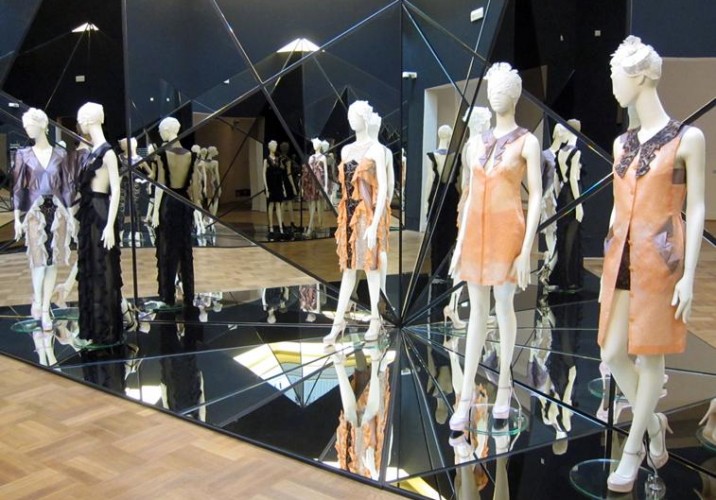
All the way across town, Arnhem’s jewelbox of a modern art museum was hosting two fashion-related shows for the occasion, the first a retrospective of Dutch twins Spijkers en Spijkers with exhibition design by the crazy-talented Maarten Spruyt and Tsur Reshef.
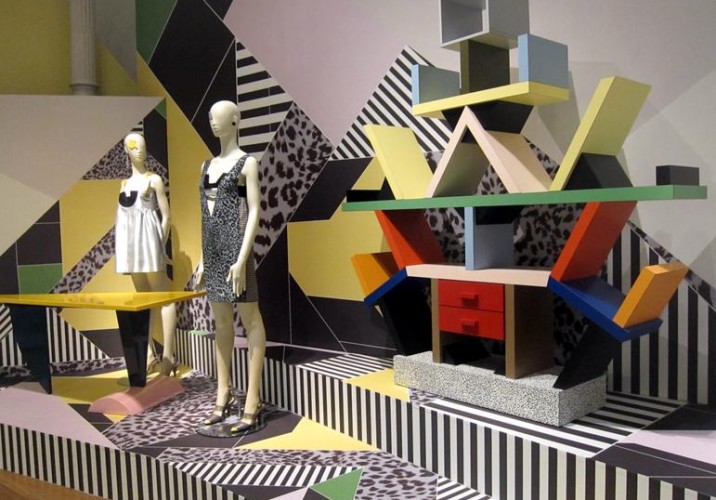
One of the rooms featured a collection of dresses from 2008 directly inspired by Memphis design, complete with one of Ettore Sottsass’s Carlton bookshelves on-site.
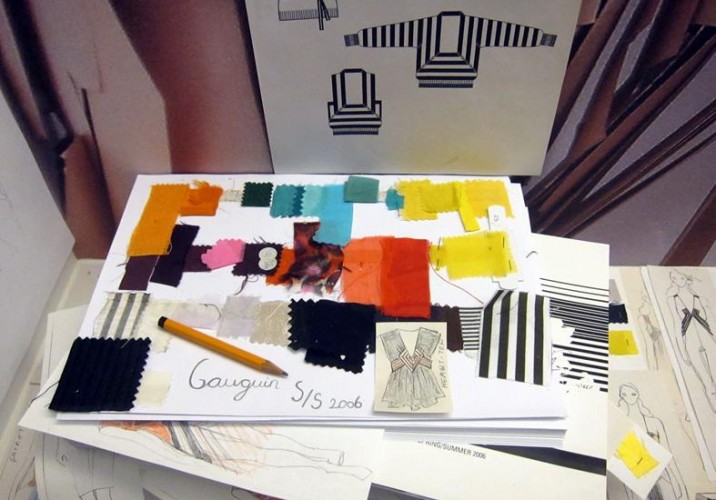
In fact, many of their seasons spring from a single primary influence, and vitrines around the perimeter of the show teased out the development of those themes, like drawings and swatches inspired by Gauguin.
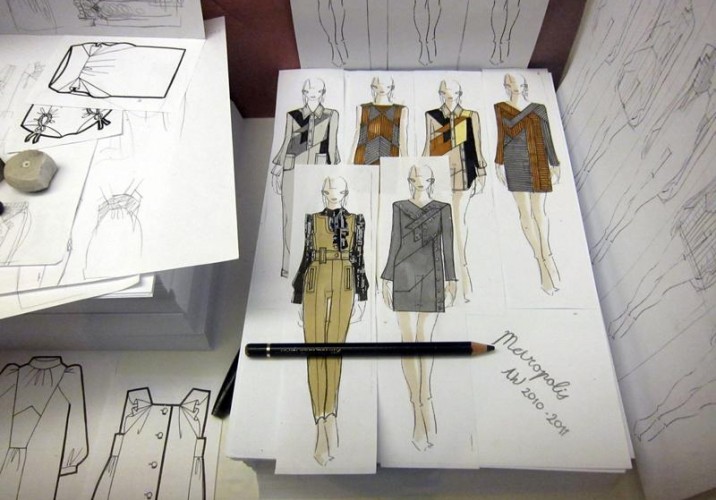
More finely tuned drawings from a 2010 Metropolis collection, which featured a lot of strong shapes and metallic fabrics.
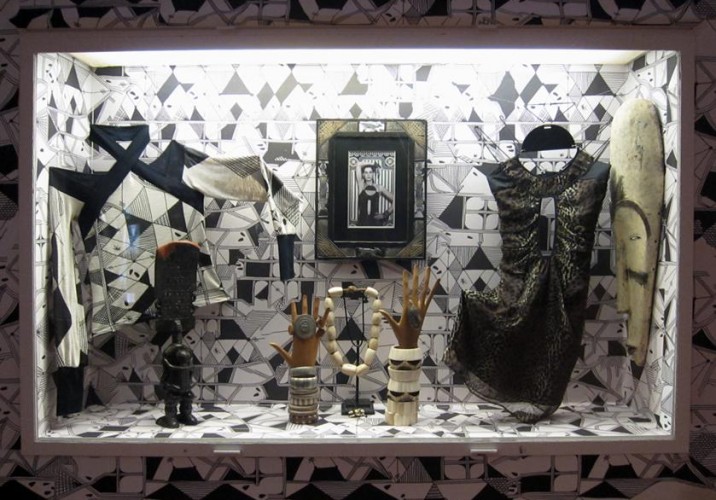
A geo-tribal vibe inside another vitrine.
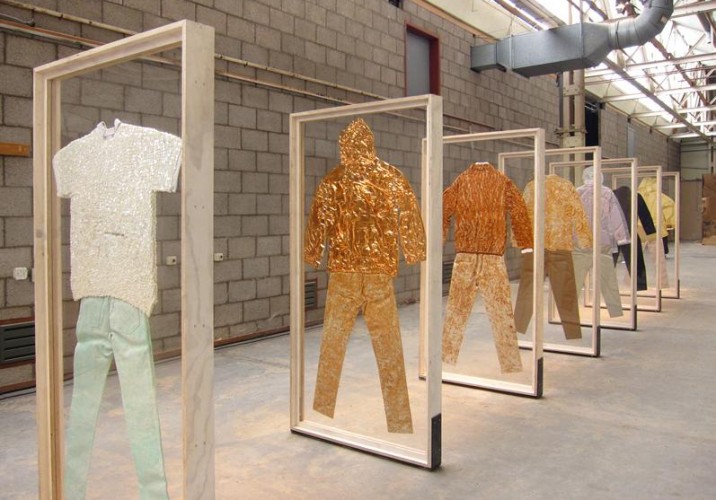
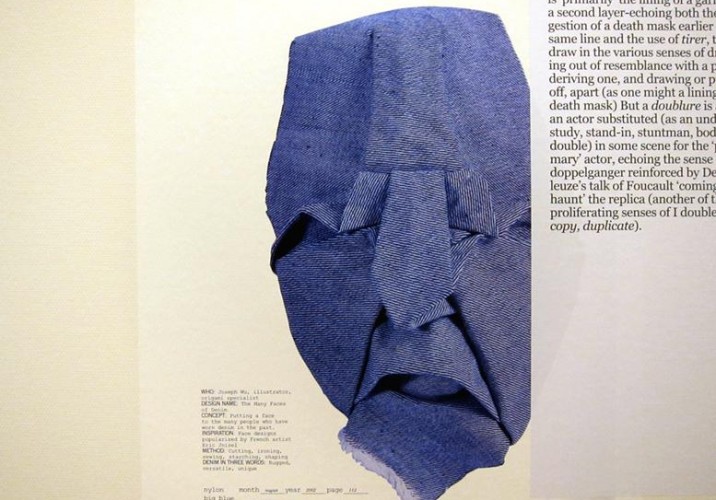
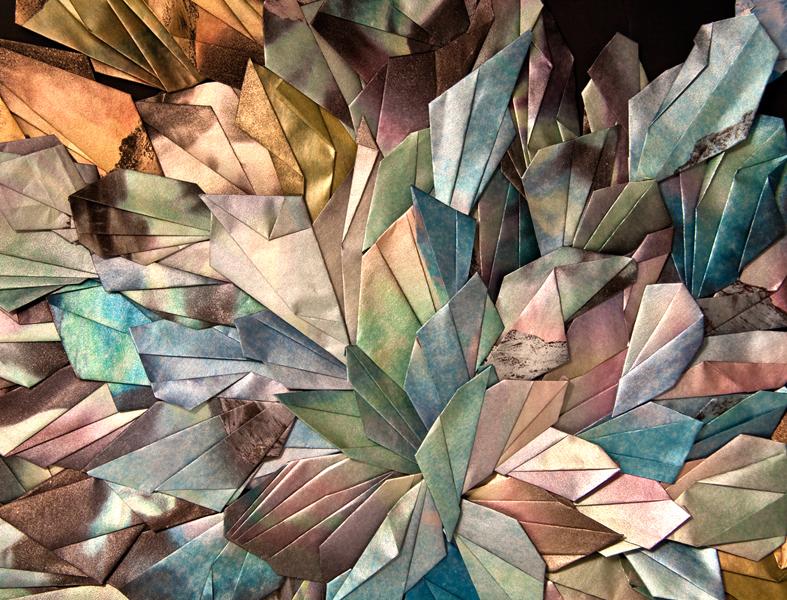
The other exhibition inside the museum, whose theme I failed to grasp, turned up this little gem by illustrator and origami artist Joseph Wu, whose 2002 “Many Faces of Denim” project was the result of a denim invitational he participated in for Nylon magazine.
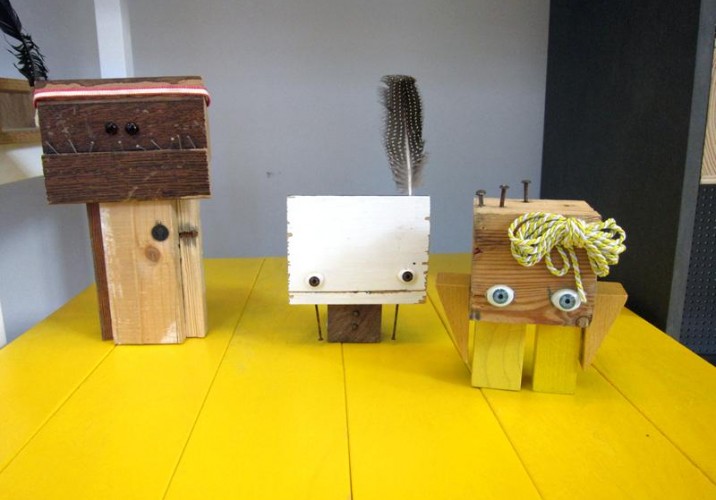
Though I got lost and couldn’t find what seemed like a cool pop-up installation in town by the People of the Labyrinths, I did check out the permanent concept shop Coming Soon, where I spotted these funny “Woody” dolls by Tweelink (along with a host of more sober designs).
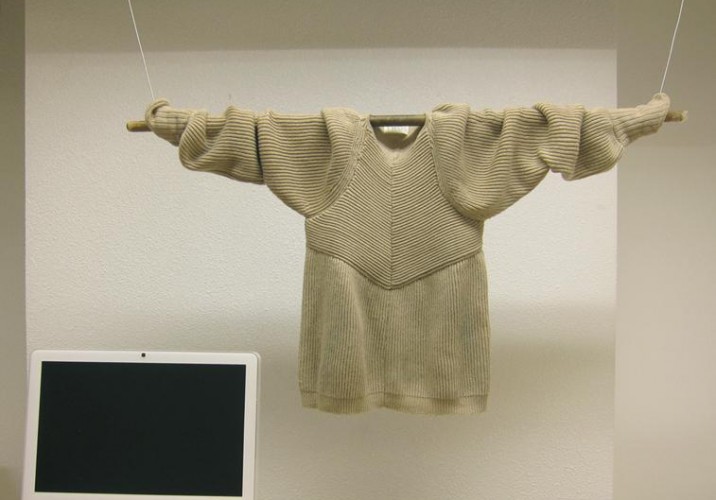
One pop-up I did catch was Workshop, developed by ArtEZ students. This sweater wasn’t so exciting to look at, but it turned out the designer used Mongolian cashmere, then actually took it to Mongolia, where she had a child jockey wear it in a ceremonial horse race. The dirt and sweat of racehorses are said to bring luck in the region.
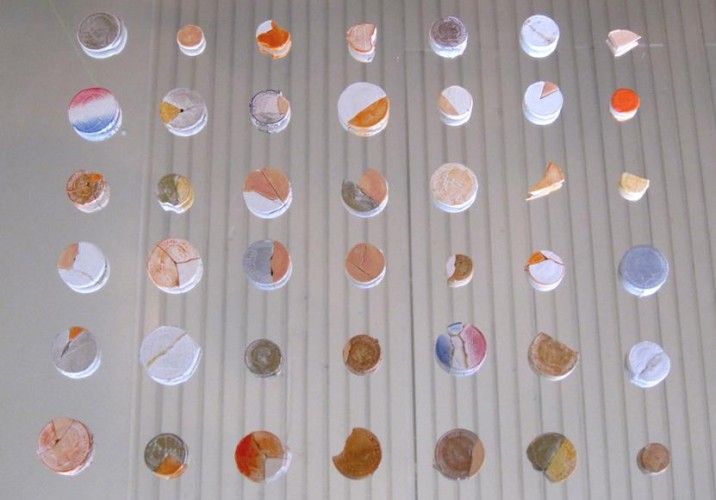
At a related show of ArtEZ product design students’ work, a set of beautiful ceramic coins by Luuk Wiehink stood out.
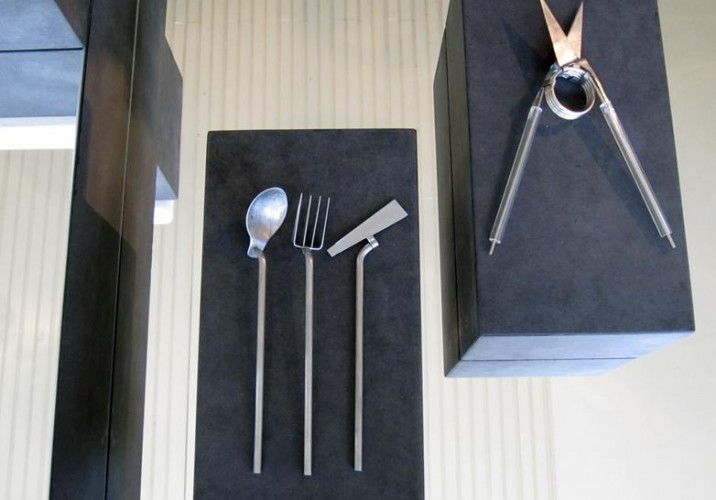
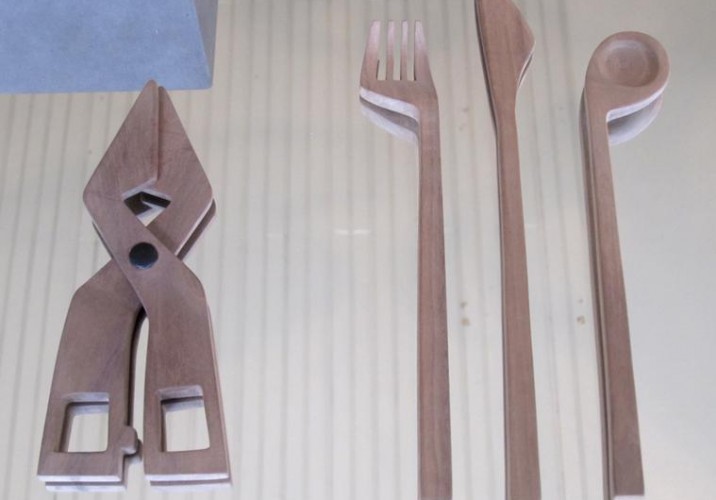
Wiehink also made this set of utensils and scissors, which bear resemblance to outdoor tools (pitchfork, pruning shears, hoe, etc).
Another student, Angela Donkers, made a separate variation on idiosyncratically shaped utensils and scissors, but out of wood rather than metal.
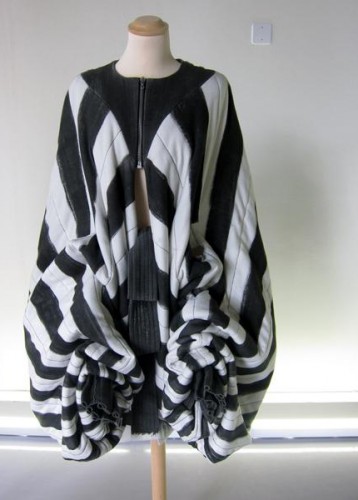
Finally, at the same show, a basset hound of a jacket by Christina Engsing, a first-year ArtEZ fashion student whose work I hope to see more of.
What Iceland may lack in sunshine — getting, on average, less than half the amount of rays New Yorkers enjoy annually — it easily compensates for in natural beauty. When it's light outside, the landscape is an almost otherworldly sight, with blackened crags of lava softened by bright heaps of moss and glaciers melting into never-ending expanses of steel-blue sea. When it's dark, there's a symphony of northern lights to behold. With all of that visual stimulation surrounding them it's no wonder Icelanders are aesthetically gifted, with a fashion sense that rivals Stockholm's in its cacophany of colors and textures and a community of designers that needn't look further than their own backyards for inspiration. When Sight Unseen was invited to Reykjavik this past weekend to attend the opening of Iceland's third annual DesignMarch festival, that was precisely what struck us most: Whether the work we saw directly referenced the country's landscape and culture or just told a story about its current state of affairs — as with one designer we met who had to shutter her architecture practice after the bank crash and start anew — the show felt like a singularly local celebration.
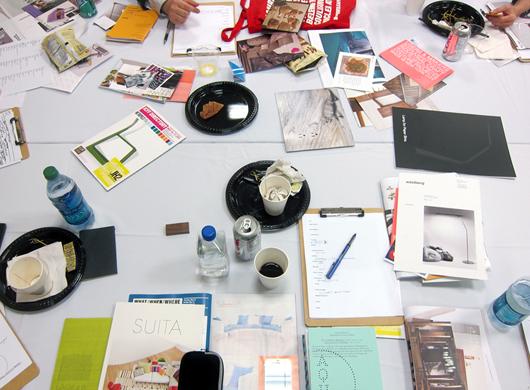
If you've been paying attention, you know by now that the Sight Unseen team spent nearly all of New York Design Week this year holed up in an abandoned lumber building, manning our very first pop-up shop and attending to all the talents we had on board for the second Noho Design District. Did we experience the rest of the weekend's offerings to their fullest? Not by a longshot. But we couldn't quite move on without offering readers some kind of behind-the-scenes take on the festivities, so we enlisted the help of two friends whose viewpoints we trust entirely and asked them be our eyes and ears: Sam Grawe, the endearingly burly editor-in-chief of Dwell, and Felix Burrichter, founder of Pin-Up magazine and local man-about-town. Grawe offered us a mini-photo album of insider moments he particularly cherished — including the back room at the Javits, pictured above, where "judging the Editors Awards requires collateral and fluids" — while Burrichter made us a list of his top 10 (er, 11) highlights from this year's show, perhaps the next best thing to cloning ourselves. See things their way right here.
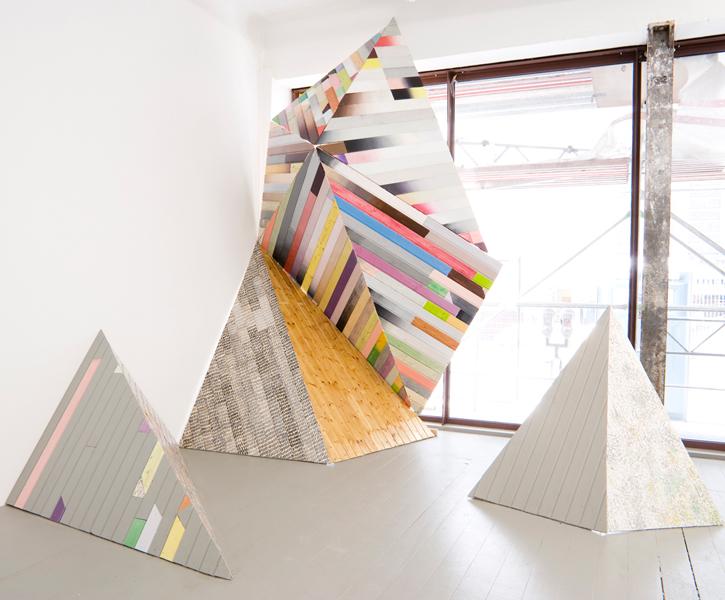
When Hamburg-based artist and textile designer Katharina Trudzinski decided to take a second residence in Berlin this spring, she found an inexpensive live-work space on the fringes of the up-and-coming Neuköln neighborhood — the city’s equivalent of Bushwick, Brooklyn — and saved two months’ rent by promising the landlord she’d renovate. But it was imagination, not thrift, that inspired her next move: After stripping the wood paneling from the walls and ceilings and tearing down a few ill-conceived door frames, she began painting the detritus and incorporating it into her sculptural installations and high-relief paintings. Made from constellations of scraps, street finds, and everyday junk cloaked in perfectly calibrated hues, her work — some of which becomes inspiration for the pieces in her clothing line — is meant to dialogue with its surroundings. “It’s not my intent that the materials should be cheap, I just like to use things that are around me,” she says. “I like to start with what I’ve got.”