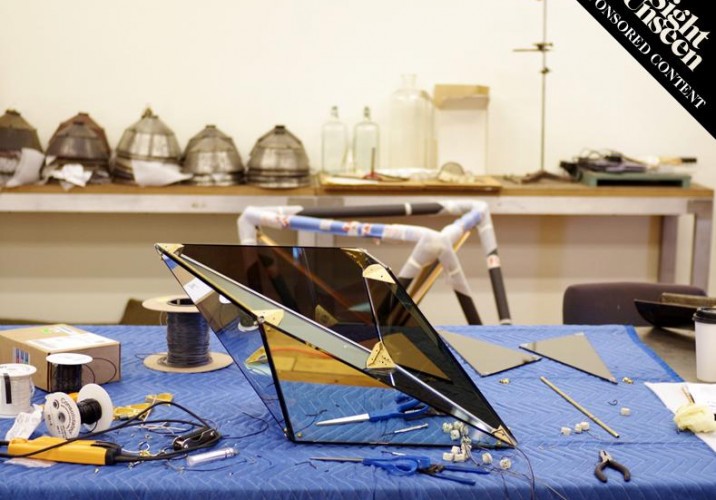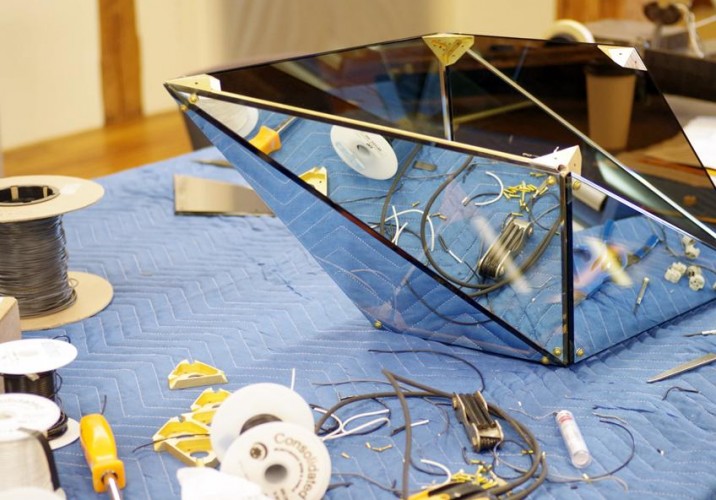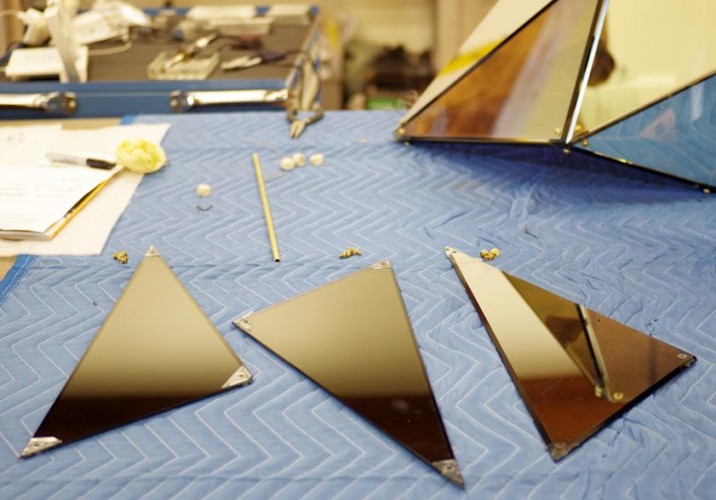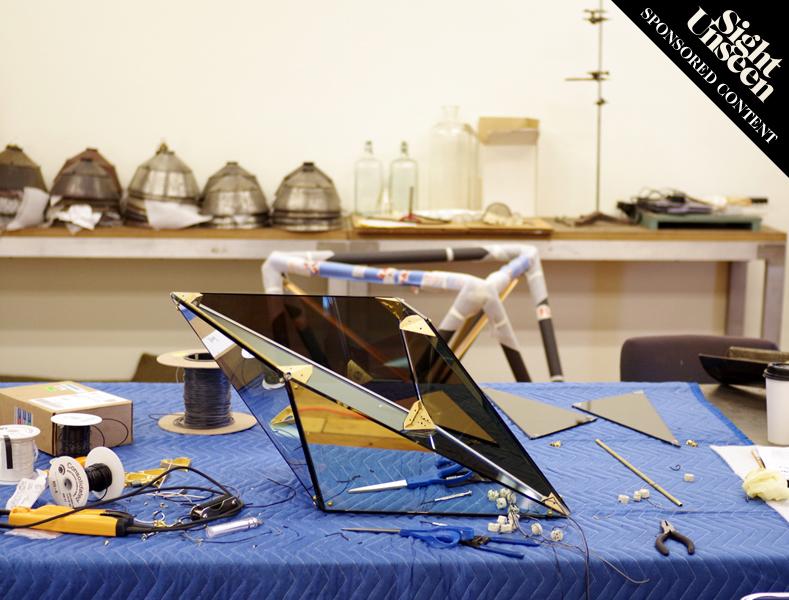
In September, lighting designer Bec Brittain moved her studio into the E.R. Butler headquarters, where she’s been developing new works like this Maxhedron fixture. Made from panels of two-way mirror, it launched last week at the Architectural Digest show; switched on, its internal LED lights are reflected ad infinitum.

“It’s taking a simple material that’s not new or high-tech and trying to use it in the best way possible,” explains Brittain. “When it’s turned off, it’s a solid form reflecting its surroundings, so it disappears. Lit, it really disappears, but you have the constellation effect of the lights, so in all states it’s doing two things at once.”

Because of the way Maxhedron is constructed, mirror panes with rapid-prototyped connectors, its design is totally scalable: Both its shape and its material could be altered. “It could be a floating white cloud hedron, or regular glass,” Brittain says. “Part of my thing — which I don’t do deliberately — is creating systems.”

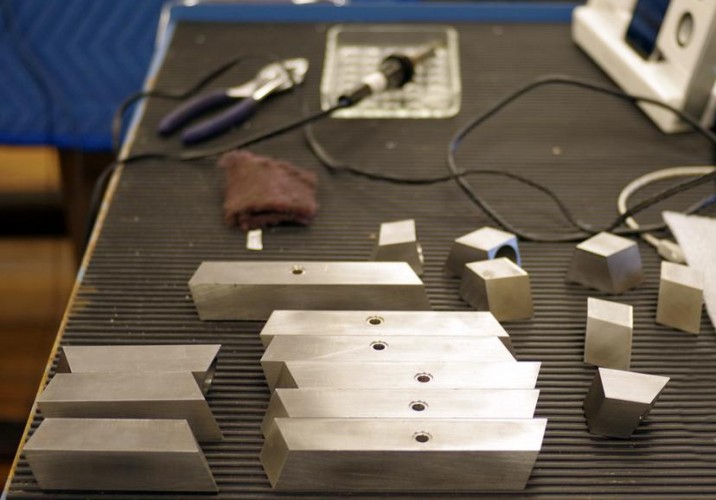
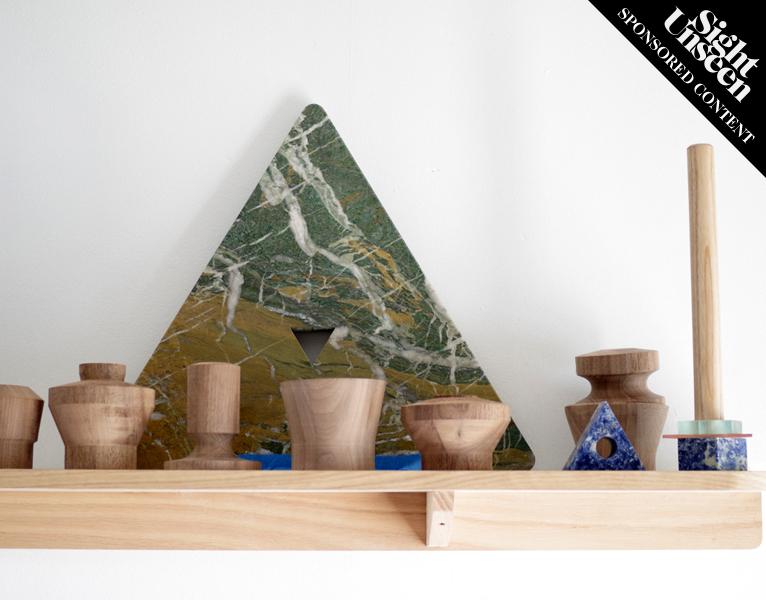
Another new piece that’s built as a system is a candlestick we’ll be featuring on the site separately in the coming weeks. Its parts, shown here, are magnetic; they stick to one another and can be added to or reconfigured at will.

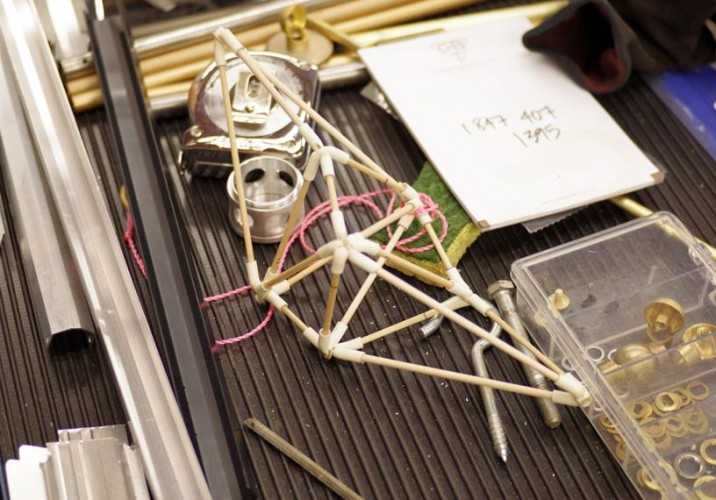
A baby model for one of Brittain's Shy Lights, a series of modular fixtures consisting of LED tube lights arranged in crystalline forms.

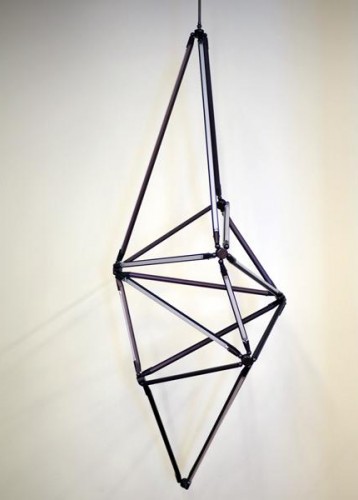
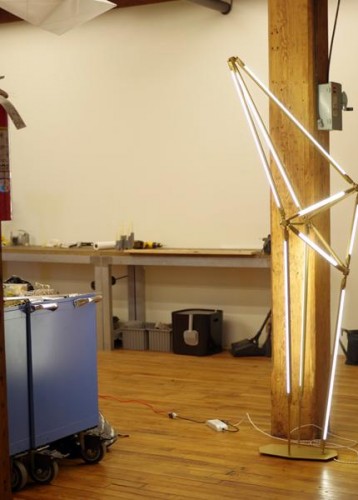
The Shy series began with chandeliers, but Brittain has been working on new forms. “They’re all constructed with the same hardware, and I have 8 million ideas about how to use it in ways that don’t look anything like what you’ve seen so far,” she says.

“It takes awhile to get around to trying all of them," she adds. The light's two most recent iterations, also launched at the Architectural Digest show, include this standing version.

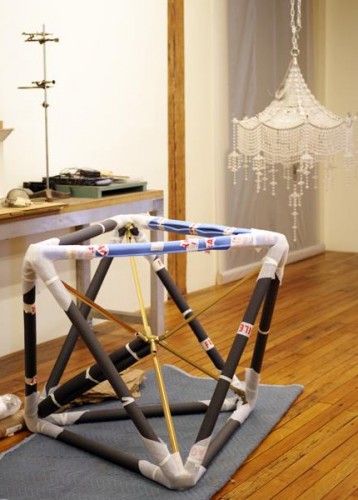
The other is the Polyhedron, which was all packed up in preparation for its debut the day we visited. Hanging incongruously in the background is an ornate crystal chandelier, property of Rhett Butler.

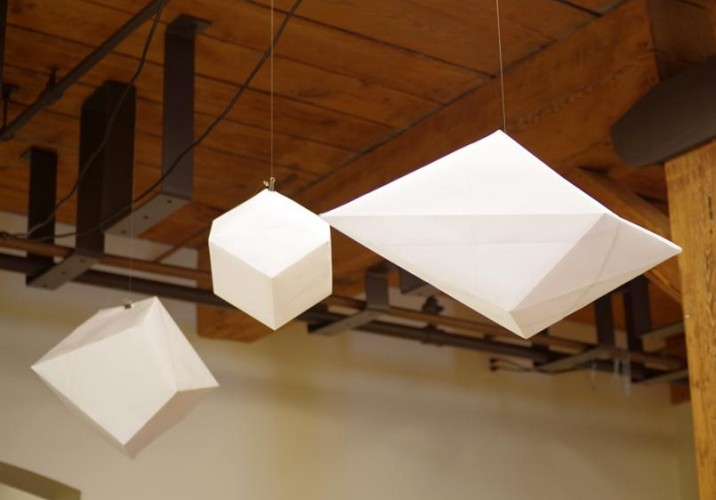
Paper models for the Shy Lights. For now Brittain does all of her designing, modeling, and assembly by herself — no interns or assistants. She listens to books on tape as she works for entertainment. “My current favorite is David Attenborough’s memoir,” she says.

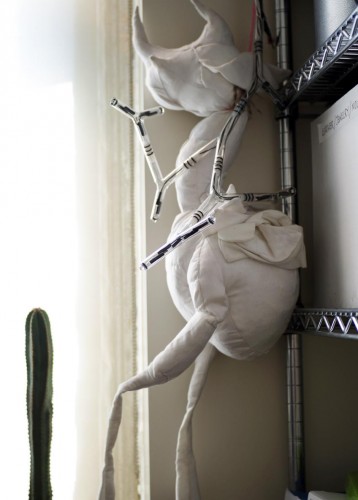
Vestiges of past projects: a stuffed animal bug, and one of her Glass Branches made from scientific glassware and LEDs.

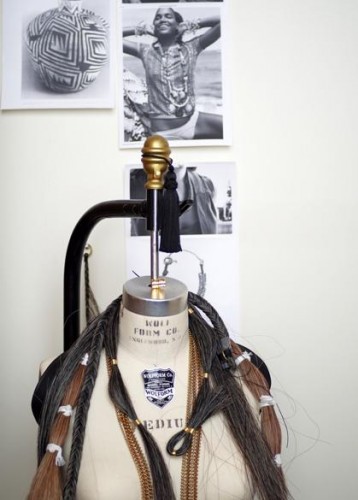
Brittain also makes jewelry, of course, and these bundles of horsehair are destined for a private commission, still in its earliest stages.

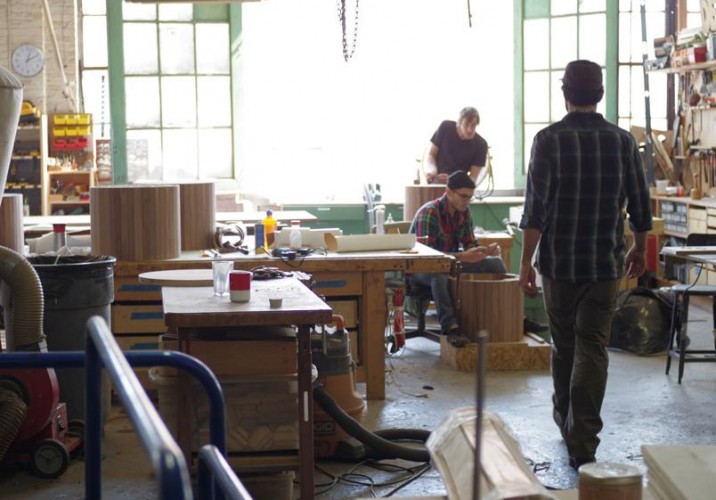
Down the street is Uhuru's 10,000-sqft. workshop and studio, which Sight Unseen visited back in 2010. The designers weren't yet working on their new line for ICFF, but the workshop is constantly busy churning out existing pieces which still sell extremely well, like the Stoolen, pictured here. Google just ordered a few dozen for its offices.

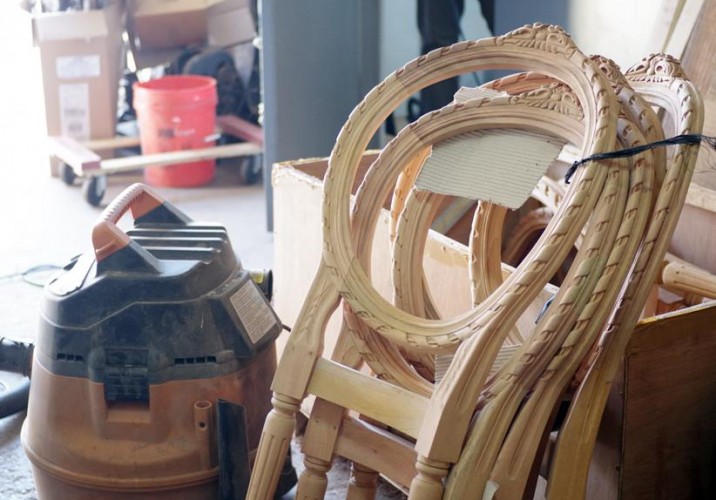
Founding designers Bill Hilgendorf and Jason Horvath had just gotten back from Indonesia, where they found a carving village turned furniture mecca capable of producing their Standard Chair, formerly a limited edition (pictured, the finished hand-carved samples).

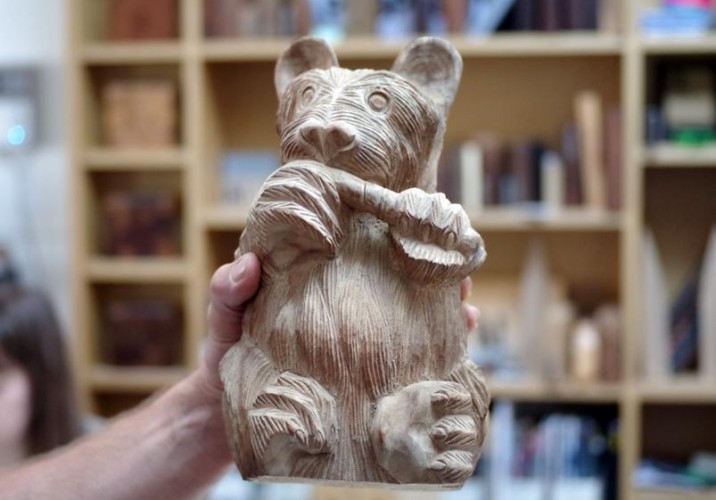
They also found fodder for their newest line of reclaimed furnishings — a 60-foot wooden boat that washed up last monsoon season, which they broke down and shipped home — and this odd $3 souvenir. “We don’t know if it’s a badger playing a flute or a woodchuck with a carrot, but we like the texture and wanted to see if the carvers could reproduce it.”

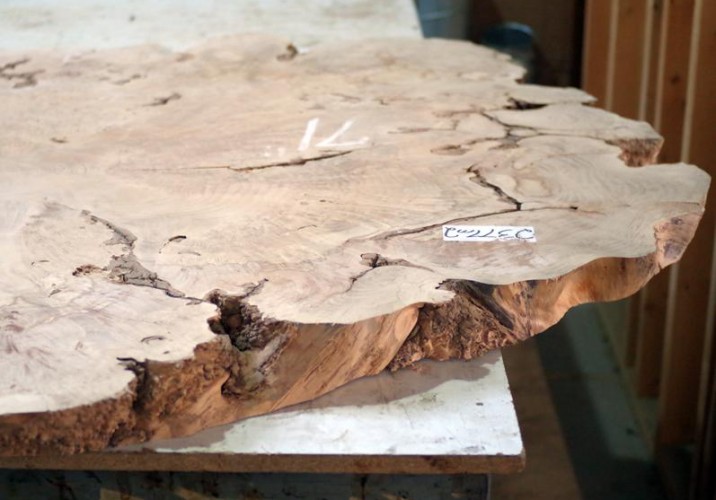
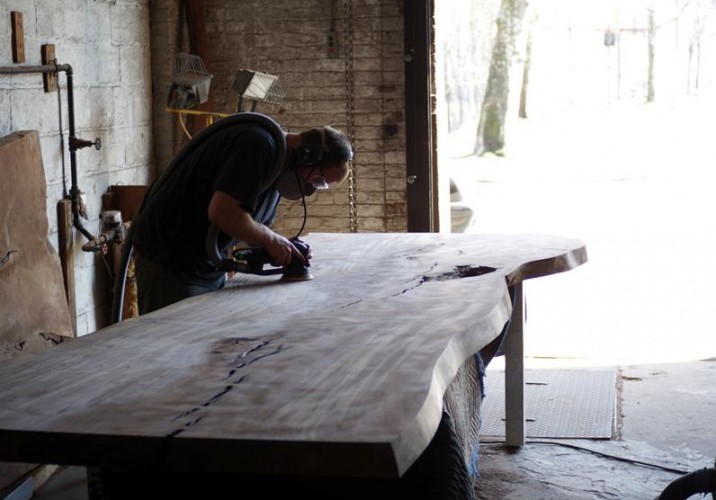
In addition to the chairs, Horvath and Hilgendorf will be producing a line of some 20 new pieces in Indonesia, under a new offshoot of the company that's still hush-hush for now. It’s one more evolution in an operation that spans everything from fabricating massive steel coffee tables for Miami lofts to slab-table commissions like the one this maple-burl slice was bound for.

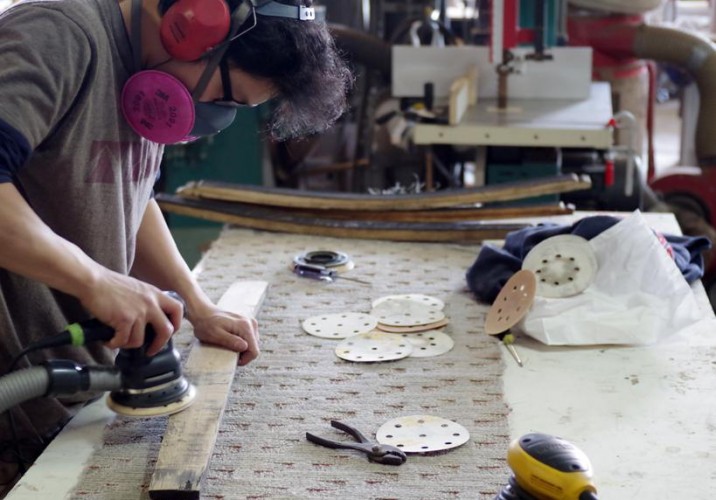
An Uhuru workshop staffer sands down old bourbon barrel slats, which will become the seat of one of the studio’s Bilge Lounge chairs, another of their longstanding best-sellers.

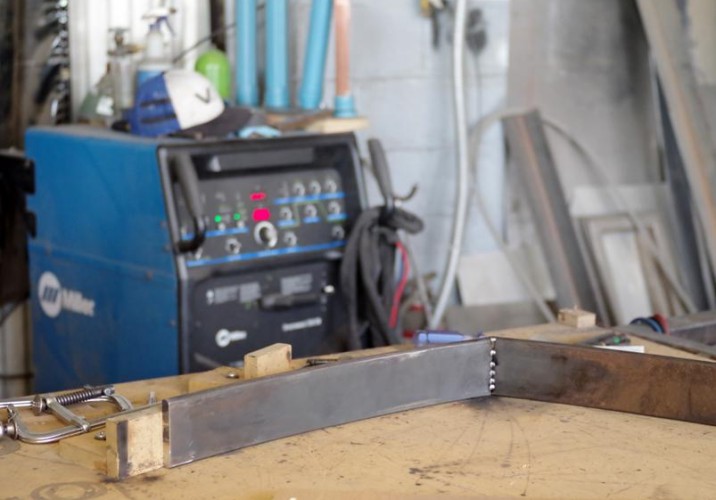
The bases of the Bilge chairs — one of which was about to be welded here — are made from leaf springs reclaimed from New York City fire trucks.

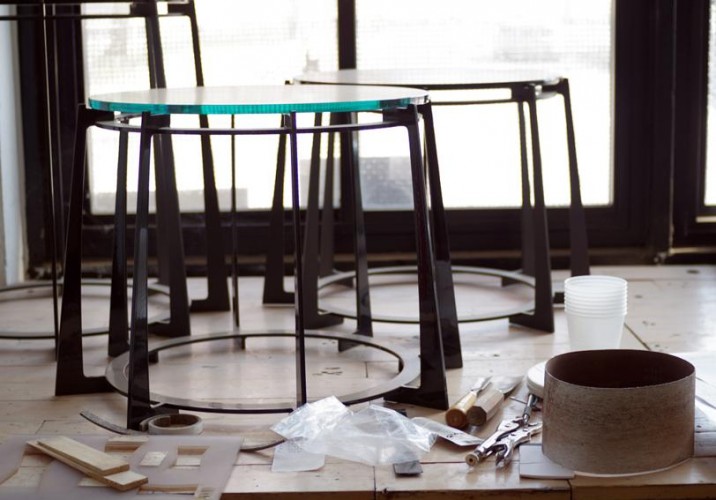
Production versions of the War Craft end tables Uhuru launched in the Noho Design District during last year’s New York Design Week, first made in an edition of 20 from teak from the deck of a decommissioned U.S. battleship. Now in black steel, the tables’ diameters reference the size of shells once carried by the ship.

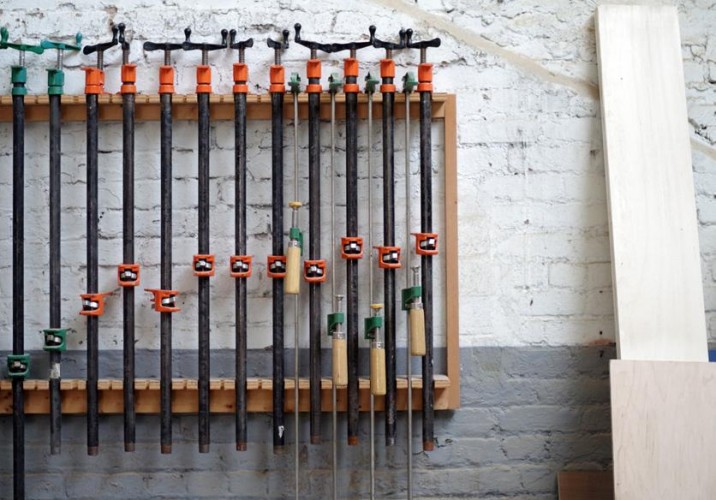
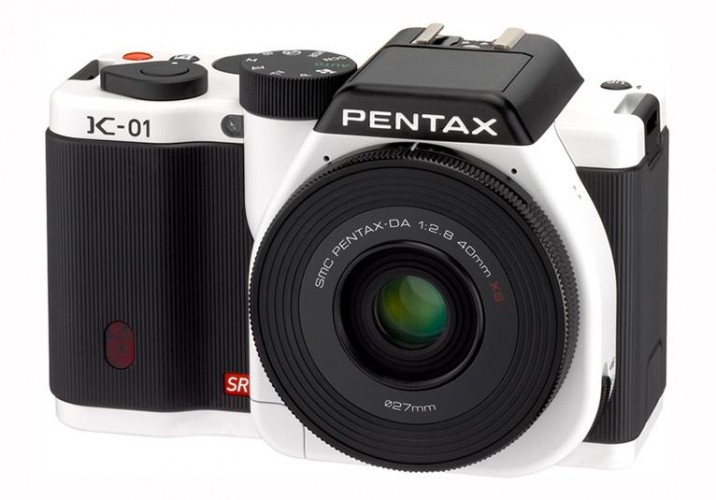
We shot a photo of these saws the last time we visited the Uhuru studio, but decided to revisit some of the same sights with our Pentax K-01.

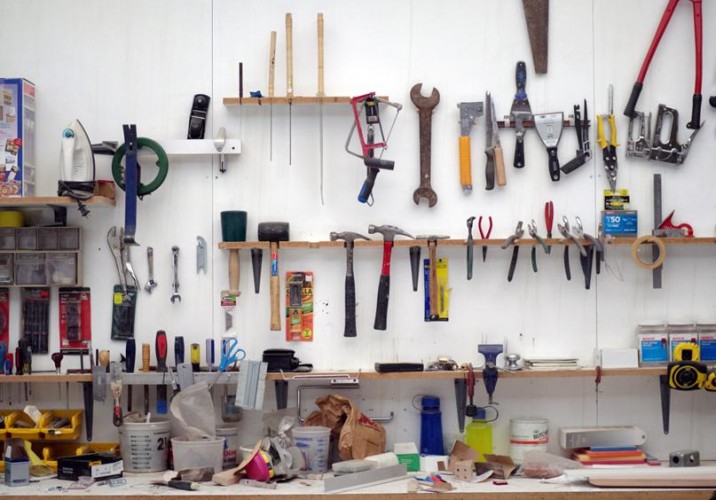
Ditto the designers’ extensive tool wall, some elements of which passed into their hands when they purchased the extensive workshop setup of Christo’s onetime model-maker (who happened to be the father of a friend).

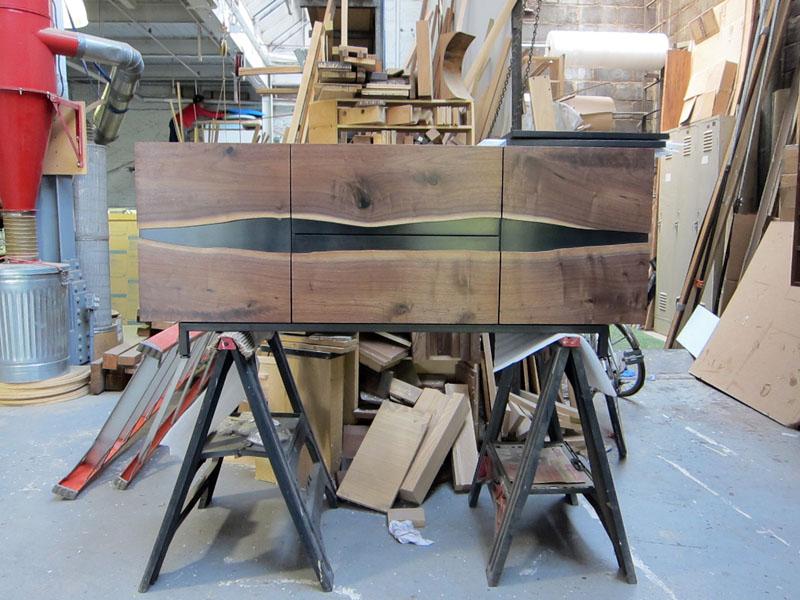
As we left the studio, we spotted another slab table being made, this one for a library in Phoenix. “We do a fair amount of these,” said Hilgendorf. “A few every month.” It wouldn’t be Uhuru without them — or the odd abandoned boat. Stay tuned for a video the designers shot in Indonesia of themselves dismantling the latest specimen, which we’ll screen on Sight Unseen in the coming months.

Follow this link to purchase a Marc Newson–designed Pentax K-01 like the one we shot this story with.