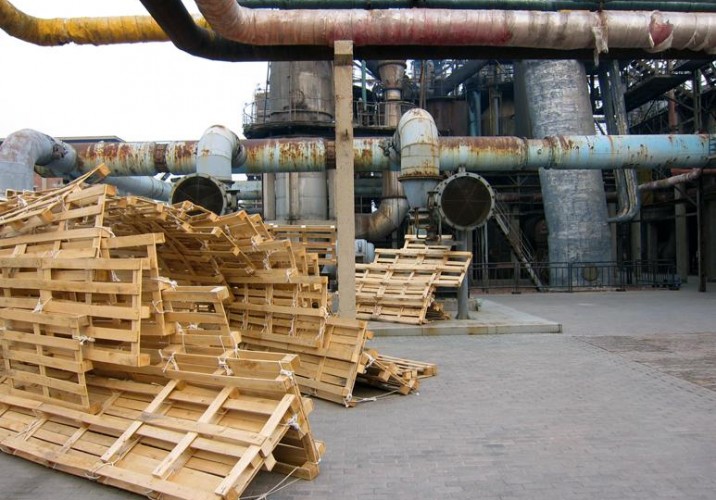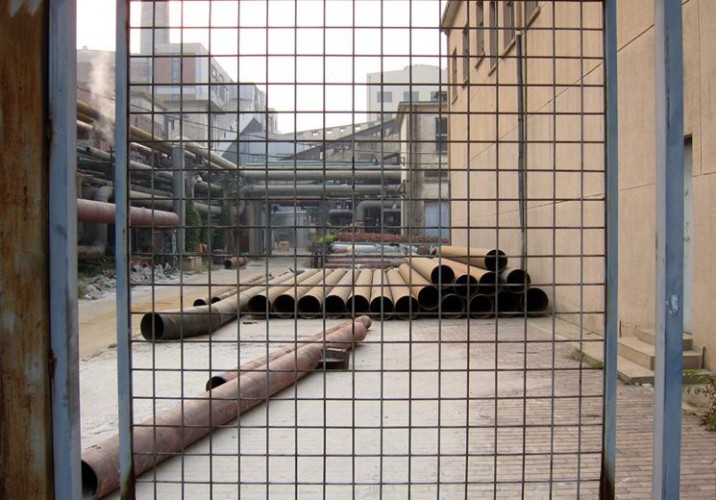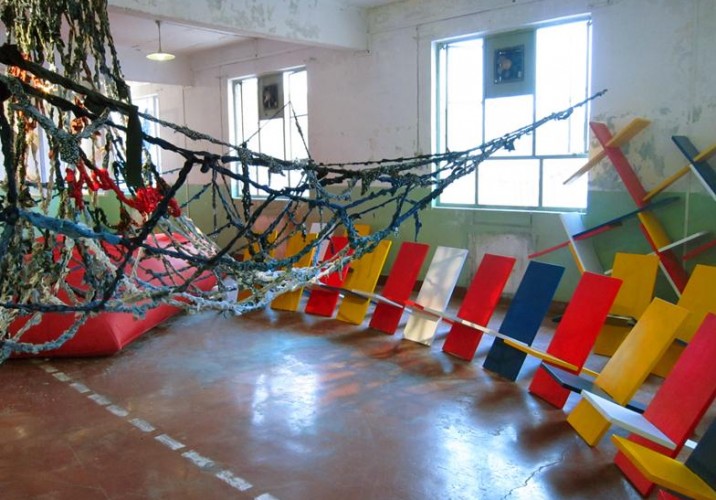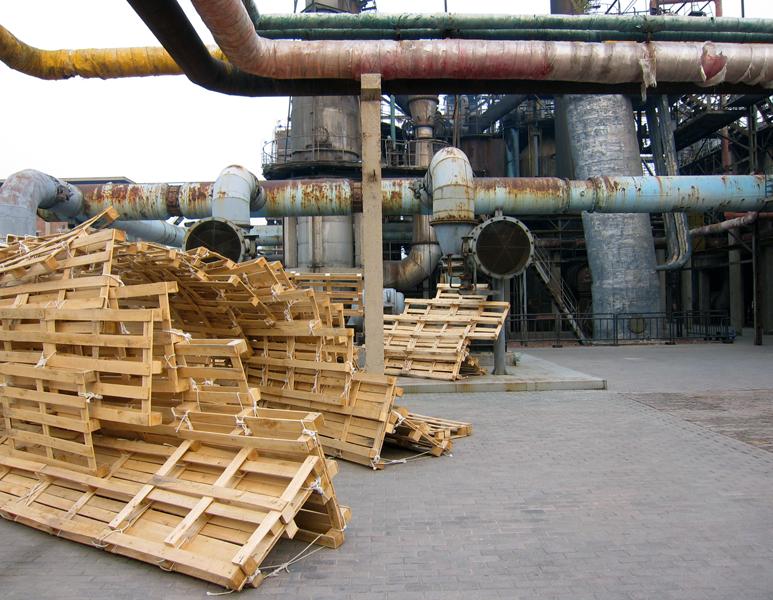
The biggest part of the fair took place at the former gas power plant recently re-christened as 751 D-Park. Next to the city's once-hip 798 arts district, it's dedicated to fostering Beijing's design industry. The wood was part of a larger installation by students from Tsinghua University and the Swiss school EPFL, who went through 600 pallets and 11,500 feet of rope.

The show also included exhibitions by Material ConneXion, Magis, DMY Berlin, AIGA, Elle Decoration, the Dutch organization Premsela, and — believe it or not — SpongeBob Squarepants, who we spotted in the "flesh" hosting a dance party next to his booth one night. Yet we couldn't stop obsessing over the breathtaking industrial backdrop.

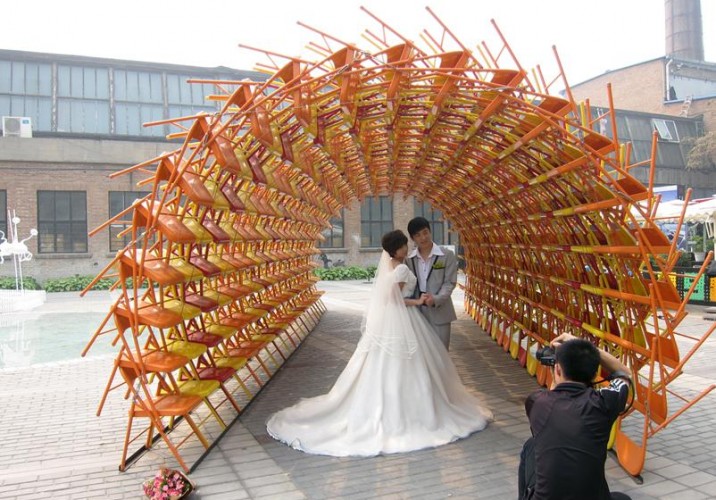
Apparently we weren't the only ones; there were multiple fashion photo shoots going on all over 751 the day we visited. We also spotted this one — which may or may not have been a real wedding photo — being taken underneath a tunnel of chairs which may or may not have been inspired by Martino Gamper's.

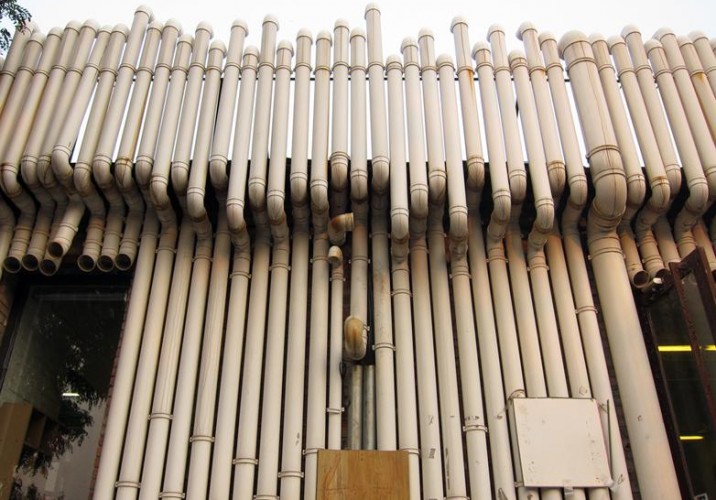
Whoever created this decorative facade outside one of the shops in the neighborhood no doubt took inspiration from all the factory pipes just behind it. It's also possible these tubes were salvaged from the plant itself.

One of the other highlights was this contraption, which seemed to follow us around the park. It was made by a man referring to himself a "kinetic sculptor," but we never got his name — we'll try to update this story on Monday with the answer.

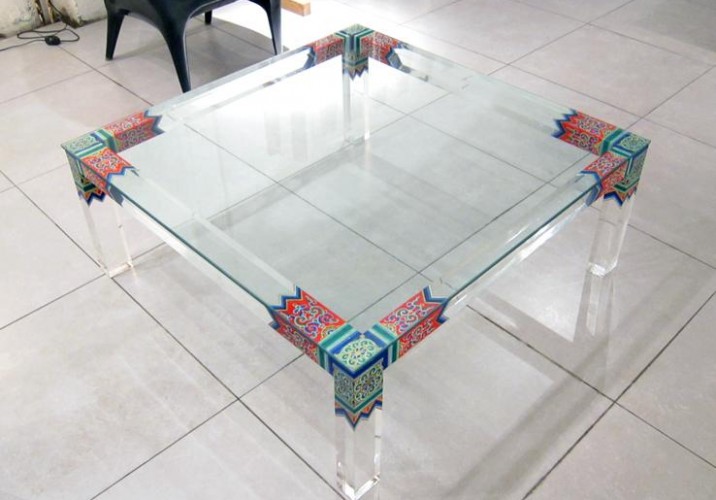
At O Gallery, we saw this table by Zhou Yi Yu, only we weren't able to find evidence of him online; he decorates lucite furniture with hand-painted traditional patterning. We also met a designer named Harrison Liu, who told us about his struggle to create small-batch furniture for a market without much buying power.

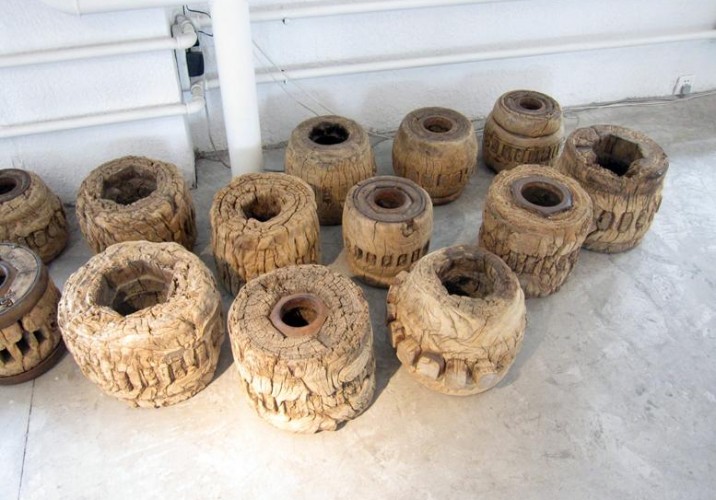
Upstairs in one of a cluster of design agencies hosting open studios during the fair, we spotted these amazing objects, which appear to be wooden factory cogs (and possible future table bases?).

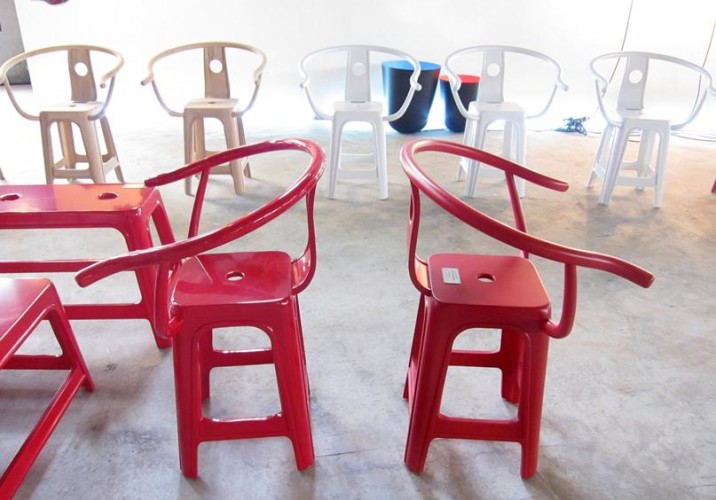
Taiwain-based designer Pili Wu created these resin-coated wood chairs for the Hong Kong furniture gallery ILIVETOMORROW's presentation, which are a mashup of two classics: the Tolix and the Chinese horseshoe chair.

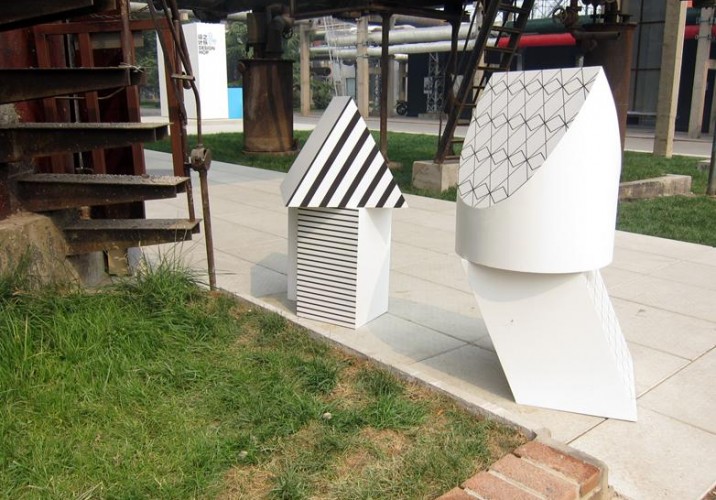
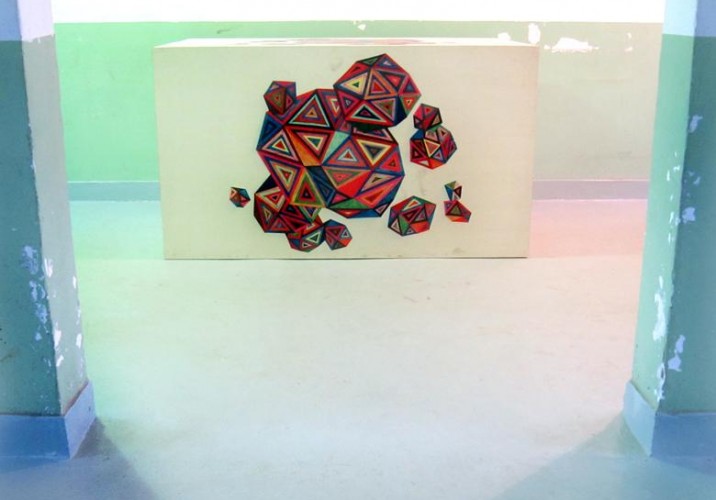
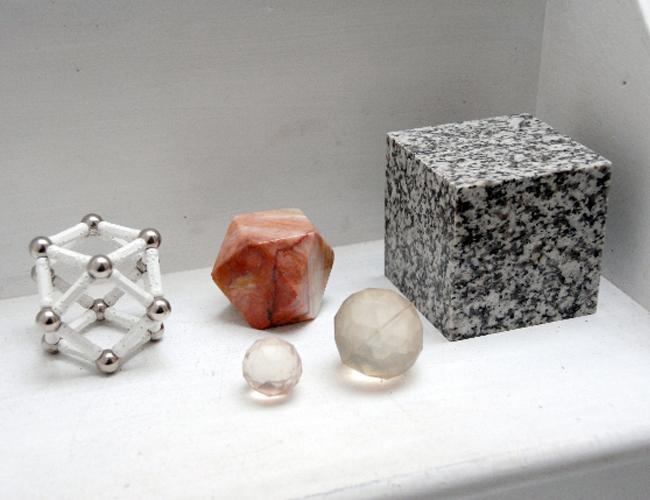
No one else but me seemed to notice these amazing geometric sculptures standing sentry outside Premsela's Dutch design exhibition. They'd make great lawn ornaments.

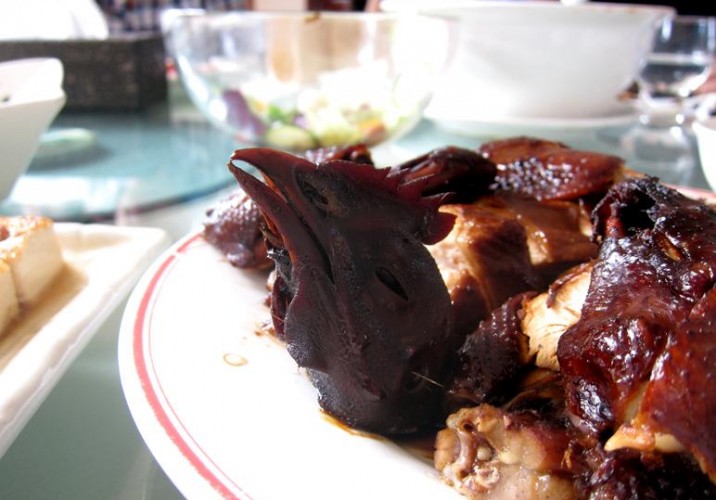
After our tour of 751 D-Park, we sat down to a delicious never-ending lunch with our hosts and a few of the designers participating in the show. This, of course, was my favorite part of the meal — nose to tail, people!

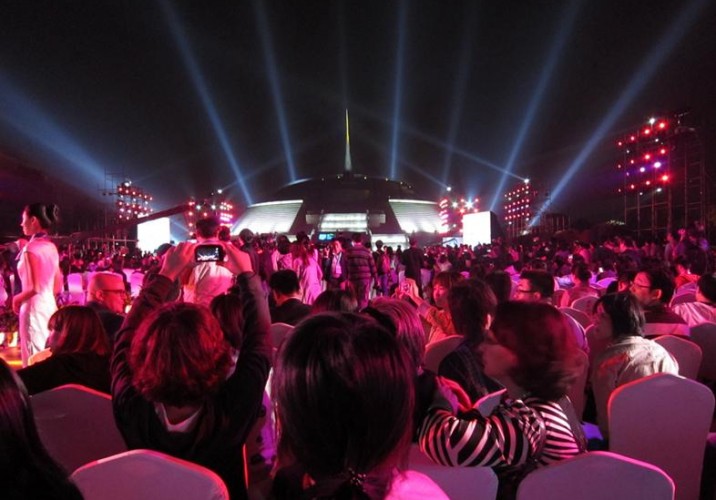
That night we attended the opening ceremony for the entire Beijing Design Week festival and were amazed at the effort and cost that must have gone into this crazy light show. It immediately made the New Yorkers depressed — why doesn't our city treat design week with this much fanfare?

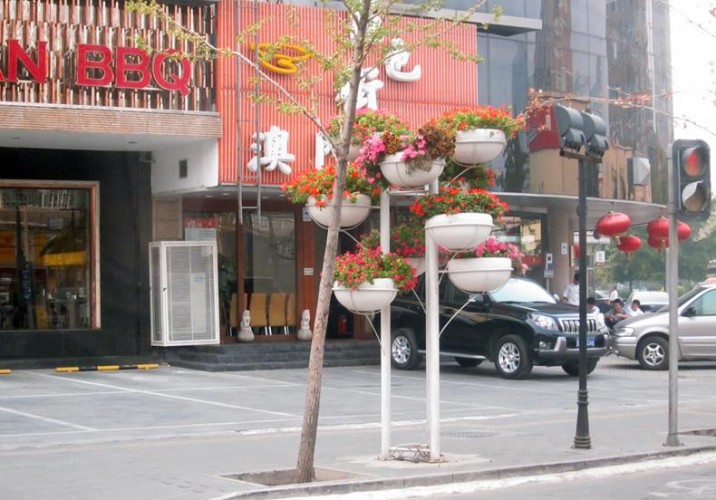
One of many surprisingly design-savvy public planters lining the streets of Beijing, possibly remnants of the city's 2001 Olympic spruce-up.

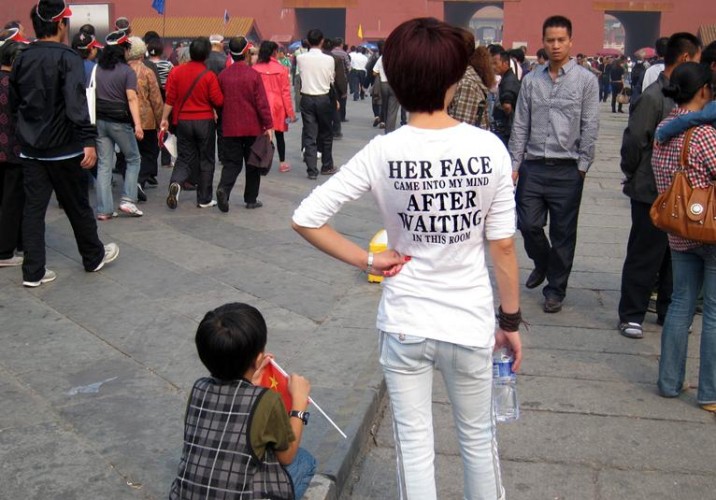
On an obligatory visit to the Forbidden City, I noticed this woman's shirt, at which point everyone in our group started feverishly snapping photos of it. I Googled the phrase just to make sure it wasn't just some song lyric I was confusing for a major lost-in-translation moment, but no such luck.

We also took a few photos of this school class having its picture taken, until one of the girls in the front row ran up to us and begged us to join them. On the upper left in this shot is Walter Bettens, editor of DAMn magazine, while on the right is Paul Makovsky of Metropolis.

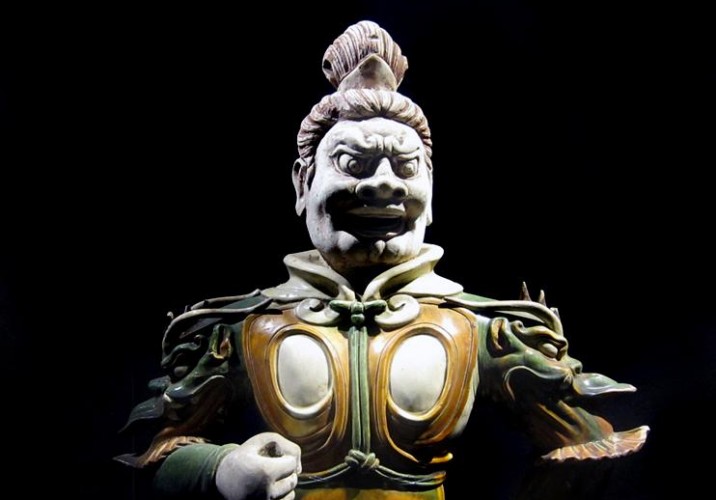
Inside one of the Forbidden City galleries, a figurine of a warrior with an insane facial expression, dating back to the Tang Dynasty in the first century.

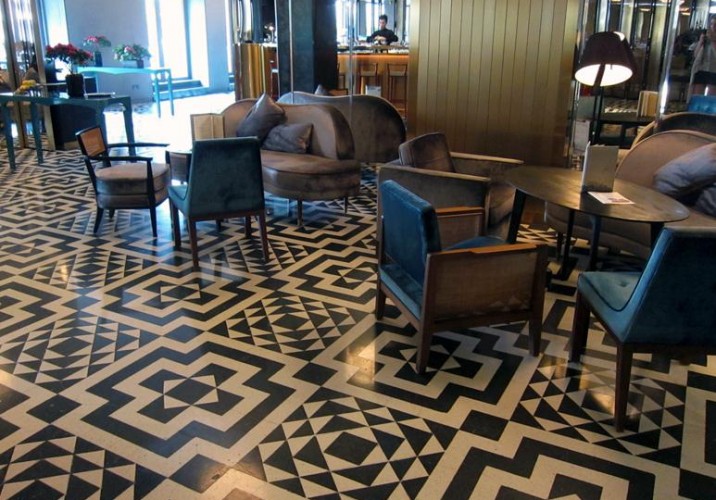
The interior of Capital M restaurant, with its stunning floor tiles. It's the work of two Aussie designers now based in Hong Kong, Debra Little and Roger Hackworth, and I wouldn't mind moving in. (Especially because they serve smørrebrød.)

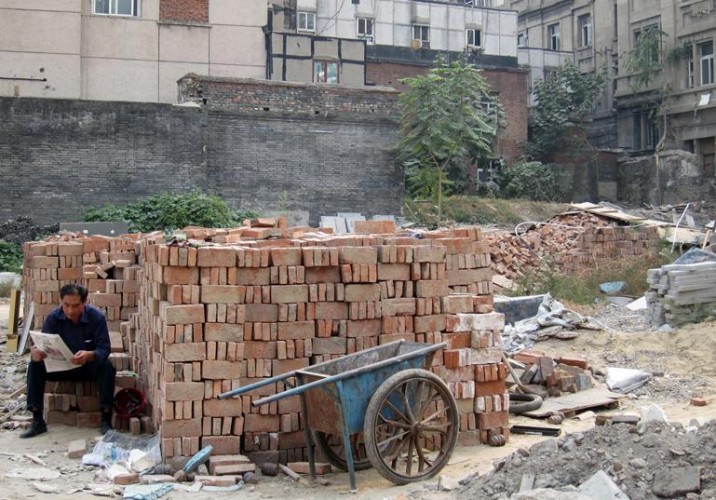
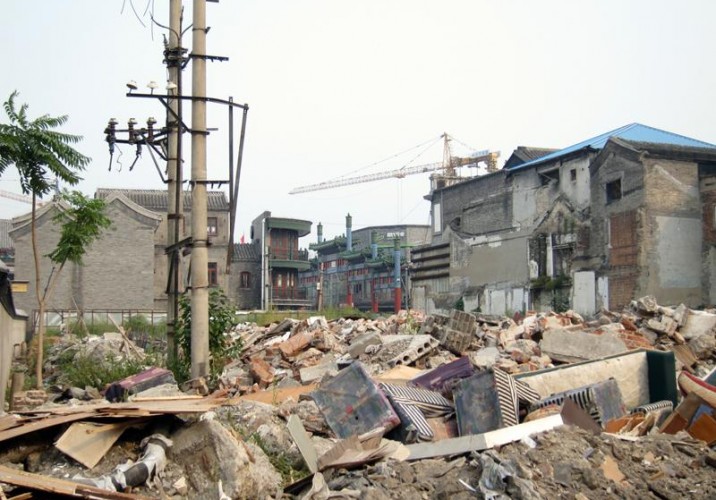
Our final stop was Dashilar Alley, a 600-year-old hutong neighborhood that began to deteriorate half a century ago and is in constant danger of being eradicated entirely, like this unlucky block just outside it.

One of our guides estimated that Beijing lost 90% of its old architecture in the recent rush to pave way for the new, making the crane in the background of this picture seem eerily symbolic. Luckily the talented team behind the Dashila(b) initiative is working on developing collaborative solutions for supporting and preserving Dashilar.

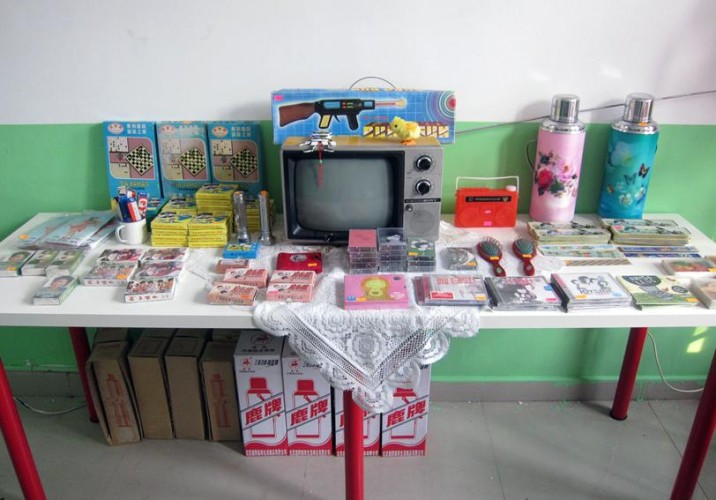
They noted that the Beijing Design Week event — which populated empty neighborhood buildings with 20 installations, including this pop-up shop full of kitschy vintage Chinese goods — seemed to be going a long way in convincing the government there might be value in those preservation attempts.

A wall plaque found inside one of those empty buildings by the folks installing Ab Rogers's exhibition, "A Day in the Life of Ernesto Bones," which we had planned to feature in more depth until we saw Core77's lovely post about it, which you can check out right here.

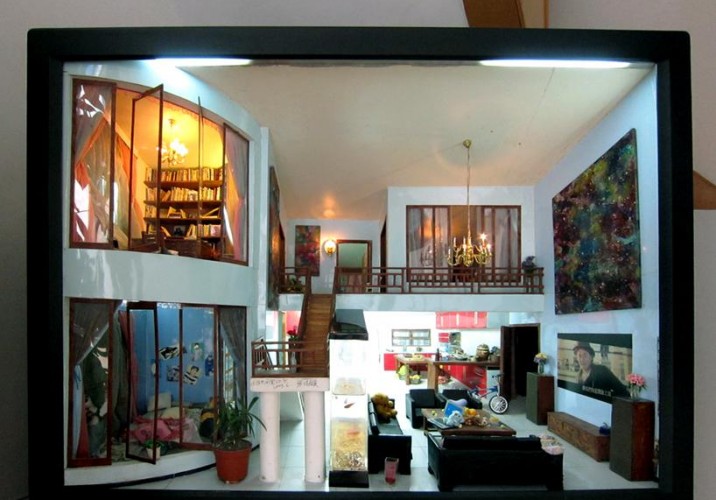
Dashilar also hosted a show by the Beijing-based ChART Contemporary gallery, founded by two New York natives to support the work of emerging Chinese artists. This miniature dollhouse created inside a Sony TV is by Zhang Xiangxi, whom we may manage to feature on the site soon — see more examples of his work here and here.

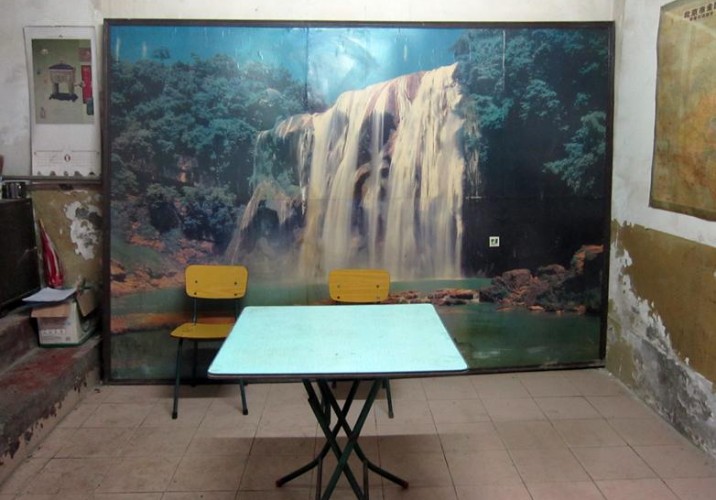
Further down the alley, we were headed into a photo exhibition when we accidentally entered this room, which we thought (hoped?) WAS the exhibition until we saw how oddly the men working there were looking at us — it had absolutely nothing to do with the festival. Oops.

Handmade recycled-paper streamers hanging from one of the show buildings looked like giant eyelashes.

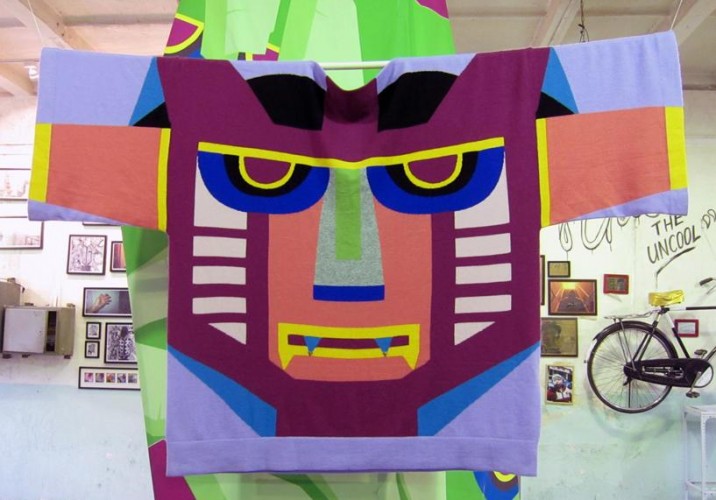
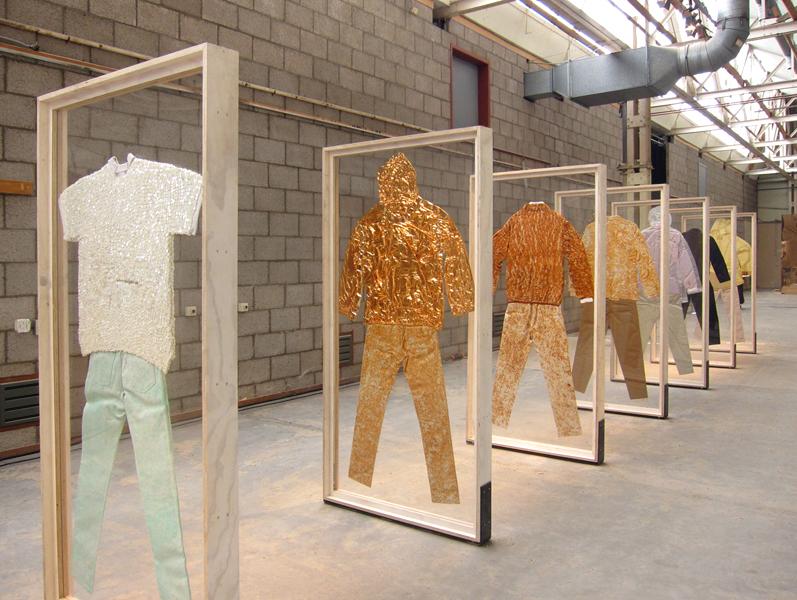
The Beijing fashion blog AnyWearStyle celebrated the launch of its new online shop — AnyShopStyle.com — with a forest of designs by the kooky London-based knitwear designer Yang Du.

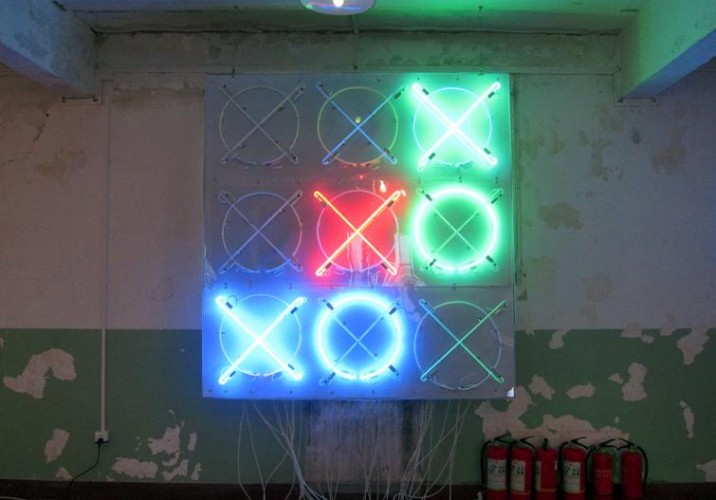
This space was part of the 2011 Notch art festival, and it asked Nordic and Chinese artists and designers to team up in a former feedback-coil factory and create designs referencing the history and/or context of the neighborhood.

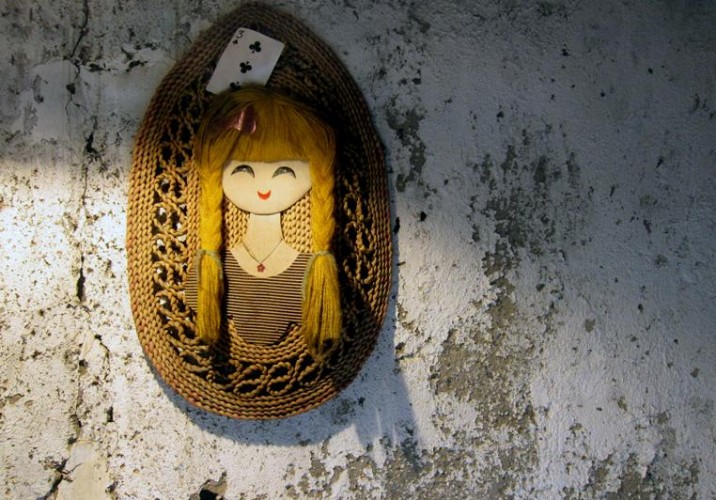
Last but not least, we saw this beautiful drawing inside "Silent Heros," an exhibit curated by Beijing Design Week creative director Aric Chen. The show itself was focused on local movie star Zhou Xun's personal reflections on old Chinese objects, but it also featured illustrations by Ray Lei and Chan Mi.

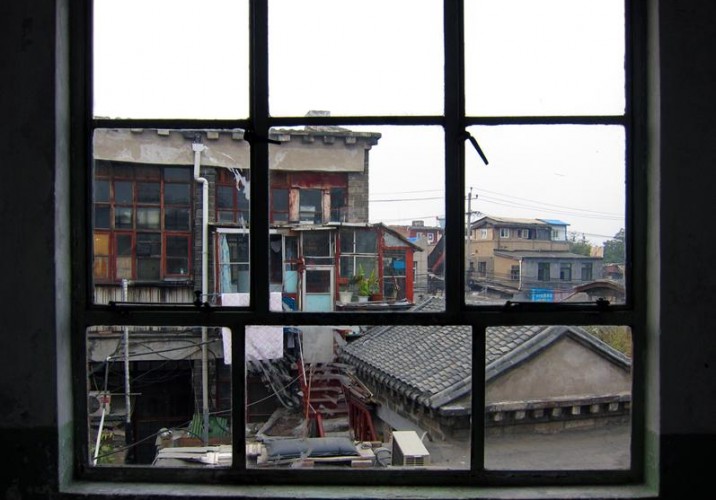
Looking out over Dashilar on my way out of the building — and back to New York — I stopped to marvel at how what some people consider to be such an eyesore can seem so beautiful to the rest of us.