07.28.10
Sighted at MOLDE, a Buenos Aires–based online magazine on crafts and applied arts run by Juan Ignacio Moralejo: An interview with British food and portrait photographer Toby Glanville, who says, “I have been drawn to photographing people in the workplace for a number of reasons, chief of which is the idea that work places us in the world. And as a photographer working from day to day on commissions for magazines and books as well as my own projects, one inevitably feels comparatively itinerant. Freedom can be a terrifying prospect.”
MORE . . .07.26.10
Sighted on Design Milk: A Friday Five interview with the intriguing Icelandic designer Sruli Recht, whose studio is “a small cross-disciplinary practice caught somewhere between product design, tailoring and shoe making,” it writes. In the story, Recht shares five of his materials inspirations, including the chest of an Atlantic Seabird given to him by a leather tanner.
MORE . . .07.23.10
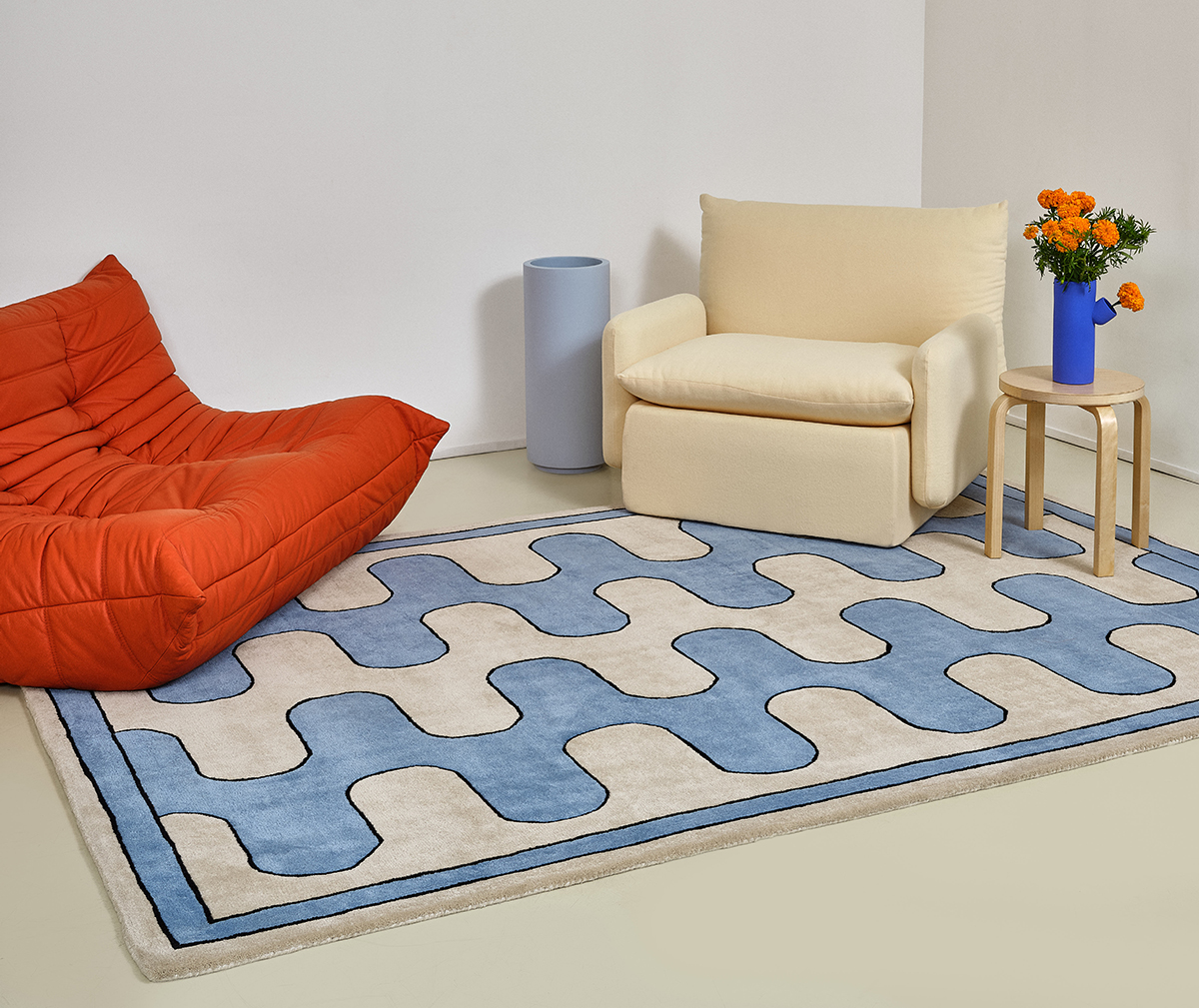
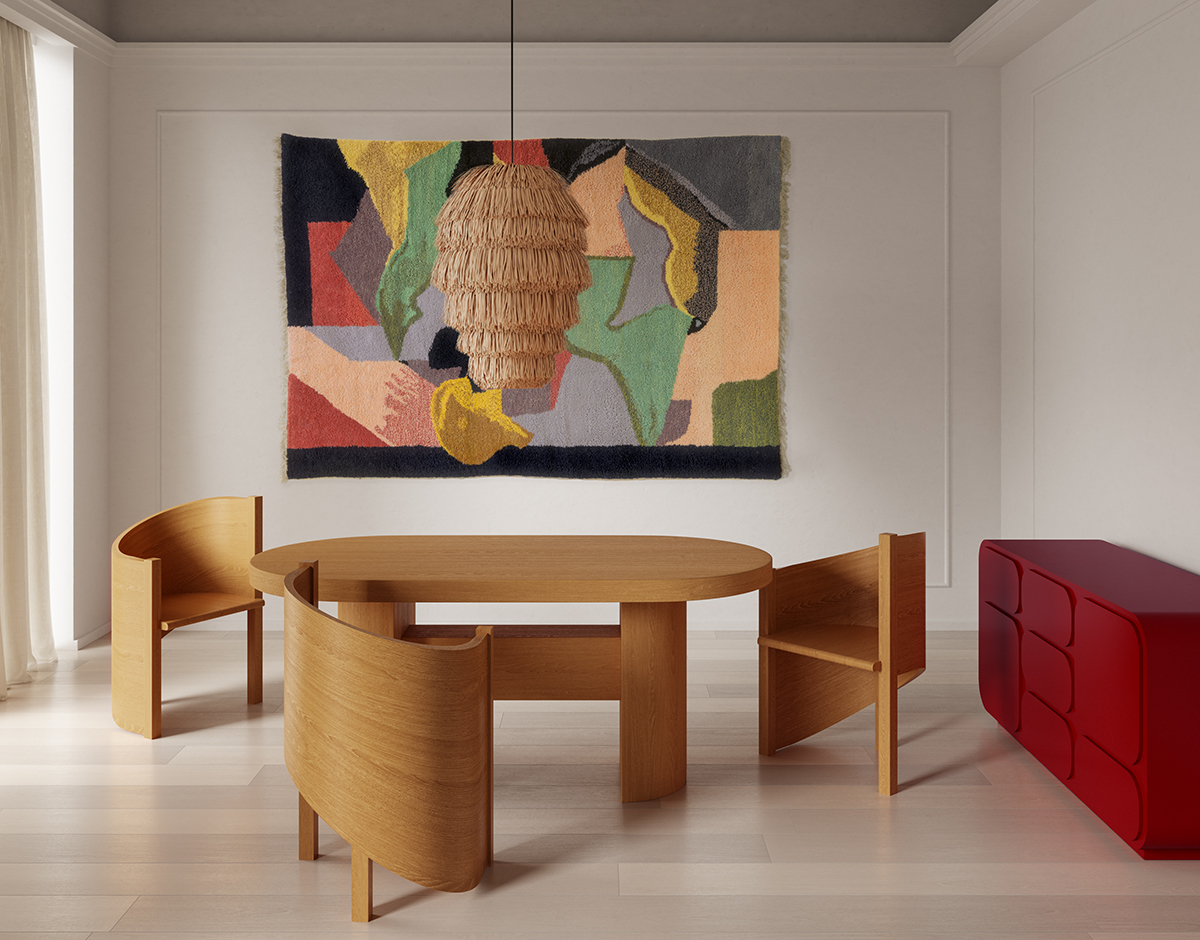
Even though Brooklyn-based artist Amy Helfand has been designing rugs on commission from her Red Hook studio since 2004 — hand-knotted wool rugs, it should be mentioned, that sell for at least $125 a square foot — she still has trouble defining herself in those terms. “Up until recently, I never really thought about rugs,” she says. “I thought about making my artwork, and some of that artwork I’d make into rugs. But it was never like ‘Ok, this one comes in 5×7 and 6×9.’
MORE . . .07.21.10
Clemence Seilles was only four months into a job at Jerszy Seymour’s Berlin studio when she started to feel it: that restlessness creatives invariably get when they’re unable to fully express themselves. It’s not that the job wasn’t fulfilling — it was, and more — but working fulltime meant Seilles hadn’t yet found a way to devote attention to her own projects. “I had this idea to make a piece that would do the work for me, something that would happen when I wasn’t there,” she recalls. One morning she hung a few felt-tip pens from the ceiling of her apartment, their tips pressed down against a sheet of Chinese rice paper, and left for Seymour’s studio. “When I came back that evening, the work was made.”
MORE . . .07.19.10
One of the turning points in Ron Gilad’s career came late on a Sunday evening in January 2008, one of the coldest nights of the year. That’s when the designer, along with nearly 200 other artistically minded tenants, was evicted from his live/work loft building in South Williamsburg, Brooklyn — the result, the New York Fire Department claimed, of an illegal matzo operation being run out of the basement by the building’s landlord. No matter that the Tel Aviv–born designer was out of the country at the time. “I extended my trip a week, but then I came back to nowhere. For three and a half months, I was homeless. And that’s when I started really playing with the idea of spaces and homes, and what, for me, a home really is.”
MORE . . .07.16.10
When Dutch artist Eylem Aladogan took her first trip out West in 2006 — three months of driving alone through the Nevada, Utah, and Arizona desert — there was plenty to be afraid of: the wide-openness of the landscape, the sensation of smallness and isolation, the possibility that the only hotel for miles around would be fully booked for the night. “These feelings of restriction at the same time you’re constantly going, driving forward, really inspired me,” says the 34-year-old, who’s based in Amsterdam. “There’s so much energy when you feel that every day.” Enough, it would turn out, to fuel her art for the next four years, as she worked out a way to visually harness those opposing forces of anxiety and empowerment.
MORE . . .07.14.10
Sighted this week on The Morning News: “German photographer Julian Faulhaber captures public spaces — supermarkets and parking garages — in the moments between their construction and when they are opened for public use. His long-exposure photos, which remain untouched after developing and for which he uses only available lighting, look unreal and Photoshopped. But what does it mean to say that reality looks Photoshopped?”
MORE . . .07.12.10
Who hasn’t suffered the sting of a thousand rejection letters? Imke Klee, for one. In 2007, having just completed an integrated design program at the University of the Arts Bremen, the German-born stylist and photographer sent her diploma work off to famed trend forecaster and design guru Li Edelkoort in search of some feedback. “It was sort of a trend book about how to transform traditional values into modern, contemporary ones,” says Klee — in other words, catnip for a trend junkie like Edelkoort, who responded almost immediately with an invitation to come join the Paris-based offices of Trend Union, Edelkoort’s renowned forecasting agency, which counts companies like Philips, Virgin, Camper, and L’Oréal among its international clients.
MORE . . .07.09.10
Despite what most people imagine, you don’t just find 3,300-square-foot apartments in Berlin these days — they have to find you. In Judith Seng and Alex Valder’s case, it was a newly divorced friend of a friend, abandoning the loft he’d lived and worked in with his musician wife, and searching for someone who could fill the sprawling space. Seng and Valder, two process-oriented product designers with a habit of accumulating furniture off the street, signed the lease immediately. In May, they moved their home from a 1960s Socialist housing bloc on the historic GDR boulevard Karl-Marx-Allee, then packed up their separate studios, creating a common office in the apartment’s living area. There’s a dishwasher and a fancy Duravit bathtub, a spare bedroom and a roof terrace. Space may be abundant and cheap in Berlin, but this is not the norm. Friends seeing it for the first time routinely gape.
MORE . . .07.07.10
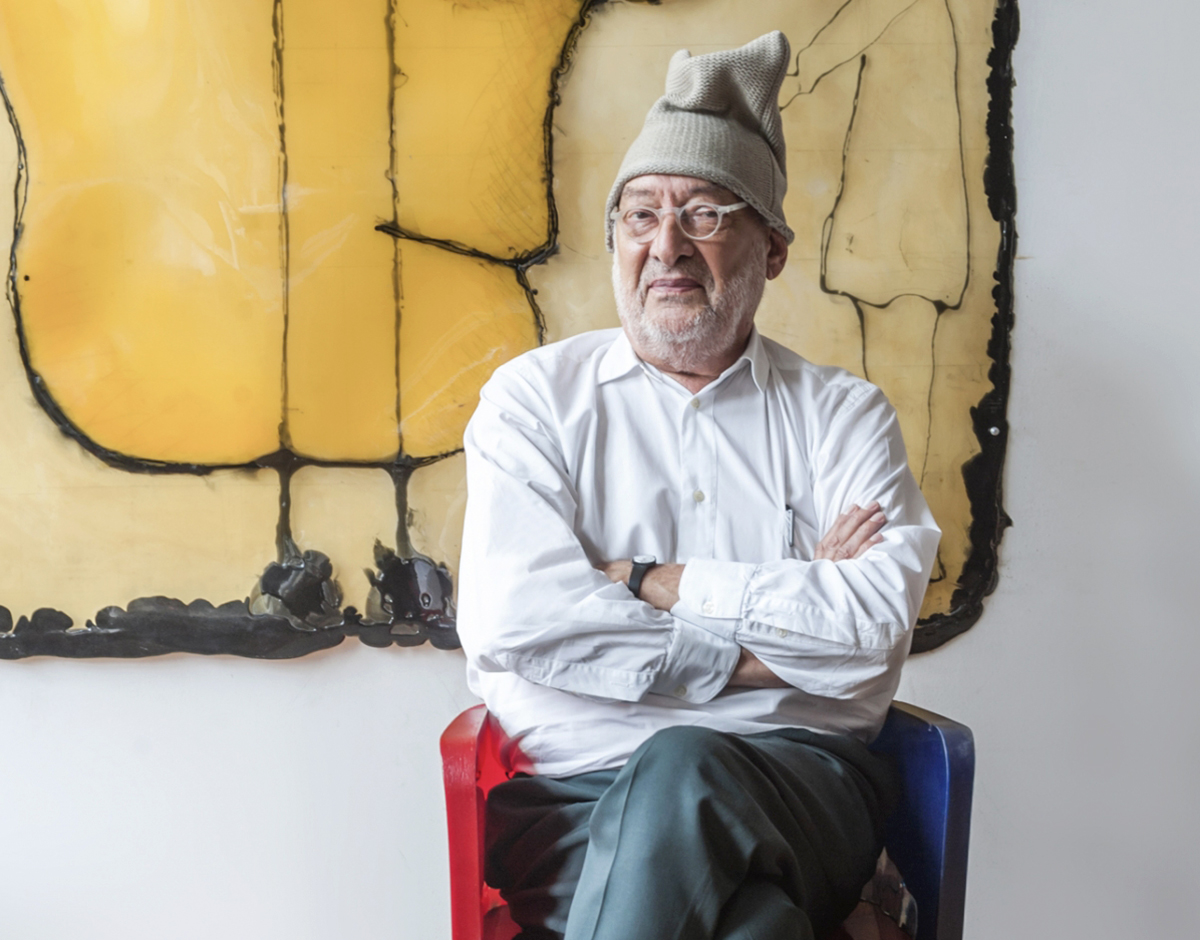
“We’re in mid-drip,” says Gregory Nangle by way of introduction when we arrive at his Philadelphia glass studio and foundry on a chilly Thursday. “Watch out, this piece of glass might blow up a little.” Nangle and his assistants were hard at work on one of his own sculptures, a totem of found hardware cast in bronze and dripping with glass, the likes of which show in spaces like Philly’s prestigious Wexler Gallery. But on any other given day, the studio’s attentions could be focused on a commission for Anthropologie (the sculpted glass-and-metal register displays for the store’s Regent Street flagship), Robert DeNiro (the Art Deco lenses that adorn the exterior of the actor’s Greenwich Hotel), or Animal Collective, the New York hipster band who earlier this year projected lasers through Nangle’s spiky glass stalagmites as part of a performative sound installation in the Guggenheim rotunda.
MORE . . .