03.06.26
The Weekly
A Design Hotel Outside Tbilisi, Our Picks From Frieze Week in LA, and More
Welcome to the new Sight Unseen, a weekly newsletter that delivers the best of the design world — news, trends, shopping advice, interviews, travel recs, and more — straight to your inbox. If you’re not subscribed, follow this link to sign up. Want to partner with us, advertise, or submit your work (guidelines here)? Email us at hello@sightunseen.com.
Isabel Rower Reinterprets the Ancient and Antique Through Form Language and Material Mimicry
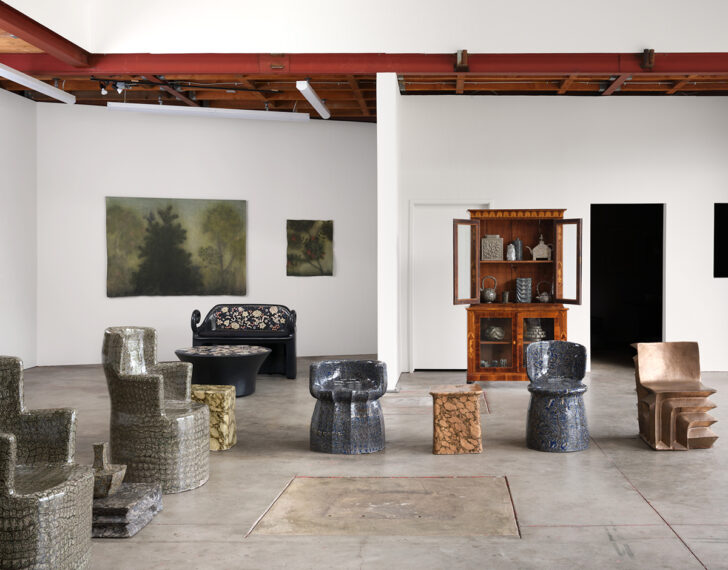
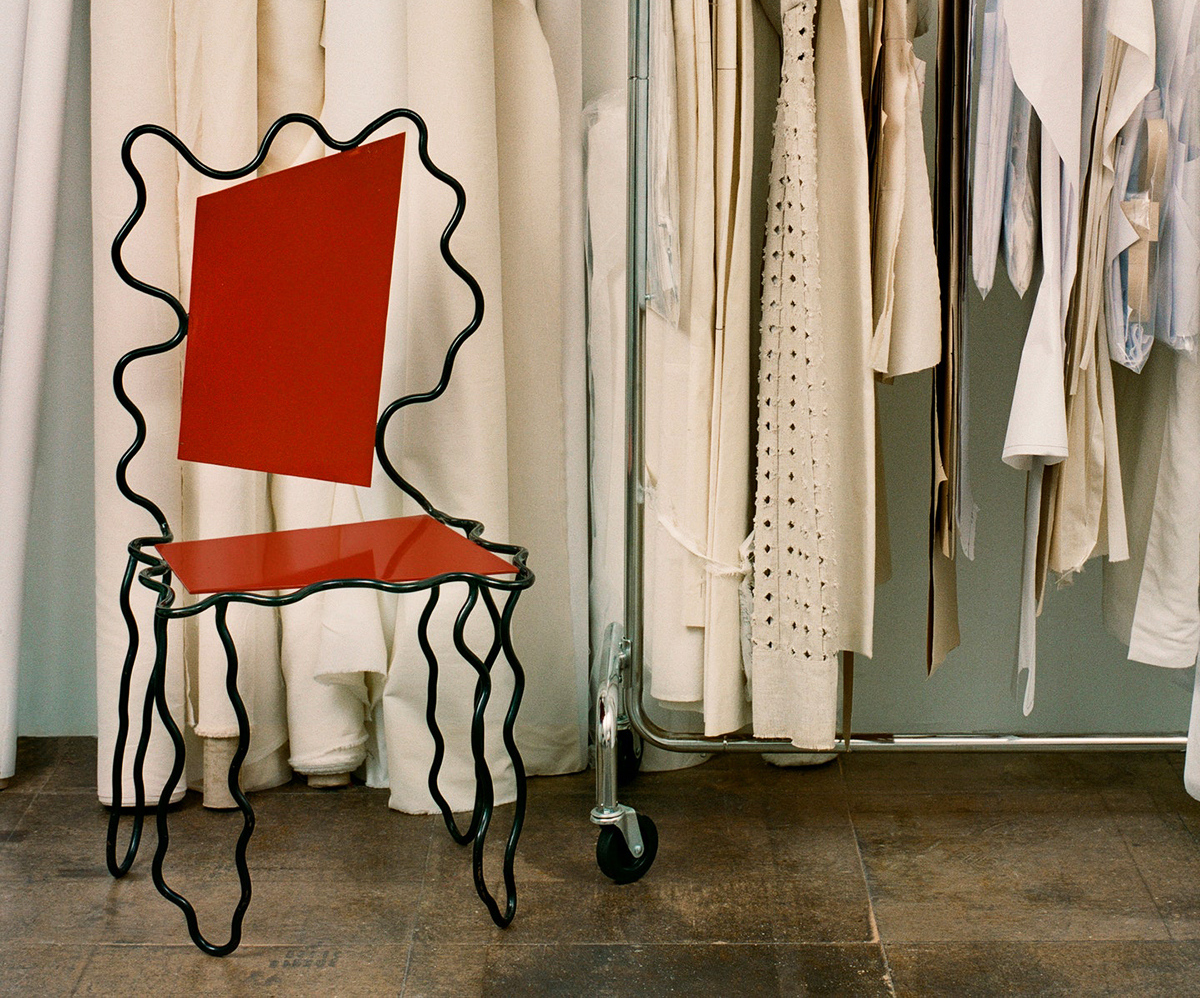
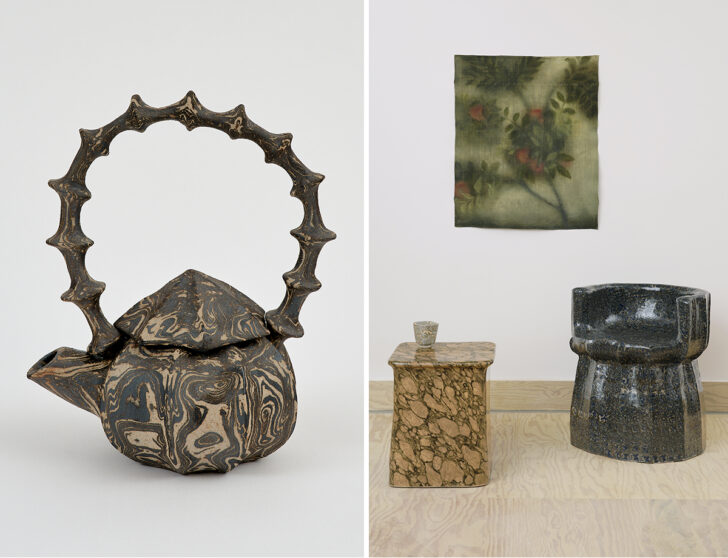 Isabel Rower’s new show at Marta, on view through April 4, encompasses paintings, furniture, and objects that reference the historical. Photos: Erik Benjamins (top) and Sean Davidson (bottom)
Ever since the “antique” look came back in style in design — maximalism, dark wood, brocades, everything brown — a whole lot of pastiche has come along with it. Which isn’t always terrible, as a lot can succeed on the particular details of the new thing that’s mimicking the old thing. But more interesting is when a collection comes along like Isabel Rower’s newest, created for her current solo show at Marta gallery in Los Angeles. The New York designer has crafted an extensive array of objects, furnishings, and paintings that are “informed and transformed by the imitation and reinterpretation of historical design,” channeling the past but through the distinct lens of Rower’s own perspective and methodologies.
For the exhibition, Rower took as a starting point a room filled with garden-themed frescoes in the ancient Roman Villa of Livia, recreating a similar scenography and mood via walls lined with hazy floral paintings made on antique bedsheets and tablecloths. In the foreground are three families of three-dimensional works: chairs and tables sculpted from stoneware that’s been made to look like marble or travertine, ceramic teapots and vases that subvert traditional forms with obviously contemporary details and surface patterns, and a series of ornate paper pulp and ceramic furnishings with pretty floral epoxy inlays that “allude to the papier-mâché furniture and objet d’art that became popular in 18th- and 19th-century Europe.” We named Rower to our American Design Hot List a year ago with the sense that she was one to watch — it’s nice to see someone mature into a body of work that vindicates our instincts.
House of Leon Turns Down the Volume, With Intention, For Its New Antwerp Collection
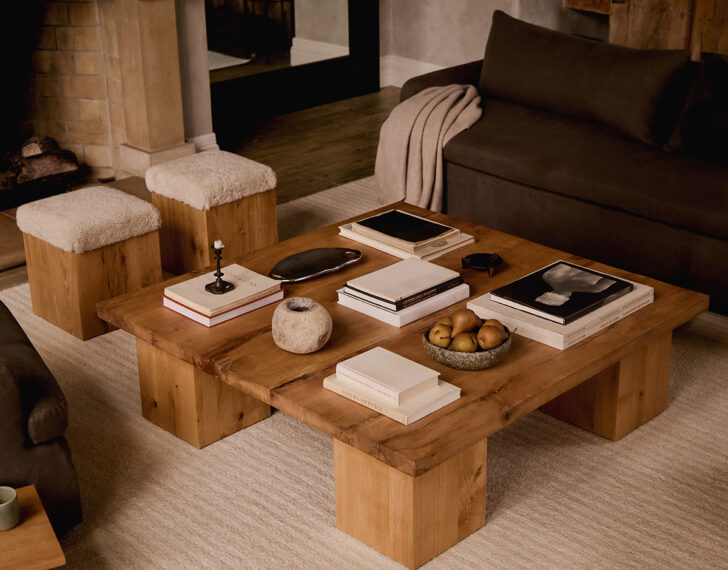
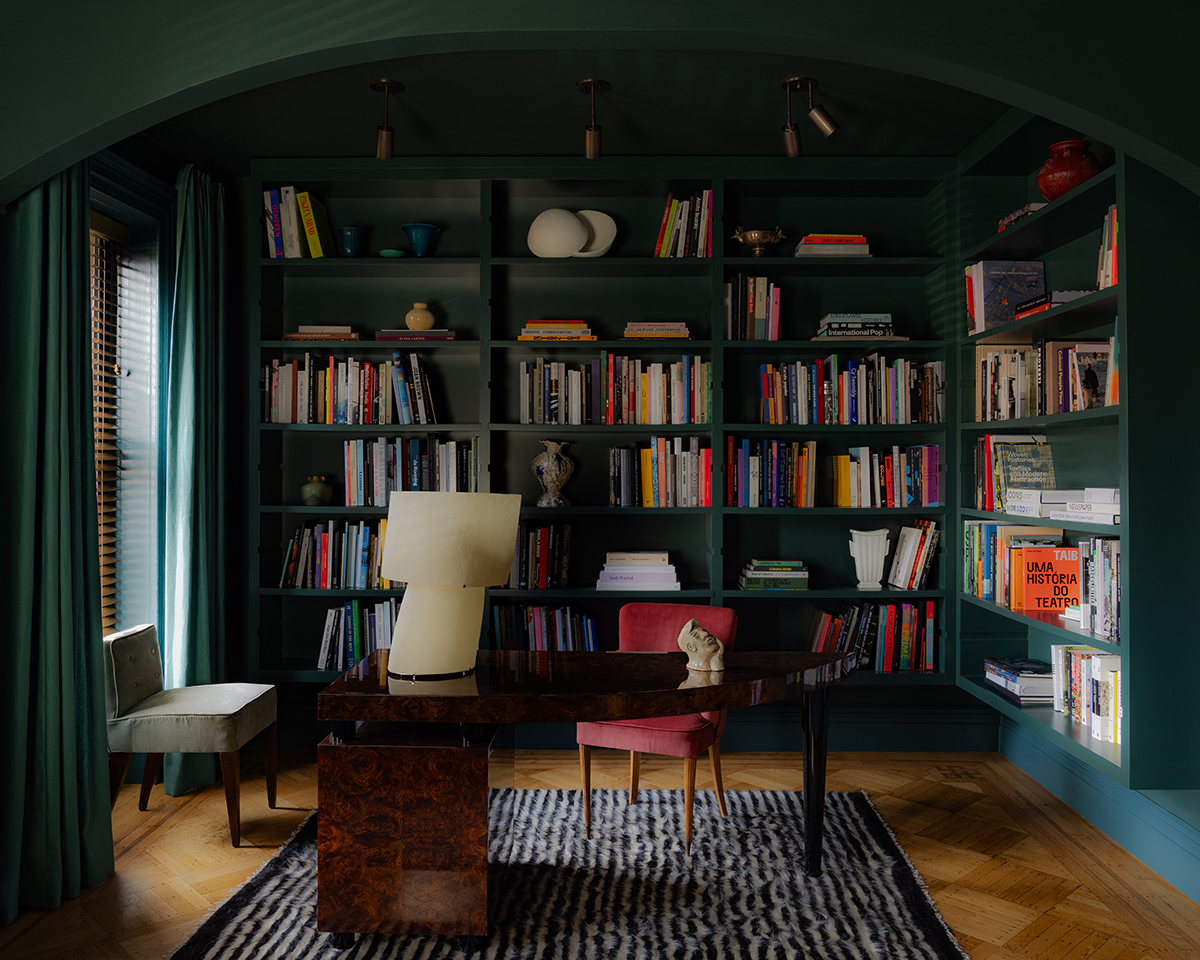
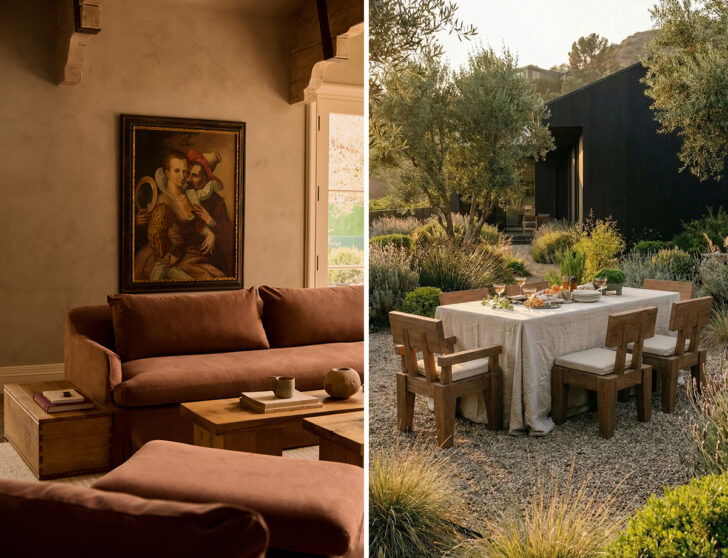 House of Leon’s new Antwerp collection — including an outdoor dining set — revolves around luxe yet unvarnished materials like blocks of French white oak and heavy Belgian linen
In one of House of Leon’s most-liked Instagram posts, two high-backed wooden chairs lined with colorful brocade flank a sculptural, river-rock-shaped coffee table alongside a pair of striking cast-iron finish side chairs with rich suede sling seats. Its newest collection, by contrast, is a study in understatement, all pared-back blocks of imperfect wood and quiet, old-world down-and-linen sofas. If you know House of Leon, the LA brand founded four years ago by twins Steven and Jordan Neman, you’ll have come to expect this type of stylistic variation; each collection they release takes on the identity of a different city, with the first example above embodying the industrial edge and sleekness of Milan and the latest, the rustic minimalism of Axel Vervoordt’s native Antwerp. Kyoto explored Japanese woodworking, Ojai pale boho oaks, and Provence French garden furniture, but it all ends up feeling cohesive thanks to one common denominator: the brothers’ unwavering reverence for craftsmanship and premium materials.
It was one such material in particular that provided the catalyst for the new series, Antwerp: a French white oak with so much character — grains, cracks, knots — “it asked to be left almost untouched,” says Jordan. That gave rise to a collection that focuses on material simplicity, with very little finish and polish, and little ambition to make a bold statement. The works, he explains, are meant to “feel adaptable and familiar over decades. While many designs seek to reimagine a space, these simply seek to ground it. It’s not about doing more, it’s about doing less.” Here, it’s the little details that shine instead, like an artisanal iron clasp on an oak armoire, or the parquet pattern on the surface of a dining table, inspired by the cobblestone streets surrounding the brand’s Belgian textile mill. The idea is that the rest of the room can be as minimalist or as maximalist as you’d like, but these are the pieces that will anchor it.
In Gypsandoncrete’s Hands, a Georgian Lakeside Resort Becomes a Study in Material Contrast
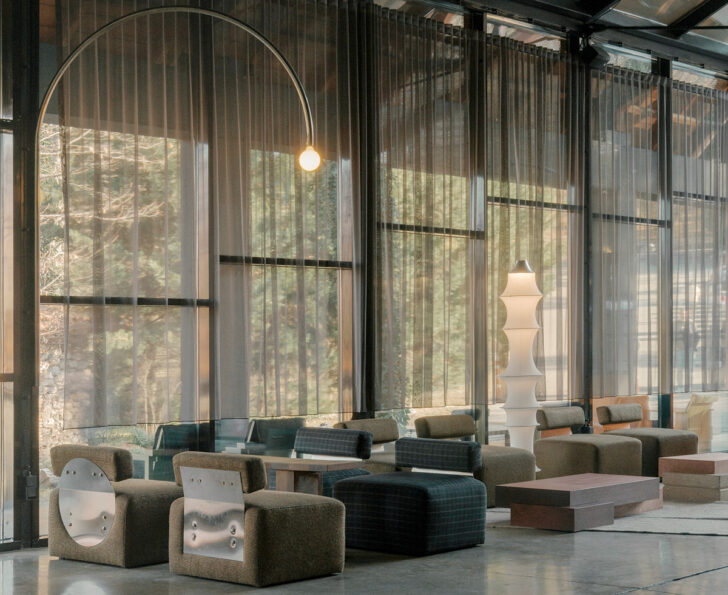
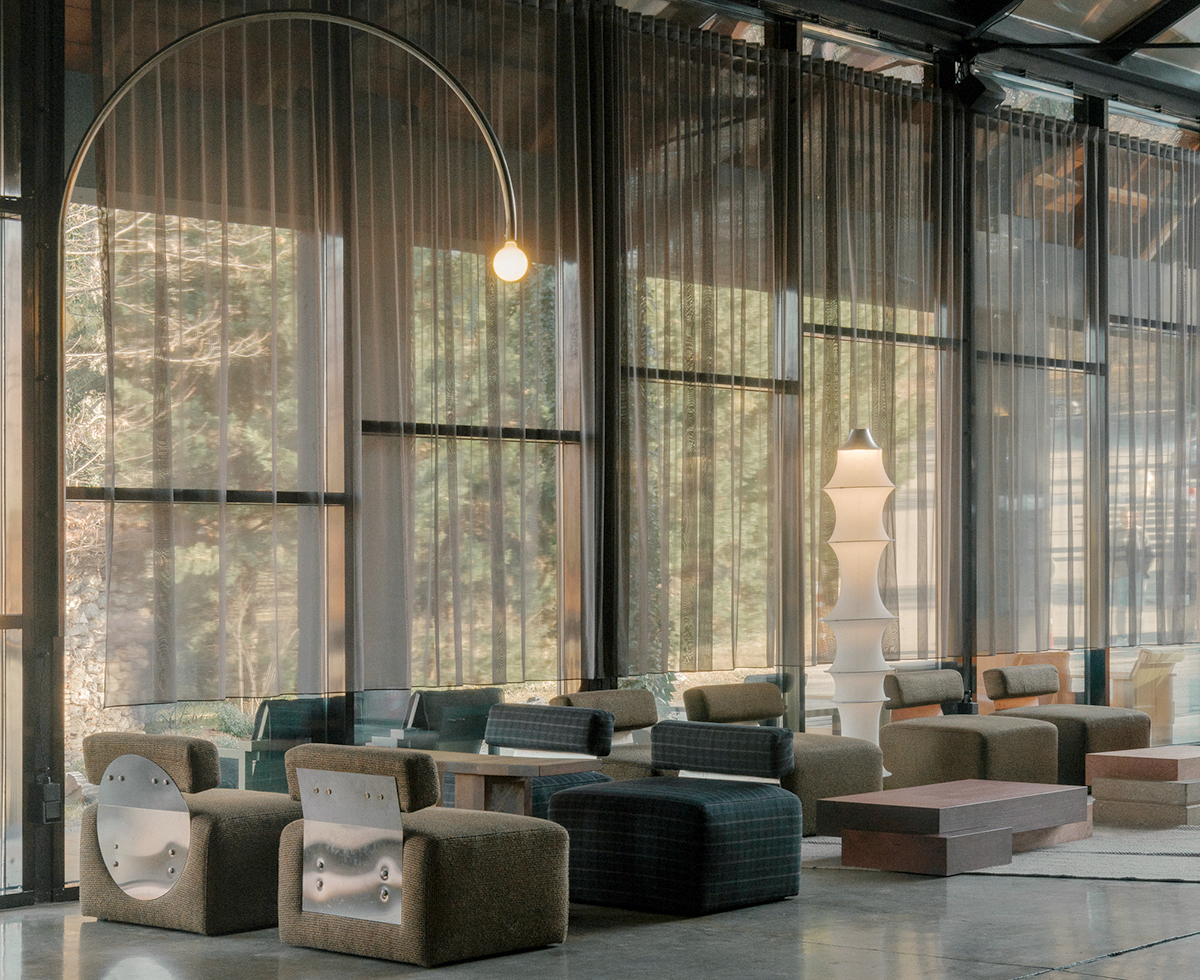
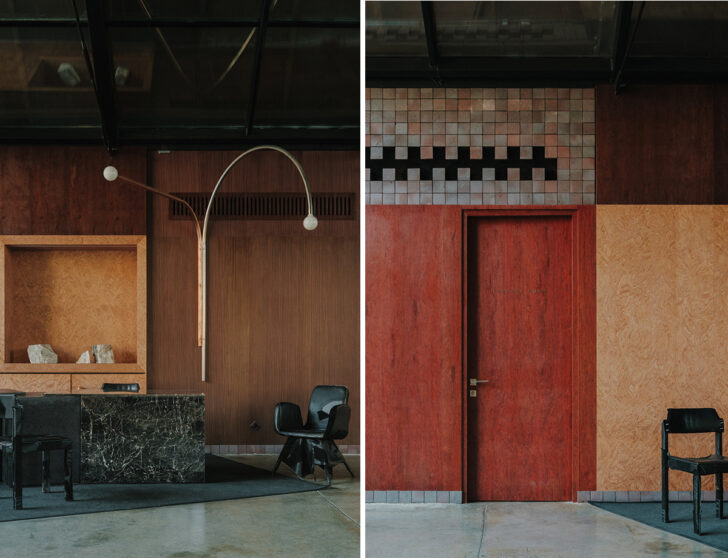 The reception area at Lopota Lake Resort & Spa, two hours outside Tbilisi, has gotten an ambitious makeover by Georgian design studio Gypsandconcrete. Photos: Grigory Sokolinsky
Being a half-Georgian person who has never, regrettably, actually been to Georgia — a situation I hope to change this fall — a project that recently landed in my inbox was like editorial catnip: a stunning renovation of a hotel two hours outside Tbilisi, by a Georgian design firm we’ve had our eye on for awhile now. It was likely Jamieri, the showroom for Georgian furniture and object design in Brooklyn, that first introduced me to the work of Lado Lamitoshvili of Gypsandoncrete, by way of his metal tables, candleholders and chess board. So I was already primed to take note of the Tbilisi-based designer’s complete renovation of the reception and gift shop of Lopota Lake Resort & Spa, a 150-acre rural getaway that also had a design-forward overhaul to its rooms by 10:10 Interiors last year. For the airy reception, Lamitoshvili used a lot of material-blocking — tiles and various wood species on the walls, wood and various marbles and metals on the custom furniture and lighting. A seating area features upholstered legless chairs whose backs are bolted on with either circular or square metal plates, while the same motif is repeated in chrome shelves climbing up sleek metal-and-wood scaffolding in the sage green gift shop. It doesn’t look like your average country retreat, and yet it makes me want to retreat to the country. With any luck, I’ll get there soon.
Andrée Putman’s Legacy Enters a New Chapter With a New Paris Showroom and Reissues Galore
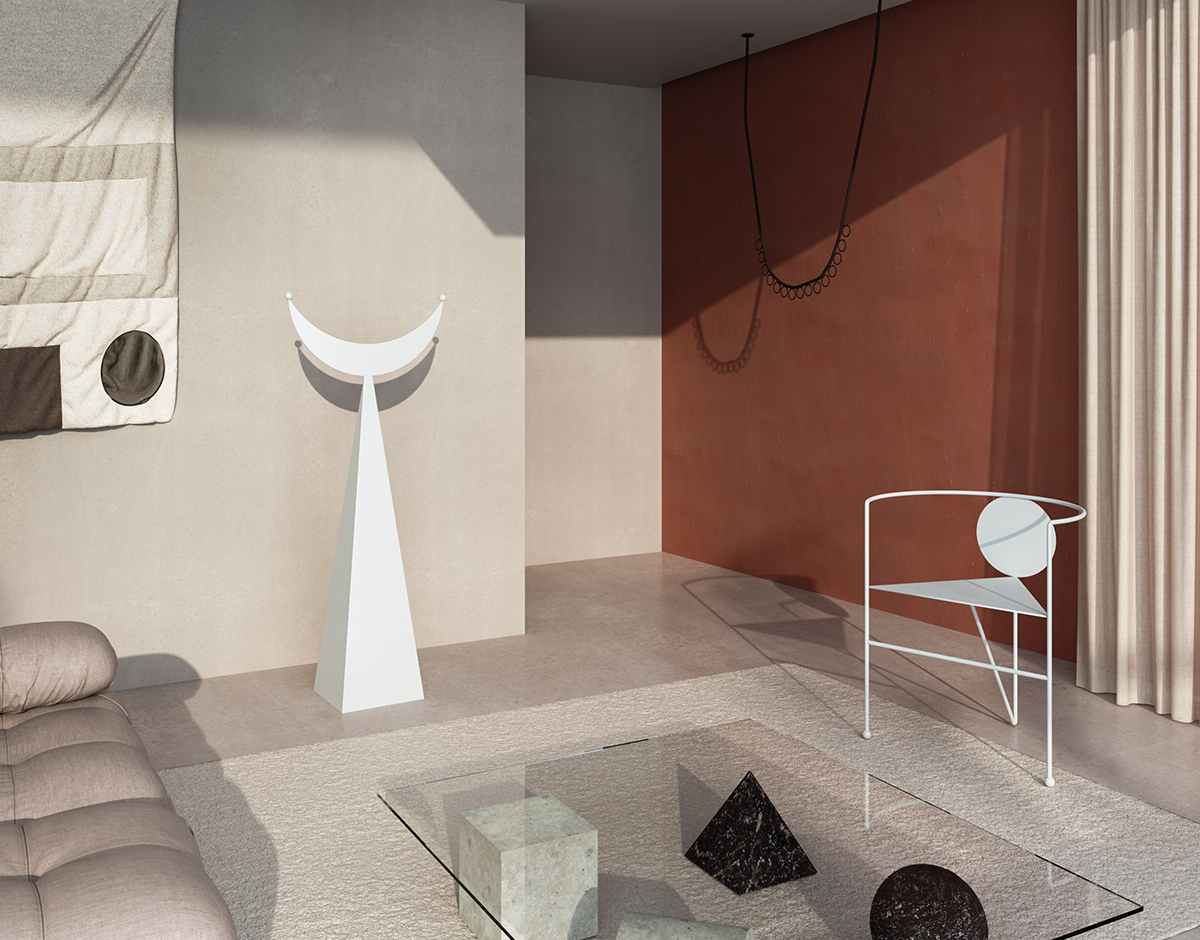
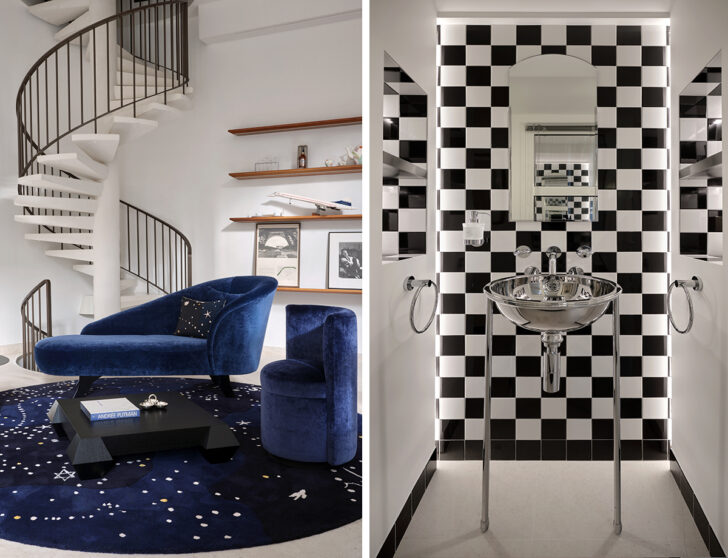 The main room (left) at the new Andrée Putman showroom in Paris features reissued sofas, tables, and rugs by the late designer, as well as an homage to her famous checkered Morgans Hotel bathrooms (right). Photos: Sebastien Veronese
It’s been more than a decade since the world lost one of its most iconic French designers, the legendary Andrée Putman, who only started her design career in earnest at the age of 53, with the founding of her furniture brand Ecart. Though she became perhaps best-known for her interiors — starting with the Morgans Hotel in 1984 — she was also a prolific product designer up until she died at age 87. Now, 13 years later, that legacy has officially passed to her daughter, Olivia, who has teamed up with Aurélie Laure to revamp Andrée Putman studio with a new Paris showroom and a raft of product reissues. Olivia has served as art director of the studio since 2007, during which time Laure was her intern and then its commercial director; after a short time away, Laure returned to purchase the studio last year. There will be brand partnerships and new design projects to come, but the appointment-only showroom, which opened in January, is probably the most exciting development — a 1930s former school transformed into a space to host gatherings as well as show off reissues like the 2003 Trois Carats et Demi coffee table and Elephant chair, some of which are 1:1, some conjured from drawings in Putman’s archives, and some merely inspired by her style. It will be chased by a New York space in the spring, though it remains to be seen whether that one will boast the same pièce de résistance: a black-and-white checkered homage to Putman’s famed bathrooms at the Morgans, which is surely set to become the holy grail of status bathroom selfies for design nerds everywhere.
Everything We Loved at This Year’s Frieze Week in LA
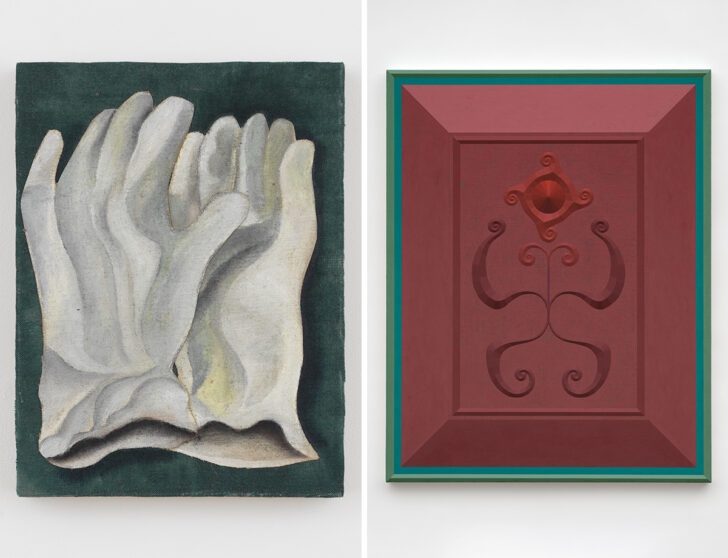 Clockwise from top: John Zabawa’s solo show with Francis Gallery at Neutra VDL House (photo by Erik Benjamins), a work by Greg Parma Smith at Hoffman Donohue’s Frieze presentation, a painting by Alessandro Teoldi at Marinaro’s Felix presentation
Despite being in LA in February once again for my annual winter sojourn, I promised myself this year that I would finally take it easy during Frieze week, not run around so much, maybe pick three new artists to spotlight in my newsletter rather than trying to digest it all. Well, dear readers, I failed at that task. I did skip the Frieze fair proper for the first time, but then ran out to the west side anyway to check out the second annual Post Fair (oops), a smaller show for up and coming galleries inside a 1930s Santa Monica post office. I stopped by the even newer, smaller fair Enzo, saw the newest work at The Future Perfect in Hollywood, and spent a lovely afternoon at Felix, where I found my new favorite painter, Alessandro Teoldi, showing with Marinaro gallery. John Zabawa had a solo show with Francis Gallery at the Neutra VDL House, Rhett Baruch filled his apartment gallery with works by glass and craft artists, and Lobster Club released a fresh batch of work by emerging artists.
In the end, I felt the urge to go gallery hopping, too, but that’s where reality finally hit — I had a newsletter to write, and a hardware showroom to run. So I restrained myself, tore through Frieze’s online viewing room, and put together a big rundown of everything I loved back on our website. Now that we’re a newsletter we don’t typically do standalone stories on the site anymore, but I couldn’t limit myself to just three images having seen everything I (accidentally) saw. Hope you enjoy the results of my chronic overextension!
Editor’s List
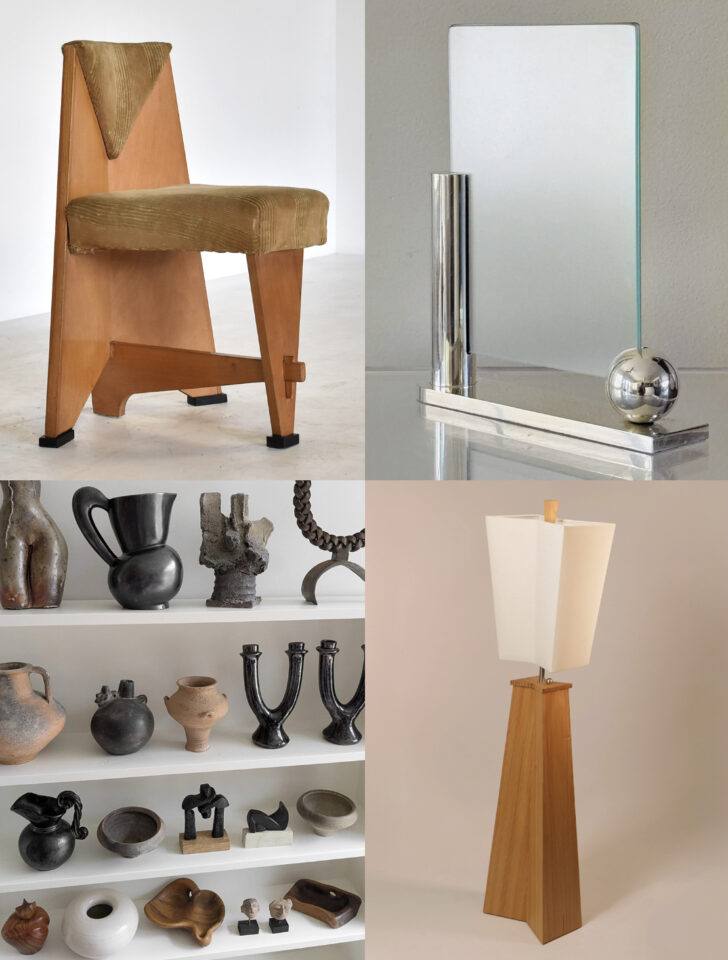
CLOCKWISE, FROM TOP LEFT:
–
Hat tip to Colin King for posting this image on his Instagram — I may not know anything about the photo, but I do know I’m in love with those triangular tripod chairs, designed in the Amsterdam School style by Laurens Groen for HH De de Klerk in 1924, for a Masonic lodge in Alkmaar, the Netherlands. There appear to be a pair for sale here, but I can’t be sure. I think this chair is made perfect by those little black Art Deco-ish feet, and the rudder-like crossbar underneath, both of which somehow make it more sophisticated than just an assemblage of triangles. Perfection.
–
If I thought this would blow up my spot, I might not post it here, but since there’s no way I’m spending $300-700 on a frame, I will share that one of my ongoing search terms for the past few years has been “Richard Meier picture frame,” specifically the series he created for Cleto Munari and Swid Powell. There are five or six different designs, plus other pieces like candlesticks and this epic fucking peppermill (!!). But they never go cheap. Maybe someday at a random garage sale in Connecticut? Wish me luck.
–
This charming Douglas fir lamp in the shape of a bowtie came in through our submissions box — it’s the work of Avery Butler, who credited us with introducing him to the work of Steven Bukowski and Asa Pingree, who he eventually interned with before launching his own career. Details like the finial, the tiny ball dimmer, and the custom shade that inverts the shape of the base make this one special.
–
I probably AM blowing up my spot with this one, but my new favorite vintage source is Eesome Shop, which is unfortunately for us — and our idiotic new tariffs — based in the UK, but consistently unearths objects with interesting forms, some with provenance and some anonymous. Not a lot of color here — for that you’ll have to hit up Casa Shop — but it’s sent me down more than a few rabbit holes, which I appreciate.
News
–
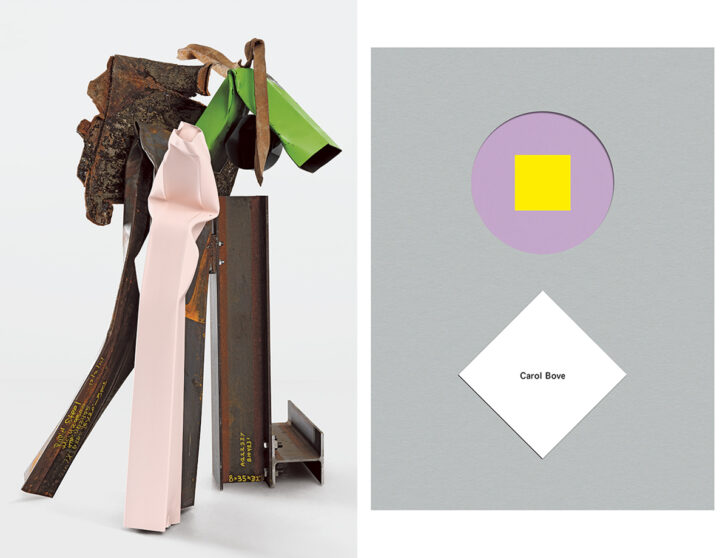
One of the quintessential designers’ artists — and I say that mostly because her practice is centered around an intuitive, largely improvisational process of letting materials speak — Swiss-born, Brooklyn-based Carol Bove is having her first major museum survey, opening today at the Guggenheim in New York. The exhibition brings together more than 100 works from her 25-plus-year career, from her early “shelf sculptures” full of books and found objects, to her famed “collage sculptures” made from crushed metal and industrial remnants, to brand new pieces. She’s also placed her own work in dialogue with that of other artists, like a site-specific 1960s mural by Joan Miró and Josep Llorens Artigas. Bove is one of my longtime favorites (me and everyone else!) so I’m beelining to the Guggenheim minute I get back to New York next week, but even if you don’t have plans to visit anytime soon, I suggest you snag the book being published to coincide with the show, sure to become this year’s coffee table must-have.
–
I honestly don’t know how these A-list interior designers do it all, but New York and Hamptons tastemaker Robert Stilin has turned his personal passion for collecting into a new gallery space on Broadway and 25th, where he’ll sell both his vintage finds and pieces he’s custom-designed for projects over the years. Every time an in-demand designer starts selling objects, whether through an in-house line or a space like this, I am truly amazed. Doing either one of those is hard enough, but doing both seems masochistic. Having an insatiable passion for objects will do that to you though, I should know!
–
As a magazine editor I know that textiles are always the hardest to feature because they tend to look so lifeless and boring in photo shoots — only so many ways you can drape a fabric for practical display. AD France just published a very nice feature showcasing the “most beautiful fabrics of the season” inside the Art Deco town hall of Boulogne-Billancourt outside Paris, and it’s one of the best examples of a great soft goods editorial we’ve seen. Partly, of course, because the building itself is so stunning.
–
There’s a Whoopi Goldberg auction at Julien’s next week, and while some of the listings are to be expected — there are a whole lot of glasses and pince-nez — the auction surfaces quite a few decorative bangers, including a Puiforcat-designed Art Deco coffee and tea service, a Frank Lloyd Wright–designed tureen, and this frankly beautiful banquette with metal rosette inlay. Go forth and bid!