04.28.26
The Weekly
Milan in Review, Pt I: Salone’s big hype problem, plus Monica’s top picks
Welcome to the new Sight Unseen, a weekly newsletter that delivers the best of the design world — news, trends, shopping advice, interviews, travel recs, and more — straight to your inbox. If you’re not subscribed, follow this link to sign up. Want to partner with us, advertise, or submit your work (guidelines here)? Email us at hello@sightunseen.com.
Milan Design Week 2026: A Reckoning
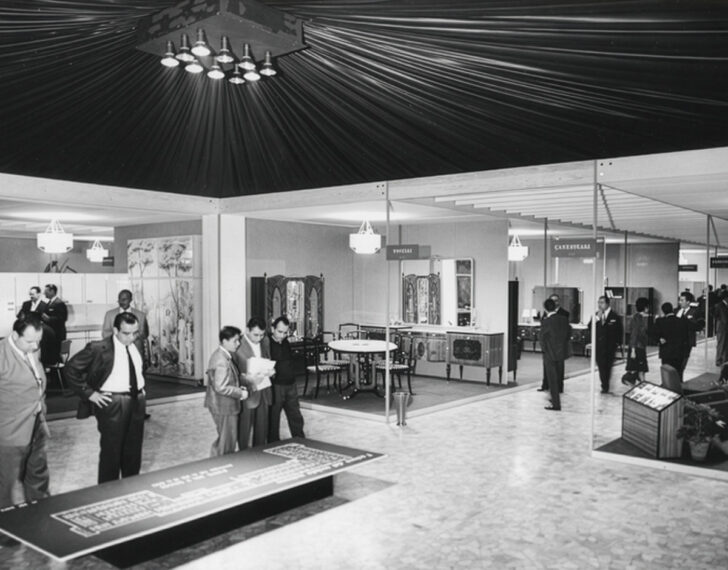 A scene from the first Salone del Mobile in 1961, which was apparently frequented primarily by men in suits.
“What have you seen so far that’s good?” is the boring but perennial question everyone asks each other during Salone, the annual furniture fair that’s so big it’s impossible to see even a fraction of what’s on view. It’s partly a quaint vestige of the pre-social media days, when the only way to discover shows, aside from an official guide, was by word of mouth. Now that you can track what everyone’s up to on Instagram, though, the question can feel more like a panicked entreaty for secret intel; not just What have I missed? but What will make me seem more insider-y to my followers? Near the end of last week’s fair, I ran into Felix Burrichter of PIN-UP, who told me the best thing he’d seen was a recently discovered bomb shelter designed by the Italian architect Piero Portaluppi. It was at Portaluppi’s former studio, which is set to open to the public in September as an exhibition space and archive. I couldn’t help but laugh. Scarcity, a never-seen interior, the fetishization of dead designers, and a bomb shelter of all things — it was the most 2026 Salone thing I’d ever heard.
For the name of the game this year was access. VIP access, of course, to exhibitions mere mortals had to brave harrowing lines to get into or else skip entirely, like the Interni Venosta show in a Borsani apartment whose queue stretched to two hours. But also access to private homes and never-before-seen palazzos by a laundry list of your favorite Rationalist/Modernist/Neo-Baroque architects, which was one of this year’s main themes and bright spots. That said, if the pieces on view inside sometimes felt commensurate to the beauty of their surroundings, other times it felt like the space became the thing rather than the ideas or objects within.
If the whole week felt like a game of one-upsmanship, it’s because the nature of Salone itself has changed so drastically. It used to be a trade fair for professionals, but as it’s gotten more and more bloated, those who actually work in design have felt increasingly desperate to cut through the noise. This year the fair seemed to reach what one friend called its “terminal hype” phase; the number of brand activations became staggering (I can’t shake the feeling that this Dezeen story about a McDonald’s ball pit is an elaborate prank). Fashion influencers crowded every event. Celebrities and their surface-level takes abounded. Comparisons were made to Coachella, Cannes, and Art Basel — all places that started as festivals celebrating the practitioners of an art form but have since become temples to commercialism.
Much of the blame for this shift lies, in the eyes of longtime Salone-goers, at the feet of fashion houses. Brands like Loewe, Louis Vuitton, and Hermès have long created installations that platform talented designers and craftspeople, highlighting the community that built the event they’re capitalizing on. But this year, as the roster — and the budgets — ballooned, the shows got more navel-gazey, more virtue signal-y, more style over substance. They felt like advertisements rather than exhibitions, yet they seemed to take up all the airspace.
It can feel like sour grapes to ask people for years to pay attention to your industry and then complain when it gets too popular. But we complain because it threatens to drown out what is good about Milan. Because the extreme crowds and superfluous events keep us from seeing more of what we love. Because when the loudest brands with the most money win, some designers choose to not even play the game (not to mention what that means for affordability — who’s going to give their space to emerging designers for cheap or free in this environment?). That’s exactly what happened this year. As we’ll be featuring today, tomorrow, and Thursday in a special three-part Milan report, there were many wonderful things on view (starting with Monica’s favorites, below, and mine to come tomorrow). But overall it was the weakest year we can remember. It felt disjointed, and lacking in true design innovation.
Is it too much to ask that we walk away from the biggest design event of the year with a sense of where the design world is heading? With fresh ideas to energize us? With new ways of rethinking how to do less harm to the environment? Is it unrealistic to expect brands to actually move the conversation forward? And to maybe try investing all that marketing money in designers themselves? We’re not sure where Salone can go from here, but we hope it’s not further down a path where exclusivity is the only currency and the biggest players bypass actual content in a race to show up with something — anything — just to be a part of the conversation. —JILL SINGER
Monica’s Picks
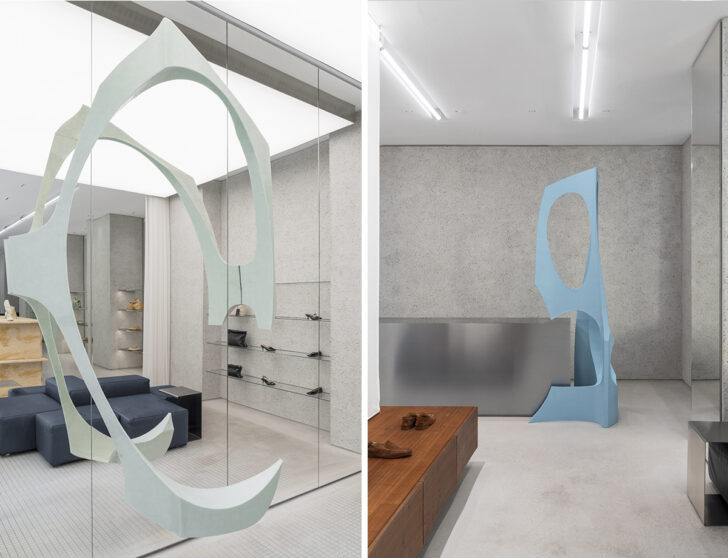
In the rare example of a fashion brand actually working with design talents, leather accessories upstart Marsèll invited Odd Matter to fill its Via Spiga showroom with giant sculptural interventions in their signature bone-like style.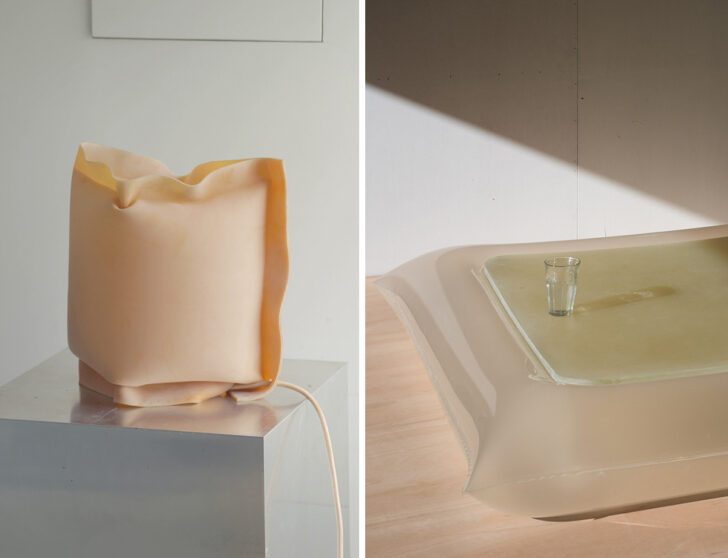
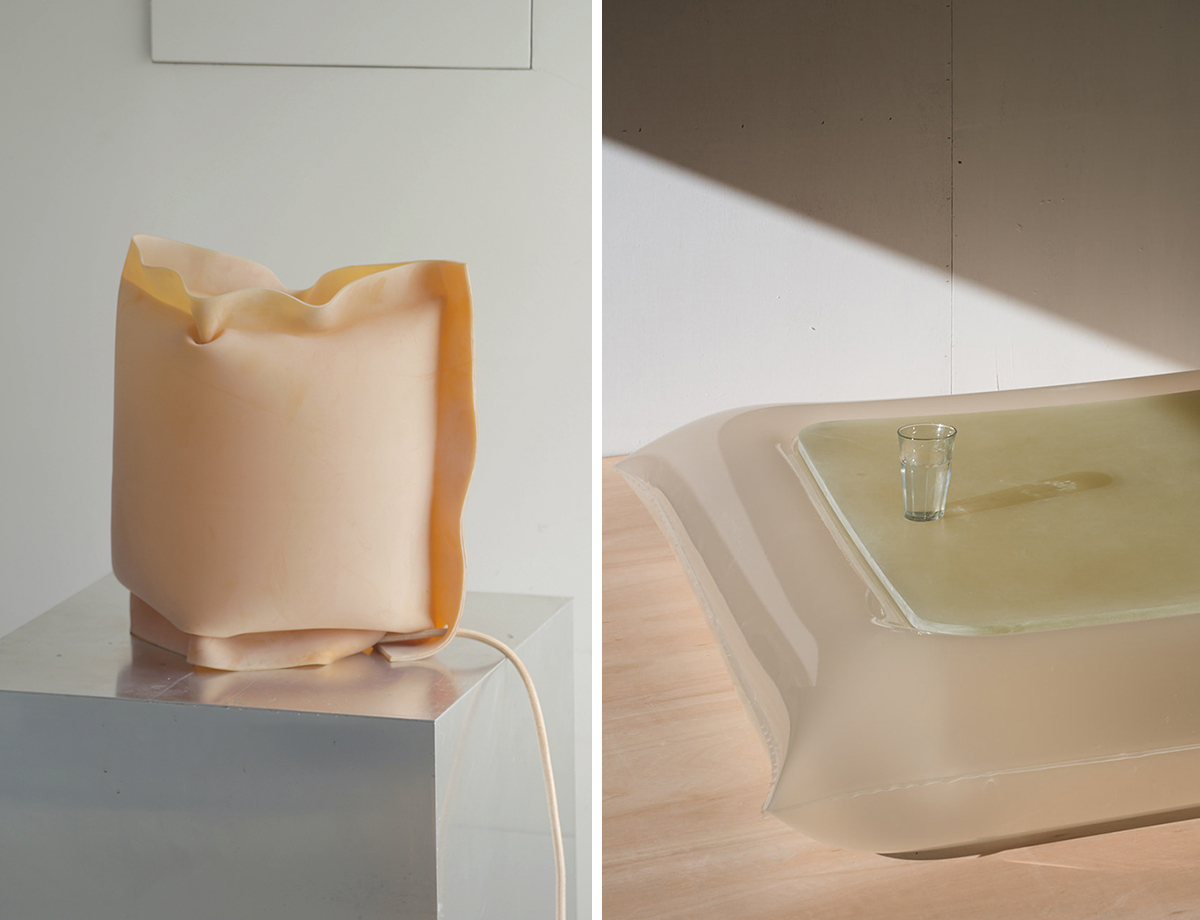
My favorite discovery at Alcova was Jabez Bartlett, a film set designer whose first furniture series creates something soft and ethereal out of industrial materials like rubber, resin, and PVC.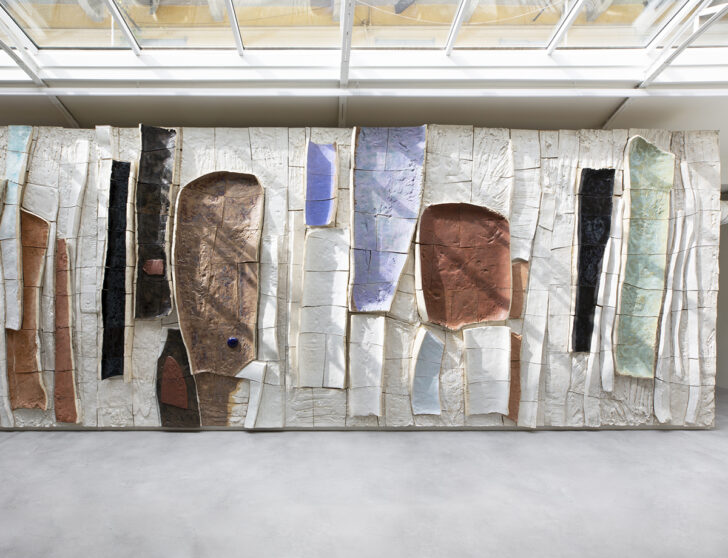
Milan-based architect Hannes Peer tested the limits of ceramic production with Officine Saffi Lab, creating a stunning 31-foot-long, midcentury-inspired wall relief made from 252 modules and a dozen custom glazes. It took 15 people over 1,000 hours to make.
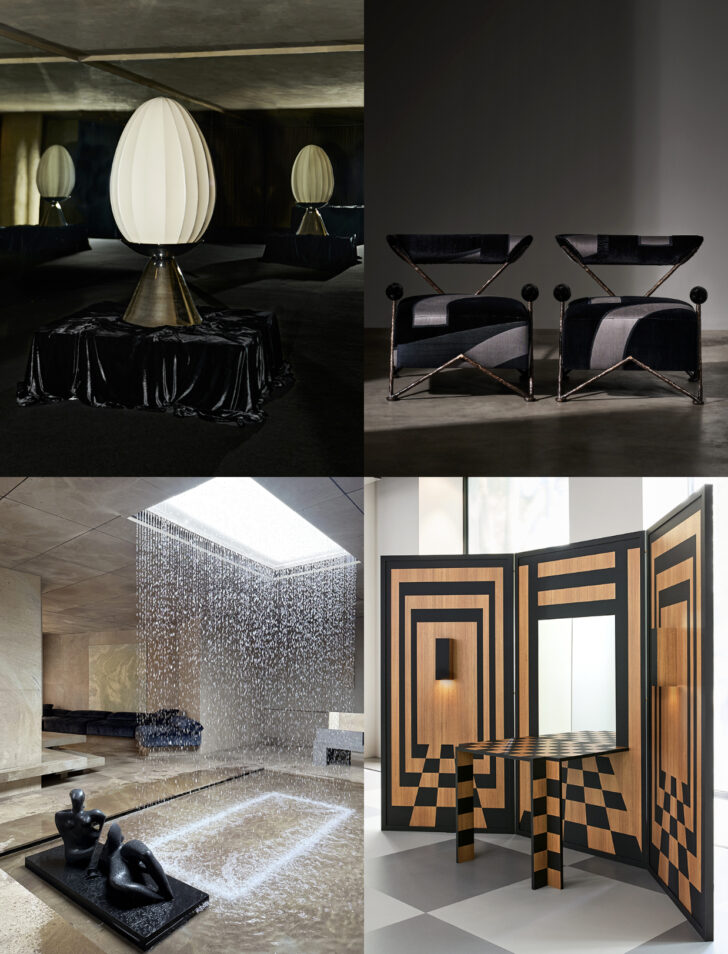
CLOCKWISE, FROM TOP LEFT:
–
For the fashion brand Taller Marmo, Eny Lee Parker designed mirrors and these huge egg-shaped lamps that remind us of Salvador Dali’s house in Spain.
–
StudioDanielK debuted a new collection at Nilufar Gallery that included cocktail tables, a room divider with shelves inside, lighting, and these striking bronze and velvet chairs with #tinyballs in lieu of armrests.
–
Federica Sala curated a show for Broadview Materials (Fenix, Arpa, etc) that invited architects like Studio GGSV to use their products to make installations like this Op-Art-esque vanity/desk.
–
In what’s normally an underground parking garage, Hannes Peer and stone company Margraf erected, for Salone, an entire room made of marble, with sculptures and structures all designed by Peer.
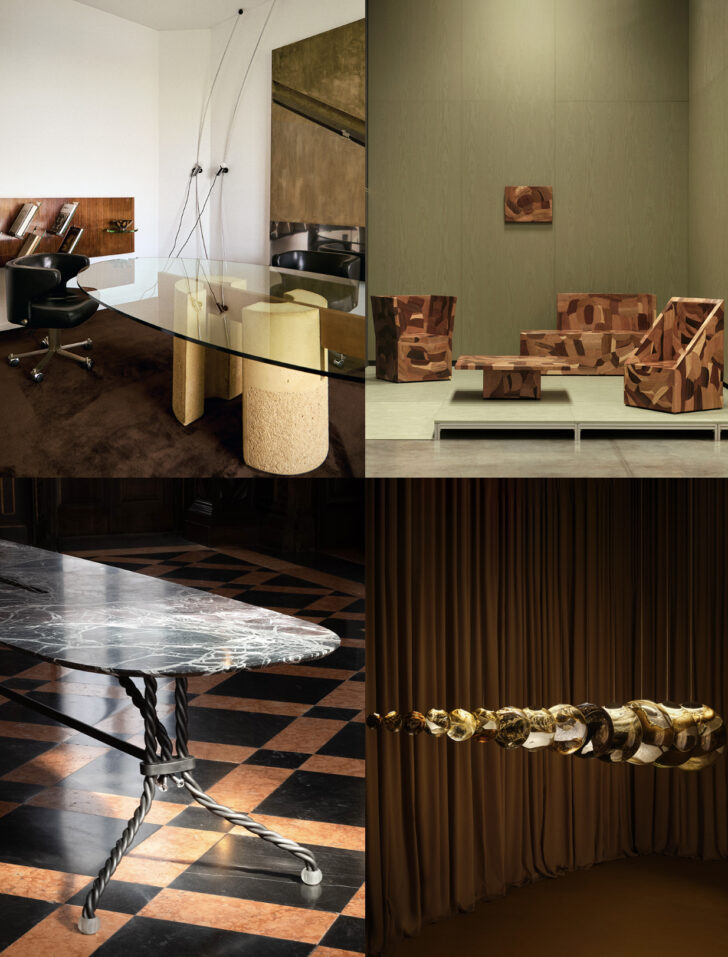
CLOCKWISE, FROM TOP LEFT:
–
While “Materials at Edge” was not technically a design show, I liked the interplay of art selected by Truls Blaasmo and Chiara Rusconi with vintage Italian lighting and furniture by Giampiero Tagliaferri, whose new Milan office it took place in.
–
Salone Raritas is the main fair’s (questionable?) new attempt to court galleries and collectible design, and Max Radford was on the first roster, showing a suite of patchwork wood furniture by Lewis Kemmenoe.
–
For the second year, The Future Perfect founder David Alhadeff staged an exhibition of Bocci’s experiments in glass inside the brand’s Milan space, and I thought this installation of 16 gold glass sphere lights was especially pretty.
–
Paris-Milan upstart Haydn von Werp showed his second collection in four months (!) in the Museo Bagatti Valsecchi’s main salon, launching tables and a canopy in twisted metal and marble and chairs, a mirror, and a lamp in opulent Murano glass.
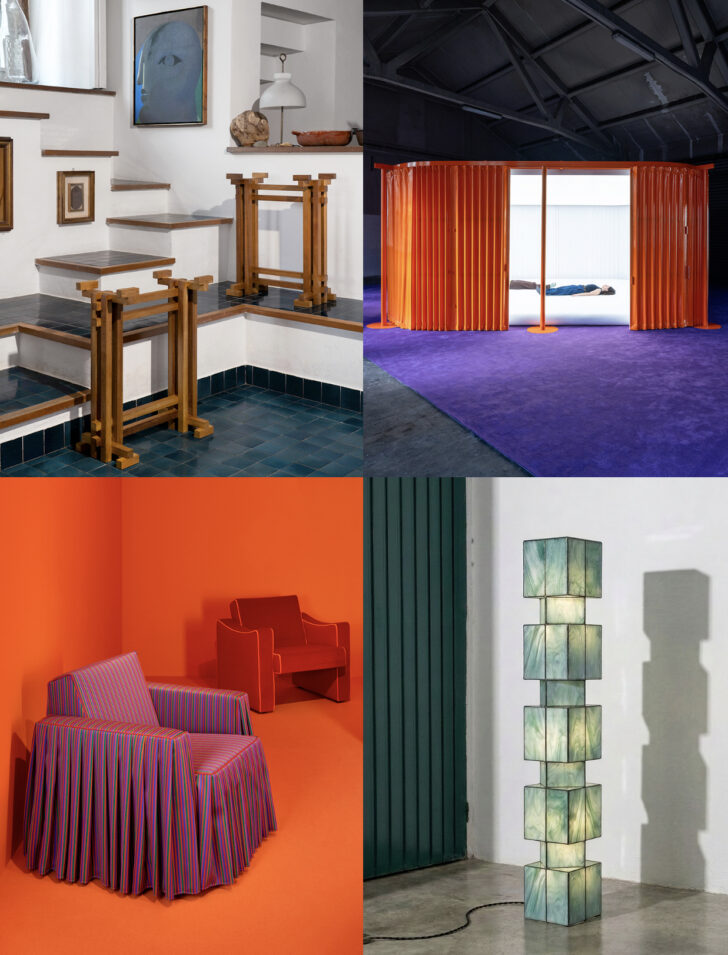
CLOCKWISE, FROM TOP LEFT:
–
In Alcova’s Villa Pestarini show, the granddaughter of Milan architect Luisa Castiglioni (no relation to Achille) launched the first production of tables and trestles she created for her own home in the 1960s through Boccamonte, a project aimed at amplifying her legacy.
–
At Alcova’s other location, Objects of Common Interest designed an experiential pavilion in orange vinyl fabric — with a white Turrell-like inflatable chamber — for the textile-door company Dooor.
–
We featured the debut of Berto, Spanish designer Alberto Sánchez’s line of lights made with Tiffany-style stained glass, last year; this year he launched new shapes and colors, including this mint-green totem.
–
Sancal debuted new furniture at the fair by Note Design Studio, Marc Morro, and more, but I especially like Júlia Esqué’s Twins series, where the same chair has both a simple, contrast-piped version and a high-drama ruffled version.
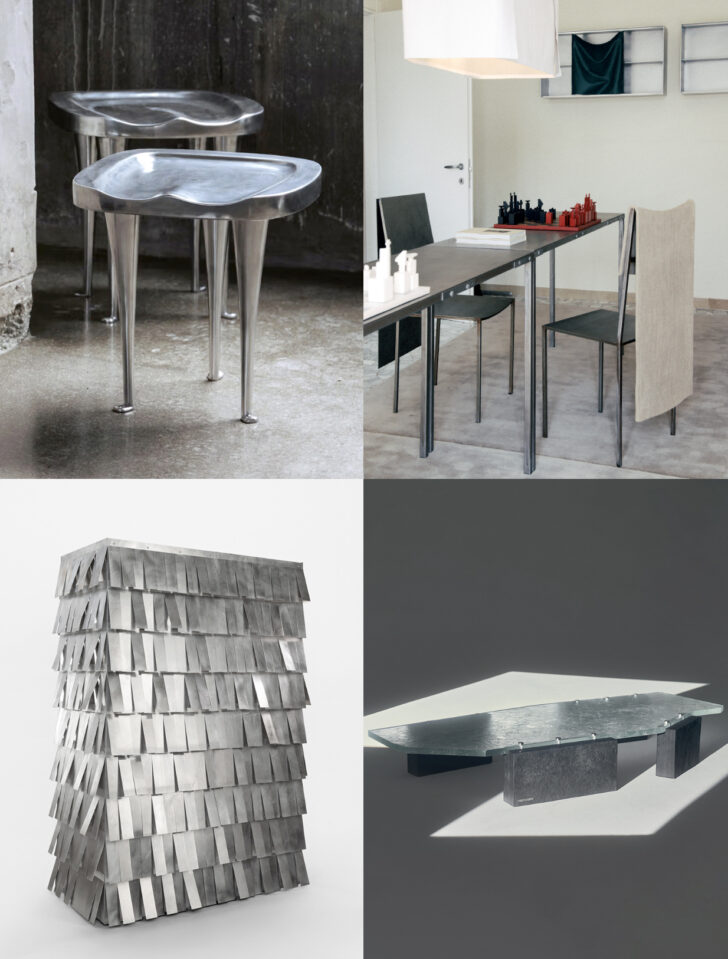
CLOCKWISE, FROM TOP LEFT:
–
In an Architectural Association group show at Alcova, Seoul- and London-based studio Order Matter showed these aluminum Node stools that combine an ergonomic seat with cute little zoomorphic feet.
–
Tbilisi’s Rooms took over a, well, room at Convey to present a scenographic installation with a chess set, pendant lamp, table, and metal chairs that feature draped backrests, some of which were covered in Soviet-era painting canvases.
–
One of my favorite single furniture pieces this week was this coffee table that bolts an irregularly-shaped cotisso fused-glass top to stone legs, part of a great collection by NM3 for Visionnaire that references John Lautner houses in L.A.
–
Similarly, I’d basically give anything to own this cabinet with metal fringes by Rome’s Millim Studio — pure joy tempered with icy-cool chic. Created in collaboration with the Italian metal workshop Poignee.