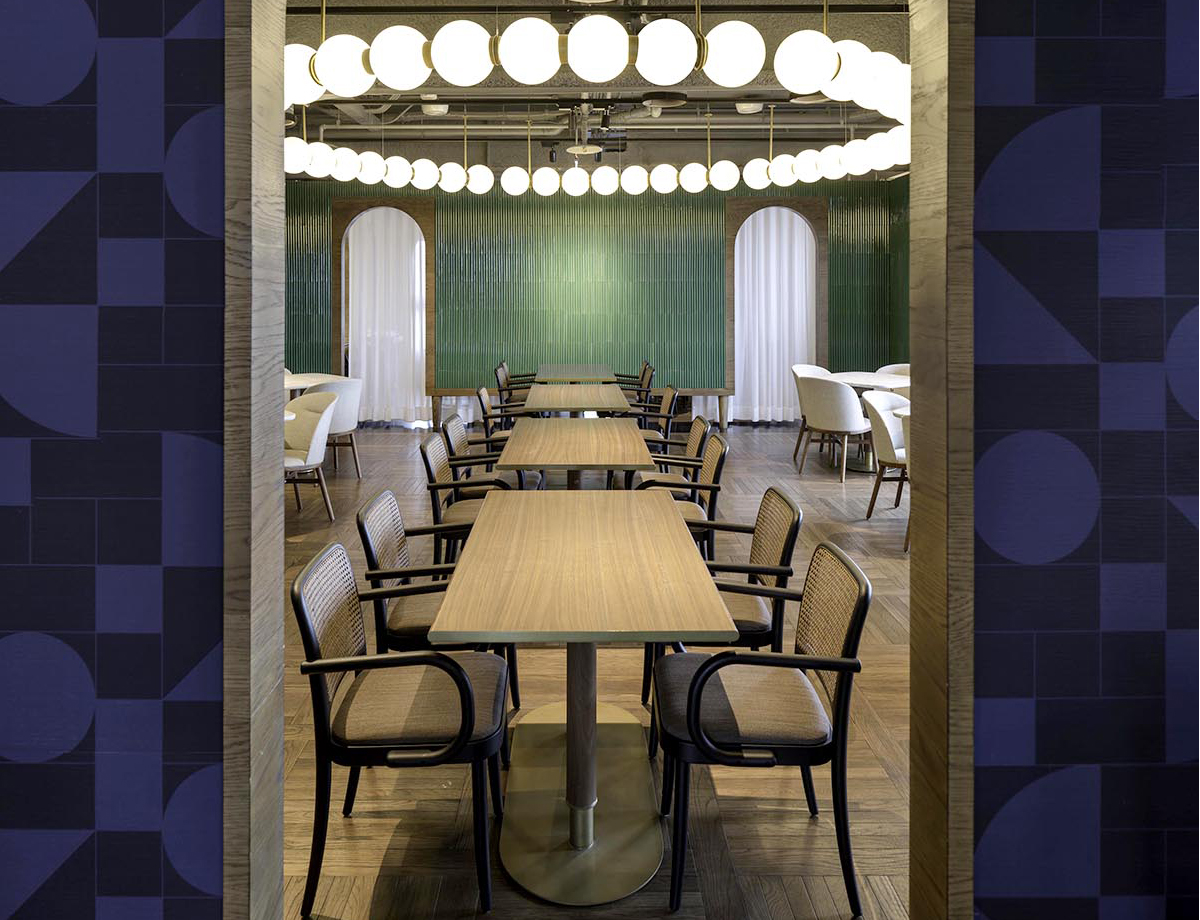
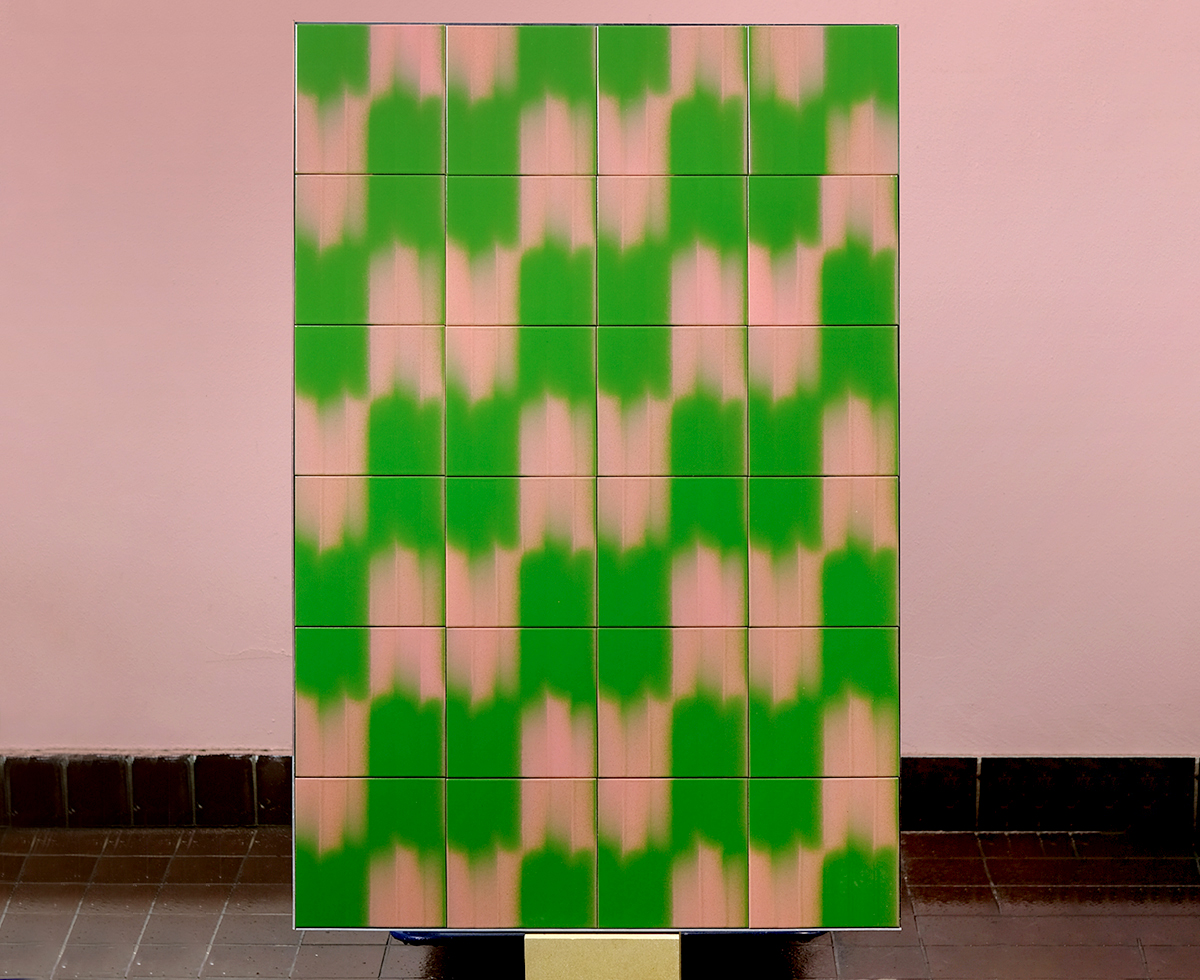
05.29.26
The Weekly
SPOTLIGHT: Two perfect tile series for transforming your kitchen, bath, patio, or any surface that could use a bit of zhuzh
Welcome to the new Sight Unseen, a weekly newsletter that delivers the best of the design world — news, trends, shopping advice, interviews, travel recs, and more — straight to your inbox. If you’re not subscribed, follow this link to sign up. Want to partner with us, advertise, or submit your work (guidelines here)? Email us at hello@sightunseen.com.
Today’s Spotlight newsletter is presented by Mutina as part of our Patrons program, but all thoughts and editorial content are our own. Thank you for supporting the brands that support Sight Unseen!
Squares, Grids, Color Theory — Mutina’s Collab With The Albers Foundation is a Match Made in Heaven
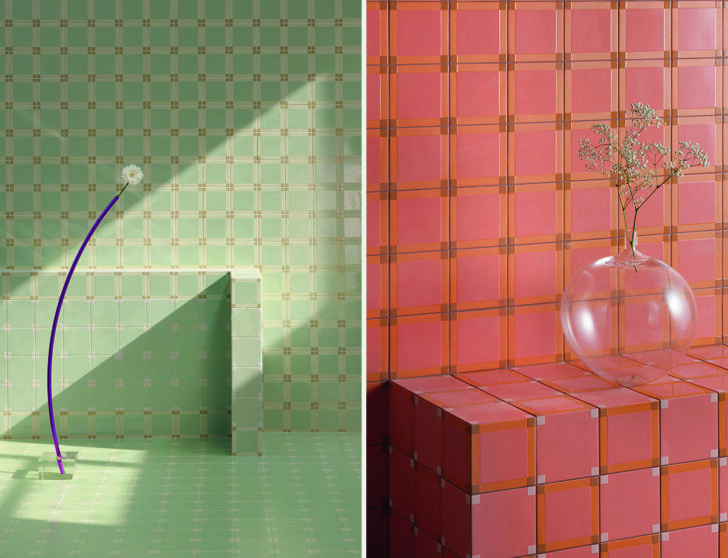
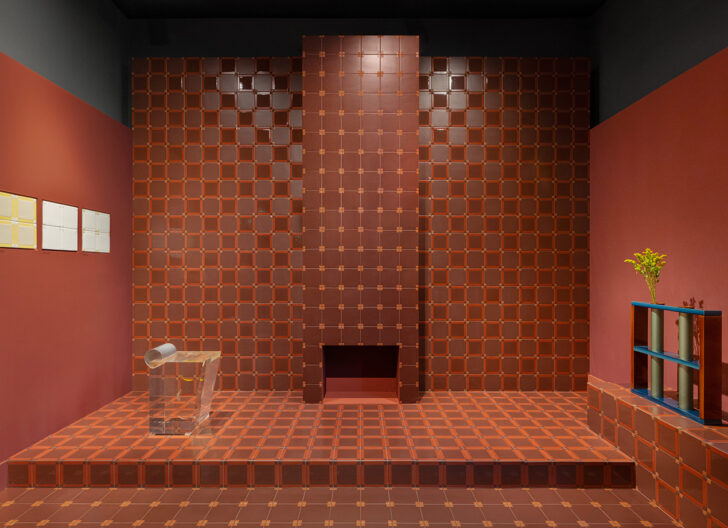
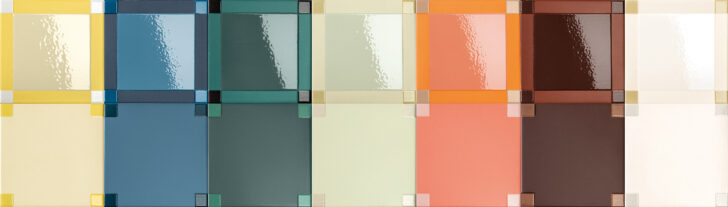
In Milan this year, Mutina debuted two major tile collaborations, including these tonal, color theory–inspired squares with The Josef and Anni Albers Foundation. Photos: Gerhardt Kellerman, Michela Pedranti
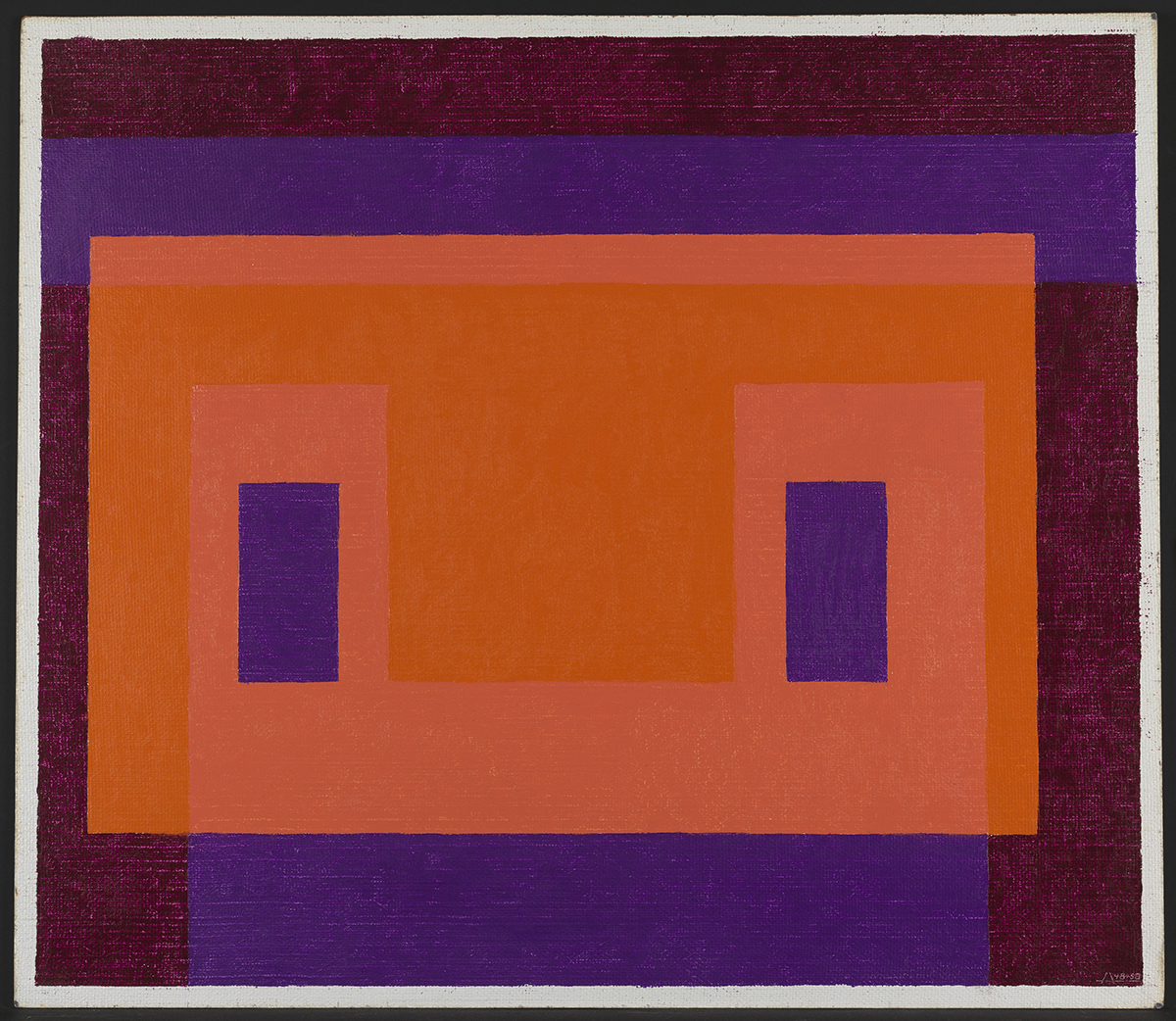
Josef Albers spent decades proving that color has no fixed identity: that it shifts, bleeds, and transforms depending on what surrounds it. Mutina, a company whose own design language has long been organized around the quiet drama of surface, has found in that conviction something close to a mirror. The result of Mutina’s collaboration with The Josef & Anni Albers Foundation is Homage to the Square, a ceramic tile collection that doesn’t recreate Albers’s iconic painting series — something the charter of the foundation in fact forbids — but continues thinking through it. Albers made over 1,000 different variations of the artwork in the nearly 30 years he worked on it, until his death in 1976, in an effort to investigate how colors could change in relation to both each other and their wider context. This collaboration gives the work a new life, a new audience, and an entirely new context to inhabit, in this case — when installed in a home — on a completely different visual scale.
The individual elements of the series are 15×15 cm tiles made from porcelain stoneware in which the natural variations of the firing process have been preserved rather than engineered away, and they’re available in two patterns and seven tones. Dash places a glossy section inside a matte frame with four small glossy squares anchoring its corners, the whole surface catching light differently at every angle. Dot is quieter but no less considered: polished corner squares set against a matte foreground. Both patterns can stand alone or be combined, each arrangement producing its own perceptual argument. The palette of Sea, Evergreen, Chocolate, Ice, Citron, Sage, and Peach was developed in collaboration with Albers Foundation curator Nicholas Fox Weber, via extensive research into glazes and pigments specifically calibrated to reproduce on ceramic the same tonal vibration that moves through Albers’s paintings. What Mutina understands, and what the collection demonstrates, is that Albers was never really talking about painting. He was talking about how we see.
The Interlocking Geometries of Neri & Hu’s Mutina Tiles Were Inspired by Chinese Bamboo Braiding Techniques
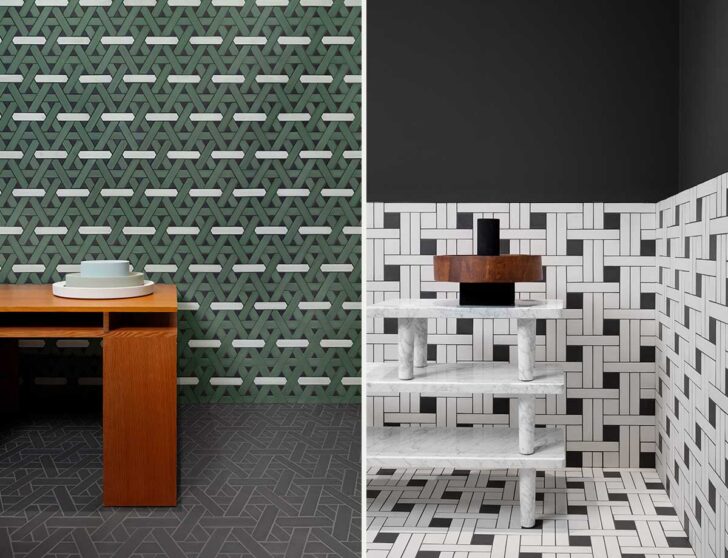
Neri & Hu’s porcelain tile collection for Mutina features different shapes and sizes that can be combined to resemble traditional Chinese weaving patterns. Photos: Michela Pedranti, Delfino Sisto Legnani
The Shanghai-based architects Lyndon Neri and Rossana Hu have long operated at the crossroads of cultural memory and contemporary form. Now, the duo have turned their attention to ceramics for Mutina, with two collections that feel less like products and more like arguments about how the past might be carried forward or mutated without being diminished.
Weaving is the more architecturally expansive of the two: a system of full-body porcelain stoneware coverings that abstracts the ancient Chinese art of bamboo weaving into a modular graphic language. Three interlocking shapes — San Jiao, Si Fang, and Ba Leng, named for the triangle, the square, and the octagon — govern a rhythm of solids and voids, while a strict palette of matte tones mimics bamboo’s progression through maturation: whites, creams, grays, blacks, and greens only. The technique is precise, with each element individually mold-extracted by hand and mounted on mesh like mosaic, its edges bearing the slight irregularities that distinguish craft from manufacture. Controlled variation in the clay mixture and temperature fluctuations during firing give the surfaces a sense of movement.
Mutina often calls on its collaborators to design a corresponding tableware line, and Neri & Hu responded to the brief with Hé, a collection of wood and ceramic serving vessels that reinterpret the traditional geometries of fang and yuan, symbols of earth and heaven in Chinese cosmology. (The two color palettes for the vessels are, appropriately, dawn and dusk.) Together, the two collections do what Neri&Hu have always done best: translate the weight of inheritance into something you can live with now.
In a New Exhibition, Josef Albers’ Paintings Are Arranged In a “Perceptual Journey” Meant to Reinvigorate The Way We See
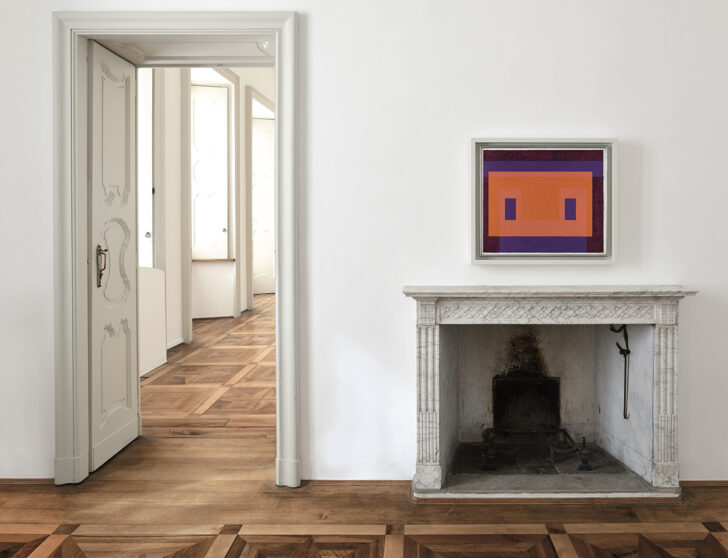
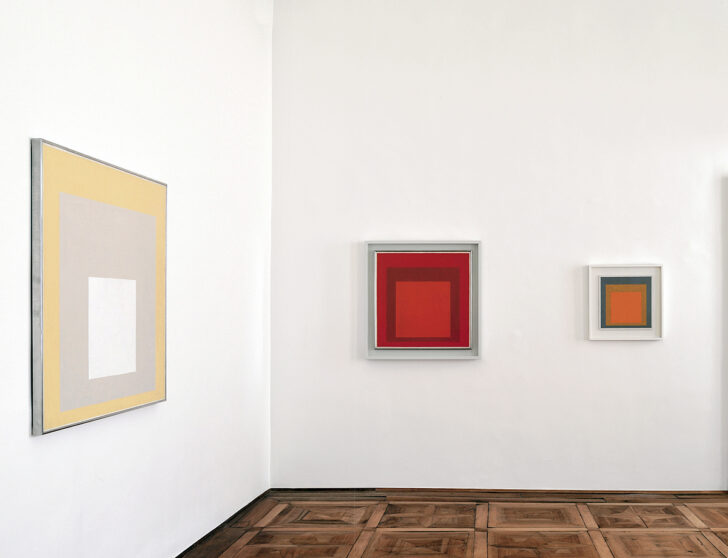
On view until January 10 at Villa Panza are more than two dozen rarely seen works from Josef Albers’ Variant and Homage to the Square series. Photos: Michele Alberto Sereni
On a hillside above Varese, inside the 18th-century rooms of Villa Panza, 29 paintings are doing what Josef Albers spent a lifetime proving color could do: move. “Josef Albers: Meditations,” now open at the Lombardy estate that Count Giuseppe Panza di Biumo transformed into one of Italy’s great repositories of American postwar art, brings together rarely-seen works from Albers’ Homage to the Square and Variant series in a setting of extraordinary dialogue. Curator Nicholas Fox Weber, executive director of the Albers Foundation, selected each painting for its capacity to “realize Josef’s vision of color interaction to an extent that makes each of them ineffably sublime.” Some of those pieces, like the iconic orange and purple “Orange Front,” will be a familiar balm to anyone who obsessively visited the Josef Albers in Mexico exhibition at the Guggeheim in New York a few years back. But others, like Dark (1947) — an asymmetrical assemblage of grays and blacks, startling in its intensity — evoke the unsettling feeling of something like abasement. “Art is not to be looked at. Art is looking at us,” Albers pronounces in a video at the end of the exhibition — a reversal that makes you question not only what you’ve just seen, but everything you’ve ever looked at.
It is coincidental but no less exhilarating that the exhibition coincides with the Mutina collaboration, which feels less like licensing and more like recognition. In both the Villa Panza show and in Mutina’s tiles, geometry is an instrument of perception rather than decoration, and color is never static, never isolated, but alive in relation to everything around it. At Villa Panza — itself a layering of centuries, patrons, and visions — that argument has found its most persuasive address.
Shopping For
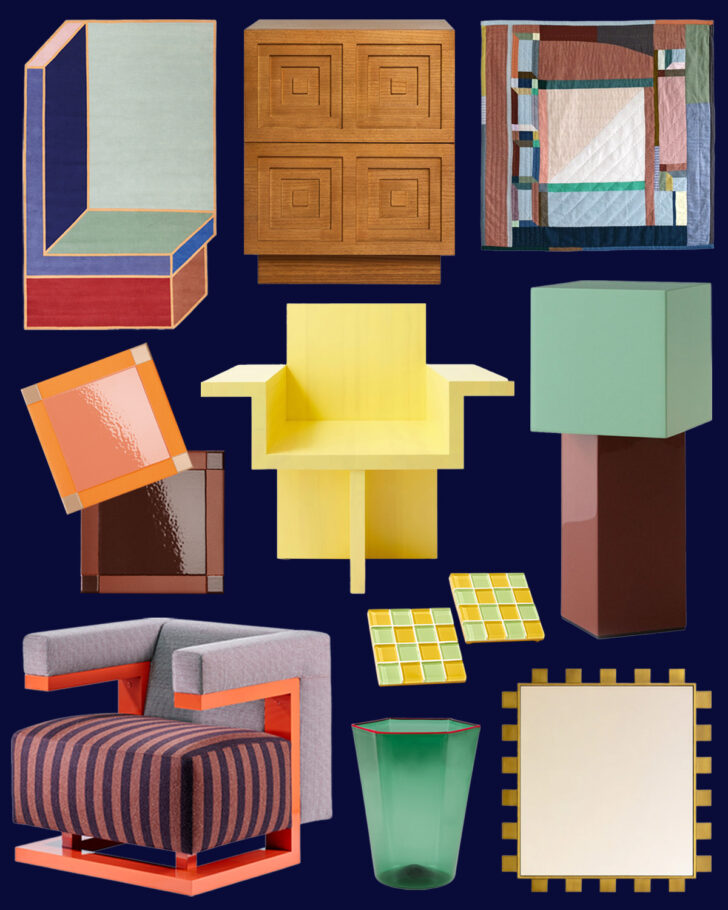
COLORFUL, GEOMETRIC, ALBERS-INSPIRED DECOR
1. Visioni rug by Patricia Urquiola for cc-tapis, $8,626, mattermatters.com
2. Hanson nightstand by Lulu & Georgia, $898, luluandgeorgia.com
3. Frame quilt by Thompson St. Studio, from $485, thompsonststudio.com
4. Pivot lamp by &Tradition, $565, lumens.com
5. Checkered square wall mirror by Dounia Home, $2,000, douniahome.com
6. Green Laguna glasses, $1,400 for 6, cabanamagazine.com
7. Big Night tile coasters, $48 for 2, bignightbk.com
8. F51N Chair by Katrin Greiling for Tecta, $7,297, rarify.co
9. Dash tiles by the Albers Foundation for Mutina, mutina.it
10. Horse chair by Magniberg, $1,900, magniberg.com
-
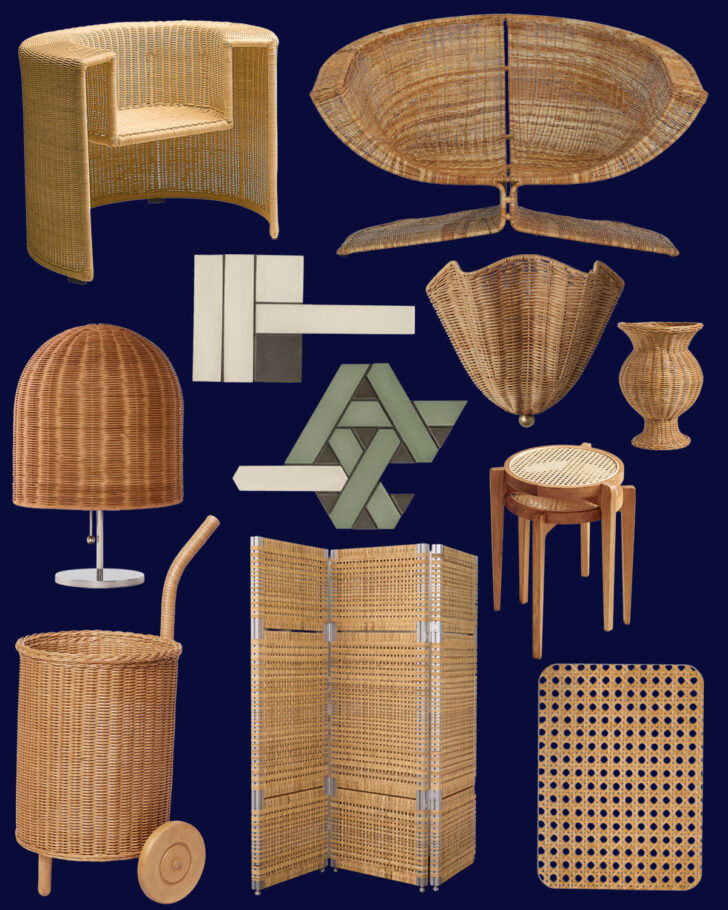
WOVEN, NERI & HU–INSPIRED FURNITURE AND MORE
1. Charlotte armchair by Mario Botta, $4,350, artemest.com
2. Lotus lounge by Miller Yee Fong, price upon request, radnor.co
3. Alford vase by Crate and Barrel, $119, crateandbarrel.com
4. Ravello sconce by Woven, $295, lumens.com
5. Le Roi side table by Norr11, $545, finnishdesignshop.com
6. Cannage placemat by Dior, $430, dior.com
7. Anodized wicker screen by Tino Seuberg, price upon request, tinoseubert.com
8. Tukki trolley by Ferm Living, $245, lumens.com
9. Bell wicker table lamp by Ellison Studios, $556.50, dwr.com
10. Weaving tiles by Neri & Hu for Mutina, mutina.it