10.12.26
The Weekly
The furniture collection that’s about to revolutionize public spaces
Welcome to the new Sight Unseen, a weekly newsletter that delivers the best of the design world — news, trends, shopping advice, interviews, travel recs, and more — straight to your inbox. If you’re not subscribed, follow this link to sign up. Want to partner with us, advertise, or submit your work (guidelines here)? Email us at hello@sightunseen.com.
Mark Grattan’s Latest Furniture Collection Redefines What a Commercial Interior Can Be
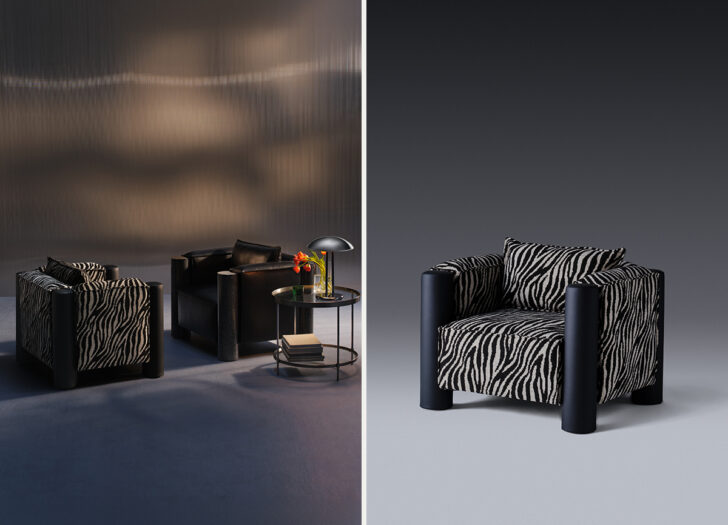
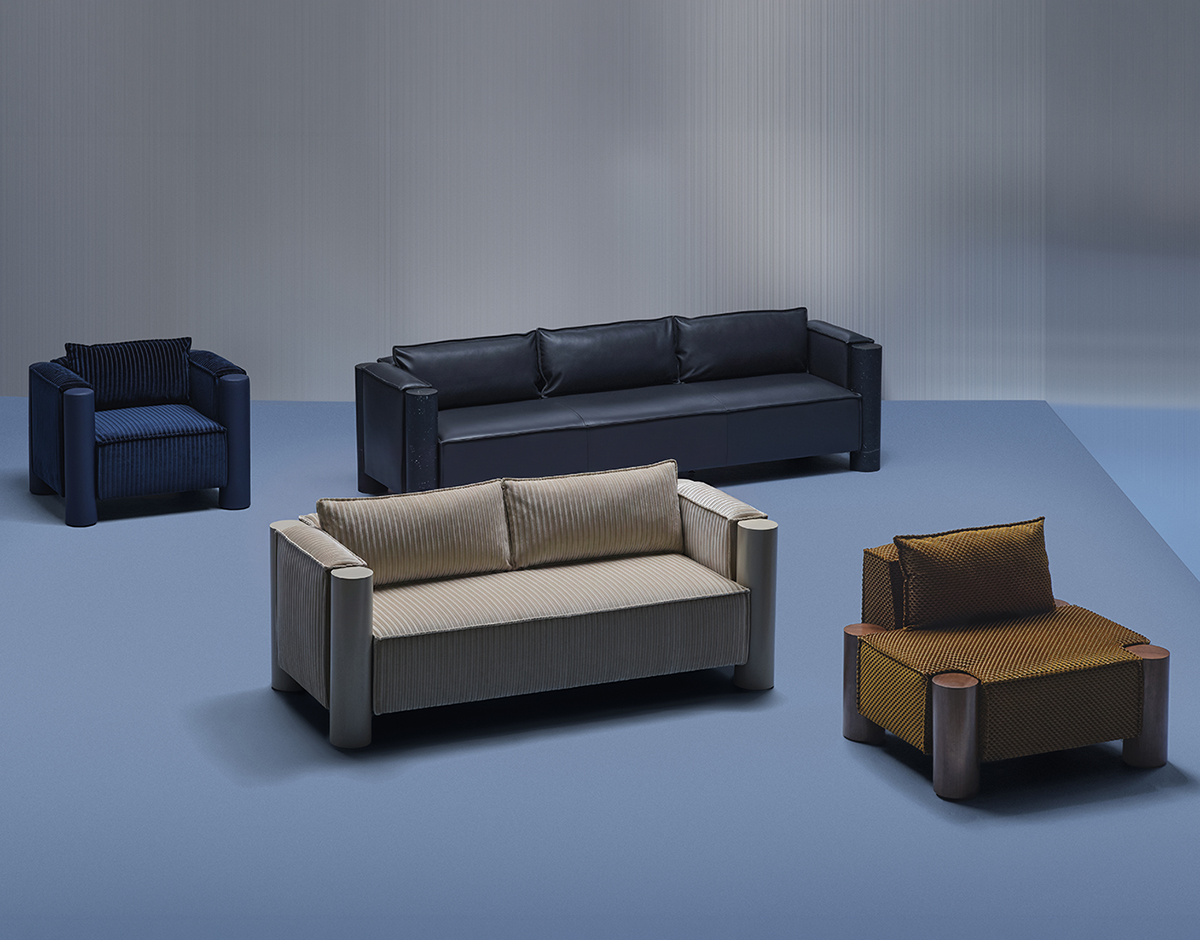
With its luxurious fabrics and sculptural legs, Mark Grattan’s Cosme collection for HBF introduces a new visual language to commercial interiors. Photos: Matthew Gordon
The Brooklyn-based designer Mark Grattan has a habit of blasting our perspective wide open, making us consider if all along, we’ve been thinking too small. Years ago, when he debuted his Docked in Rio bed, we asked: Why have we only been coveting low-profile wooden platforms? Shouldn’t we all have a pink suede bed wrapped in metal? When his Bed-Stuy apartment appeared on the cover of Architectural Digest, everyone whispered: Can you actually do that to a rental? And looking at Grattan’s latest collection, Cosme, for the North Carolina–based contract company HBF, you might wonder: Why has no one ever thought to make commercial furniture so cool before?
Grattan has said that his resourcefulness regarding his own interiors comes from a place of want: “What you can’t have ultimately can instruct the way you’re supposed to live.” The same could be said for Cosme; in his first outing for the contract market, Grattan simply throws away the rulebook. He originally conceived the collection as a concept for a celebrity interiors project. “It was deeper, lower, and born from a desire to create something genuinely luxurious for the human body,” says Grattan. He retooled the pitch for HBF, and what’s resulted is a 7-piece collection that combines softness and structure and marries the comfort and luxury of residential furniture with the high-performance fabrics and longevity of something bound for a more public space.
The details are special. Cushions and pillows — upholstered in leathers, ribbed velvets, dijon bouclés, and zebra prints — end in a kind of flamboyant flange welt. The relatively simple forms of the chair, sofa, and ottoman are punctuated by rounded column legs made from veneer, marble, solid surface, or upholstered leather — what HBF calls “a deliberate act of softening.” It’s a visionary collection, one that shows not only that more contract companies should call upon designers with an authorial voice but also that more companies in general should call upon Grattan — something we pointed out years ago!
In Sydney, Two Exhibitions That Deal With Obscurity and Transformation
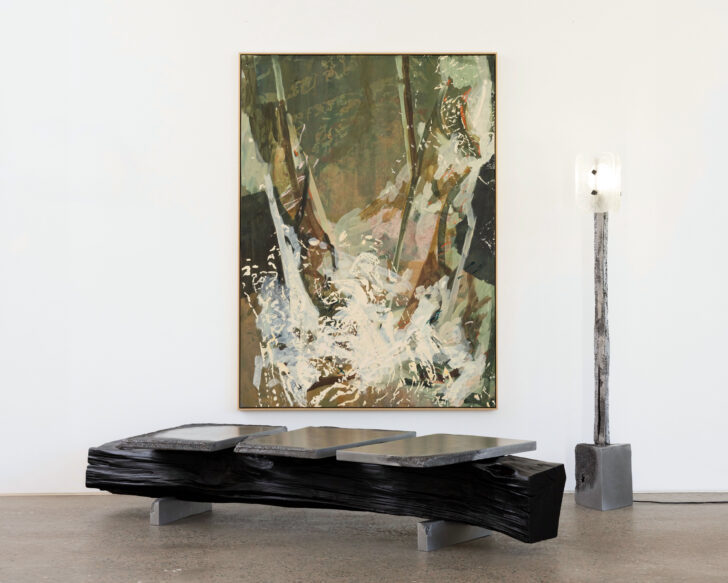
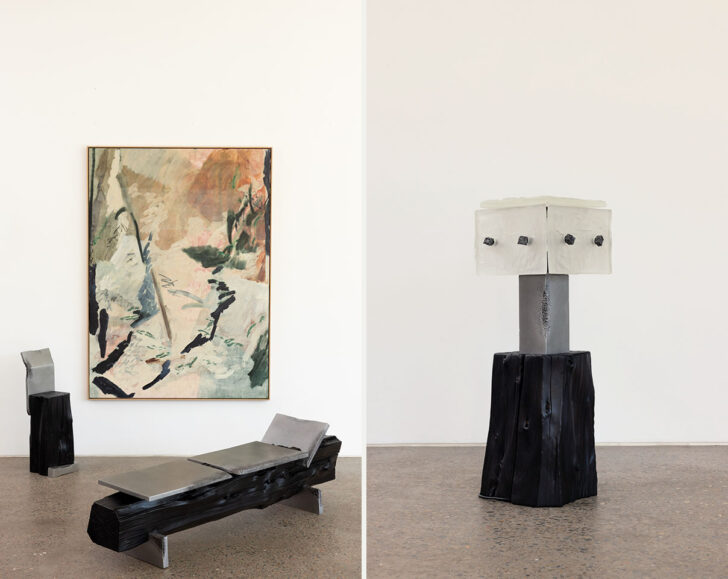
On view at Hake House in Sydney are two separate exhibitions that nonetheless go very well together: paintings by Ash Holmes and new charred furniture pieces by Saturday Yard Work. Photos: Cory Roberts
On view at Hake House in Sydney are two separate exhibitions that nonetheless go very well together. Vessels, a series of paintings by Ash Holmes, is preoccupied with the idea of a container as not merely an object but “a body, a home, a relationship, a family history, or a story passed from one generation to the next.” During WWII, the artist’s great-grandmother was commissioned to create camouflage swatches; here, Holmes has reinterpreted the pattern on upcycled sailcloth, moving beyond the idea of camouflage as a means of concealment. “Within Vessels, camouflage becomes a meditation on visibility and protection, and on the ways women have historically adapted themselves to, moved through, and occupied the spaces around them.”
Paired with these paintings is a series of furniture by Nathan Martin of Saturday Yard Work, made almost entirely from two 8-foot-long cypress logs that Martin sourced from a sawmill in the Adelaide Hills. In a way, Martin’s work also deals with concealment and visibility. He chars the split logs to a blackened state that begins to not even resemble wood, and, for the sand-cast aluminum elements he pairs with the wood, he scorches and agitates the metal, leaving behind a pocked, lava-like surface texture. For the exhibition, Martin made benches, seats, and a daybed, but the stars of the show, to my mind, are two lamps whose thick, cast-glass shades sit atop totems of cypress and steel, affixed via a button-like detail made from chunks of metal. On view through October 24.
Meet Us for Dinner At This Opulent New Supper Club, Designed by Rafael de Cardenas
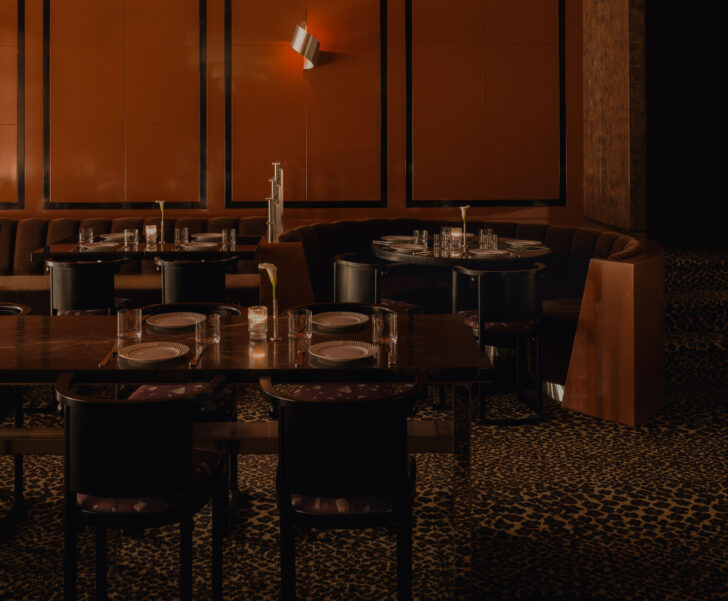
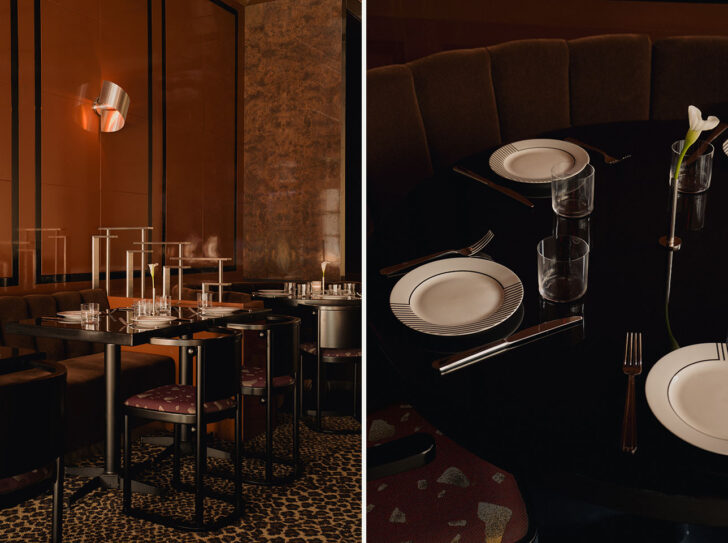
Romy, an opulent new supper club in Soho, was designed by Rafael de Cardenas, Ltd and based loosely on Adolf Loos and the Wiener Werkstätte. Photos: Matthew Kappas
How many more opulent restaurant interiors can New York City take? When they look like this, we’ll allow. Longtime friend of the ‘Seen Rafael de Cardenas recently unveiled his studio’s interior for Romy, a glitzy steakhouse and supper club in Soho that’s run by restaurateurs Cobi Levy and Will Makris and looks like a Strip House for the new millennium (IYKYK). The design, which features oxblood and black lacquered paneling and a leopard-print rug, draws from Adolf Loos and the Wiener Werkstätte — and even deploys Josef Hoffmann’s Fledermaus chair, in a move that nods to another New York dining institution, Mr. Chow. But, with its custom sconces and George Condo artwork, the 40-seat space feels decidedly modern. “ROMY grew out of a fascination with spaces that seduce, feel otherworldly, and belong distinctly to the evening,” says de Cardenas. Save me a martini, I’m on my way.
You’re Going to Want to Bookmark This New Destination for Perfect Vintage Objects
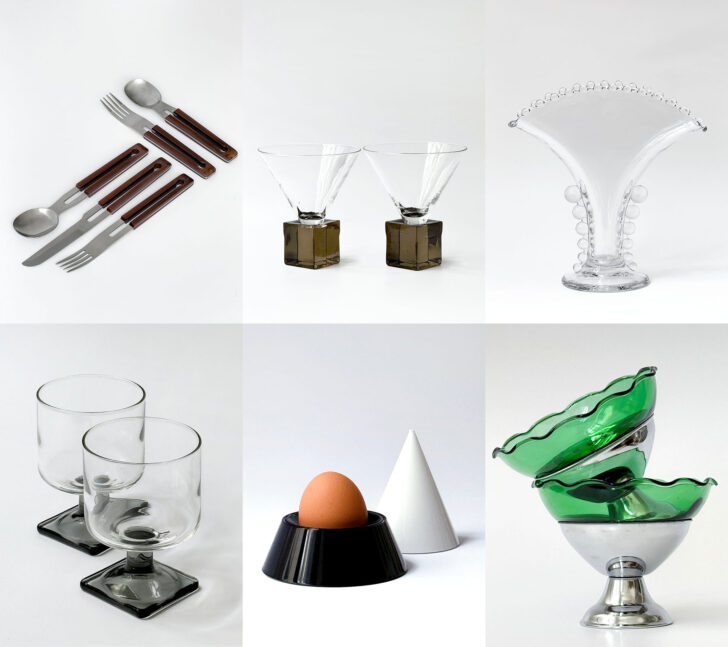
A selection of items for sale at Jussu, my new favorite online vintage shop.
Monica and I follow probably hundreds of vintage shops on Instagram, and sometimes they start to blend together. But once in a while, one comes along that perfectly captures the Zeitgeist. My latest obsession is Jussu, which was founded earlier this year by Jesse Lee, a stylist and designer from the fashion world. The first few collections have featured things like Bodum egg cups, a set of Pierre Cardin cutlery, and so many cocktail glasses, but what I love most about Jussu is that despite being an online retailer, the experience of shopping it feels real and specific. This is thanks to a cohesive brand identity and web design that includes an interactive tablescape, film scripts for imaginary films, an ever-changing playlist, and mystery objects. Says Lee: “Rather than presenting each object as an isolated product, Jussu considers how pieces from different periods and styles can live together through a shared visual or functional relationship.The website functions as a shop, but is built around discovery and participation: something to explore.” FYI: Someone better snag this Sophie Lou Jacobsen–esque vase before I do.
Editor’s List
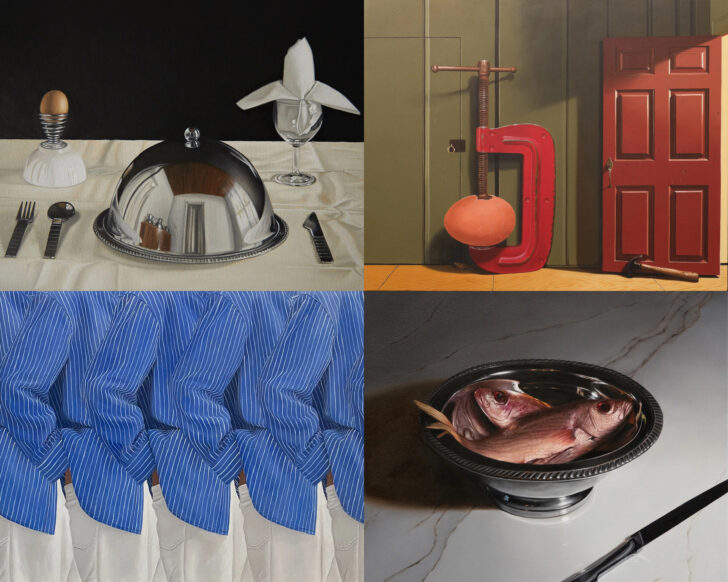
CLOCKWISE, FROM TOP LEFT:
–
Seeing as how the September art season in New York just came to a close, I wanted to theme this Editor’s List around a specific style of hyper-realistic art I’ve been quite drawn to lately. What are we calling this? Photorealism? Flemish naturalism? Whatever it is, I’m in. This painting by the London-based artist Amanda Shadforth popped up on my Instagram the other day, and I was immediately obsessed. It depicts some of my favorite object categories, including egg cups, flatware, and you know what? Let’s put covered dishes in there, too. Is there anything better than getting room service and lifting one of these up with a flourish?
–
Speaking of eggs, I saw this Conner O’Leary painting at the Martha’s Gallery booth at The Armory Show. Broken eggs, hammers, and open doors all recur in O’Leary’s paintings, all images that evoke a kind of unease — Chekhov’s C-clamped egg and all that.
–
We wrote about Danielle Fretwell last year after I saw her work at NADA, but the New Hampshire–based artist definitely falls into this category. She told us how her painting style differs from traditional vanitas paintings: “I’m not interested in decay. The whole point is this frozen state of perfection.”
–
I discovered the British artist Murray Clarke through IRL Gallery earlier this year. The striped shirt has never looked so good!!
News
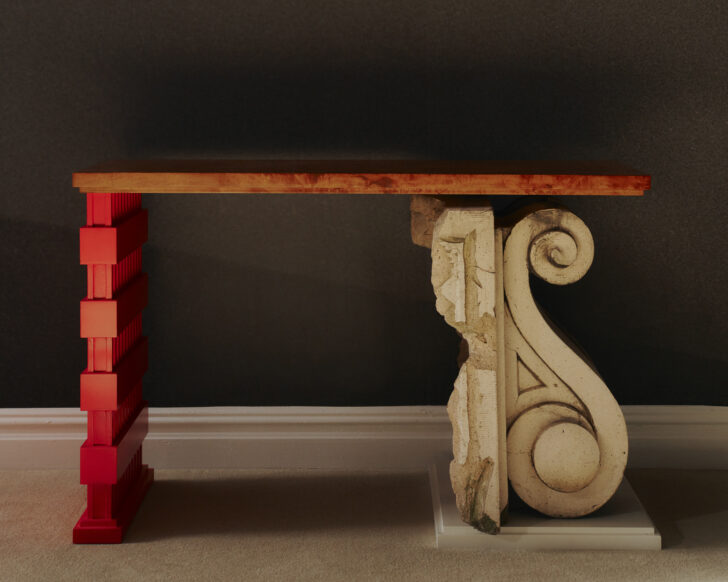
New pieces from Rafael Prieto’s The Future of the Past exhibition at Emma Scully Gallery pair stone architectural fragments with machined parts in lacquered wood. Photos: Clement Pascal
–
I wrote more about the new exhibition at Emma Scully Gallery in New York when I profiled Rafael Prieto for Curbed last month, but it’s fun to finally see the finished pieces. TLDR; Prieto incorporated stone architectural fragments salvaged from the building next door into a new collection called The Future of the Past; the collection also includes more abstracted profiles in lacquered or painted birch. Sculptural and lovely.
–
At Blunk Space in Point Reyes, California, there’s a new exhibition up by the London artist Francesca Anfossi, who recently completed a residency at Blunk House. The pieces are just plain fun, with lots of functional ceramics including a typology that is new but precious to me: egg baskets, which would be excellent for people who are unafraid of salmonella and like to keep those suckers on the counter (Europeans). Plus, there are wooden wall pieces with ceramic inset shapes, almost like chic, multi-media Utensilos.
–
In case you missed it, Tiwa Gallery recently pulled up its New York roots and moved to London — at least for now. Luckily, the Tribeca loft space, which is quite dear to me, remains open to the public in the guise of a new showroom for Autumn Sonata, the towels and textiles brand run by Lilli Elias. Elias is slowly making it her own, with a wall of plates she’s collected from Dutch flea markets, a vintage display case she picked up on Facebook Marketplace, and lots of other fun antiques and custom pieces. Plus, you can see the majority of pieces from the collection in person. My question is: When are we getting bedding!?
–
One of our favorite shoppable galleries, Aarticles in Copenhagen recently moved into a shared showroom with the Danish printmakers Borch Editions, meaning now you can visit your favorite little objects even when it’s NOT 3Days of Design.