06.23.26
The Weekly
I Expected to Love My First 3Days of Design in Copenhagen. But I Could Never Have Anticipated What Would Make It So Great.
If you can believe it, this was my first year attending 3DaysofDesign in Copenhagen, and I went to the fair, now in its 10th year, armed with absurdly high expectations. I knew that just existing in Copenhagen in early June — using Lime bikes to cycle around, drinking natural wine, eating smørrebrød — would set a good baseline for fun. But after my experience at Salone, which I wrote about here, I felt increasingly desperate for Copenhagen to mean something. I told people I was going because, as a chronicler of design fair culture, I felt compelled to see one that had become such a word-of-mouth success. But on a personal level, it’s like I needed Copenhagen to prove to me that design fairs were still worth attending.
As hesitant as I am to say this — lest everyone frantically start planning their show next year in Denmark, which is simply not the right move for everyone — Copenhagen actually exceeded my expectations. As I went through the week, seeing the precise things where, to me, Milan fell short — i.e. incredible group shows assembled by designers and brand presentations so intentional they bordered on religious — I began to develop a theory about what made this year in Copenhagen so great. I crystallized it in my group chat. “There was a matriarchal energy to 3Days that stood in stark contrast to Milan,” I wrote. “Women were at the helm of almost every company or exhibition I loved. Not to the exclusion of men at all. But in a way that I have never in my life felt at a design fair.”
There were Rhya Johnston-Wallace and Kasia Sznajder, two ex-Frama employees who not only curated their own star exhibitions but also helped organize and promote presentations by a collection of mostly female-led brands or galleries. There were the big Danish brands, from Fredericia to Fritz Hansen, with their new female creative directors. There were exhibitions centered around traditional women’s crafts, like the quilts at Tekla and or the sewing exhibition at Vaerktoj. There was the Ladies Power Lunch™️ I attended, hosted by Other Circle and PIN-UP, where I could speak with other women editors, brand directors, and designers about being consistently underestimated. There was Norwegian designer Daniel Rybakken’s 12-year-old daughter launching a light with Blond. There was a delightful Cecilie Bahnsen party in a garden with everyone in flouncy dresses. Not to get all Beyoncé about it but it really did feel, for a week, like girls ran the world.
As I began to think more deeply, I realized that everything I loved about Copenhagen fell under the umbrella of care — perhaps not surprising coming from a country that actually takes its citizens’ health and happiness seriously. The impulse at so many shows to present the process and meaning behind each project fell under this umbrella, as did the feeling I couldn’t shake that I was being taken care of by the city itself, with its beautiful parks, its ease in getting around (meaning you could actually see the work you wanted to see!), and its early-bird schedule (petition to make all parties from 4-7PM). The fact that Scandinavian brands and designers had an outsized presence — that Copenhagen hasn’t been fully taken over by the international community — added to the chummy feeling of being hosted. It was like Copenhagen and its residents knew it was their turn to show off the city’s natural beauty and immense talent reserves, and they rose to the occasion.
Of course not everything was perfect. But all in all, 3Days makes a compelling case for keeping fairs (mostly) region-specific and seeing what happens when you put women in charge of, well, almost everything. Here are some of my favorites from the week.
Display / Displayed
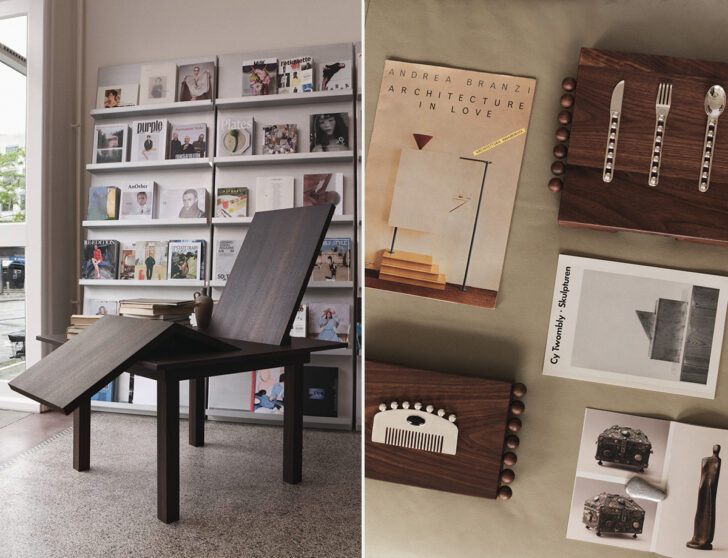
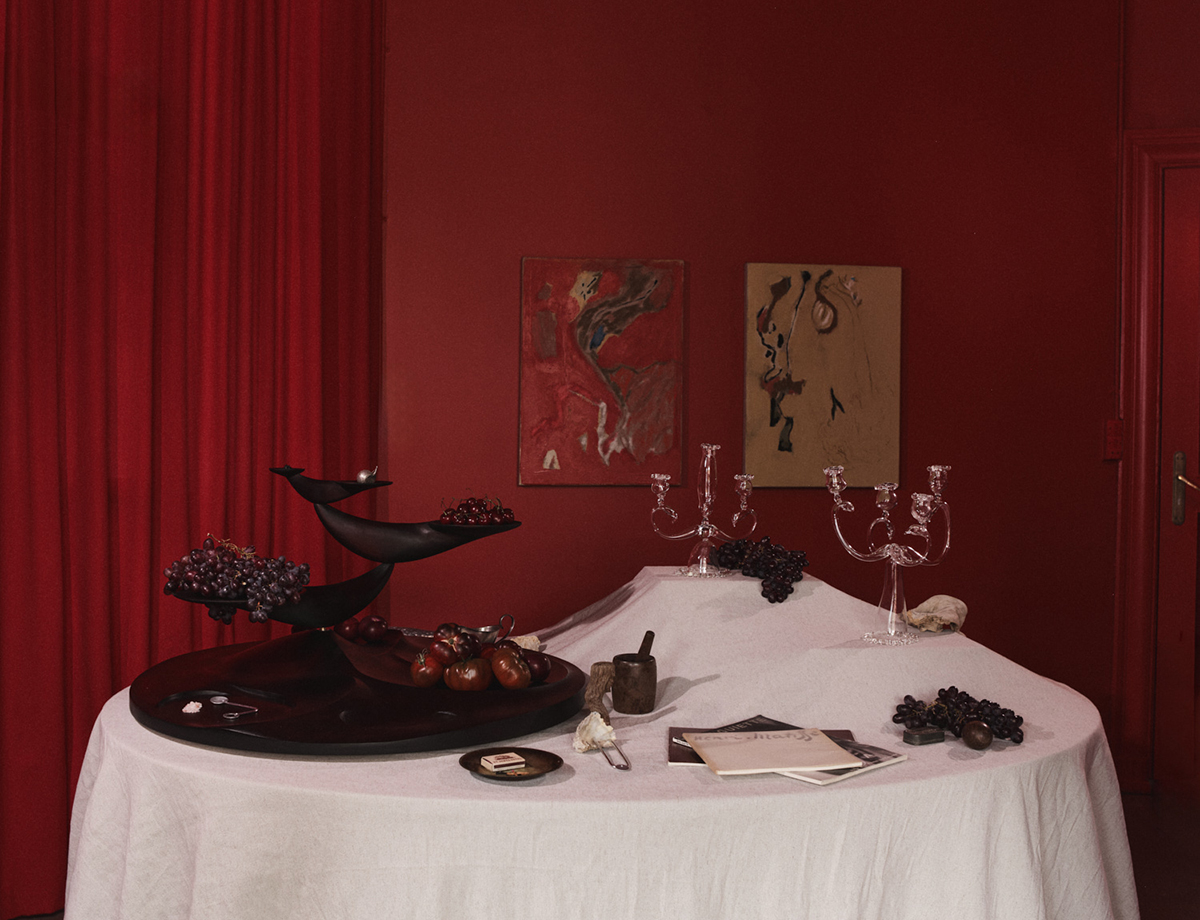
I was already planning to come to Copenhagen when I was invited by Rhya Johnston-Wallace to take part in a panel at Display/Displayed, her curated show at Simone Book Services, a new independent and archival bookstore. The show — which cast the objects we display as not frivolous but as essential tools to our artistic practice and our presentation of self — turned out to be one of my favorite exhibitions of the week. The show-stopper was Nicholas Shurey’s Lazy Susan, whose bi-level surfaces moved in opposition to each other when rotated, but there was also a beautiful chaise lounge for reading by Anton Defant and Karst (bottom left); book stands curated by Aarticles; a new ceramic piece by Derya Arpaç and Milka Zaleska; home objects by Jessi Burch (bottom right); hand-blown glass objects by Justine Menard; conceptual cutlery by Luna Schulze; and vintage furniture and objects from Palsgaard Kunstauktioner. An accompanying zine created by Manners, the still-life photography studio of Ed Gumuchian and Michelle Walters, featured sentimental objects by several participating designers and friends — very How to Live With Objects coded. Photos: Ed Gumuchian
Ukurant Makes Room
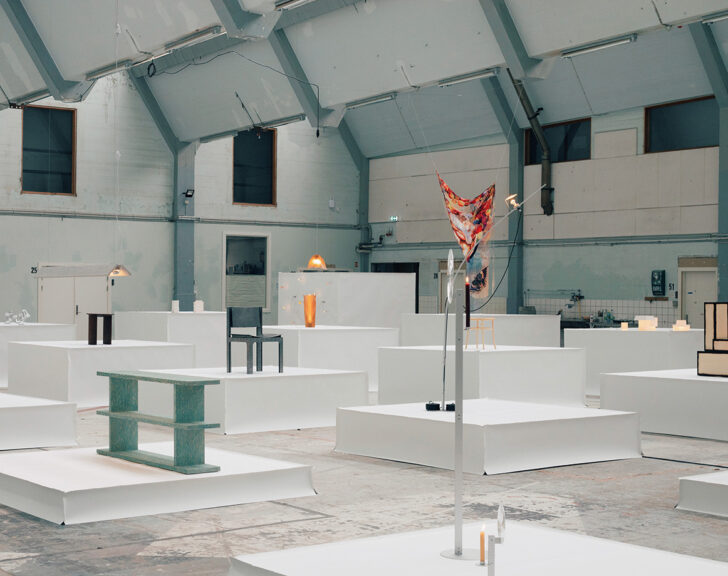
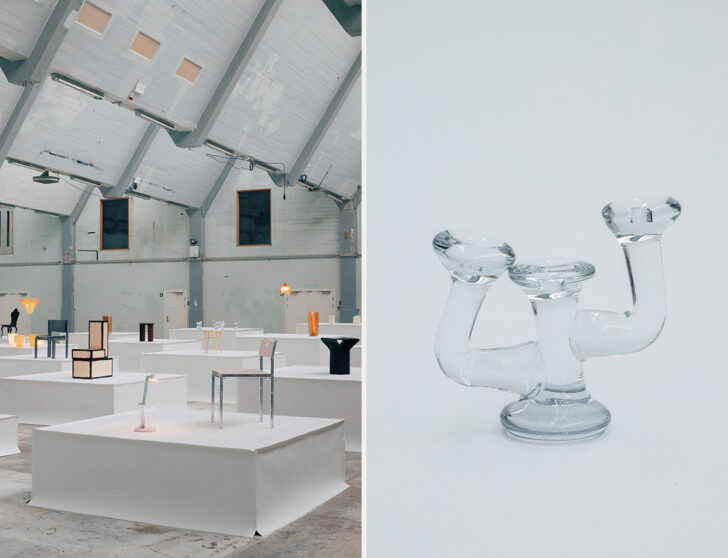
When anyone in Copenhagen asked me which exhibition was unmissable, I cited Ukurant Makes Room, a group show that gathered 26 experimental works by up-and-coming designers in a former factory that happened to be gorgeous. (You can’t fake that seafoam green wall color or that endless gabled roof!) Ukurant is a loose collective founded by Kasper Kyster, Josefine Krabbe, Kamma Rosa Schytte, and Lærke Ryom, and the works they curated drew on inherited traditions while testing their limits through new approaches, materials, and technologies; a small side room showed the process behind each work. Favorites included Caspar Fischer’s aluminum-framed chair and light, featuring baby pink HI-MACS; Julie Fuhlendorff’s glass candelabras (which I kept referring to as “Drunk Lumière”); and Subin Bae’s poplar plywood and resin chair, whose charred edges recalled metal welds. Photos: Maya Matsuura
Compositions by Aarticles
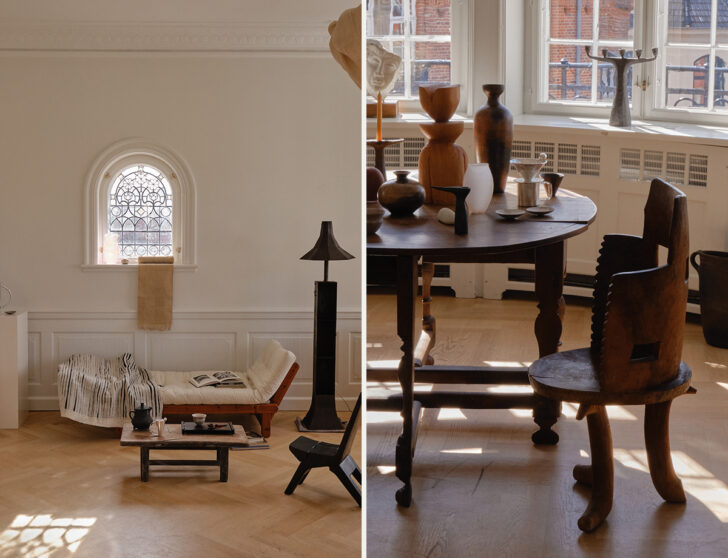
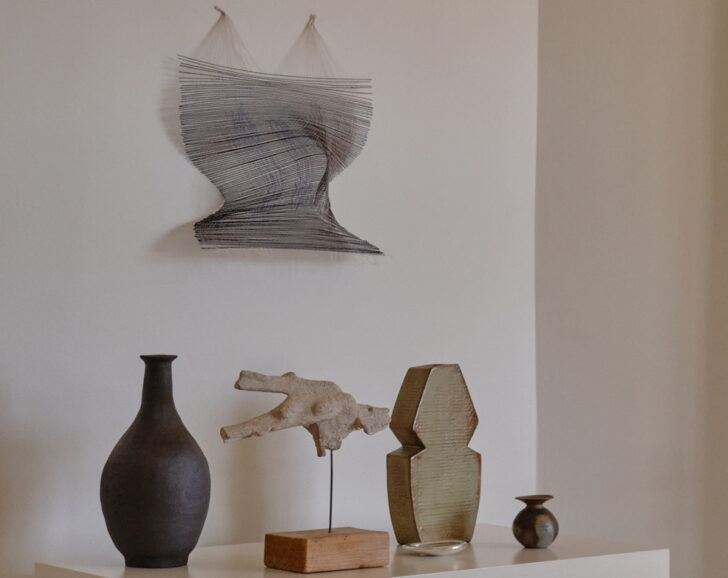
When I sometimes dream of opening my own shop or gallery, it looks something like Aarticles, a roving project by partners Kasia Sznajder and Fred Aartun that mixes contemporary and vintage finds to a T. Their second collection dropped during 3Days in an apartment building–turned–office in the center of town, and, like the first collection, it featured an array of items from some of our favorite designers, including rough-hewn wooden pieces by Vince Skelly (top right), lamps by Studio Kuhlmann (top left), vases by Shane Gabier (bottom), and glassware by Verre D’Onge. The difference is this time I walked away with one of the pieces: a wood and stainless-steel book stand by London designer Louie Isaaman-Jones, with weighted rocks for keeping the pages open for display. (Out of all the art books I own, my daughter chose a page from Chez Panisse Vegetables to display, befitting the book stand’s original purpose as a cookbook holder!) Photos: Elevine Berge
The Practice of Bathing by Baina
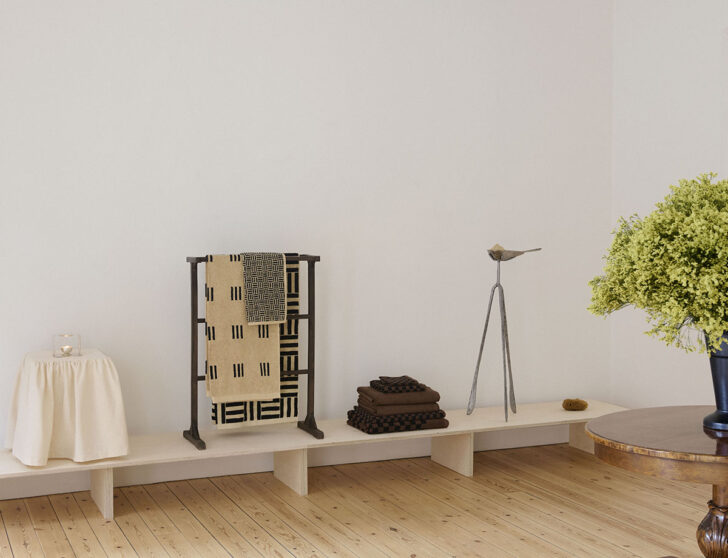
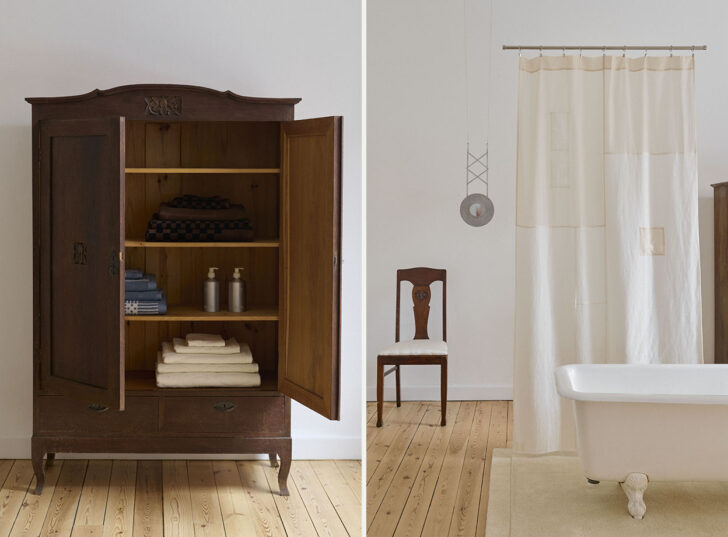
Bathing was big in exhibitions this year — perhaps not surprising considering how easy it is in Copenhagen to simply jump into the water (although not when I was there — the temperature was positively frigid). The Antipodean bathing brand Baina, led by creative director Bailey Meredith, organized an exhibition to launch Baina’s new home fragrance, and alongside vintage and antique bathing objects, six designers offered pieces that facilitated the washing ritual in some way. A hanging mirror by Olivia Bossy (bottom right); a hand-forged stainless-steel tripod for holding bath salts by Agnieszka Owsiany (top); a leather-fronted vanity cabinet by Marsha Golemac; and an oil burner to diffuse the new fragrance by Gala Colivet Dennison were among my favorites.
Vanitas in Use I and You Can’t See It From There at Innenkreis

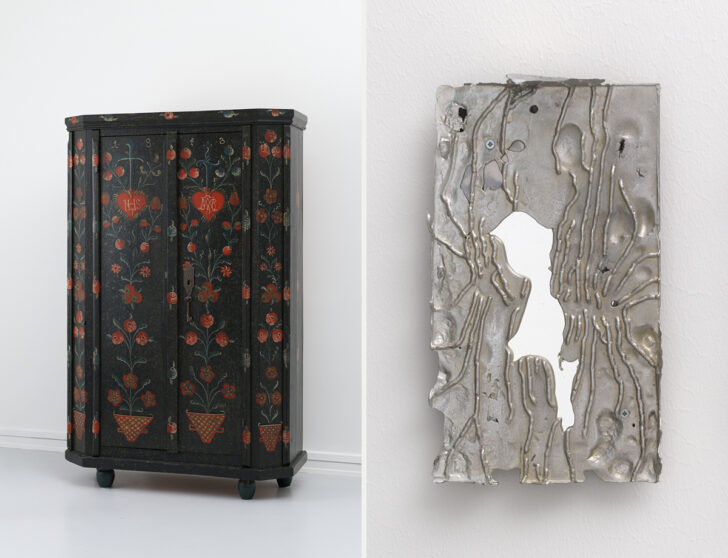
I recently wrote about Innenkreis, the new gallery founded by former Étage Projects gallery director Zeynep Rekkali Jensen, so I was happy to see its two new exhibitions in person on my first night in Copenhagen. The first was a solo show by the Danish textile duo Tronhjem Rømer (who also made lights for the show), but I was more taken by Vanitas in Use I, which I likened (complimentarily!) to an exhibition at Jacqueline Sullivan Gallery in New York. The art-historical concept of vanitas typically refers to a still-life painting that reminds us of our own mortality, but here, vanitas was presented as being contained in a thing — “a vessel that outlasts its contents, a wardrobe that outlasts its owners” — rather than as symbolic imagery. I particularly liked this painted wardrobe from the 1840s (above left), the cast tin mirrors by Et Arrangement (above right), and a ceramic birdbath by Thomas Woltmann (top). Photos: Robert Damisch
Knife Fork Spoon 3.0
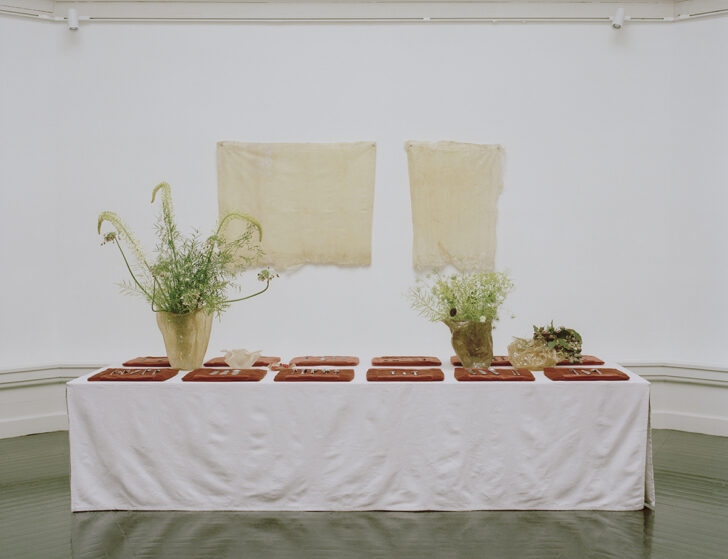
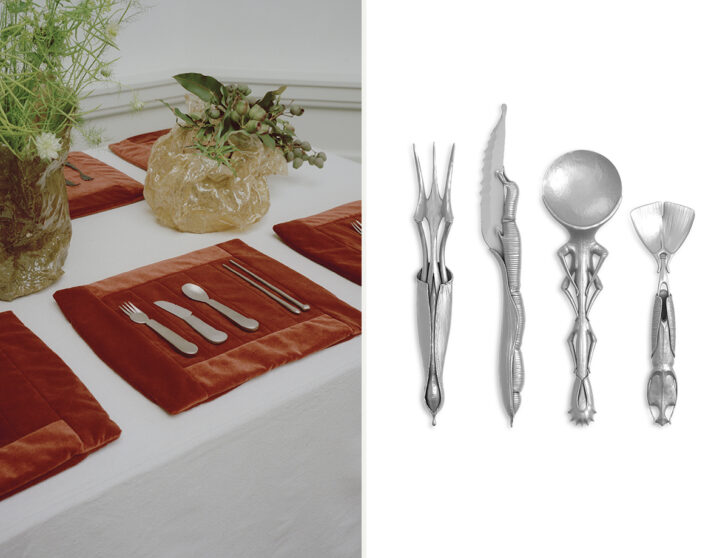
The design writer, publisher, curator, and man-about-town Dung Ngo has been cultivating his modernist flatware collection under the name Knife Fork Spoon for more than two decades now. This is the year it all pays off. There’s a forthcoming 600-page book from Rizzoli in August, an exhibition at the Denver Art Museum, and this, a collection of 12 flatware sets commissioned by Ngo from designers like Jolie Ngo and Rafael de Cardenas, and presented at Ark Journal’s Design/Dialogue with Marta Gallery in Los Angeles. Each set was 3-D printed in sintered steel, and functionality was not a prerequisite. Misha Kahn made a 4-piece set depicting snails and other creepy-crawlies (bottom right), while Minjae Kim (bottom left) created a trio of off-kilter, childlike utensils accompanied by chopsticks, a nod to his Korean upbringing. SO-IL’s conceptual loose-weave creation reminded me of cheesecloth, or chainmail, while Marcin Rusik’s frilly florals looked almost like boutonniere pins.
Mutina
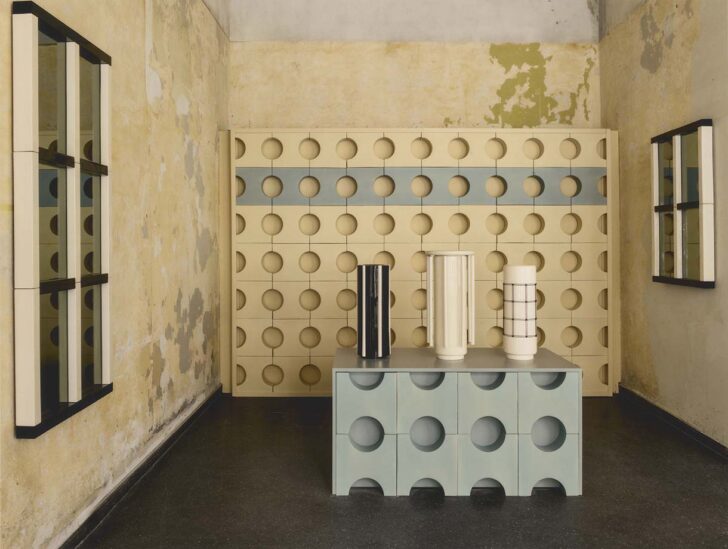
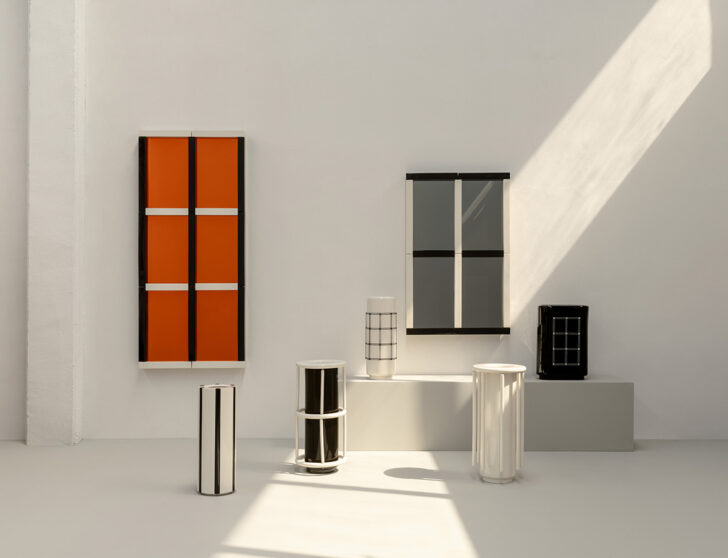
Fresh on the heels of its Milan outing, Mutina launched two new collections that further the Italian company’s thesis that ceramics are capable of moving beyond the realm of surfaces and into something more like architecture. The exhibition was set inside the Copenhagen studio of Sweden’s Note Design Studio, who also joined Mutina’s roster with the modular, puzzle piece-like Emisferi, which can become anything from a partition wall to the wrapping of a kitchen island. Mutina’s other excellent offering was Carrousel, a series of vases and mirrors by Ronan Bouroullec.
Bread & Butter
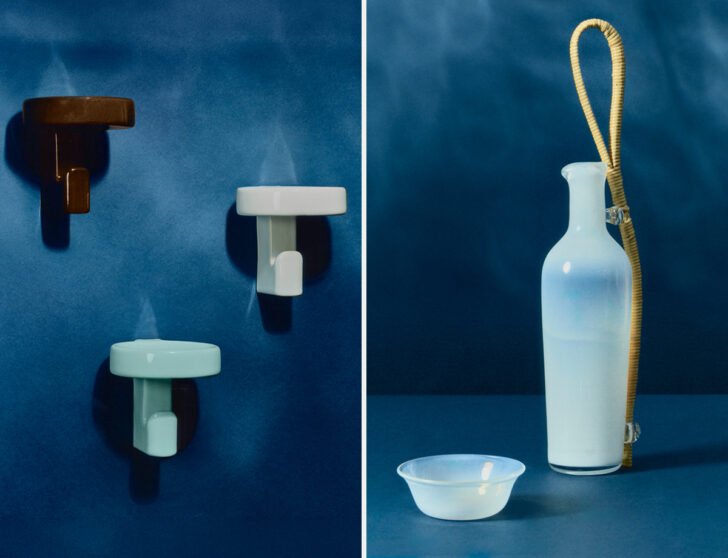
The best exhibitions in Copenhagen felt rooted in someone’s actual lived experience, and perhaps no show did that better than Bread & Butter. The exhibition is now in its second year — last year’s show focused on objects for dining — and this year centered around pairs created for the ritual of bathing. Its 16 designers hailed primarily from countries where bathing is part of the culture, like Denmark, Finland, Japan, Korea, and more. Daniel Schofield made a two-in-one object (above left) — a shelf for a wallet and keys (or a shower beer) and a hook for towels. The Japanese studio Siin Siin made a loosely connected pair consisting of a toothbrush holder (for function) and flower vase (for vibes). And in perhaps the most poignant pair, Maria Bruun made an elevated pitcher and washcloth in glass, wicker, and hand-woven cotton, meant to recall the ritual of bathing her children and washing their hair. “My own experience forms a varied repertoire of methods: from failed, tearful attempts carried out in haste and efficiency, to slower, more respectful moments of success.” Even the venue itself had a pair: At an active swimming site across town, an exhibition showed the process behind each object. Photos: Peter William Vinther
Fredericia: A Chronicle of Danish Design
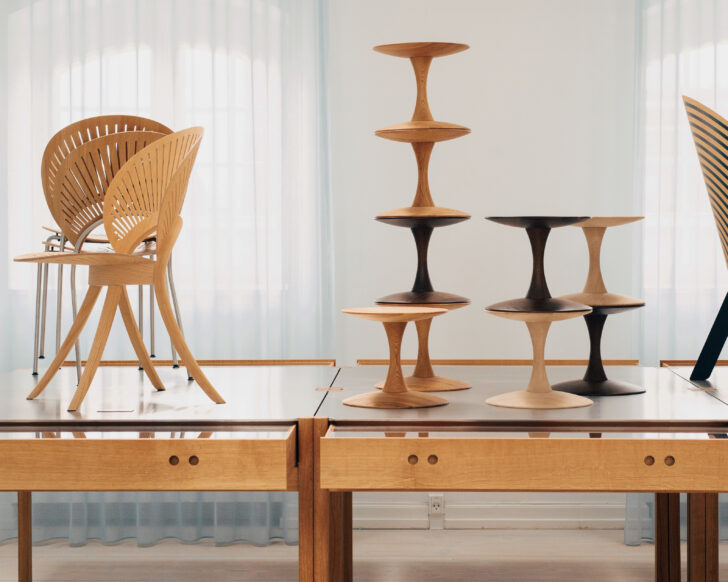
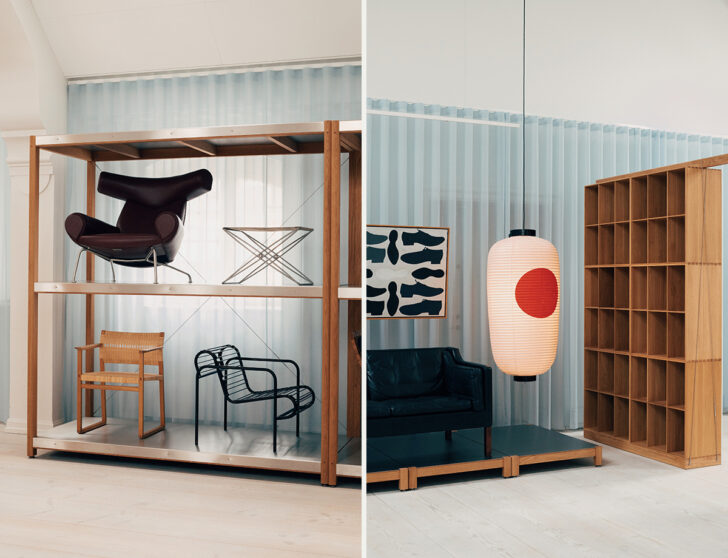
Another exhibition that knocked me out was Fredericia’s look back at a century of Danish design, featuring works by Børge Mogensen, Hans J. Wegner, and Nanna Ditzel alongside contemporary pieces by Jasper Morrison, Barber Osgerby, Cecilie Manz, Hugo Passos, and more. The show originally debuted at the Triennale in Milan, but I missed it there, and frankly I was happy to see it in the context of Danish culture. Fredericia’s creative director, Maria Bruun, designed the gorgeous display tables that everyone said they should put into production. Each had a pullout drawer with archival or process materials; my favorite was an old magazine article Poul Henningsen had written praising Nanna Ditzel’s approach to children’s toys and furniture. The exhibition was a good reminder of something we sometimes seem to have forgotten in the pursuit of merely beautiful objects: how design can enrich everyday life while also serving a broader public good.
Henrik’s Hotel
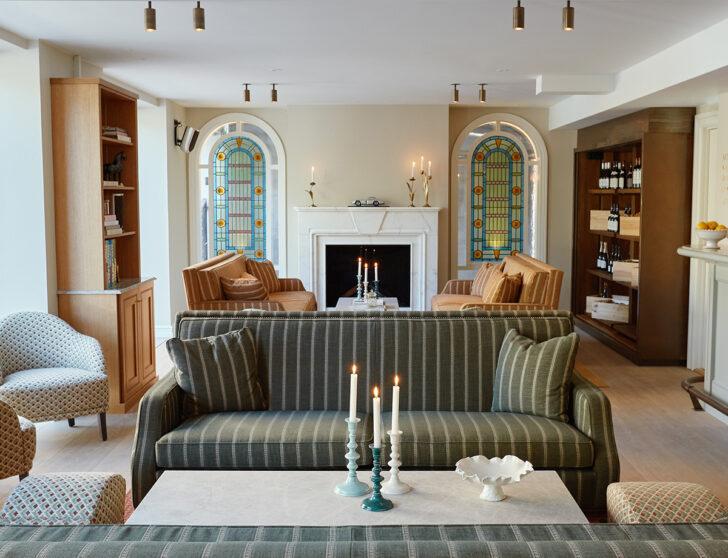
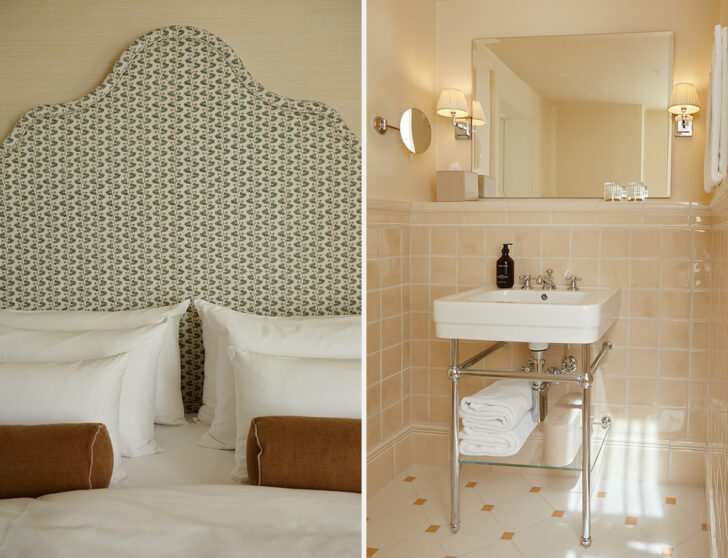
While in Copenhagen, I was one of the first to stay at the newly opened Henrik’s Hotel, the fourth property in the family-owned hotel collection Hildebrandt Hammer Hotels, founded in 1971. The hotel’s founder, Jørgen Henrik Hildebrandt, worked in the car rental industry and in dry cleaning before founding his eponymous hospitality brand, and there are slight nods to that legacy throughout the new building, like a boxed miniature vintage car that sits on the mantle. For the most part, however, Henrik’s reminded me of if Kit Kemp opened a hotel in a former church. There were stained glass and stenciled windows, and pattern drenching to the extreme — wallpapers, upholstery, and pillows, all in tonal florals. I liked the little homages to Danish design, like an electric Ottoni kettle by Bodum in every room. Best of all, it was a perfect perch from which to explore the city — near favorite sites like Thorvaldsens Museum and Glyptoteket, a 7-minute bike ride to the center of town for exhibition-hopping, getting a facial, or shopping, and only 15 minutes to farther areas like Vesterbro or Christianshavn. Highly recommend!
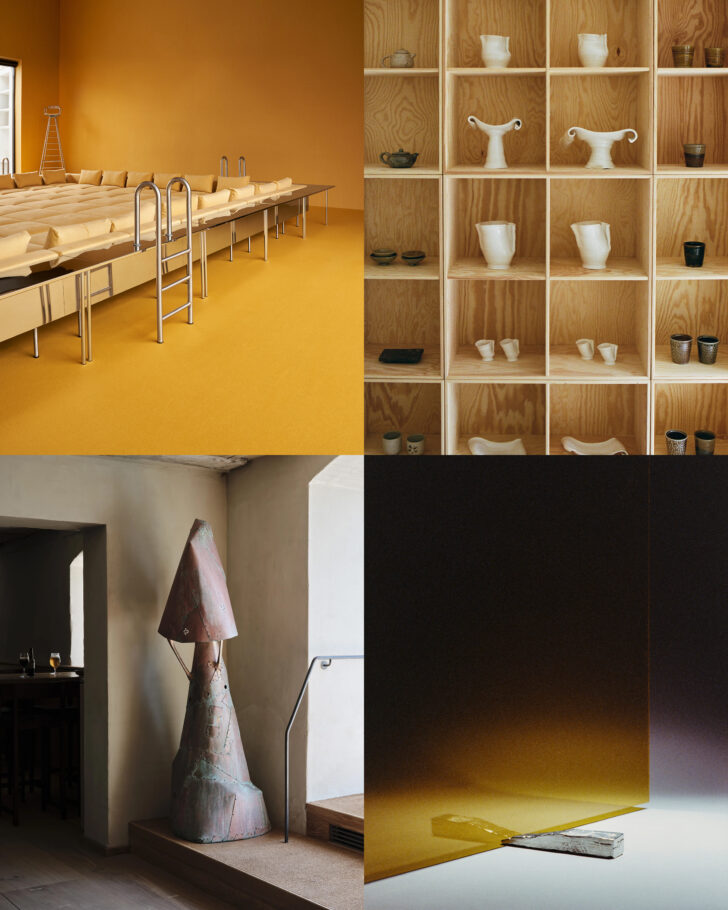
CLOCKWISE, FROM TOP LEFT:
–
At its sprawling campus, Vipp collaborated with Barcelona-based studio Mesura to create a playroom of sorts, inspired by Vipp’s growing catalog of bookable guesthouses. To reflect the sense of time unbound that vacation brings, Mesura created a seesaw, a lifeguard chair, and a conversation pit–turned–tummy time mat for visiting babies, among other things. (The Danish word for seesaw is “vippe,” and the tilting motion of Vipp’s original pedal bin inspired the company’s name.)
–
Norm Architects designed this exhibition for Galleri Sonja, a small exhibition space run by Birgit Lyngbye Pedersen and Jimmy Olesen on Bornholm, an island off the southeast coast of Denmark that’s long been a haven for artists. The exhibition, called Connected: A Dialogue Between Nature and Craft, brought together artists who all work with earthbound materials, including Kawabi’s paper lights, Julie Fuhlendorff’s glass works, and these curled porcelain pieces by Cille Grosell. (If you read my Substack you know how hard it was to walk away from this egg cup!)
–
On my last day in Copenhagen, I made my way to the upper floors of the city’s Goethe Institute, where, hidden behind some offices, I found Stop/Go, an exhibition from Hahn&CuestaWolf dedicated to the doorstop. I’d seen several single-object or single-material exhibitions throughout the week but this was the most successful. There was one doorstop that resembled a curling stone, and another that used the pliable properties of metal to create tension, but my favorite was this one by BNAG, who looked up “doorstop” on Wikipedia and cast in tin a replica of a delightfully generic handmade-wood example used to illustrate the entry.
–
The Ladies Lunch I mentioned was hosted by PIN-UP and Other Circle, and it took place at Barr, which opened in the former Noma space in 2017 and was just refreshed by the female-led Copenhagen team Spacon. I loved these custom lamps by Karl Monies, made from reclaimed brass from the former Barr interior.
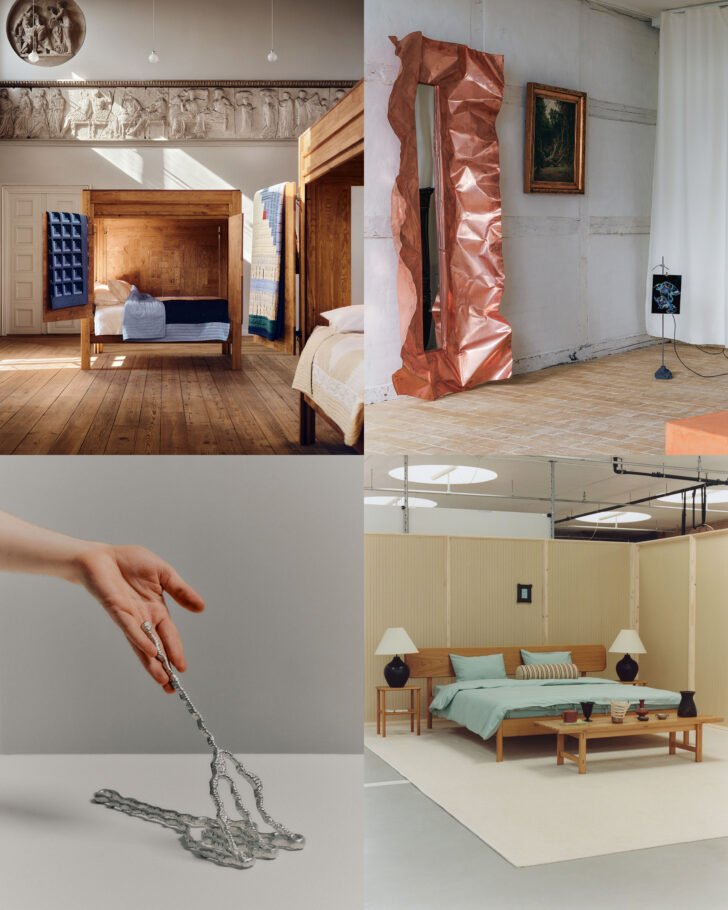
CLOCKWISE, FROM TOP LEFT:
–
Tekla won on drama for The Heart of Living, their installation inside Charlottenborg Palace of patchwork quilts, constructed in a log cabin pattern using cotton bedding from Tekla’s 10-year archive and shown inside custom-built pine box beds, which were typical of 19th-century rural and working-class Scandinavian homes. (The hinges on these particular beds were unreal.)
–
I loved the concept behind Kajsa Willner’s Phoenix Forms exhibition. In it, she paired her own contemporary pieces, which often deal with the effects of the digital revolution, with late 19th-century works sourced from 14 Furniture in Copenhagen; she reasoned that we’re currently experiencing something akin to that time period’s Industrial Revolution. I loved this copper mirror that she pounds into shape with her own two feet.
–
I wasn’t familiar with the bed brand Rye before last week, and now I’m plotting how to get their gorgeous dark amber Cubico bed somewhere in my house. (They sell in the US at Assembly Line.) Their installation, which previewed a bedding and pajama collaboration with Another Aspect, was a top-tier highlight of the week. Called At the Threshold of Rest, the installation was conceived, curated, and styled by Aarticles’s Kasia Sznajder (told you she was everywhere!) and set within a working parking garage in central Copenhagen.
–
I saw this video on Instagram of Anna Maria Øfstedal Eng’s process, which helped me to become obsessed with her Sablôn sculptural serving tools before I even saw them at the Volum booth at Other Circle. In it, she melts down old pieces of vintage pewter, then pours the liquid metal into shapes cast in sand — each serving utensil an exact fit that nestles inside its twin.
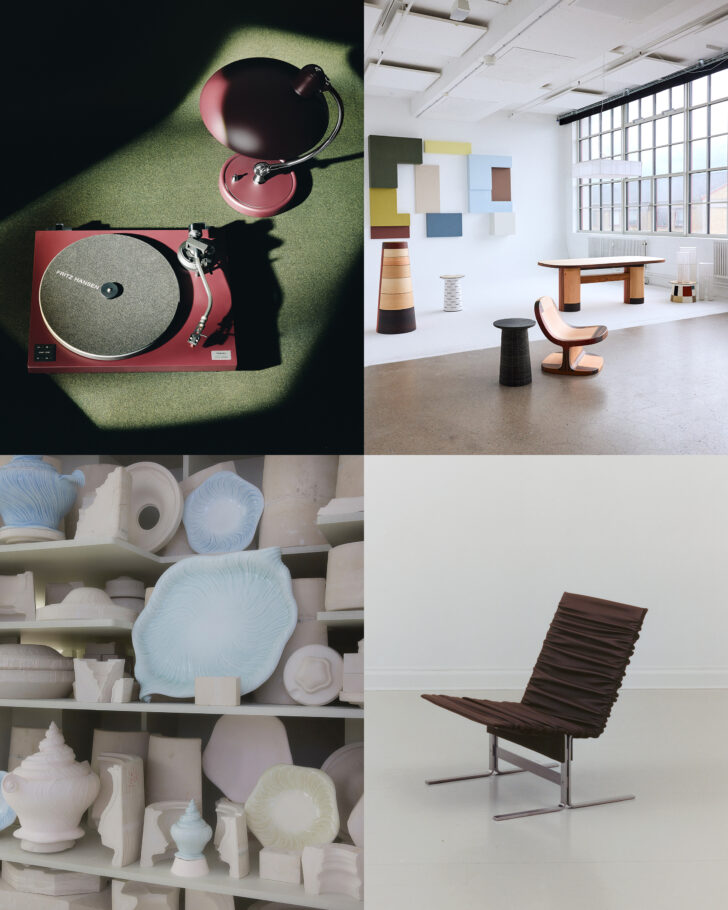
CLOCKWISE, FROM TOP LEFT:
–
Rather than create static vignettes in their showroom, Fritz Hansen developed an immersive experience to explore how sound affects the way we interact with objects. My favorite pieces were the limited-edition Technics turntable and reissued Kaiser idell lamp, both done up in a deep burgundy, and a Bauhaus-inspired drinks trolley, which set the scene for podcast listening.
–
Studio Booboon, the Copenhagen-based studio founded by Jisu Yun and Richard Bone, had a lovely presentation at Other Circle, in which they used marquetry as a structural framework rather than a decorative motif. In each piece, the duo selected timber off-cuts from a variety of species and assembled them into items like a dining table, cabinet, and lounge chair, each patchwork appearance telling the story of its making.
–
Each year the exhibition VÆRKTØJ 3 gathers together designers who deploy the same tool in their work: in this case, the sewing machine. I very much liked Erwan Bouroullec’s Tyvek sofa; Jonas Trampedach’s Taut Lamp, which stretched fabric over a custom-made glass tube; and PearsonLloyd’s biconical pendant, made from ripstop nylon. But I’ve really been feeling Laerke Ryom’s work this year, and her piece for this show was no different. Her Enfold Chair dresses a steel frame in chocolate brown leather, squished to created folds and fastened down the back with tiny buttons. Gorgeous.
–
Fifty years ago, Royal Copenhagen collaborated with the jeweler and goldsmith Arje Griegst to design Triton, a collection of serving dishes with a swirling, nautical-inspired theme. To create the molds, Greigst used an unconventional technique involving beeswax casting, and due to its ambitious but difficult production, the collection was eventually discontinued. This year at 3Days, in an installation curated by Dan Thawley, Royal Copenhagen revived Triton with the help of Bo Jørgensen, a modeler who helped develop the original design as an apprentice in the 1970s