11.20.26
The Weekly
A new furniture gallery in New York, an obscure Italian designer reemerges, and more
Welcome to the new Sight Unseen, a weekly newsletter that delivers the best of the design world — news, trends, shopping advice, interviews, travel recs, and more — straight to your inbox. If you’re not subscribed, follow this link to sign up. Want to partner with us, advertise, or submit your work (guidelines here)? Email us at hello@sightunseen.com.
At This New L.A. Shop, the Interior Plays a Supporting Role While the Garments Are the Star
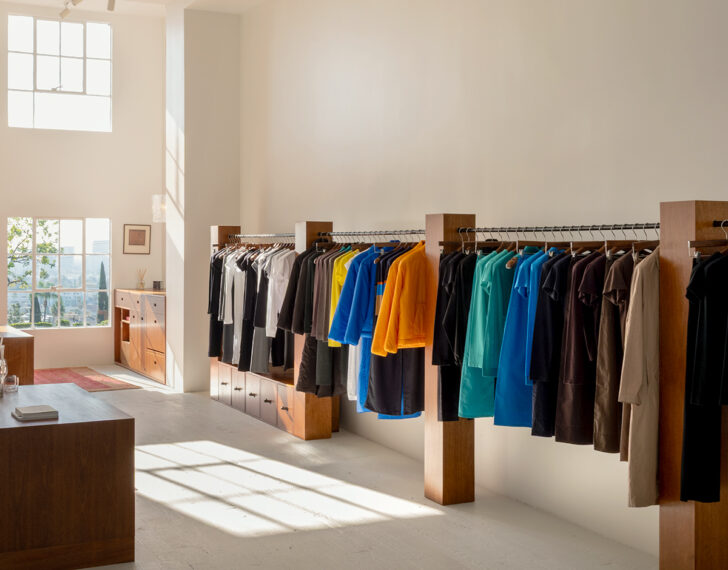
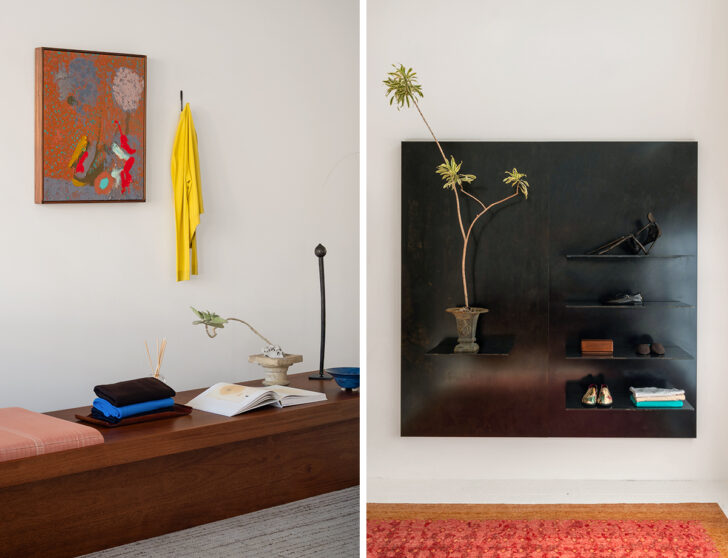 LESET’s new West Hollywood store was designed by Phoebe Little, who created artistic compositions in every corner using objects, interior architecture, and the brand’s colorful clothing.
When it comes to boutique interiors, most fashion brands design their spaces first and drop the clothes in later, almost as an afterthought. But at LESET’s new outpost in L.A.’s West Hollywood neighborhood, the clothes are an intentional, participatory part of the decor. The brand, founded by Lili Chemla in 2019, specializes in elevated basics in a particularly good range of colors, and interior designer Phoebe Little has made those colors central to the store’s aesthetic: Against white walls, pale wood floors, and warm walnut-toned millwork, rows of cobalt blue, turquoise, marigold yellow, and chocolate-brown garments become bold compositions, almost like color-field paintings. It’s a clever way of bringing an artful, vibrant feel to a space that otherwise takes its cues from the restrained palette and clean lines of Japanese interiors.
The store occupies a split-level space on Sunset with huge industrial windows that flood the interior with natural light. Little, who has worked with Chemla on the brand’s previous stores, drew on Japanese domestic architecture as well as the sculptures of Richard Serra, the latter for a series of custom blackened-steel display walls that can pivot to either hang flat and frame a few key pieces, or open passageways into the dressing area. A matching wall panel upstairs, punctuated with small shelves for accessories and an ikebana-adjacent potted tree, also nods to an artistic sensibility. Other fixtures in the space are warmer and more domestic, including a long wooden counter displaying folded sweaters alongside books and objects, and a built-in banquette with thin, low backrests and flaxen cushions. Vintage rugs, abstract paintings, and stacks of wooden storage boxes add to the store’s lived-in quality, which makes perfect sense in a store full of pieces that are meant to feel as familiar as they are aspirational.
I Love Sleeping. Here Are My Favorite Sheets, Mattress, and Other Bedroom Holy Grails.
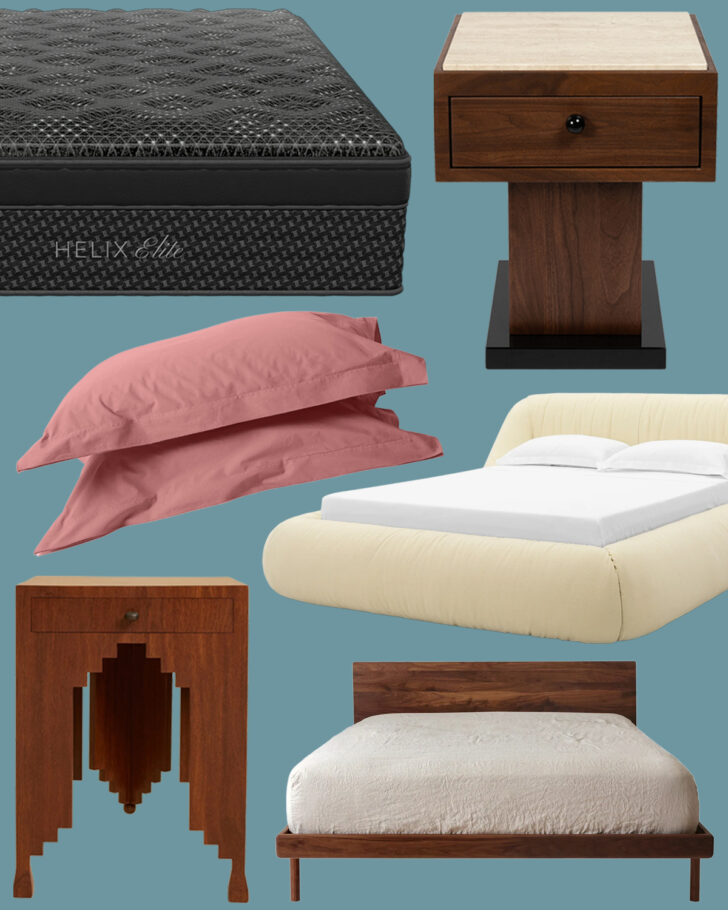 Clockwise from top left: the Helix Sunset Elite mattress, Studio Vraco’s Nightstand 01, Ellison Studios’s Melt bed, Kalon’s Simple bed, Ebur’s Palmyre table, and Sutram pillowcases in Clay.
Recently an interior designer friend was surveying a group of us for new sources of linens for her clients. I practically leaped out of my chair to evangelize a personally life-changing find: Sutram sheets. Not many people have heard of the Sydney-based brand, which manufactures in India from fair-trade organic cotton, but I would sleep on their cool, crisp, lightweight bedding every night if I could. This got me thinking that perhaps my favorite bedroom accoutrements might find an appreciative audience right here in my newsletter, too? I’m not an expert by any stretch, but I do spend a LOT of time lounging in bed, so why not. Feel free to share your own tips by replying to this email!
FAVORITE SHEETS: Sutram, as noted above. (Though for the record I’ve never tried Tekla, which Jill loves.) For cheaper guest sheets, I buy these in organic cotton (credit to Katie Stout for that tip).
FAVORITE MATTRESS: After much costly trial and error, I recently got a Helix Sunset Elite, and it’s perfect. I need an extra-soft mattress because I’m a lightweight side-sleeper with broad shoulders, and the pressure relief with the Sunset is gold. But I’ve heard great things about Helix in general, so I’m sure the firmer options are just as nice.
FAVORITE NIGHTSTAND: A tie between one we sell, the Studio Vraco Nighstand 01, which has an Art Deco pedestal vibe, and one we do not, the Palmyre by Studio Ebur. Don’t even talk to me about a nightstand if it doesn’t have a drawer for hiding boring stuff like vitamins and glasses cleaners.
FAVORITE BED: Several brands have released puffy bed frames in recent years, but my favorite might be Ellison Studios’s Melt bed, particularly in that buttery yellow chenille. If you’re more of a purist, go for either the Simple bed from Kalon, shown above in walnut, or the Smilow floating platform bed. Personally I need so much under-bed storage that I use these paired with a vintage headboard, but I’d have one of those three if not.
OTHER MUST-HAVES: A great glasses stand, a bedside tissue box cover (this or this or this), a chic pill organizer, the absolute best ear plugs, classic slippers, hideous grippy house socks (sorry/not sorry), and silk pajamas.
An Overlooked Italian Designer Gets a Retrospective — and a Burst of Reissues — in Rome
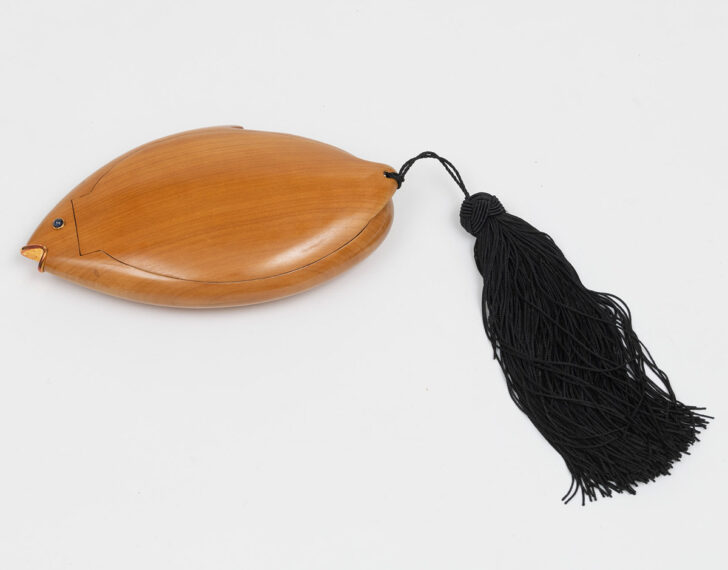
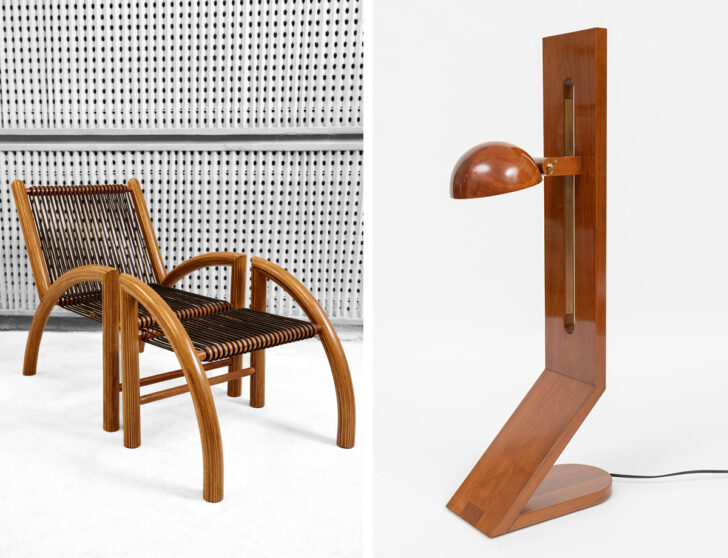 A new retrospective of Emanuele Pantanella’s work in Rome includes his Zoppis chair, his Monaca Piccola lamp, and the minaudières he created for Fendi in the ‘90s, like this fish-shaped, tasseled number.
Ordinarily if you named an Italian designer who made architectural wooden furniture and lamps in the second half of the 20th century, we’d already be fans. But the late Roman designer Emanuele Pantanella has flown under my radar until now, despite having work in the collections of the Met and the V&A (not to mention Charlap Hyman & Herrero’s room for Artemest at the last Salone). From the 1970s until his death in 2014, Pantanella created designs that pushed the typical boundaries of all-wood constructions, bringing them to life with his woodworking partner, Armando; the pair produced the majority of his furniture and objects independently, though early on he struck up a relationship with the Fendi family, creating playful one-of-a-kind wooden minaudières for the fashion house. More than fifty years later, Rome’s Casa Triplef — the vintage showroom run by Federica Formilli Fendi and Ginevra Piersanti Fendi, the daughter and granddaughter of Pantanella’s original collaborator, Franca Fendi — has mounted a show celebrating the full breadth of his career, and it’s a great excuse to get to know his work.
The Fendis’ gallery, located in a former artists’ studio once occupied by Mario Schifano, is a maze of interconnected rooms furnished with finds by the likes of Gio Ponti and Gabriella Crespi. For the Pantanella show, they’ve woven his pieces throughout the house and its collections, beginning with an archival display of his furniture: a 1983 maple bar cabinet, the 1990 Rosa dei Venti table, cherry wood lamps from 1980. In one vignette, a pair of his Palmetta lamps have been updated with shades made from Triplef’s vintage fabric collection. There’s also a group of his 1990s Telaio chairs — displayed around a table by Romeo Rega — that were recently reissued by his posthumous studio; run by his daughter Anna and granddaughter Virginia, the studio is now bringing selected pieces back into production with specialist Italian artisans. Naturally, the Fendis are also showcasing Pantanella’s work in fashion, including the minaudières, a series of carved bangles, and belts with little wooden buckles.
On view through January 10, the show is both a retrospective and an introduction to a revived collection, and the contextual curation provides a particularly nice way to discover a designer whose work was so varied. For those who aren’t traveling to Rome anytime soon, though, the studio website has a shop full of pieces both currently produced and archival, which is a rare treat in collectible design.
Courtney Applebaum’s New Gallery Is an Apartment in a Perpetual State of Redecoration
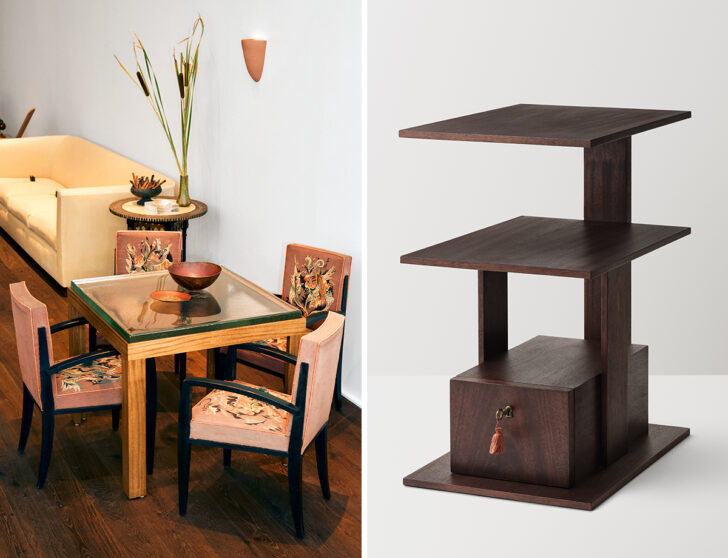
 Last week interior designer Courtney Applebaum launched both a new gallery in Tribeca and a new collection of furniture and lighting, including the tasseled mahogany nightstand at right. Photos: Cobey Arner
Interior designer Courtney Applebaum has always excelled at mixing furniture from different periods in ways that feel personal rather than overly decorated. Her spaces — which have included homes for Maria Sharapova and retail stores for The Row — often pair imposing vintage wood furniture with more delicate, at times eccentric pieces, and her newly opened gallery in Tribeca underscores that sensibility. It’s both a showroom for her growing furniture collection and a place to buy the kinds of antiques she might otherwise source for a client’s home, with French Art Deco, 19th-century Japanese, and American midcentury all represented.
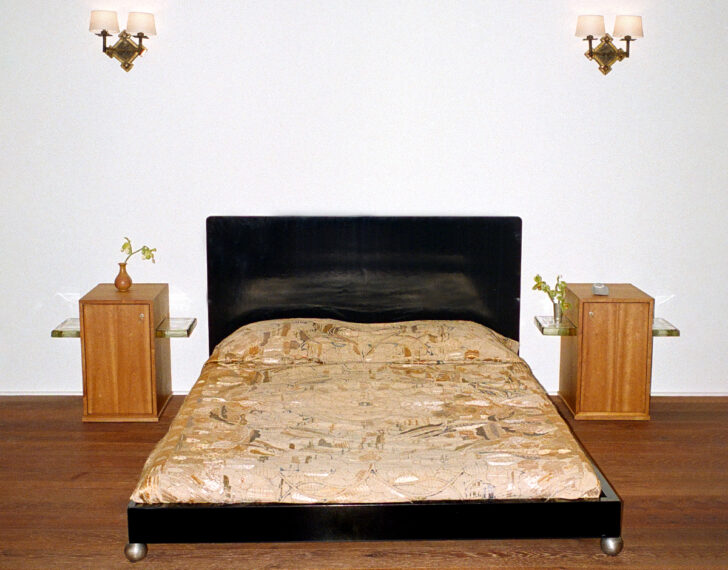
Applebaum has staged the gallery as a series of rooms, each with its own character. A living room grouping pairs a sofa and two armchairs upholstered in olive-green velvet, their exposed wooden frames lending a slightly rustic counterpoint to the sleek black coffee table. In the dining room, a glass-topped dining table from her newest collection — whose launch coincides with the opening — is surrounded by four vintage chairs upholstered in dusty pink fabric with floral motifs, while a bedroom setup centers on a low black platform bed flanked by her new wooden nightstands that are shot through with cast-glass shelves. She’s also debuting a series of hand-hammered silver-plated copper pieces produced by artisans in Mexico, including a blocky coffee table, table lamps with conical shades, and simple bowl-like wall sconces, all with reflective surfaces that contrast with the matte woods and textiles elsewhere in the gallery.
The space isn’t necessarily a literal demonstration of Applebaum’s decorating prowess — there are no rugs present (yet?) and the white walls are stark and art-less — but presumably more a platform for illustrating to clients her ideas around how objects and furniture spanning different eras, scales, and materialities can speak to one another. What’s nice about that approach is how easy it will be for her to let the space change and evolve as different vintage finds and contemporary pieces come and go, which is ultimately a lot more fun than a perfectly staged set piece.
From Straw Marquetry to Resin to Judd-Esque Metal Lamps, Estúdio Rain Tries It All
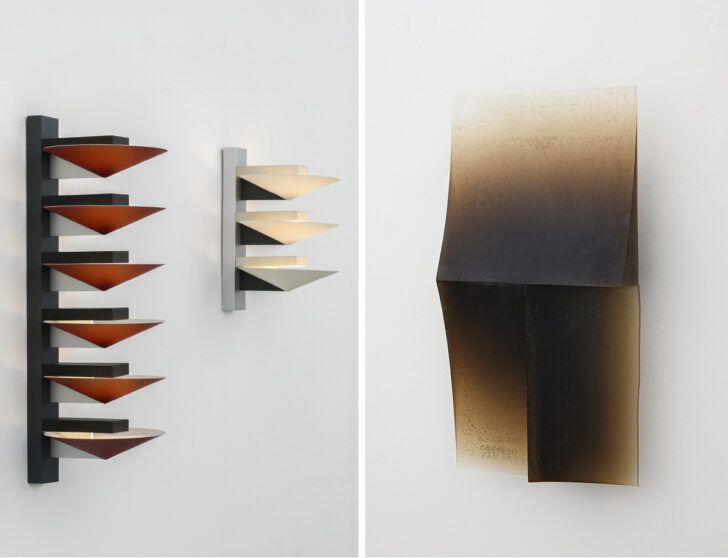
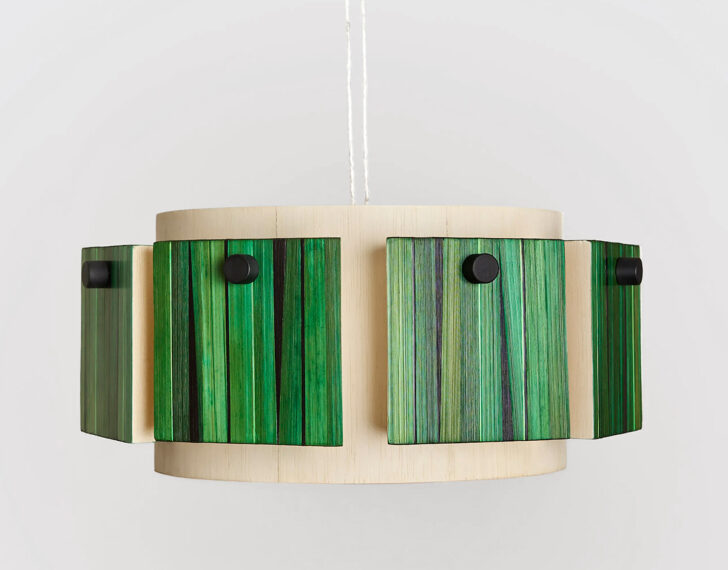 Estúdio Rain’s latest lighting series include, clockwise from top left, Orbe in steel, Chroma in resin, and Traversées in wood and straw marquetry.
The São Paulo–based Estúdio Rain loves to experiment with materials, and in three new collections in the past year — one on view in Paris through next week — the duo has tackled castor-oil resin, sheet metal, and straw marquetry without missing a beat. The common thread lies in simple forms being subjected to increasingly elaborate experiments in fabrication, with the most dramatic example being Chroma: four sculptural wall lights made from resin, a continuation of the studio’s ongoing work in the California Light and Space tradition. Unlit, as shown above, the lights resemble abstract wall sculptures that fade from highly pigmented to transparent. Switch them on, though, and hidden LEDs create glowing fields of electric blue, purple, magenta, and orange. The duo’s Orbe lighting family is simpler, spinning an earlier table lamp into a collection of three sconces and a pendant, each assembled from Judd-esque stacks of shallow cones, rectangular housings, and triangular supports. And Traversées, which is currently being exhibited at Galerie Brazil Modernist in Paris, is a collaboration with French-Caribbean straw marquetry artist Célyha Mathieu that’s inspired by sugarcane, a crop whose history connects Brazil and the Caribbean through a legacy of colonialism and enslaved labor. The series pairs cylinders of Brazilian Caixeta wood with strips of dyed straw, its naturally reflective surface lending a layered richness to the simple geometries that are characteristic of the studio’s work — another way of exploring new ground within the existing context of their practice.
Editor’s List
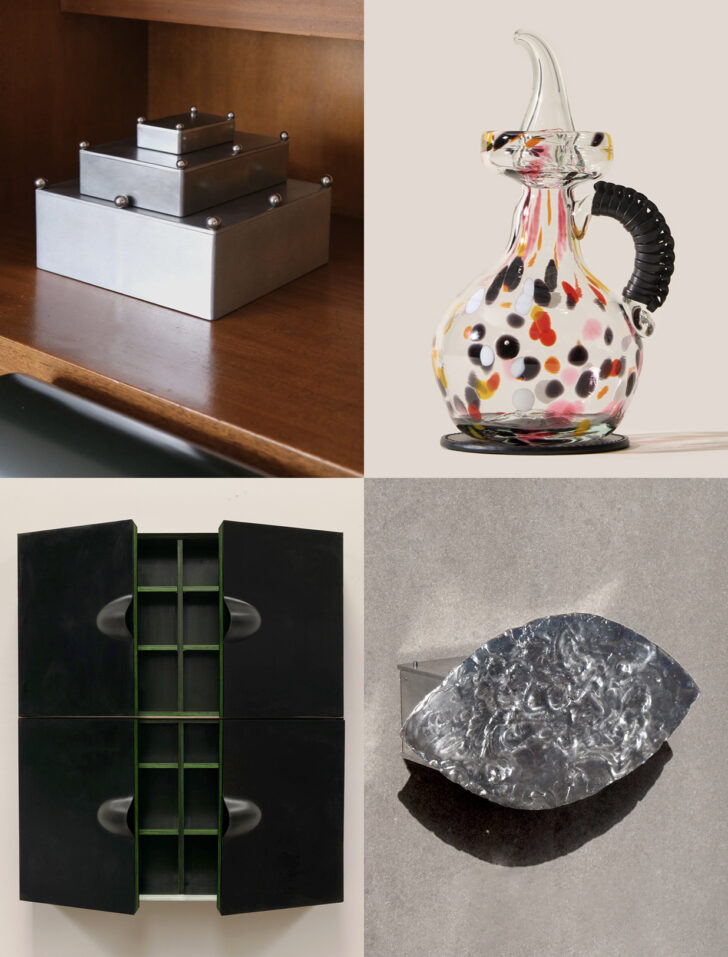
CLOCKWISE, FROM TOP LEFT:
–
Perfect for anything you want to limit access to — precious jewelry when you’re out of town, your phone when you’ve hit your doomscrolling limit, dr*gs, or in my case, Trader Joe’s Peanut Butter Pretzels since I pine for them like dr*gs — Julia Esque’s aluminum Safety Boxes have lids you literally lock down with ball-topped screws. In a way it’s kind of psychotic, but they sure are pretty. And quite useful for dr*gs.
–
I am an olive oil fanatic, and this one is my go-to for proper cooking and finishing. But for the daily grind, I sometimes use cheaper oils in ugly bottles, which is why this cruet from the new collab between the cult Spanish leather brand Hereu and the Mallorca glassblowers Lafiore caught my eye immediately. The collection also includes vases, carafes, drinking glasses, bag charms, coasters, and a very cute glass chicken (!!), all with the same colored speckles, but the carafe’s leather-wrapped handle is what did it for me. The series goes live this Monday on Hereu’s Souvenirs page, which I wasn’t aware of before now, and which also presents a lot of other fun options for holiday gifting!
–
I’ve been meaning to feature this little eye-shaped mini-cabinet since it debuted in April in Milan, but kept kicking the can down the road. No longer! This is the Inner Tide cabinet by Stockholm’s Studio Formbart, with a body made from aluminum and a door made from cast tin. It’s a folly for your wall and I love it.
–
I guess it’s storage day in my Editor’s List because my last pick is a new rubber wall cabinet by Brian Thoreen for Masa gallery. Some of you may remember that Thoreen made his studio debut with us at the now-defunct Collective Design Fair in New York, where he exhibited this black rubber credenza with sculpted handles. The new cabinet is nostalgic for me for that reason, but with the added bonus of a very striking pop of green on the interior doors and shelves, which you can see above and here in slide 7.
News
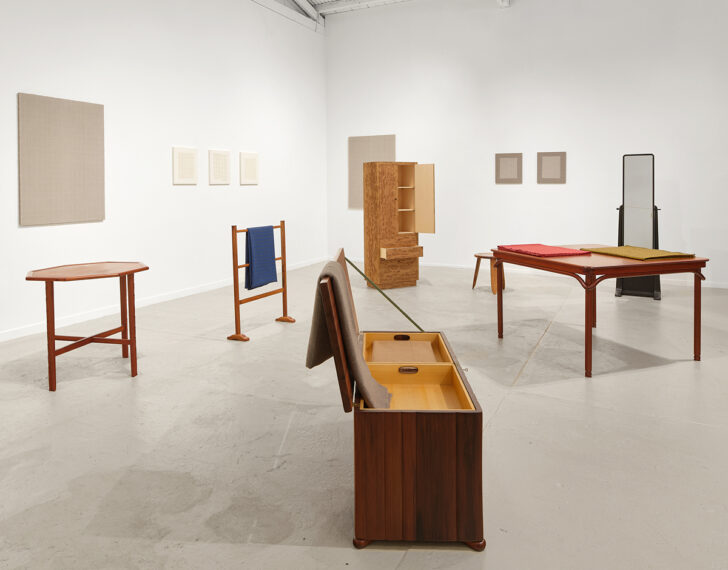
Objects from an imagined dressing room by Noah Cohen and Marina Contro, on view at Blunk Space now. Photo: Chris Grunder
–
For their third collaboration with Commune Design, the Blunk Space gallery in Point Reyes, California, invited L.A. furntiure designer Noah Cohen and San Francisco weaver and artist Marina Contro to stay at JB Blunk’s former home in Inverness and mediate on its domestic spaces. The pair then created a show around the concept of a dressing room, with tables, blanket chests, vanities, mirrors, and racks by Cohen and blankets and textile wall works by Contro. It’s on view through January 2.
–
This story in T Magazine about designer Axel Chay’s house in Marseille is worth perusing for the gorgeous cement-tiled floors alone, but there’s also a lot of his work on view, a lot of sunlight streaming through the windows, and a whole lot of boob-shaped lights and mirrors, funny enough. With winter swiftly approaching this is not just an interiors story, but a real dose of escapism. While you’re over there, T did a fun expert-recommended gift guide this week, too. Our guides are coming very soon!
–
Earlier this month the Belgian Instagram account Toerist Modernist posted a fun photo tour of all the fireplaces she documented at Joseph Diongre’s 1927 Withuis in Brussels, which you can see even more photos of here. Apparently this is the last weekend you can book a tour of the 5-bedroom house before it’s set to become a rental property, which is mind-blowing enough before you consider that the rent is only 4,400 Euros, basically the cost of a totally average 1-bedroom apartment in New York right now. Unreal.