12.13.25
The Weekly
Enter our $12K furniture and lighting giveaway, tour a vintage-filled NYC home, and more
Welcome to the new Sight Unseen, a weekly newsletter that delivers the best of the design world — news, trends, shopping advice, interviews, travel recs, and more — straight to your inbox. If you’re not subscribed, follow this link to sign up. Want to partner with us, advertise, or submit your work (guidelines here)? Email us at hello@sightunseen.com.
It’s Time to Get Cozy — Enter Our Giveaway to Win $12K in Furniture from In Common With, Audo, and Known Work
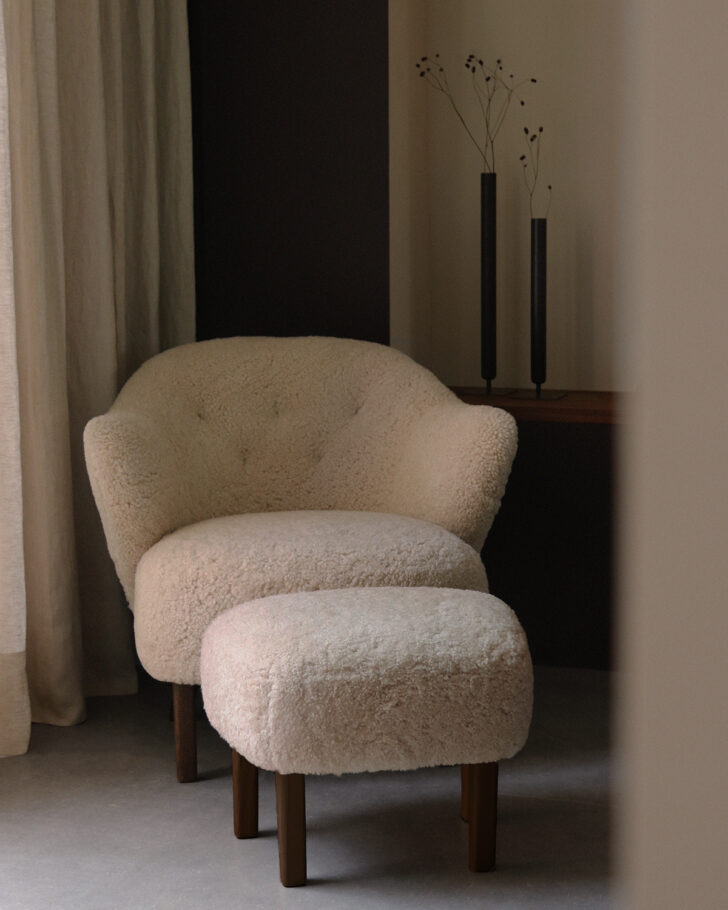
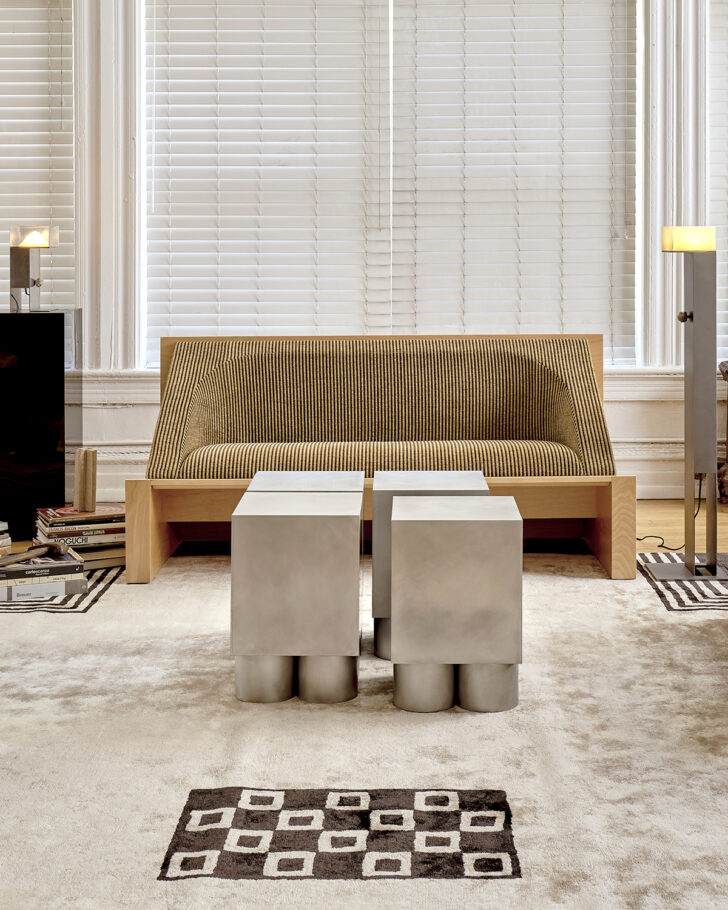
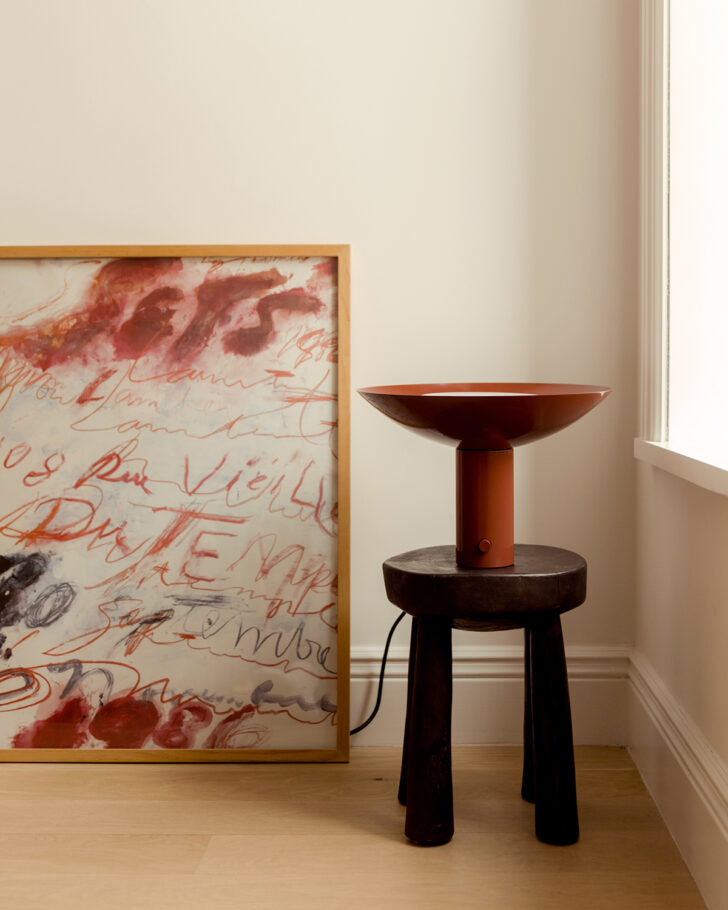
When we talk about the importance of function in furniture, we’re often referring to something fairly dry, like whether a chair is optimized to support your posture, or if a desk has proper cable management. But there’s a second layer of function that’s equally important, which is the effect furniture can have on your physical and mental well-being — whether sinking into that chair at the end of the day feels like a blissful hug, or if that desk makes you feel more organized and relaxed.
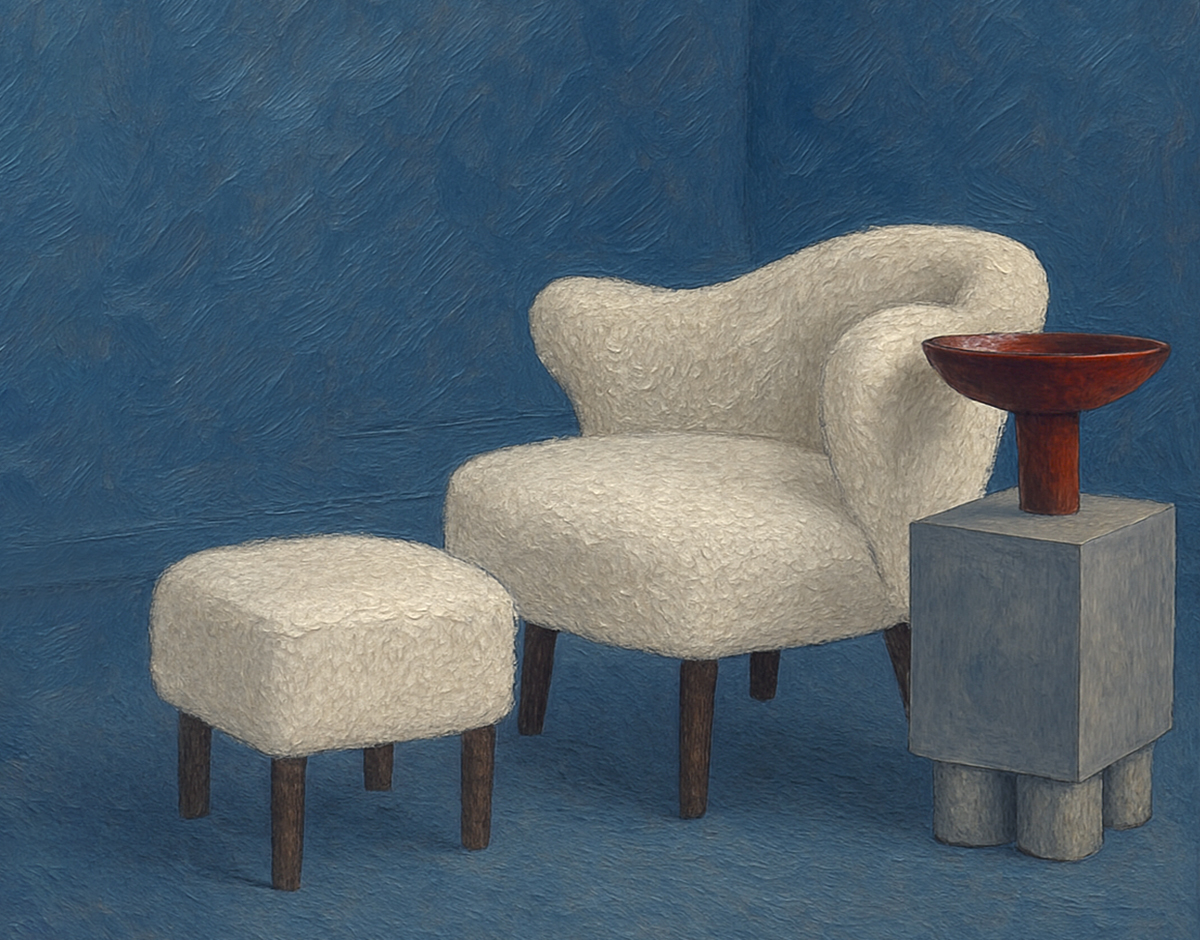
To that end, to celebrate this holiday season, the Sight Unseen Collection has teamed up with Audo, In Common With, and Known Work to offer our readers the chance to win what we’re calling a cozy corner — a chair, ottoman, side table, and lamp that will create the perfect nook for curling up in this winter to read a book, watch old movies, have a drink, or otherwise unwind. The winner of the giveaway will receive the following items, with a total retail value of $12,795:
• An Ingeborg sheepskin chair and ottoman from Audo, designed in 1940 by Flemming Lassen
• An aluminum Perceptions Cube side table by Known Work, from the Sight Unseen Collection
• An Arundel Up table lamp in oxide red by In Common With
The giveaway is open to residents of the U.S. or Canada only. To enter, fill out the entry form linked here by December 19, 2025. Good luck!
This Polish Apartment is Giving Early 20th-Century Opulence
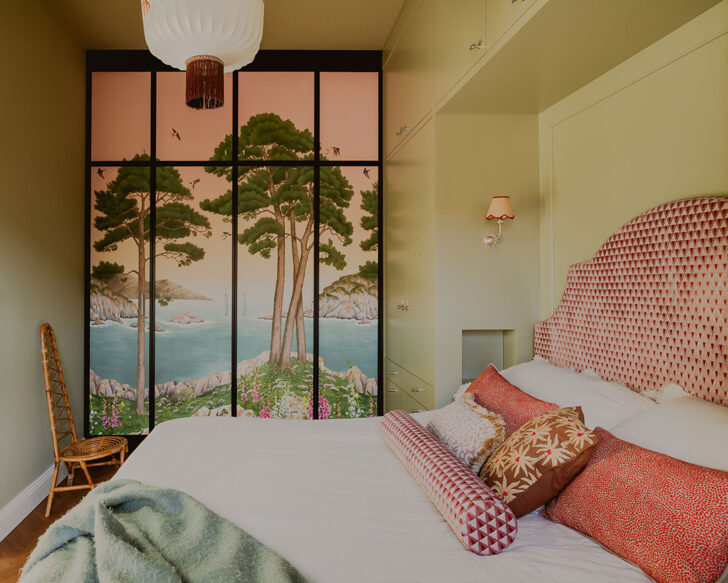
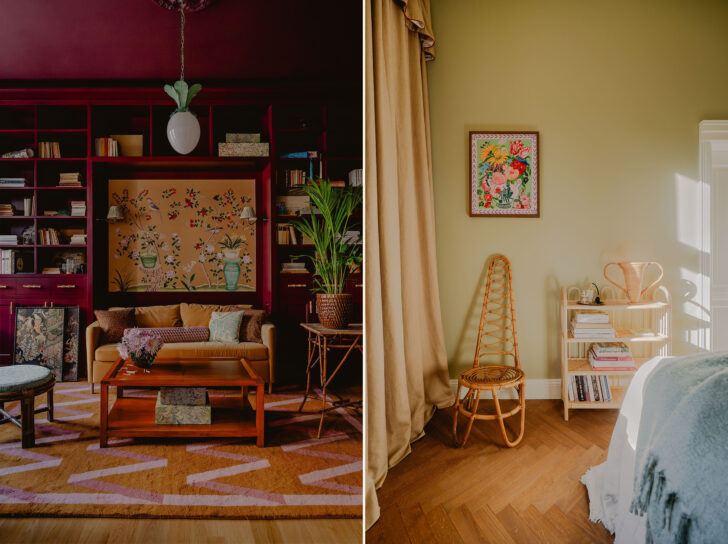
Deeply saturated walls, florals galore, and folk art–inspired furniture give this Polish flat an early 20th-century opulence. Photos: Maja Bulkowska
The first thing you notice about this Wroclaw apartment, by the Polish interior designer Luisa Anyszka of Anyszka Studio, is its incredible use of wallpaper. There’s a dark and moody moiré by Dedar in the powder room, a Chinoiserie–inspired paper framing garden green archways in the hallway, a nighttime sky pattern on the kitchen ceiling, and a coastal scene of majestic cedars, inset on the paneled doors of a wardrobe. There are also paintings everywhere, upholstered headboards, floral draperies, and checkerboard tiles, and the effect is one of pattern, pattern everywhere. It’s grounded by deeply saturated walls and folk art–inspired furniture in a way that gives a kind of Swedish Grace–inspired opulence.
The home itself dates back to the early 20th century, and was purchased by the clients after many years spent living in London. Anyszka specializes in renovations of these kinds of historic interiors, in projects that create not a pastiche of the past but a thoroughly modern interpretation of it. This particular project blends the drama of an English townhouse with a distinctly Polish appreciation for craftsmanship, to tell a story “about returning home, about memory, and about two cities that shape one’s sensibility in equal measure.”
A New Prize is Making a Serious Commitment to the Future of Craft in This Country
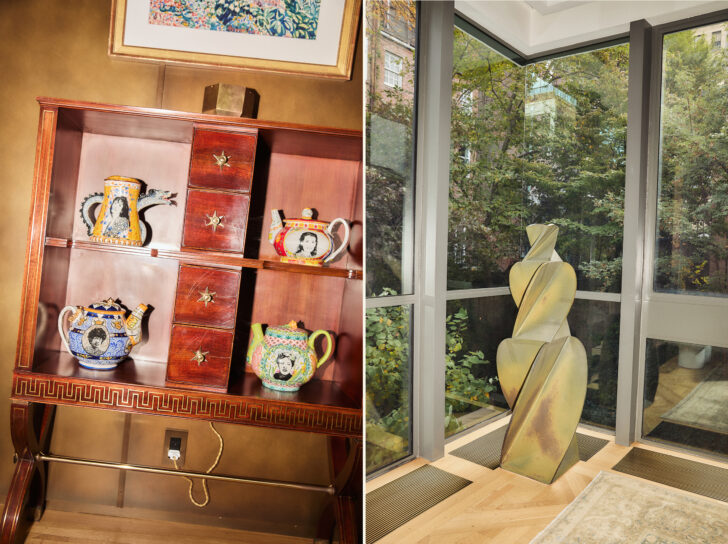
Items from the Spectors’ personal craft collection include, left, Roberto Lugo teapots inside an Osvaldo Borsani cabinet and right, a ceramic figure by John Mason entitled Figure, Broken Green, 1999.
Though we don’t always refer to it as such — and though there is, in our archive, an equal attempt to understand the framing of domestic life through interiors — the heart of Sight Unseen has always been about craft, making, and our obsession with a materials-based approach to design. How else to explain the countless articles taking readers inside ceramics and woodworking studios to learn about process; the curated shows centered around a single material; or my personal, pewter-based agenda? So we were excited this month to learn about the newly established Spector Craft Prize, a program founded by philanthropists Abigail Klem Spector and Warren Spector to invest in makers who have both dedicated their lives to craft and who will be instrumental in shaping its future.
Together with curator Glenn Adamson — who also leads the jury, which includes R & Company gallerist Zesty Meyers and former RISD president Rosanne Somerson — the Spectors have developed a new ecosystem for supporting American craft. The Spector Craft Prize will partner with a different American museum each year, with the inaugural institution being the Crystal Bridges Museum of American Art in Bentonville, Arkansas. Meant to honor an established artist in the United States whose work demonstrates an exceptional commitment to craft, the prize will be a major acquisition by the partner museum of the winner’s work; five awardees of an emerging craft prize, for artists who have been in practice for seven years or less, will receive grants of $10,000 each. Winners will also take part in the yearly Spector Craft Summit as well as a mentoring program meant to foster community and care. Applications are open now through March 1, 2026!
We Aspire to the Vintage Sourcing in This Downtown New York Apartment
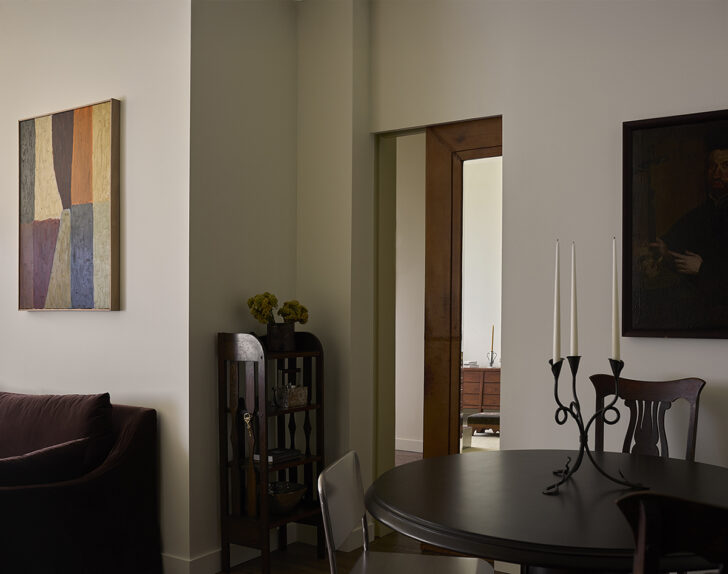
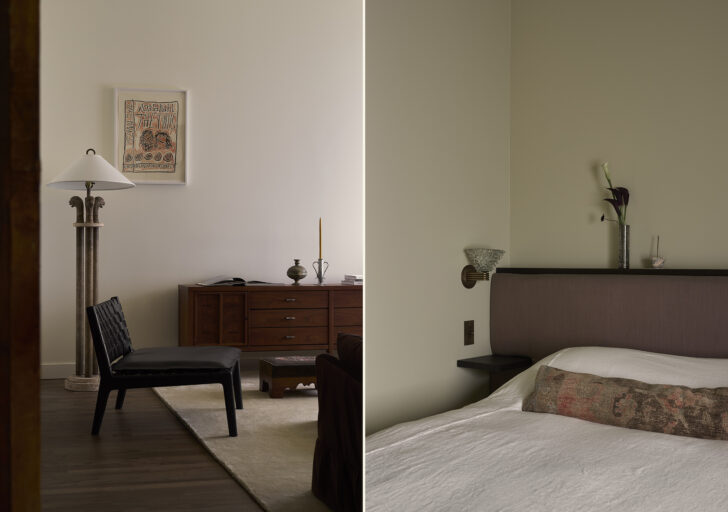
LA interior designer Georgia Somary used heavy wooden antiques and playful accents in metals and glass to create a specific mood for this Lower East Side apartment. Photo: Hanna Grankvist
I actually first came to the work of Georgia Somary through the vintage shop arm of her Los Angeles–based studio Earl Grey. When I started to learn about her interiors practice, though, it all made sense — only someone this good at sourcing could create such a specific mood using only a handful of pieces. Her newest interior is a tiny, 750-square-foot condo on the Lower East Side of Manhattan, and the fact that I don’t recognize a single vintage piece is in fact what makes it so great. Rather than recycling the same five things we see over and over again, Somary spent two years working with the client to curate a collection that held sentimental as well as aesthetic value. “I wanted to build a world that felt quite moody but with a sense of playfulness and calm,” says Somary. “It was to be a push/ pull between the ornate and something more sparse, with heavy and more decorative pieces sitting in this overall fairly minimal space. Instead of battling for brightness, we opted to lean into shadows.”
Little details fill out the space and add playful touches to offset the heavier antiques — jeweled silver cabinet knobs by The Perfect Nothing Catalog, chrome-plated brass salt and pepper shakers from Greece, a 1940s floral wrought iron and glass Murano pendant, a Postmodern lamp whose base is topped with lion-shaped finials, and, my favorite, a painting by the young artist Colt Seager (who is actually the subject of my own first major art acquisition). A great master class in minimal mood.
A Short Story by Louise Erdrich Inspired This New Series of Paper Lamps
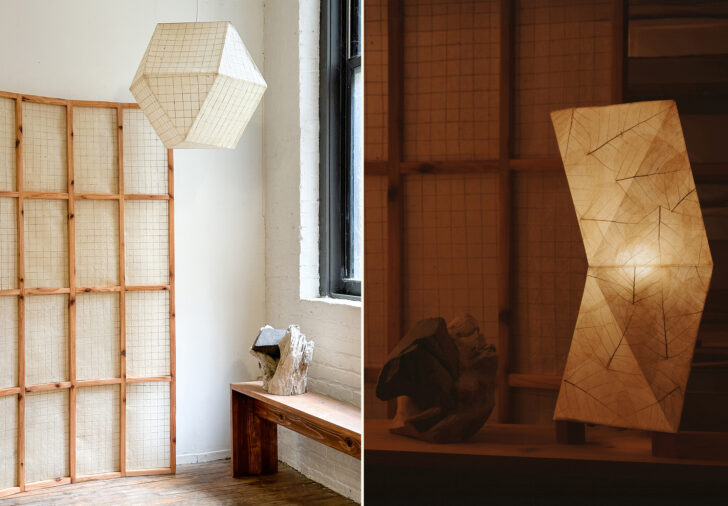
See Earth, the first solo collection of lamps by Drew Seskunas of SAW.Earth, features translucent shades made from paper pressed with hemp, flowers, and bodhi leaves.
On view through December at the Philadelphia gallery space Dudd Haus is “See Earth,” a series of new lights and found stone and wood assemblages by Drew Seskunas of SAW.Earth. The lights, which stand on cedar wood bases, have softly translucent, faceted shades constructed using handmade mulberry bark paper pressed with hemp, flowers, or bodhi leaves. They’re an evolution of a body of work Seskunas began earlier this year, using the same cedar bases with Nepalese wax paper shades. But the pressed flowers take them in a more organic and earthbound direction, which is fitting considering that this collection takes inspiration from a Louise Erdrich short story called “The Stone.”
In it, the author posits that when we pick up a stone to take home, it’s not us deciding to move the stone, but rather the stone moving us so it can travel from one place to the next. “To believe this theory would be to see Earth with a magic and vibrance that we ordinarily may disregard,” explains the designer. “The work comprising See Earth is all made by hand, bearing a negotiation between the desires of the artist and those of its materials. The resulting lighting objects move us to see Earth with deeper meaning, establishing a rootedness on our planet that can be both alien and familiar.”
Editors’ List
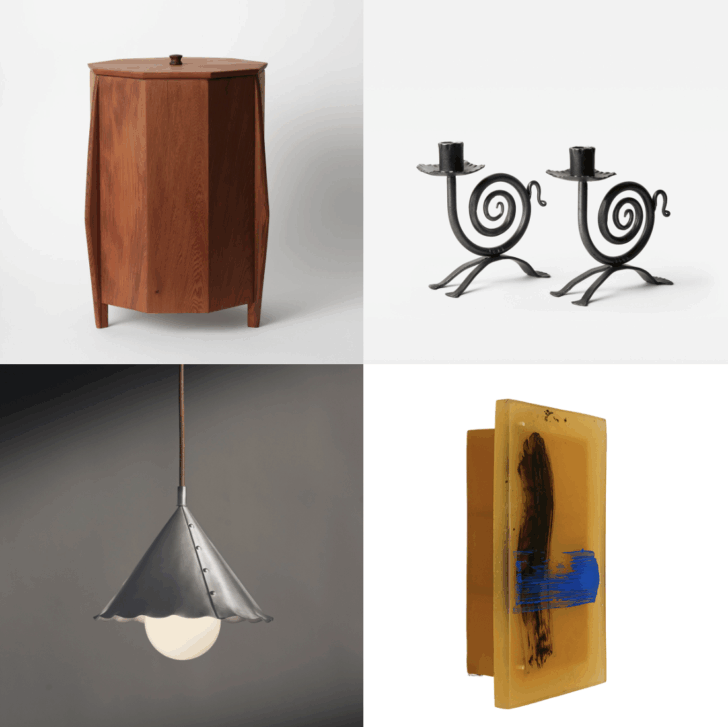
CLOCKWISE, FROM TOP LEFT:
–
Despite its price ($1,250), I got excited when I saw this bin made from salvaged old-growth redwood at the shop of the JB Blunk Estate. Longtime followers of my Instagram might remember an arduous search for the perfect hamper, and I thought this might be the one. Turns out the bin is a bit small for laundry, but it would be an amazing addition to a very chic home regardless.
–
Sixteen years ago, I bought a Dansk Kobenstyle baking dish at Brimfield, and so began my obsession with the late designer Jens Quistgaard. I love how even though Quistgaard is known for certain typologies — teak ice buckets, peppermills — I still find little pieces I’m surprised are his design. These vintage snail candleholders are so sweet.
–
When I was in Stockholm for the furniture fair in February — which, reminder, is not happening this year but will return in 2027 — I saw these beautiful wall-mounted boxes in plastic by Ebba Lindgren. She was finally able to photograph them properly and I wanted to share. The concept? “In an optimistic future, our perception of plastic has shifted. No longer low quality or throwaway, it’s used only for necessities, and otherwise sparingly for high-quality objects meant to last. Overproduction has ceased. These cabinets, the future heirlooms, embody this change, and are inspired by collectible, precious objects.”
–
I did a guest edit for Domino Magazine’s Home Front newsletter last week, where I talked about my love for duller, more roughed up silvery metals. This new riveted Roll & Hill pendant in what they’re calling “soft silver” definitely scratches that itch.
News
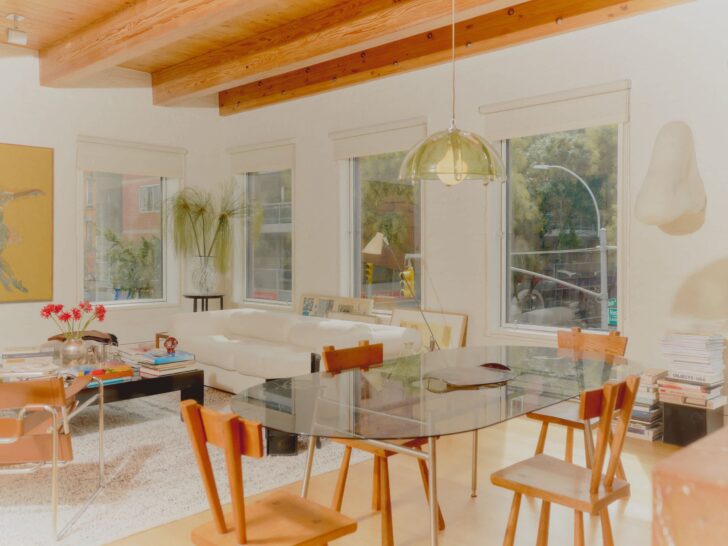
The New York apartment of designer Dana Arbib, as seen in the Financial Times. Photo: Todd Midler
–
I’m not sure if it’s the style of the photography or the style of the apartment, but Dana Arbib’s New York home — as seen this weekend in the FT’s How to Spend It section — looks like a Brian Rideout painting. I’m obsessed with everything about it, especially that Loup Sarion plaster nose, which I saw at an exhibition a few years ago and have thought about weekly since.
–
An article in the latest Cultured Magazine, titled “We Owe Our Post-Recession Craft-and-Scrap Aesthetic to This RISD Friend Group,” explores how a certain class of RISD grads — including Misha Kahn, Katie Stout, Adam Charlap Hyman, and the duo behind Eckhaus Latta — has gone on to “exert disproportionate influence on American material culture over the past decade.” The article is bit inside baseball even for me, a person who was there chronicling it in real time. But that era is something I often think about, as it coincides with the rise of Sight Unseen and what we now know as American design culture writ large. Oral history of American Design from 2008-2018 when?
–
Speaking of Katie Stout, why haven’t we seen more coverage of the incredible CAROUSEL?! she designed for the 20th anniversary of Design Miami. Kind of seems like the best thing to come out of last week.
–
I’m in Japan for Designtide so I’ll miss it, but today marks the opening of a holiday market in the joint showroom of vintage dealers Past Lives Studio and Studio Nordic, featuring independent artists and small businesses from New York, LA, and beyond. Lots of Sight Unseen’s fave makers there, including Mellow — from whom I just purchased a bowl! — Upstate, Suna Bonometti, Cuff Studio, Julia Elsas, and more. Wish I could go to discover more new talents!
–
Our friends at Block Shop debuted a new hardware collection this week with Monica at Petra, based on a lumpy, hand-sculpted and hand-cast ball shape initially created for Block Shop co-founder Hopie Hill’s own kitchen. I’m partial to the cabinet pull and toilet paper holder in unlacquered brass or aluminum.
–
Are you reading my new Substack, Counter Space, yet? The first four deep dives — modular furniture, egg cups, fish-themed décor, and little cutlery sets — are obviously very Sight Unseen–coded but in a way I couldn’t have done here. I think you’ll enjoy!
Jobs
Sarita Posada Interiors is seeking a freelance, full-time, mid-tier interior designer.
Ravenhill Studio is seeking a full-time customer service representative in Los Angeles
Mouthwash Studio is seeking a senior designer with four years experience across digital and branding