05.03.26
The Weekly
Milan in Review, Part III: Our Top 5 Exhibitions
Welcome to the new Sight Unseen, a weekly newsletter that delivers the best of the design world — news, trends, shopping advice, interviews, travel recs, and more — straight to your inbox. If you’re not subscribed, follow this link to sign up. Want to partner with us, advertise, or submit your work (guidelines here)? Email us at hello@sightunseen.com.
An Apartment, Furnished to the Hilt With Antiques, Art, Personal Mementos, and New Works Was the Bona Fide Hit of Milan
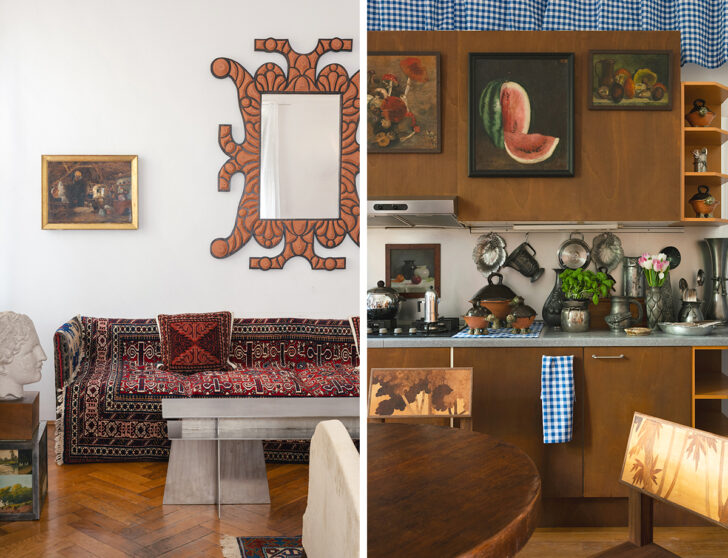
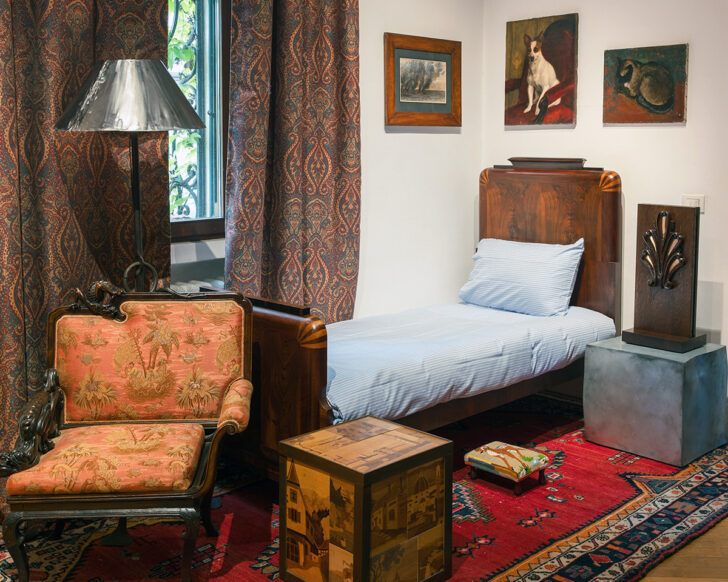
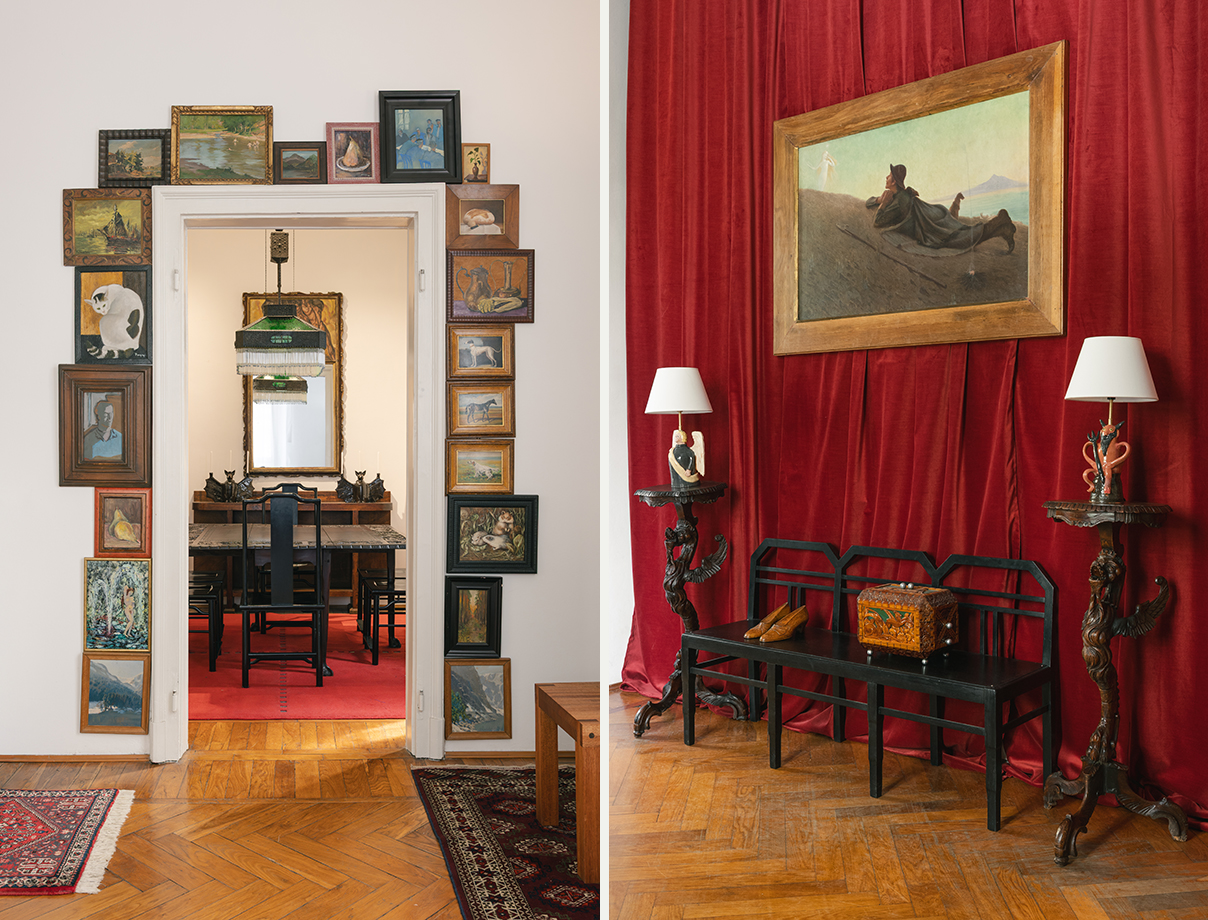
Antoine Billore hauled truckloads of antiques — as well as his own debut furniture collection — from Paris for L’Appartement, a selling exhibition presented in collaboration with L’Artisan Parfumeur. Photos: Theo Bobin
Almost universally agreed upon as the best exhibition in Milan, the Parisian antiques dealer Antoine Billore transformed an empty corner garden apartment in Città Studi into L’Appartement, a well-loved flat teeming with vintage items and art he’d trucked in from Paris. There were also personal mementos and his own debut furniture collection — nearly all of it for sale. The exhibition was beautiful, but it also had heart: Interspersed throughout were family photos and childhood talismans, like a porcelain Babar plate signifying the day of Billore’s birth. Even Billore’s own pieces, which dress up antique decorative elements in new clothes, were suffused with a love for his livelihood: solid wood chairs combined with vintage upcycled marquetry panels or tin bas-reliefs; screens that incorporated small-scale pieces of art; solid oak lamps inset with 18th-century details; and more. “The idea was to create something new using somewhat outdated, forgotten, neglected objects,” says Billore. “I feel no nostalgia for the past; what interests me is inventing a new function, changing the way we look at old things.”
Billore’s lack of attachment to his finds was every Salone-goer’s gain; several people walked away with items from the show, including an American gallery director who snagged the sculptural wooden vessels in the kitchen and Jill, who carried a painting home to New York. The exhibition was put on with L’Artisan Parfumeur, celebrating its 50th anniversary, and the scent added a hint of mystery and magic to the surroundings. Future exhibition-builders, take note.
Natalia Triantafylli and Andrew Pierce Scott Are At the Top of Their Craft Game
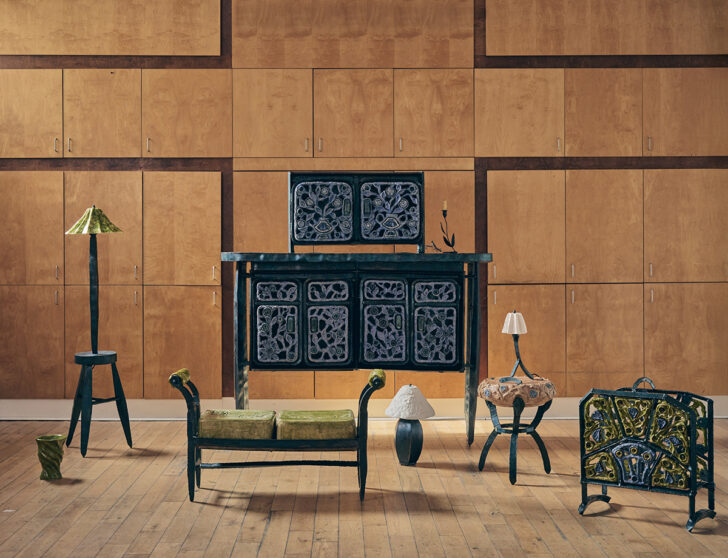
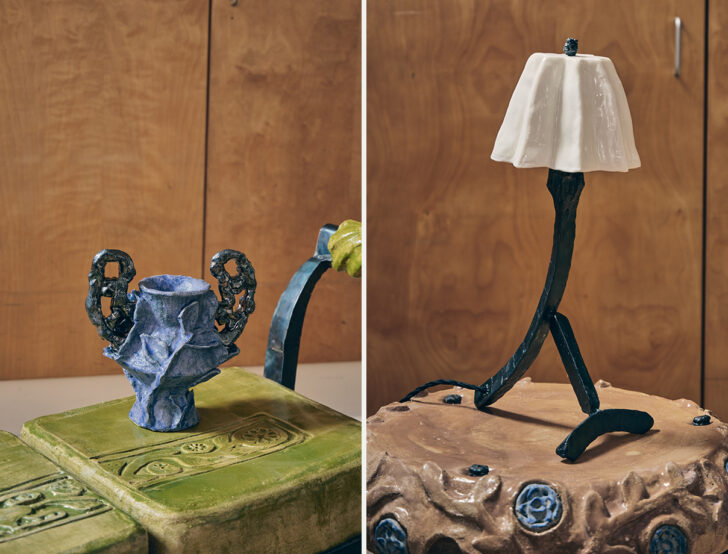
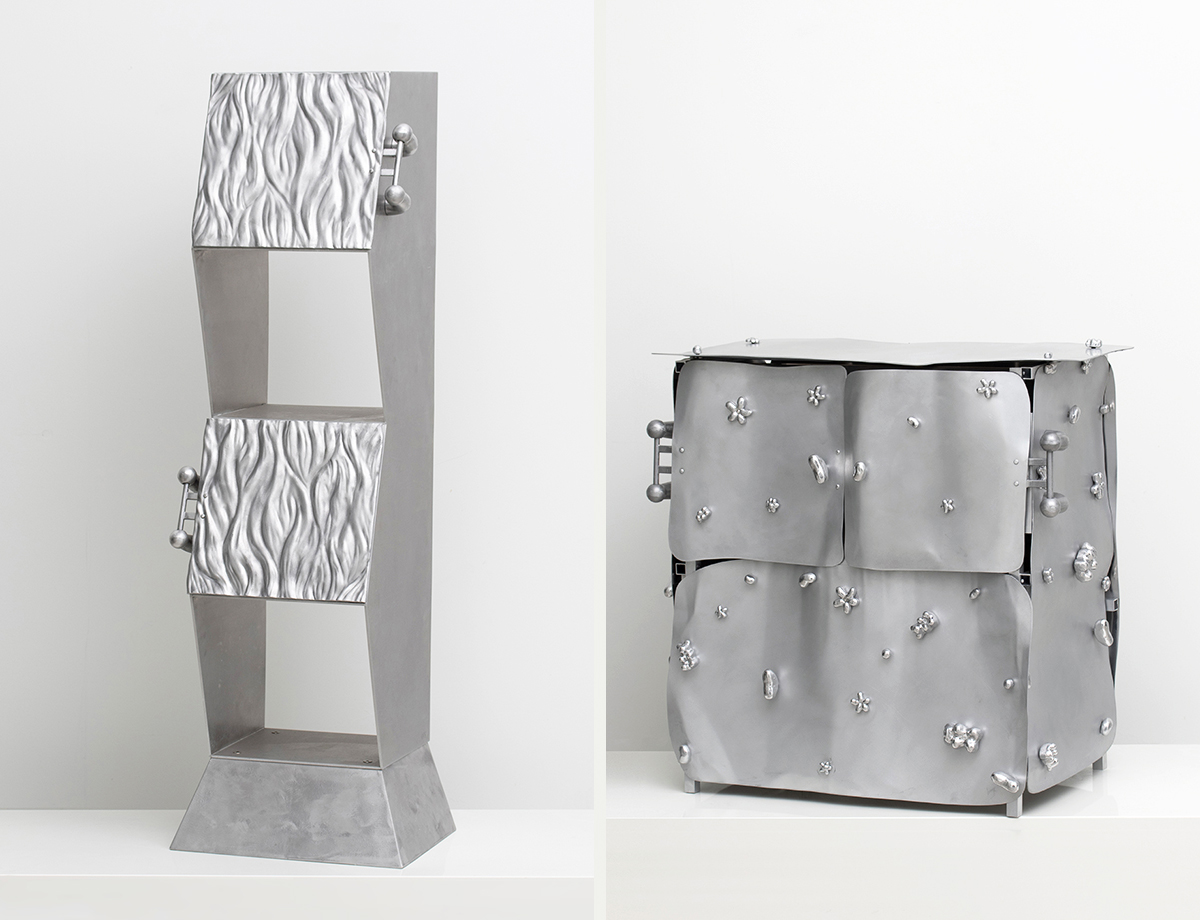
New ceramic and steel furniture by Natalia Triantafylli and Andrew Pierce Scott was the highlight of Alcova’s Baggio Military Hospital location. Photos: Tim Salisbury
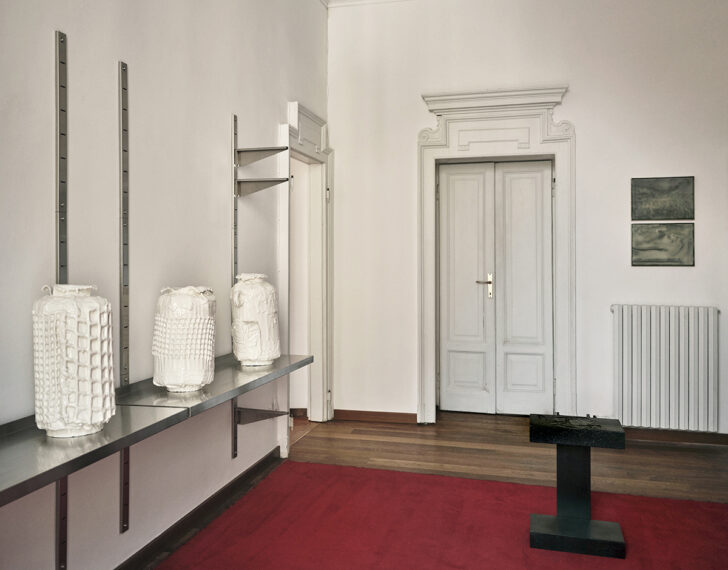
London ceramicist Natalia Triantafylli and artist/metalworker Andrew Pierce Scott have been working together for years, but their room at Alcova — which saw them creating an antique parlor’s worth of furniture — was their most vivid collaboration to date. A steel-framed sideboard with lacy lilac floral fronts, a bench with acid-green “cushions” made from ceramic, a magazine/firewood holder that would be as at home in a castle as it would a Brooklyn apartment: At once rough-hewn and delicate, these are objects that announce their mode of production, seams and all. Scott brazes and welds recycled sheet-steel into blackened and waxed frames and volumes, while Triantafylli creates motifs in ornamental stoneware and psychedelic translucent porcelain. It’s a true collaboration where the designers’ individual and notable talents are synthesized into something even greater — in a sea of been-there, done that furniture, a clear and true visual language that’s unmistakably theirs.
From Uppercut Gallery in Antwerp, Two Shows That Meditated on the Domestic Space
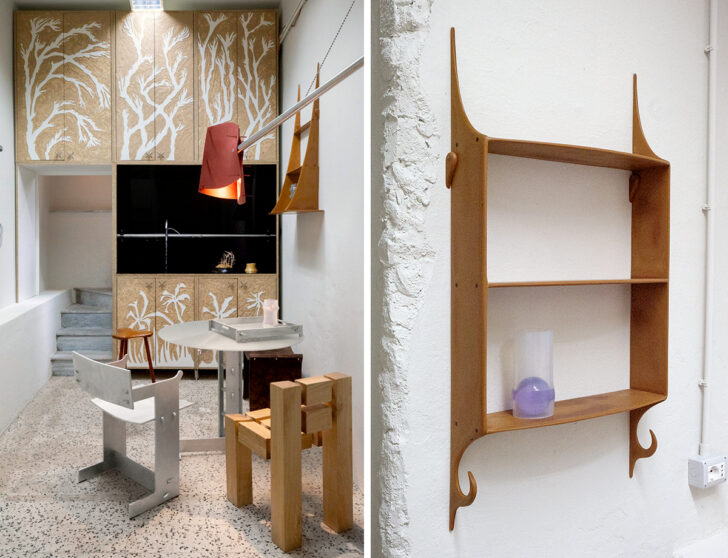
Top: Soft Baroque’s Ghost Kitchen for Uppercut; bottom; LS Gomma’s short-lived Painting At Home exhibition, also for the Antwerp gallery
In 1926, Margarete Schütte-Lihotzky designed The Frankfurt Kitchen for a German social housing project, creating what’s now considered to be the first standardized, built-in kitchen. It was an innovation that has since created a monster of rote replication, at least from the perspective of Nicholas Gardner and Saša Štucin of Soft Baroque. As something of an antidote came Ghost Kitchen, Soft Baroque’s diminutive subterranean installation in Milan, presented by Antwerps’s Uppercut Gallery. Ghost Kitchen turned the kitchen space into a laboratory of odd proportions: there were high-tech materials rendered with an archaic feel, like a trio of seats made from Tufnol, a precursor to plastic that can be sanded to look like wood, as well as everyday items turned slightly Gothic, like laminate cabinets carved with spindly floral motifs or a spear-like spit that sat atop a collapsible textile BBQ pit.
Ghost Kitchen was one of two presentations in Milan from Uppercut, which also unveiled Painting at Home, a solo show of new pieces by Milan’s LS Gomma. Working with his signature polyurethane rubber embedded with metal mesh, the designer explored the possibilities of his materials, transforming them by hand into vessels and “paintings” that are somehow both gloopy and exquisitely wrought. His exhibition, which took place in his apartment, was open only for 24 hours before it was shut down by his landlords — enough time to cement it on our list of the best.
Bronzed Pasta, Pearl Buttons — Oxilia Gallery’s Group Show Delighted in the Small Details
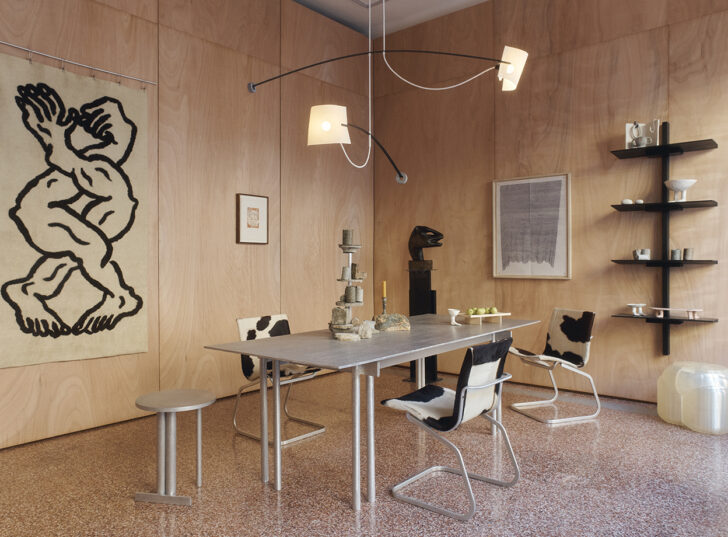
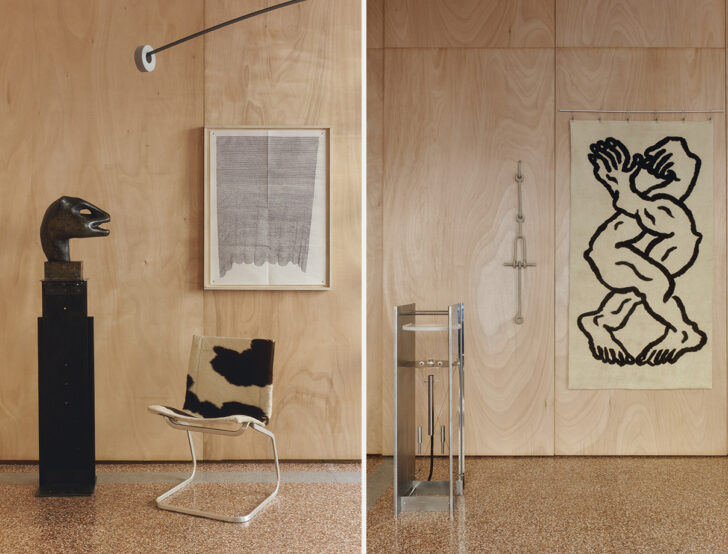
The white cube has its place, but this year, Milan’s Oxilia Gallery went in the other direction, creating an immersive space with Room Studies #1 — a wood-paneled interior in which objects and furnishings related to one another in subtly unexpected ways. Matthew Verdon debuted lighting that uses renewable, plant-based materials such as hemp and bamboo, while Kutarq Studio’s Totem de Luz employed a double-pulley system that lets the light source shift from ambient to focused. Beatrice Dettori reimagined wrought-iron forms in clay, and Arianna Lelli Mami’s ceramic vessels became anthropomorphized. The cabinets in Ludovico Grantaliano’s Barocco series, based on the golden ratio, had the cool sheen of sheet metal yet emanated a kind of warmth, fastened with pearls and other semi-precious stones. Chris Fusaro transformed pasta (!) — through lost-wax casting — into bronze and brass household artifacts. (Our favorite piece, a turquoise stool made from patinated rigatoni, sadly didn’t make the photo shoot.)
Along with pieces from 14 designers, the show also featured objects from Oxilia co-founder Alessandro Mensi’s personal collection: Lia chairs by Claudio Salocchi, the Barca table by Piero de Martini for Cassina, two works by Man Ray, and a wooden sculpture by Manlio Argenti. A small, off-the-beaten path exhibition that felt doubly rewarding for being almost hidden.
This Exhibition Cast Polish Design in a New Light, Uniting the Historical and the Contemporary
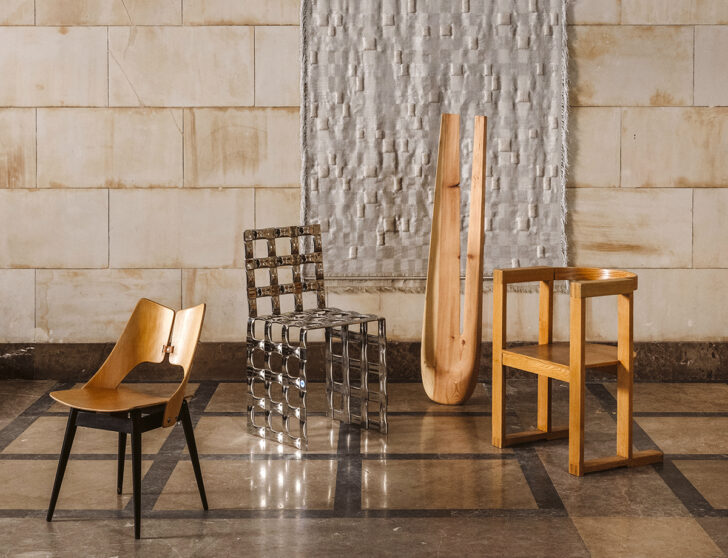
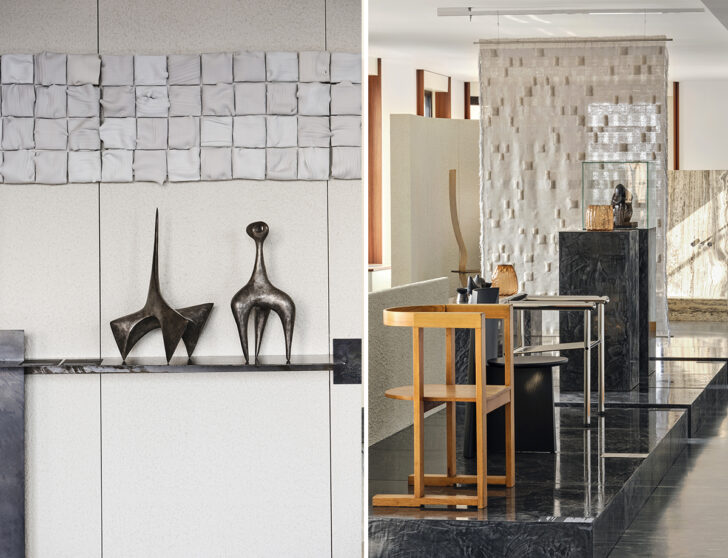
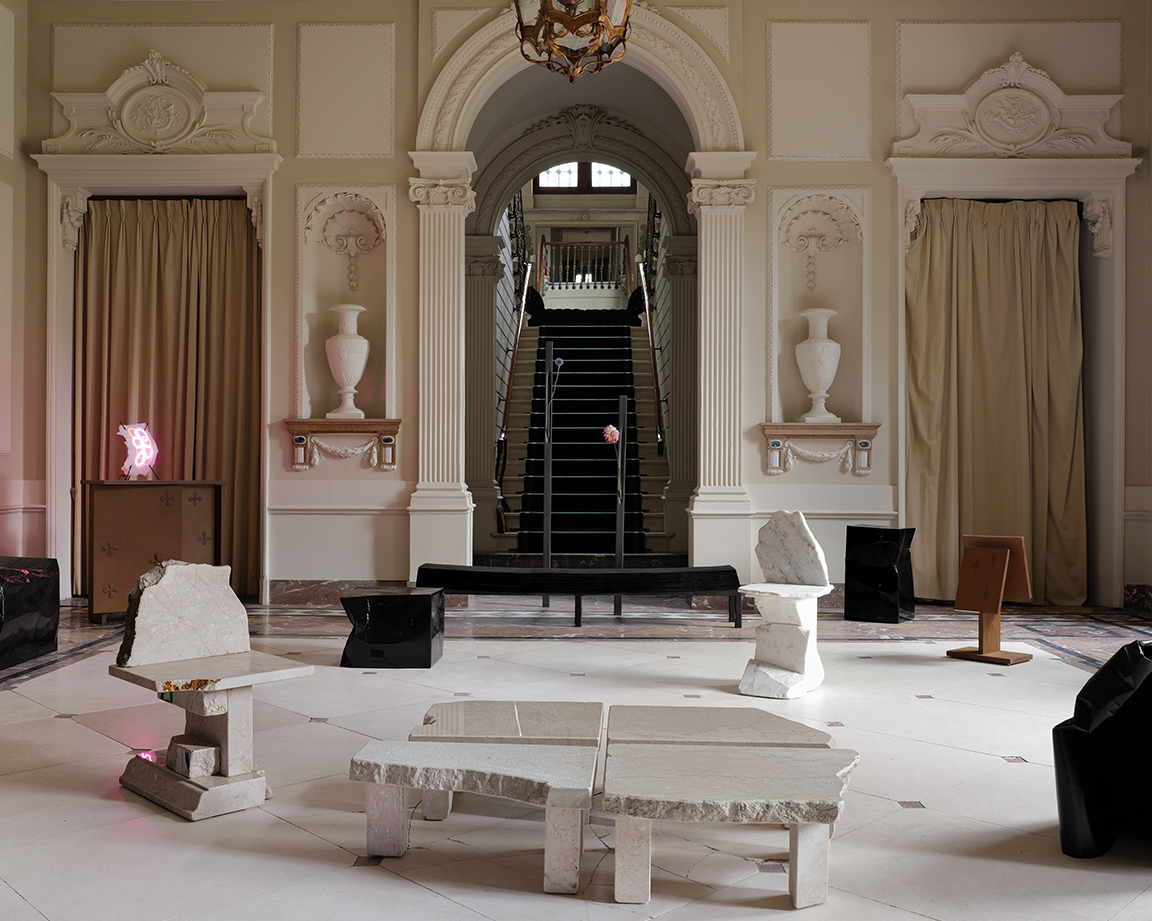
Views of Polish Modernism, which featured vintage designs alongside contemporary ones by the likes of Maria Jeglinska and Marek Bimer. Photos: Michał Łukasik
With Polish Modernism: A Struggle for Beauty — presented last week by the Visteria Foundation, high atop Milan’s 1950s BBPR-designed skyscraper Torre Velasca — curators Federica Sala and Anna Maga made the case for a modernism specific to the Eastern European country: a 20th-century movement in which the decorative arts remained central and even an expression of cultural resistance. As Katarzyna Jordan, president and founder of the Visteria Foundation, put it: “We are not presenting a visual aesthetic, but rather a way of thinking [that] combined art, industry, and a responsibility for everyday life.” What made the show even more special was the exhibition design by Zofia Wyganowska Studio, who created a display landscape from white stucco, marble, and polished black plaster that was intended to unite the aesthetic language of the Polish modernism era with the aesthetic language of the Torre Velasca itself.
The exhibit showcased the lasting effects that modernist ideas continue to exert on Polish design, with works from the archive of the National Museum in Warsaw, including furniture by Jan Kurzątkowski, Bohdan Lachert, and Teresa Kruszewska. These were placed in conversation with pieces by contemporary designers like Mati Sipiora, Marek Bimer, Aleksandra Hyz, Monika Patuszyńska, and Małgorzata Markiewicz. Additionally, Tomek Rygalik, Maria Jeglińska-Adamczewska, Paweł Olszczyński, Igor Polasiak and Maja Ganszyniec were commissioned to create objects for the exhibition. After Milan, the show moves to Visteria Foundation’s headquarters in Warsaw.