05.21.26
The Weekly
The Best of New York Design Week, From Nightlights to Fish Tables
Welcome to the new Sight Unseen, a weekly newsletter that delivers the best of the design world — news, trends, shopping advice, interviews, travel recs, and more — straight to your inbox. If you’re not subscribed, follow this link to sign up. Want to partner with us, advertise, or submit your work (guidelines here)? Email us at hello@sightunseen.com.
This week’s newsletter, including an extended Editor’s List below, is devoted to our picks from this year’s New York design week.
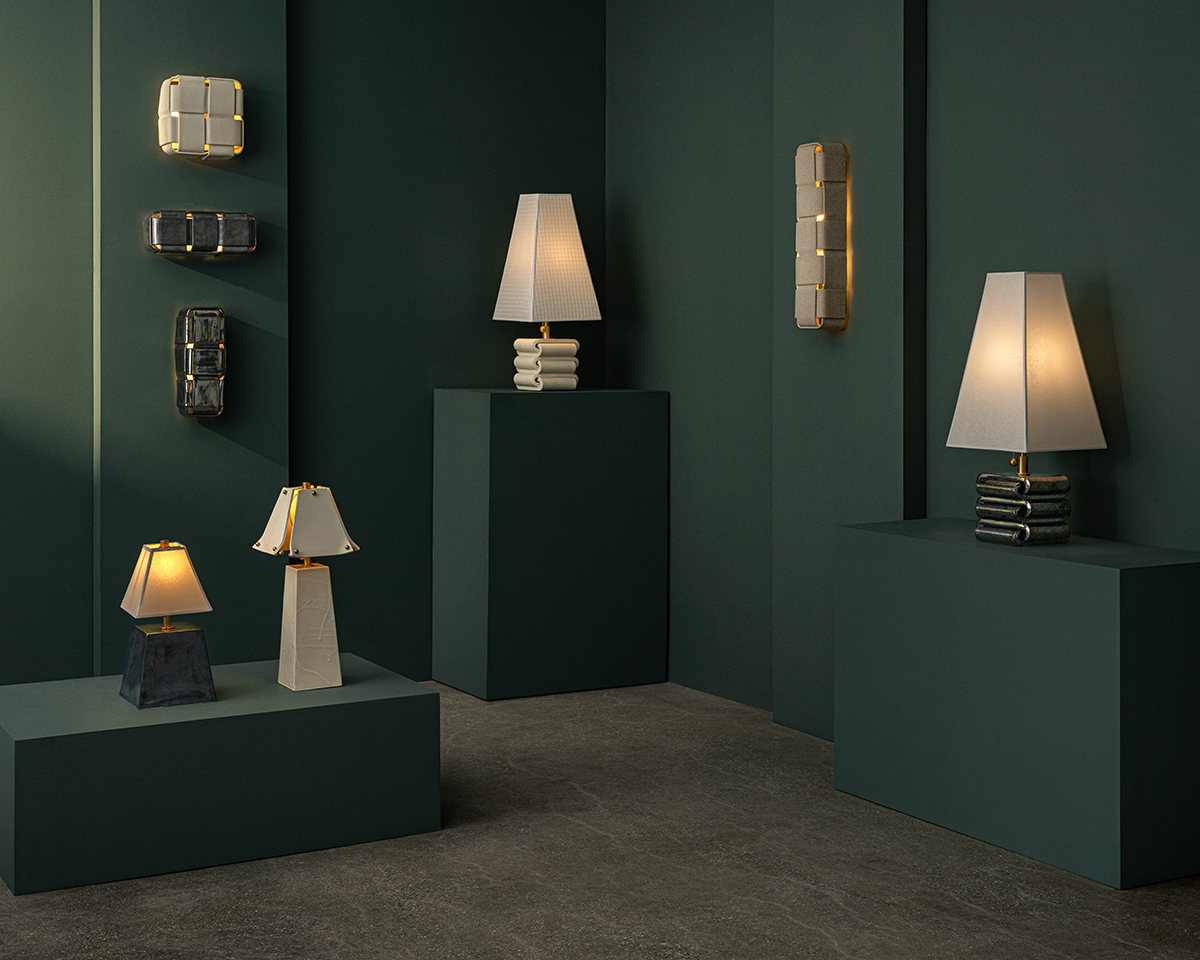
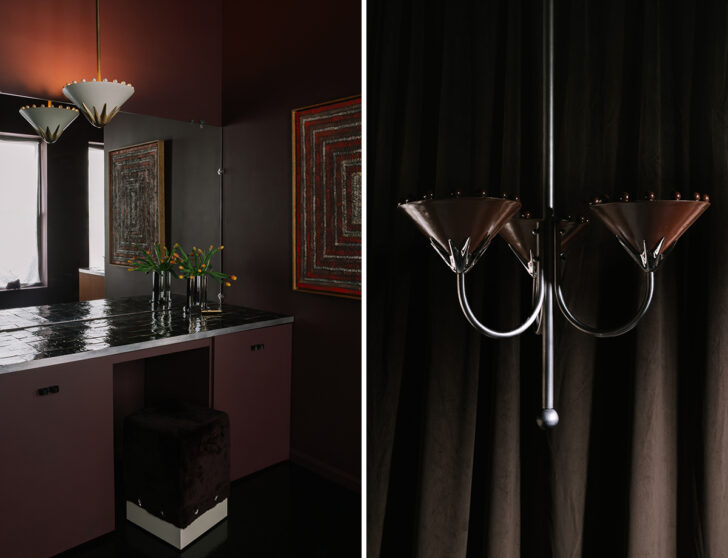 During New York design week, Devin Wilde and Astraeus Clarke launched a collaborative lighting collection in ceramic and metal, shown above and at top in Astraeus Clarke’s showroom. Photos: Chelsie Starley Photography
Devin Wilde and Astraeus Clarke Team Up on Lighting That’s Earthy Yet Engineered
Just like some friendships seem effortless and frictionless — almost meant to be — so, too, can design collaborations borne of those friendships. The best of them incorporate obvious elements of each individual’s creative approach while being, as a whole, so harmonious that one could equally assume they’d been created by a single person. Staccato, a new joint lighting collection from ceramicist Devin Wilde and the design duo Chelsie and Jacob Starley, of Astraeus Clarke, is a perfect example; Wilde and the Starleys were old friends when they decided to co-create a series, and the gestures are as perfectly suited to one another as the people are. For Wilde’s part, he created handmade conical ceramic diffusers that are ringed with ball-shaped finials — shapes that could have been lopped off the top of one of his vases. They’re inset into sleek metal chandelier, pendant, or sconce frameworks punctuated by Astraeus Clarke’s signature star forms, which hold the diffusers in place. The ceramics are subtly varied and imperfect, while the machined metal parts are softened with aged finishes on stainless steel or brass. The two interact beautifully. “We both came to the table with ideas, sketches, and instincts,” says Jacob. “There was a shared sensibility; we weren’t forcing anything. The forms just made sense together.”
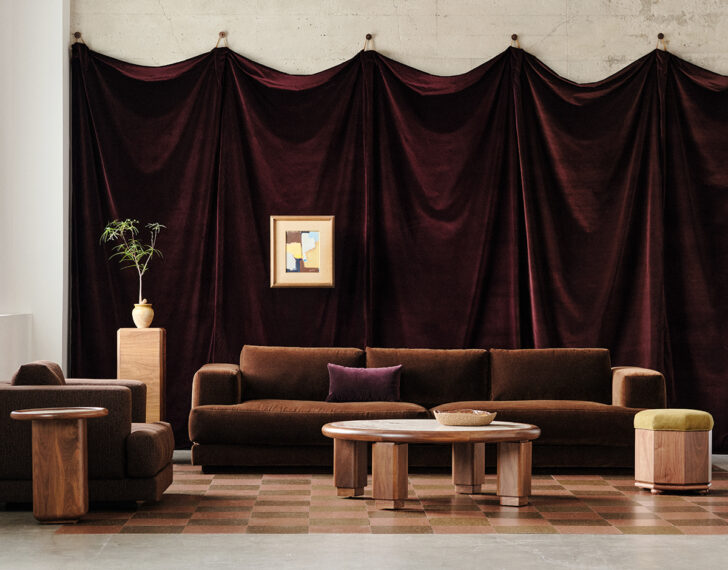
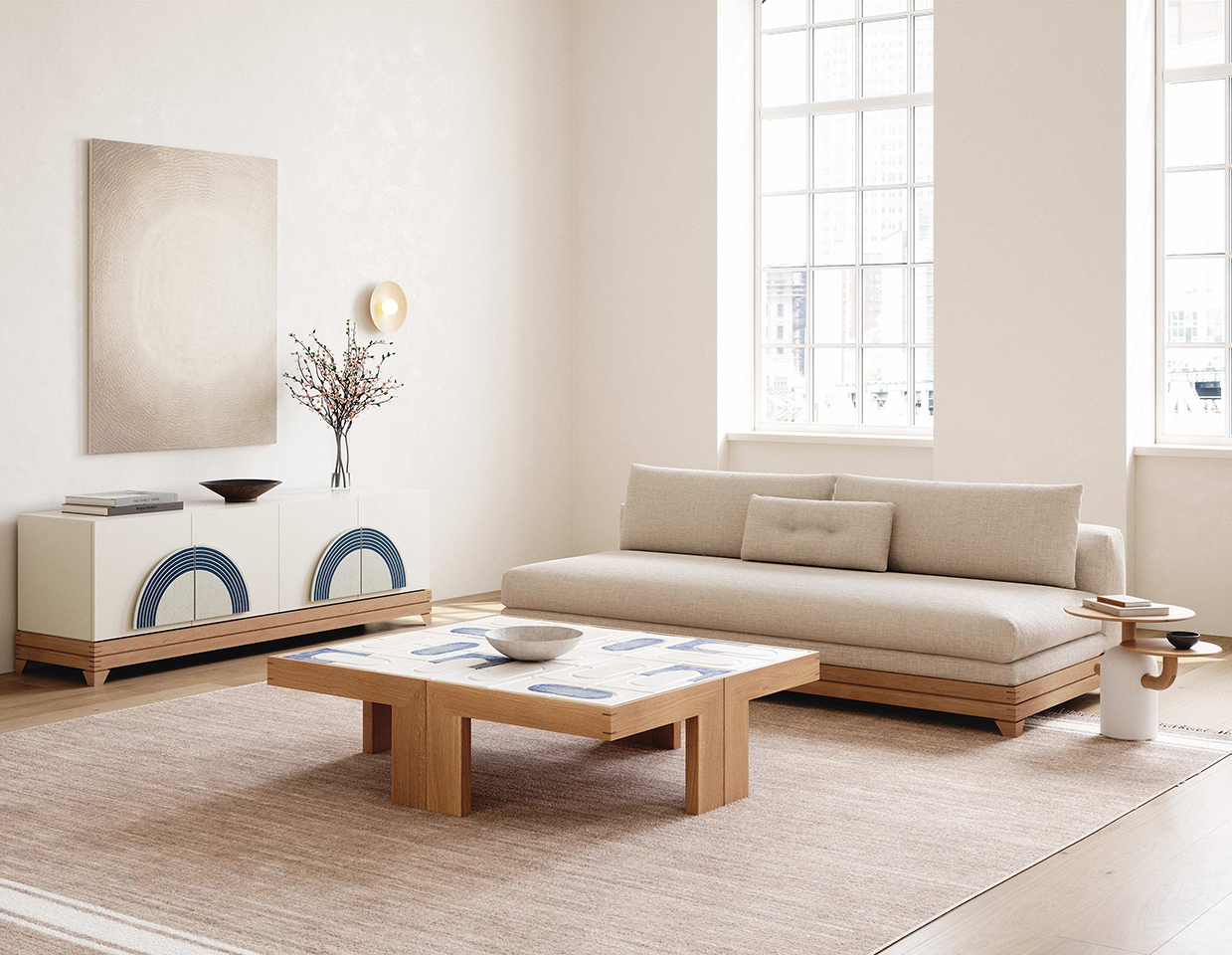
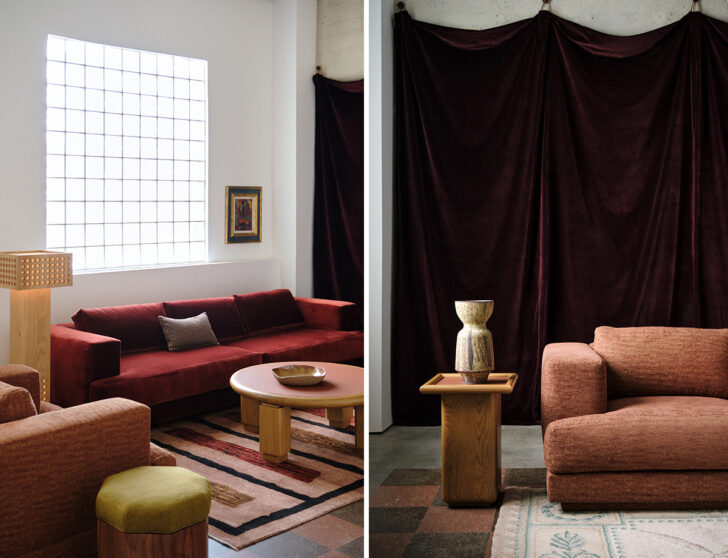 Unveiled at Lawson Fenning’s New York showroom last week, the Bosque collection encompasses 19 pieces that feel grounded and architectural.
Lawson-Fenning’s Latest Channels the Warm, Organic Side of Midcentury Architecture
At a party to celebrate Lawson-Fenning’s new Bosque collection during New York design week, a long table was covered with moss, stones, and flowers, punctuated by pyramidal stacks of sweet and savory cakes. Each took the form of a cube with a small dot of filling on top, which, it turned out, was a clever reference to the architect Kishō Kurokawa’s 1972 Nagakin Capsule Tower in Tokyo — the most iconic example of the Japanese Metabolism architecture movement. The Metabolists believed that buildings, and cities, should be able to grow and adapt to the people inhabiting them, as if they were living organisms themselves. While Lawson-Fenning’s 19-piece Bosque collection isn’t exactly modular, the brand’s chief design officer, Grant Fenning, says that he and co-founder Glenn Lawson felt drawn to “how [the Metabolists] thought about structure as something both expressive and human.” Accordingly, the new line of sofas, coffee tables, stools, side tables, cabinets, beds, and oversized swiveling lounge chairs contrast strong shapes with a warm, rooted feel, their edges all softened by curves or chamfers.
Echoing the Nagakin Tower more literally, squares and circles recur throughout the line, both in the cabinetry pieces as well as in two special collaborations unveiled for the first time at the opening: the Cuadra series of wood lamps by Ceramicah, which feature grids of circular cutouts and are for sale exclusively through Lawson-Fenning, and a special edition of Bosque side tables inset with one-of-a-kind ceramic tops handmade by New York artist Bruno Grizzo. Like a Metabolist building, Bosque will keep growing, too — it will expand to encompass its own lighting series this fall.
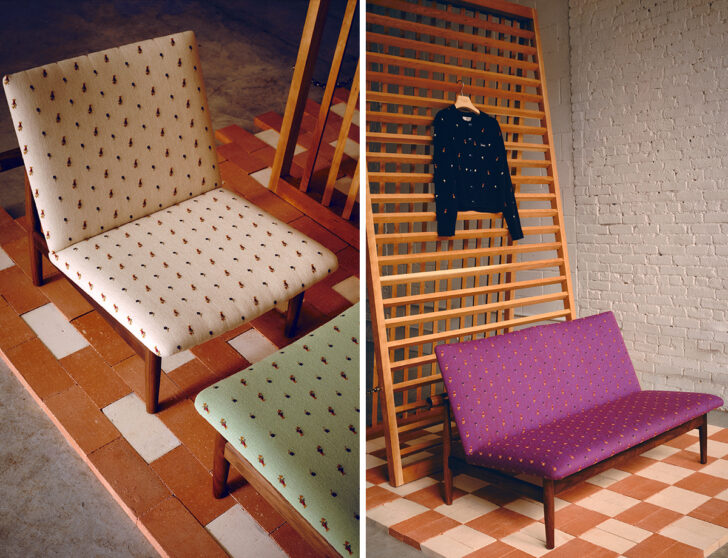 For a new collaboration, Sea New York wrapped Finn Juhl’s Japan chair, ottoman, and sofa in embroidered floral upholstery, then created sweaters and jackets to match.
Finn Juhl’s Precise Modernism Meets Sea New York’s Feminine Hand in This New Collab
As Finn Juhl fans may already know, the midcentury Danish designer was also a talented artist, and he planned out his furniture and interiors through beautiful watercolor paintings that were precise, colorful, and vibrant, just like his realized work. He was already a huge inspiration for Monica Paolini, the creative director behind the New York fashion brand Sea, when she first had the chance to shoot one of her collections inside his former home in Copenhagen in August of 2024, and nearly two years later, his original painted studies for that home have formed the basis for a new collaboration between his eponymous brand and her own. For Sea New York x House of Finn Juhl, Paolini has wrapped Juhl’s Japan collection of wood-frame seating in an embroidered floral fabric that builds a bridge between her creative universe and his; while Juhl’s own textiles from the time were quite minimal — as is a posthumous collection released by his brand that was also inspired by his watercolors, which are part of the Danish Design Museum’s collection — Paolini’s florals reference his color palettes but aim moreso to “capture the feeling his work evokes: a sense of softness and intimacy,” she says. Produced at the House of Finn Juhl’s textile mills in central Denmark, the wool and cotton fabric reflects both “the warmth and quiet beauty of his interiors,” says Paolini, “and Sea’s language of texture, femininity, and craft.”
While the initial idea for the collaboration centered on the furniture — which debuted in Sea’s Canal Street flagship last week — Paolini ended up expanding it to encompass clothing as well: sweaters and jackets made from her own floral knits, some accented with leather salvaged from the Finn Juhl workshop. “I loved the idea of incorporating materials directly connected to the furniture-making process in a more subtle way,” she says. “It created a natural connection between the two worlds through craftsmanship and material, without feeling too literal.” Sea’s take on the Japan series will be available soon through DWR, and if you’re headed to 3 Days of Design next month, you’ll get a second chance to see it in person at the House of Finn Juhl flagship.
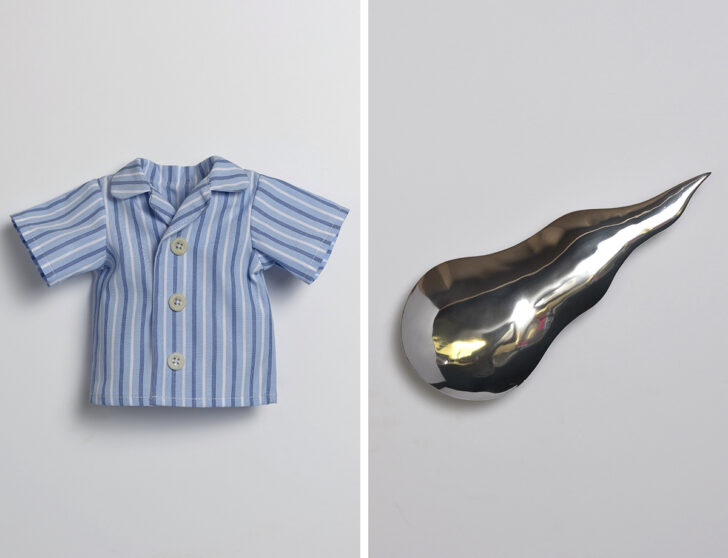
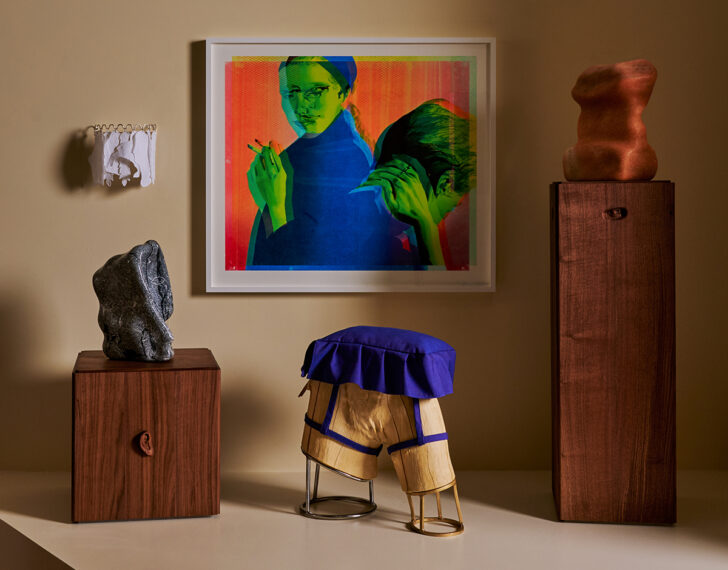
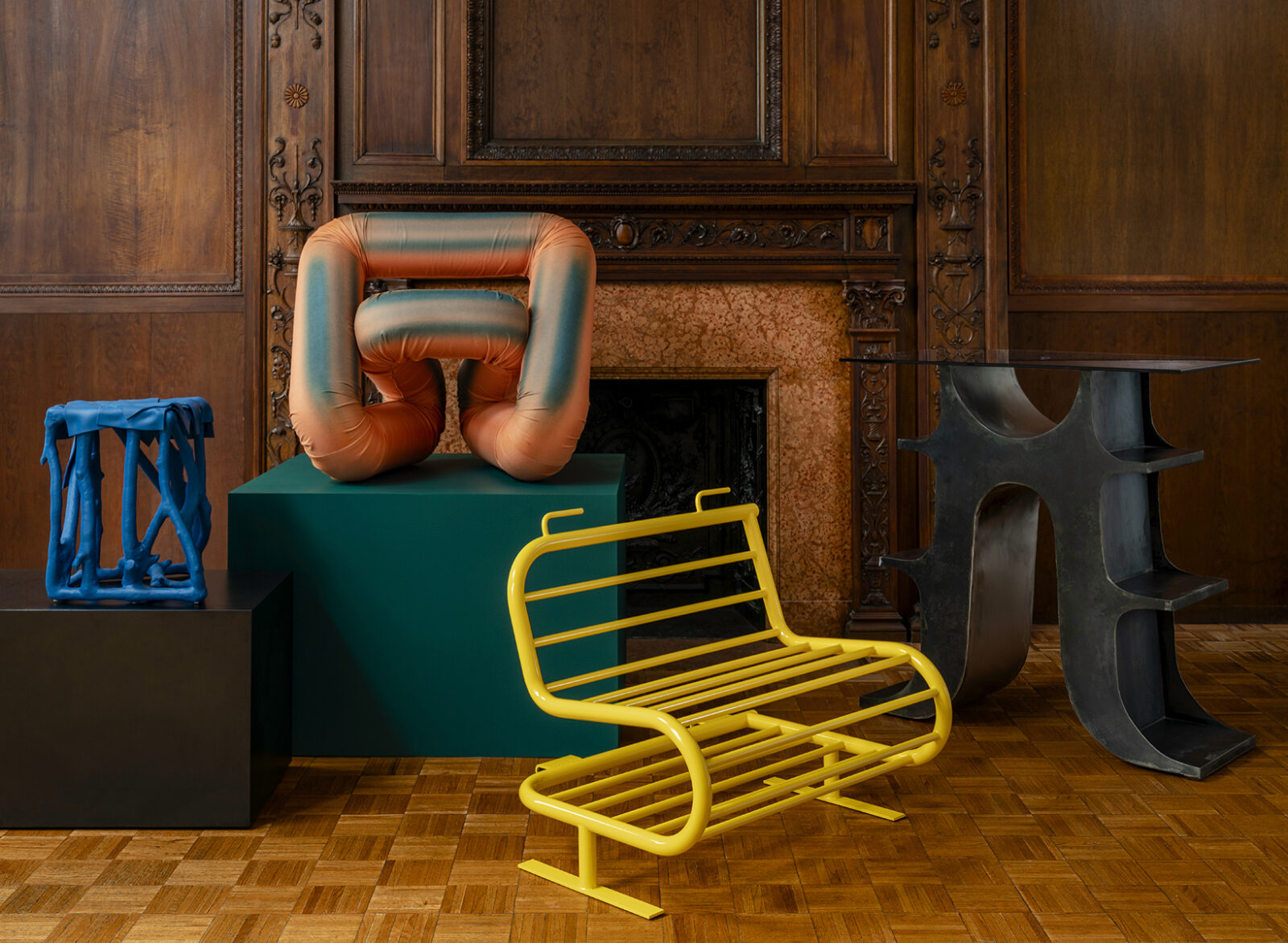
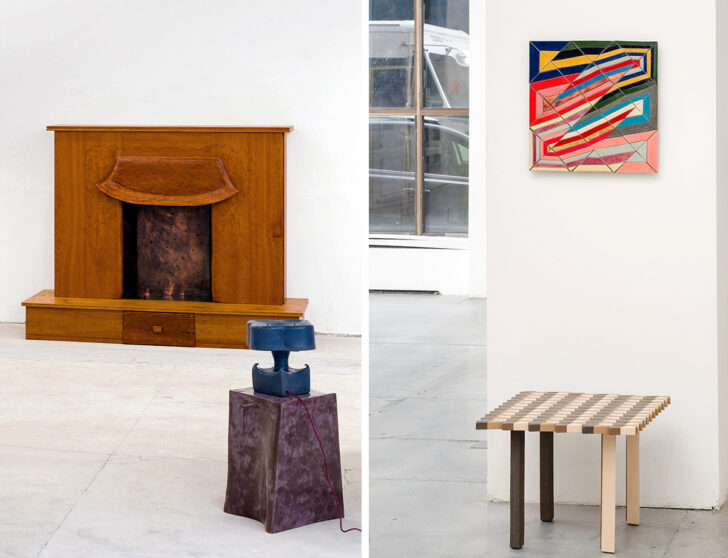 Top: Nightlights by Nino Chambers and Kump Studio in the Dudd Lite show at The Future Perfect, photos by David Sierra. Middle: Works in Bower Studios’s Body Language show, photo by Matthew Gordon. Bottom: Works by Luke Malaney, Liyang Zhang, and Cody Hoyt at Placed’s Put Together show, photos by Simon Leung.
Where Was All the New Work By Independent Studios This Year? Mostly in Group Shows
While this year’s design week was surprisingly thin on new collection launches by independent studios, fun group shows, on the other hand, abounded. Office of Tangible Space, Piscina, Head Hi, Paraphernalia, and Bon Studio all hosted good ones — along with a selection of works by Korean artists at the Standard, which we’ve given a mention to below — but three in particular stood out, both for their curation and for their inclusion of mostly new work. First, the Philly-based gallery Dudd Haus graduated to a spot at The Future Perfect with their show Dudd Lite, which showcases 120 variations on night lights (down from 400 submissions); it went a bit viral on Instagram thanks to a genius shrine to Luigi Mangione created by Kate Bailey, but featured equal numbers of more jokey creations and more beautiful, abstract ones, like the Starck-esque chrome comet by Kump Studio, above.
Across the bridge in Williamsburg, Bower Studios is presenting Body Language, an exhibition of pieces by 17 designers and artists that they’ve programmed into the showroom they now share with the jewelry and housewares shop Mociun. Meant to explore gesture and physical expression — how objects communicate without language — the show includes an anthropomorphic bench by Pat Kim that channels the paintings of Wilfredo Lam, an eye and nose speaker set by Joel Siegle, and sconces draped with lace cutouts by Nassi Lamps. But perhaps our favorite pieces are the new wood pedestals by Bower themselves, adorned with little carved ears, eyes, and lips.
Dudd Lite is on view through June 10 and Body Language June 27, but Put Together, by the Montana-based Placed gallery, was only on view last week for a grand total of 28 hours. The gallery’s director, Coryander Friend, found out only three weeks prior that real estate company Rudin was giving her a large empty storefront — after plans for a show at a much tinier venue fell through — yet she managed to wrangle work by nearly 30 designers and artists that explored rule-breaking approaches to craft. Cody Hoyt showed lovely new flat ceramic wall works, Liyang Zhang presented a ceramic lamp and stool, and Luke Malaney contributed several wood and copper pieces, including an epic fireplace he first debuted last summer. All the group shows made me a little sad we didn’t do our own this year, so maybe we’ll be back in action in 2027?
Editor’s List
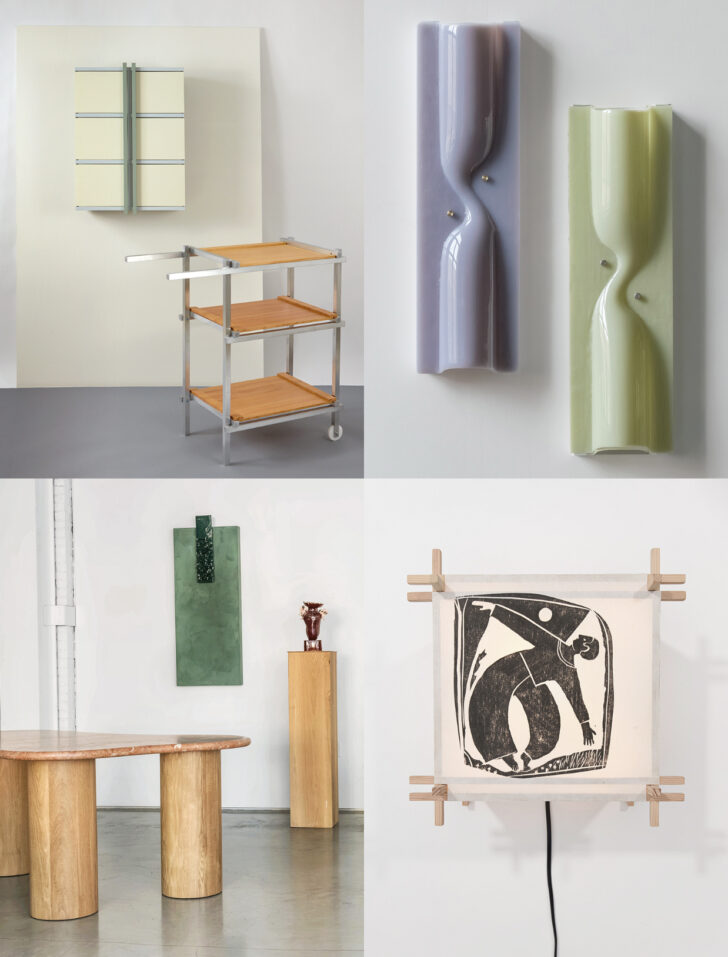
CLOCKWISE, FROM TOP LEFT:
–
RISD once again had a booth at ICFF, with Wanted, that hosted various works by BFA and MFA students; we loved this cabinet by Lieyah Dagan and cart by Andrew Goulet, both 2026 MFA grads.
–
Brooklyn lighting designer Anna Dawson debuted a new collection of colored glass pendants, table lamps, and sconces in the prettiest muted greens, burgundies, and purples — we just started selling her work in our Sight Unseen Collection, and will be adding more soon!
–
The bookstore Head-Hi put on another edition of their annual Lamp Show, this time at The Standard, High Line, and while 36 designers participated, we’re calling out this one by John Gnorski via Studio Ahead, available here.
–
Interior and furniture designer Sarah Sherman Samuel opened a solo show at Colony to celebrate her new book, including past works and new ones — love that green wall piece with the glass inlay. Photo: Amy Carroll
CLOCKWISE, FROM TOP LEFT:
–
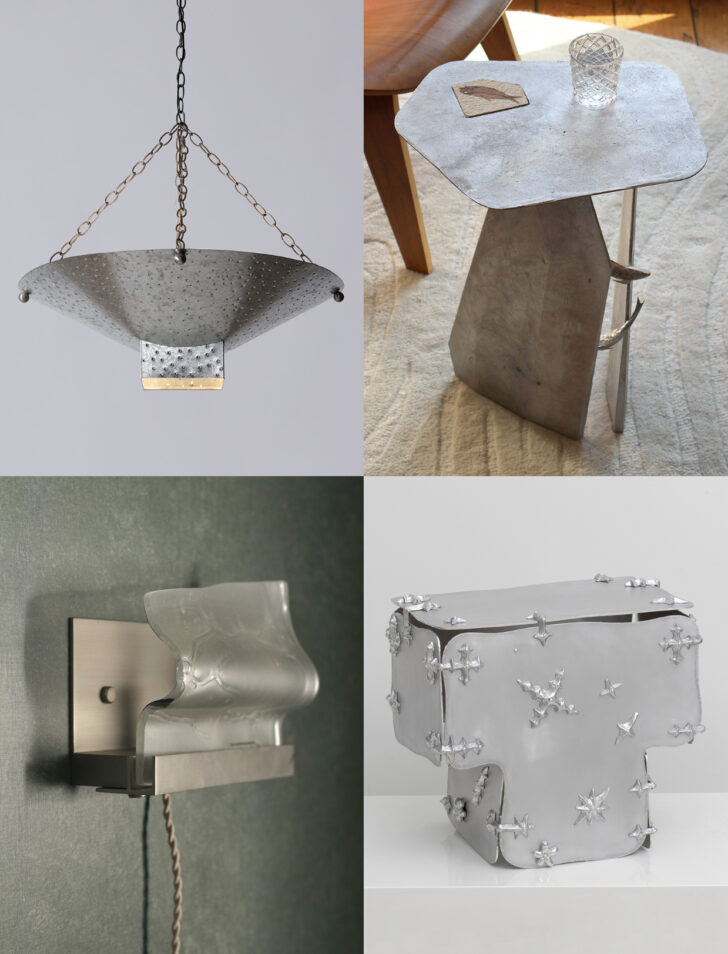
We’ve been offering Muhly’s punched-steel Lin table lamp for a few years now, but recently the pair collaborated with the Texas interior designer Scott Parks to create a large pendant version for a project of his; it debuted last week at Afternoon Light.
–
Our favorite ICFF find was the new Los Angeles studio Epoche, who showed in the Look Book section of the fair and came out of the gate with a sophisticated series of tables, chairs and vases embedded with fossilized fish (the side table above also has metal fish swimming around its base).
–
At Elsewhere, Still Ours, a group show at The Standard, East Village that was curated by John Kim & Sandy Park, nine Korean designers exhibited furniture and artworks, including Hakmin Lee, who brought two small star-adorned tables from his latest collection.
–
Cuff Studio showed their latest collection at ICFF, including a very chic pet bed and a blown-glass pendant and sconce with a Brutalist feel.
CLOCKWISE, FROM TOP LEFT:
–
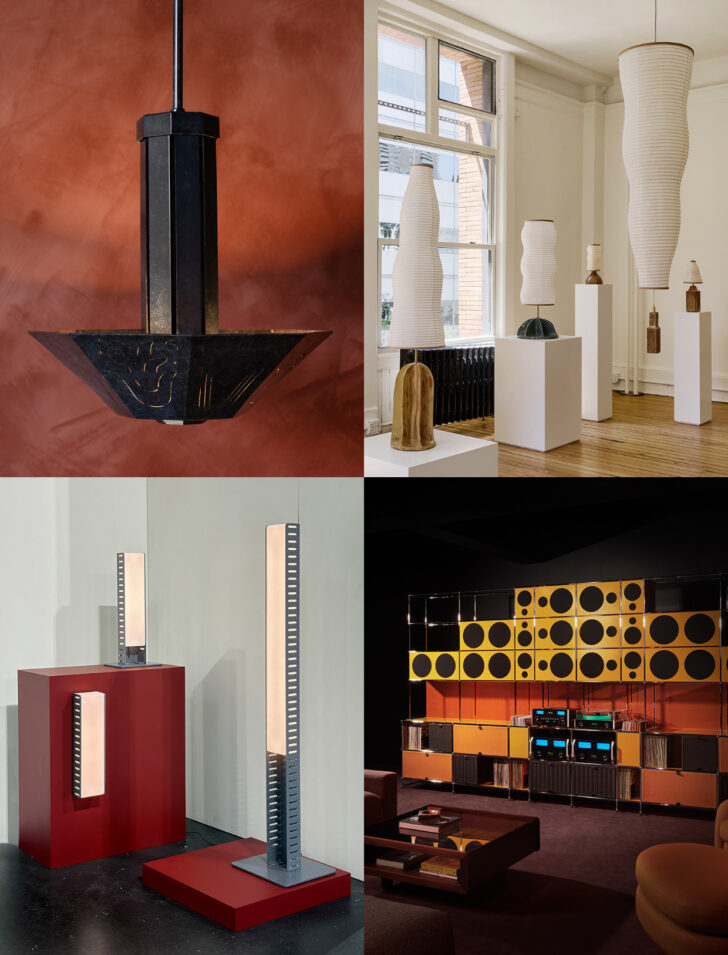
Also spotted at ICFF Look Book, the Colorado studio Marx Et Al, which primarily works in brass, showed a pendant lamp with palm- and star-shaped cutouts in the shade.
–
Kawabi, the Brooklyn studio known for their paper shade lamps, had a prolific design week, showcasing dozens of new ceramic-base lamps made in collaboration with Christopher Merchant at the Assembly Line Annex in Tribeca. That calming show is open until July 16 by appointment, if you missed it.
–
My favorite thing at Afternoon Light was a listening room by Symbol Audio in collaboration with USM, which had a fun 1970s vibe and the most beautiful speaker stack I’ve seen. Photo: Black and Steil
–
Vancouver designer Nolan Talbot-Kelly brought his Slotted light series to ICFF, which pairs industrial-chic cut-out aluminum bodies with acrylic diffusers and was just simple enough to impress us.
News
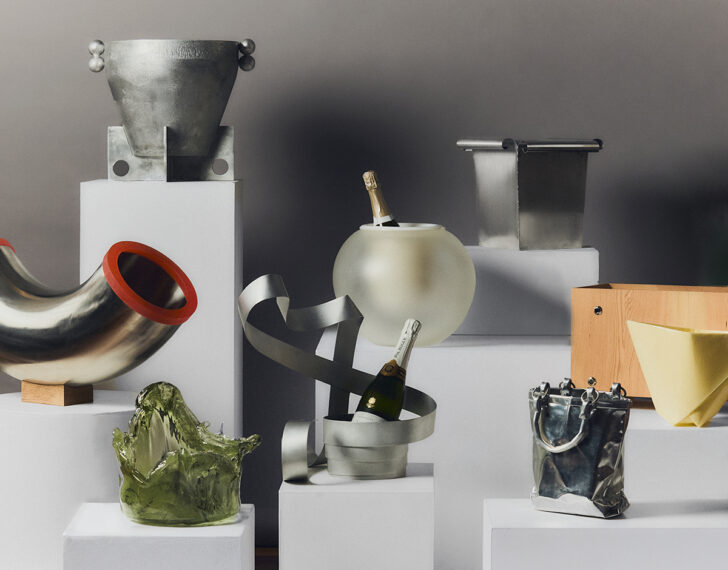
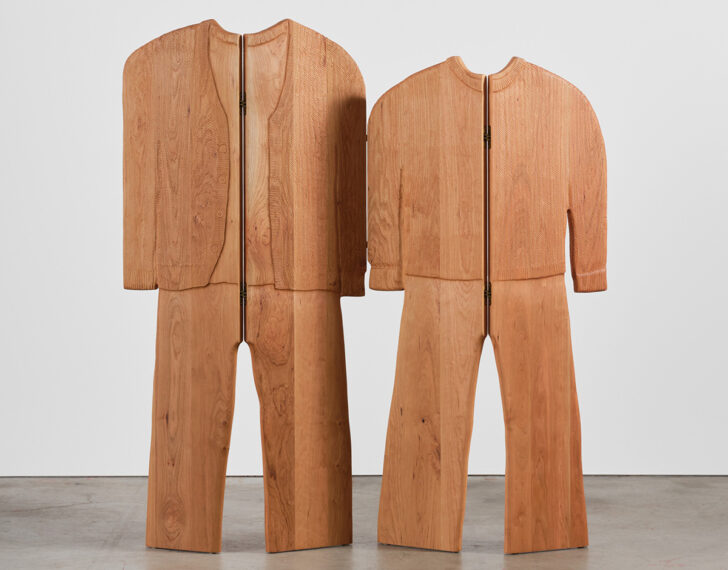 Top: Some of the 20 champagne buckets on view at A Sense of Occasion during Melbourne Design Week, photo by Matthew McQuiggan. Bottom: A room divider by Ryan Belli, part of his solo show at Marta gallery in LA.
–
It wasn’t just New York design week last week, it was Melbourne Design Week too, and some excellent work came out of it — not least this show of 20 Australian designers making champagne buckets for A Sense of Occasion, a single-object show curated by Thomas Maxam Studio. Among our favorites were a metal bucket with tiny balls as handles and a frosted glass orb by Dean Norton and Hamosh Donaldson.
–
Los Angeles designer Ryan Belli is showcasing his largest body of work to date in his new solo show at Marta gallery, which is on view until June 6. It’s a wildly diverse lineup, with fabric lamps, metal wall sculptures, upholstered lounge chairs, a cast-bronze pretzel, a cabinet adorned with ducks that he designed with his wife Calley Benoit, and the room divider above, which proves we just can’t get enough of clothing as furniture.
–
Two recent interiors stories in Milk Decoration I’d like to call out. First, the personal apartment of Sophie Pearce from Beton Brut gallery in London, which is full of works by the late artist Salvino Marsura, whom she represents. Gonna be honest it doesn’t look like someone actually lives in this apartment? Like where are the nightstands, for one? But Pearce has great taste and it’s a very pretty shoot regardless! Second, the lovely Netherlands home of interior designer Bonnie Barlag, which had me thinking two things: first, how is it possible that every interior designer can afford such a fancy apartment? And second, deeply annoyed that I can’t afford this 1990s Rhino lamp by Christian Dufay for Abode. Going on my aspirational wish list!