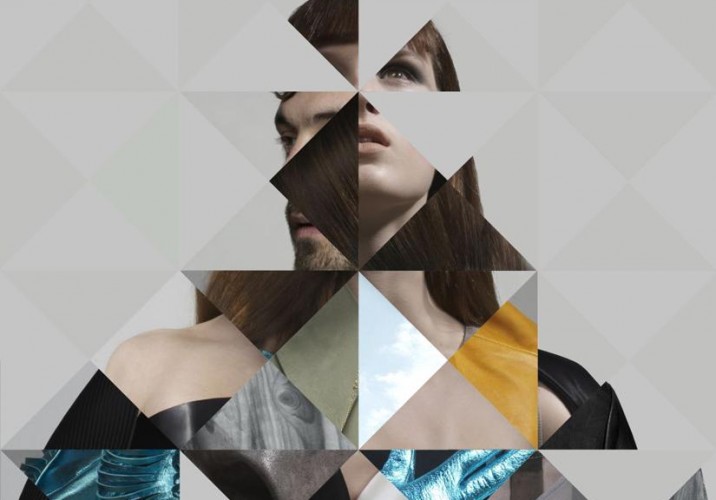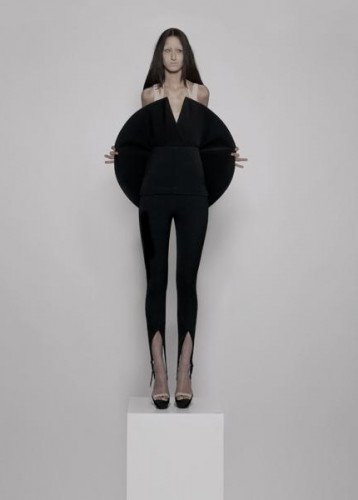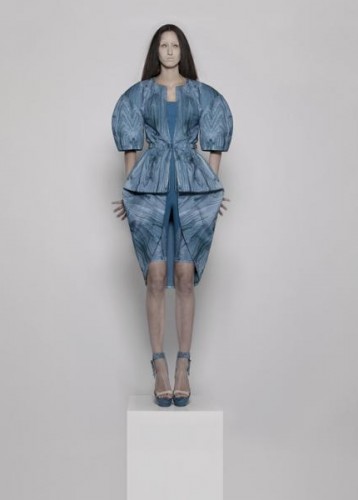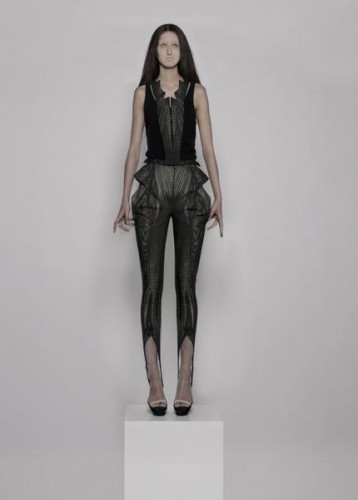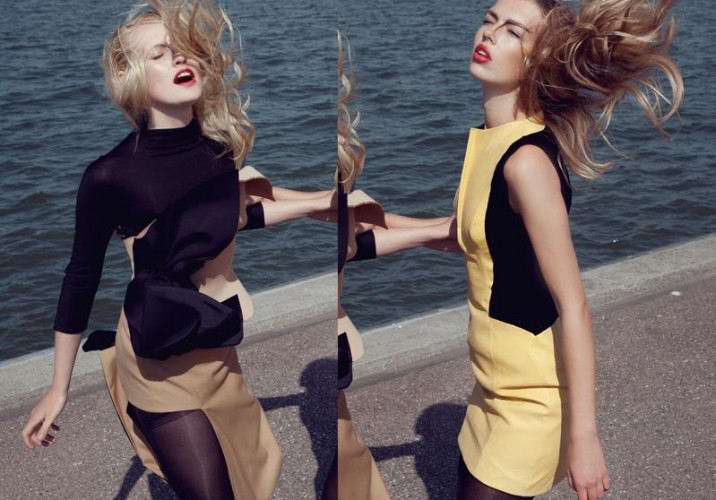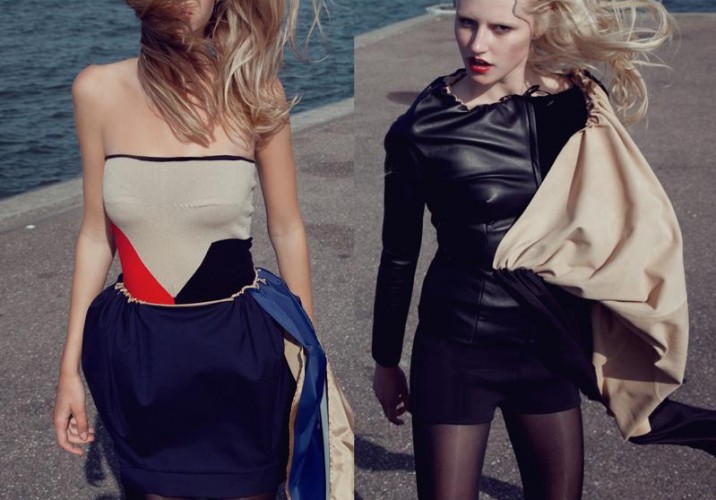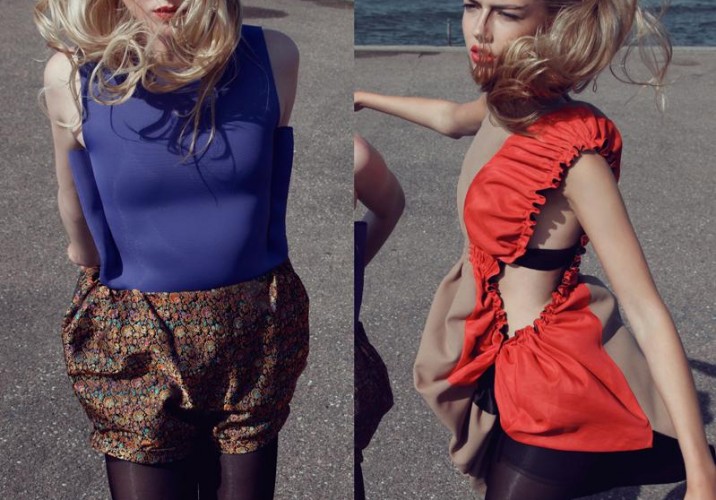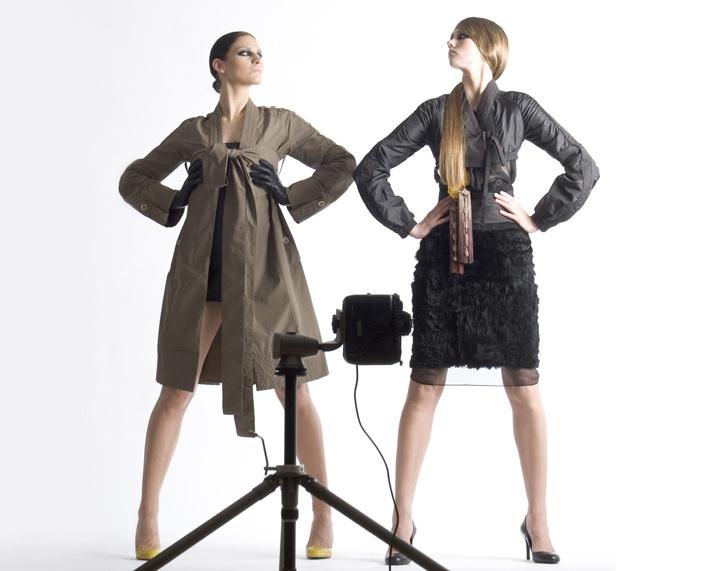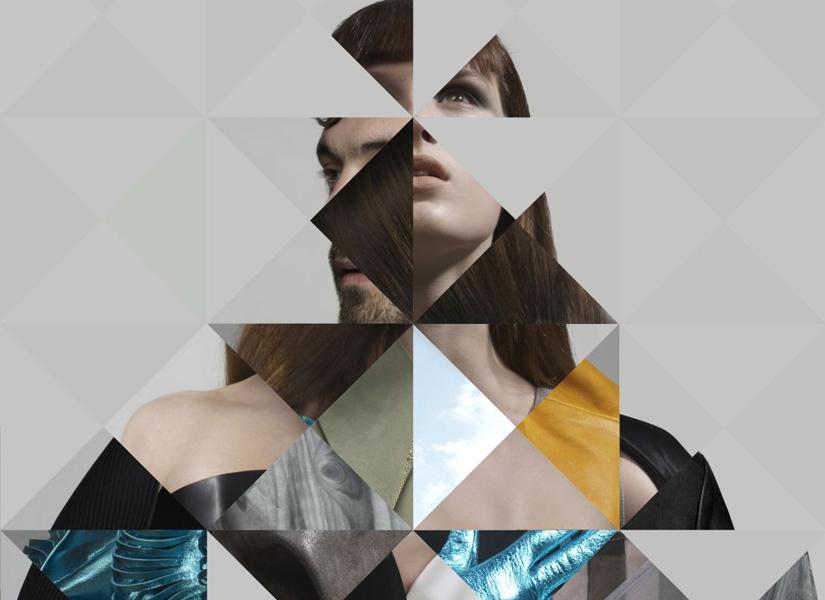
A promotional image for the video lookbook Amsterdam duo Freudenthal/Verhagen created around the five ArtEZ Fashion Masters students' collections, each of which is represented within one or another of its triangles.

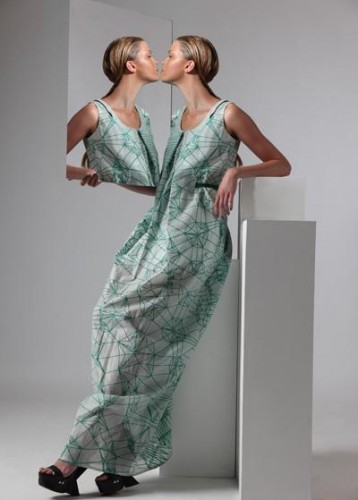
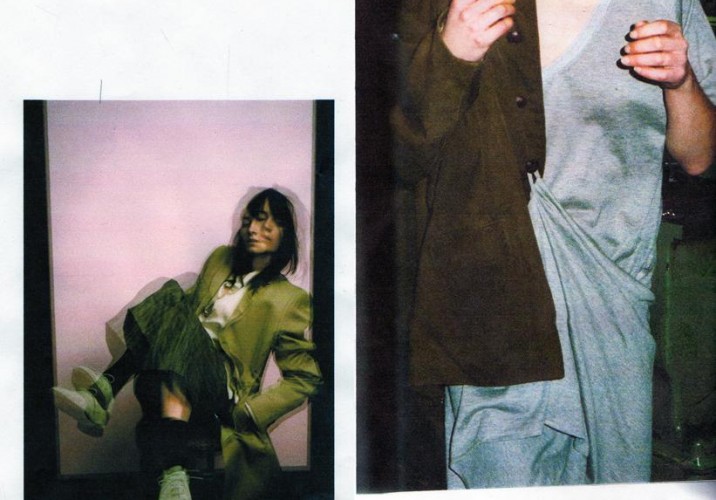
Hanna Siwecki: “The current generation has grown up with the internet, integrating it into their lives until their online profiles develop into something bigger than their actual selves. This is the basic idea behind the network collection: The clothes are oversized and describe a space that is bigger than a single person. The image of a network is directly translated onto the print.”

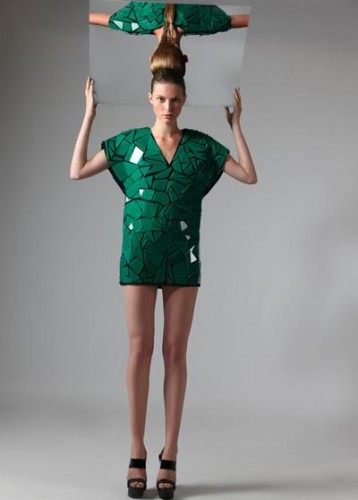
Hanna Siwecki: “Loose drapery symbolizes the casual, easygoing attitude of bloggers, while the Plexiglas fragments on several of my garments — which evolved from the network print — symbolize how we put the image we create of ourselves together in a very subjective way. This piece in particular represents the relationship between the person (body) and the reflection (blog/profile) of itself to its surroundings (the internet community).”

Hanna Siwecki: “Even though I wanted to make the collection very wearable, I added a few pieces that would exaggerate that relationship between the body and the surface of the clothing. For this dress, the network print determined the shapes of the Plexiglas pieces; I had to laser-cut them to make them precise but without sharp edges. They also couldn’t be too small, or it would have been impossible to sew them all to the dress by hand.”

Hanna Siwecki: “My mood board for this collection contained interesting articles, pictures from artblogs and magazines, and mobile snapshots that inspired me in some way. This is one of them.”

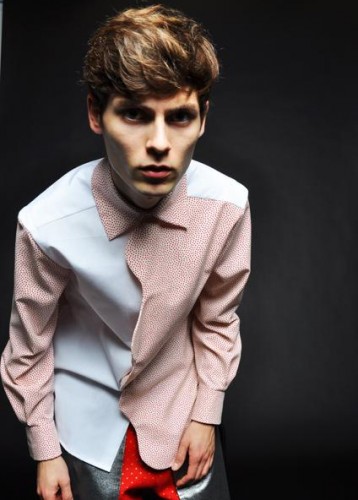
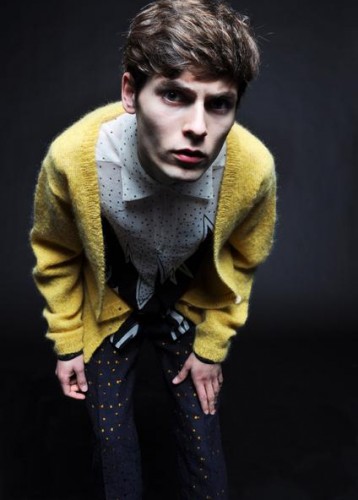
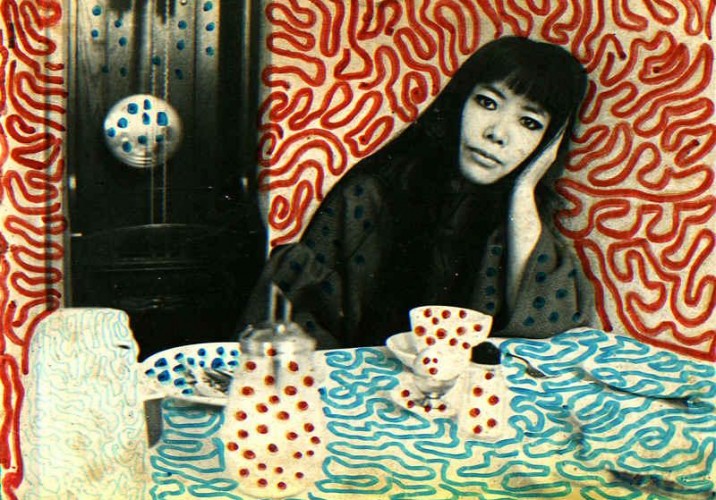
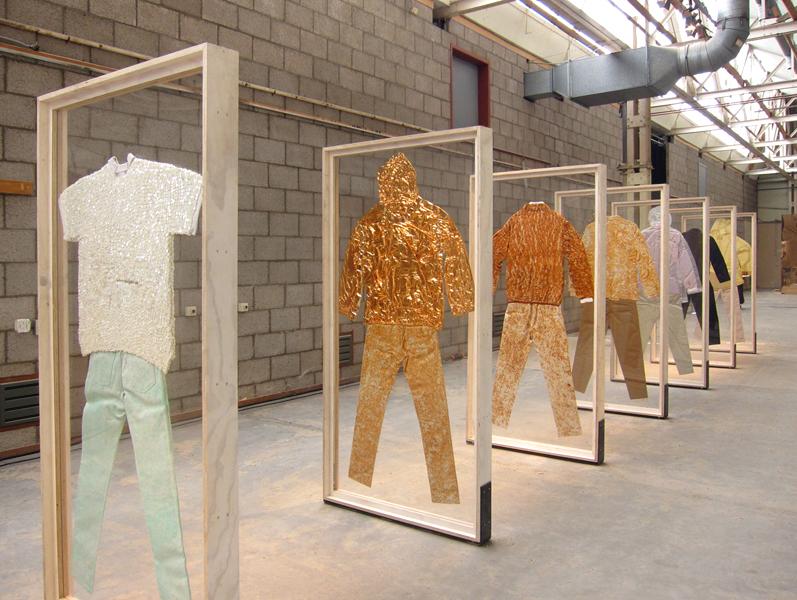
ZhengZheng Li: “I get inspiration from paintings by mental disorder patients and by the works of artist Yayoi Kusama. Their work expresses a true self; there’s no control exerted by the consciousness. In my collection, I also try to release myself, breaking the borders and limitations of traditional menswear in both my designs and fabric choices.”

ZhengZheng Li: “The collection has a playful sense, reflecting me and my mental world: capri pants, spiral-edge layers, irregular cuts and darts combined with repeated graphics result in a hypnotic atmosphere. I try to materialize abstract mental images through outfits.”

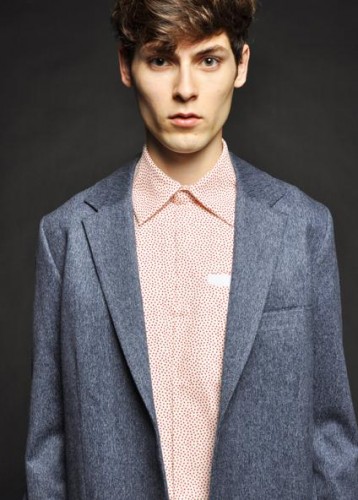
ZhengZheng Li: “I also did a lot fabric combinations in my collection, and a lot of layers woven together in each of the garments — polka dots, houndstooth, displaced plaids. The colors, repetitive patterns, and layers come from the fact that I believe the subconsciousness is very diverse and illusive.”

ZhengZheng Li: A piece by Yayoi Kusama.

Nick Rosenboom: “I was intrigued by cutting and self-harm as a form of communication; I removed this dark and sinister subject from its contemporary reality and transformed it into a surreal sad parade. The resulting garments have strong architectural lines and a complex character. Key items are skin-tight trousers bound around the legs with corresponding harnesses wrapped around the body.”

Nick Rosenboom: “The materials presented are raw, matte, and dusty in contrast with smooth and shiny metallic surfaces. The coats are quite strong in shape, and constructing the silhouette without using massive shoulder pads took multiple sizes of felt strips and fuseable webbing inside each sleeve.”

Nick Rosenboom: “The woodgrain print I designed for the collection represents our veins, which are exposed by self-cutting just as the grain is exposed when cutting into a tree. And yet woodgrain is much-beloved and more comfortable to look at — I just wanted to show my inspiration, however unpleasant, without forcing it on anyone.”

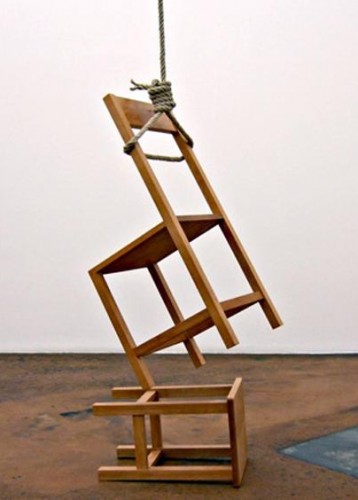
Nick Rosenboom: “This image from my mood board is called ‘Le Suicide Des Objets,’ by Philippe Ramette. Although the picture represents a macabre situation — which the wood as a former living material reinforces — the setting is unrealistic. A chair doesn’t hang itself. The context loses its heaviness, and to me it becomes ironic. I like the idea of transforming heavy everyday situations into more bearable images.”

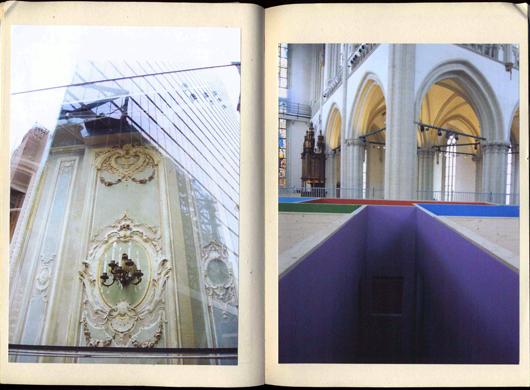
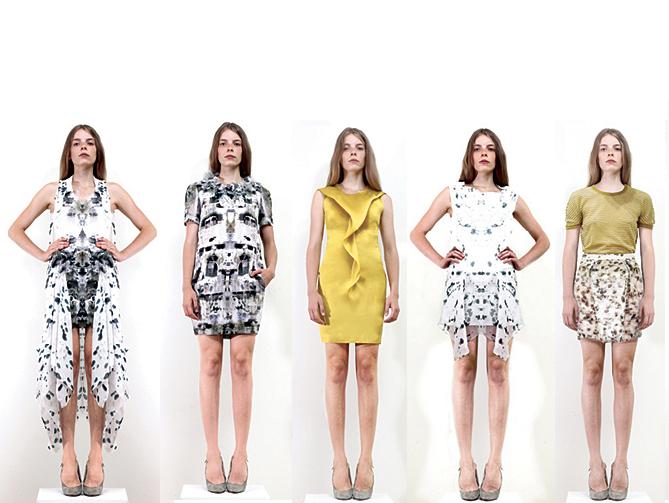
Yona van Mansfeld: “My collection ‘Elusive Clashing’ is based on contrasting elements: color contrasts and a clash between modern and ornamented fashion. This summer I was in Berlin, where I saw a neo-Rococo wall covered with a modern glass-metal construction. It was fascinating how the two elements really worked together. After Berlin I went to an exhibition by the artist Krijn de Koning in Amsterdam, who works with bright colors in modern constructions and puts them in a classical environment.”

Yona van Mansfeld: “Ornamention is visible in my collection in my use of brocades and the dramatic long, draped pieces attached to some of the garments. The modern aspect shows in, for example, the very tight cut of the sleeves and use of neoprene. Primary colors clash with black and beige, while construction contrasts with drape, ridigity with flexibility, and woven fabrics with smooth, plain ones — all combined in one garment.”

Yona van Mansfeld: “In this collection I worked with small channels which I put a cord through, causing the garment to wrinkle and take on whatever shape and form I wanted. One dress started as a simple wide blouse with a wrinkled armhole which I made tighter to the body and longer; the pattern is totally the opposite of what you see when the piece is worn.”

Yona van Mansfeld: “This is a page from my sketchbook: On the left you see a photo I took of the neo-Rococo wall in Berlin, with glass around it, and on the right is a picture from the exhibition of Krijn de Koning, with a constructed object whose bright colors reference the stained-glass windows of the church.”

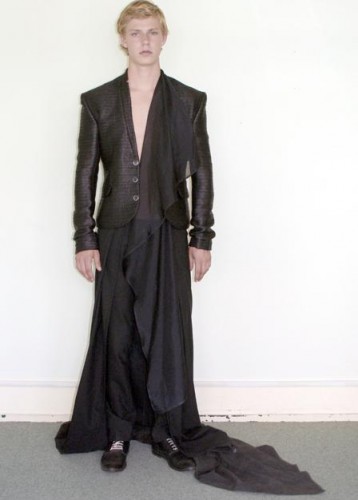
Jonathan Christopher: "My work explores the more macabre side of human nature, using inspirations such as hunting and dissecting people and animals. I’m also trying to stretch gender boundaries by, for example, using feminine elements like draping in menswear."

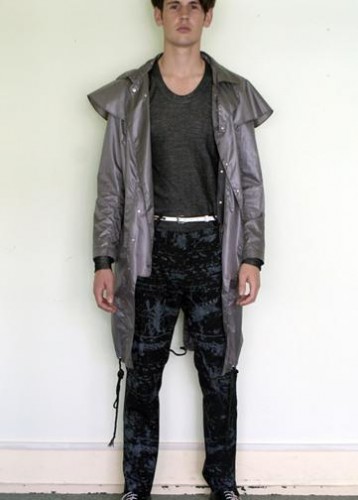
Jonathan Christopher: “This collection uses insects — creatures people do not want to see, even when they're there — to reflect the idea that while people act a certain way, it differs from who they really are if they’re hiding their darker side under a mask. I created fabrics that are light-sensitive, so their patterns (like the insect print on these pants) only change color and are revealed under a UV light.”

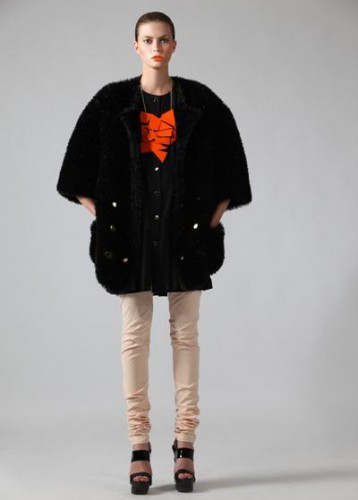
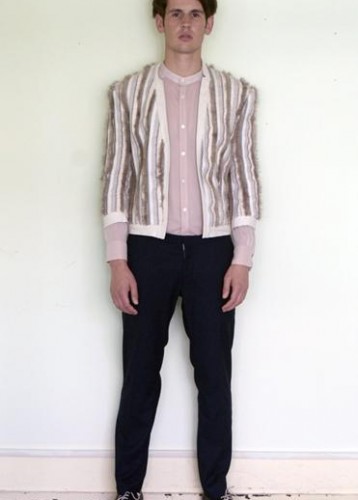
Jonathan Christopher: “The most challenging piece to make was a jacket (pictured) I wove myself out of UV-sensitive yarn, fur, raffia, and wool. It took a long time to get it right. The main thing was how far apart the warp yarns needed to be to create an open weave, especially because all of the materials reacted differently; the raffia when woven too tightly would bubble, but too loose and it would just fall out.”

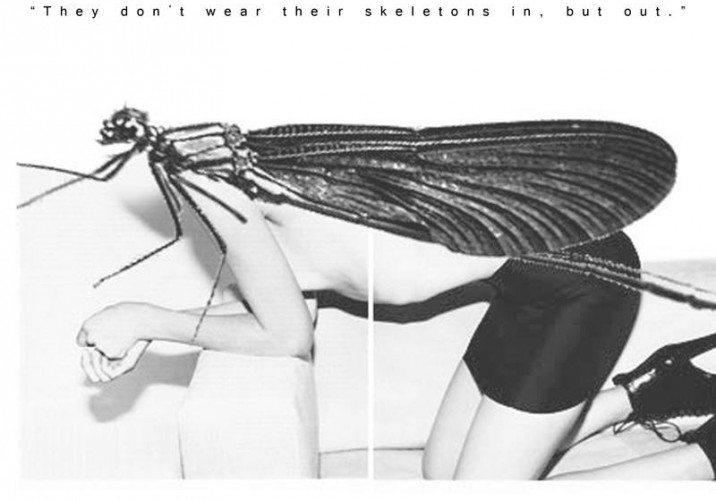
Jonathan Christopher: “This picture inspired me when I was designing the collection because it shows human nature as I perceive it: People wearing their true nature on the outside rather than hiding it. An artist friend made it for me.”