10.19.26
The Weekly
An Edgy London Interior by Max Radford, Three Experimental Design Exhibitions, and More
Welcome to the new Sight Unseen, a weekly newsletter that delivers the best of the design world — news, trends, shopping advice, interviews, travel recs, and more — straight to your inbox. If you’re not subscribed, follow this link to sign up. Want to partner with us, advertise, or submit your work (guidelines here)? Email us at hello@sightunseen.com.
A London Couple Asked for “Edgy and Raw.” Max Radford Delivered.
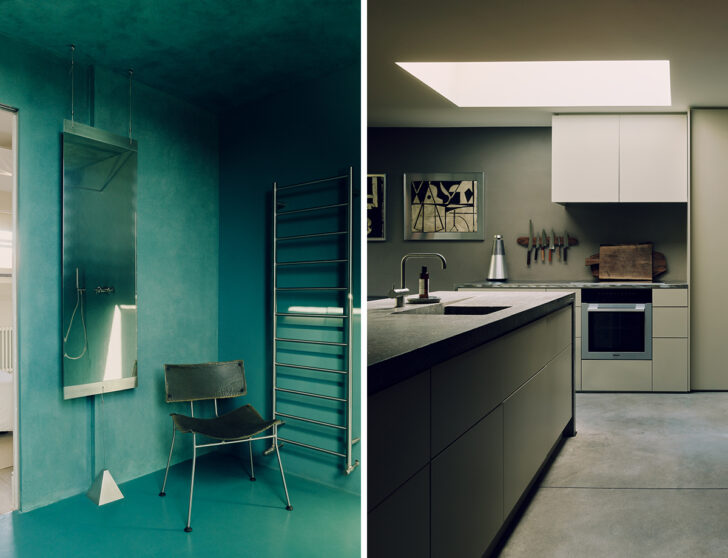
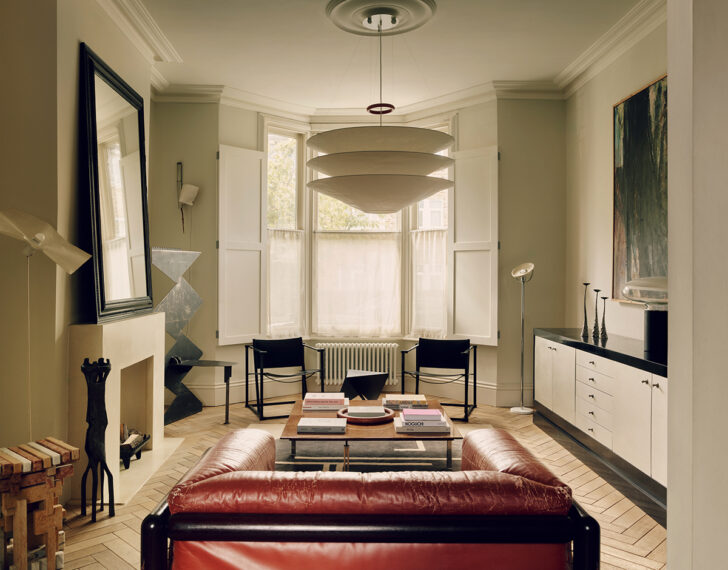
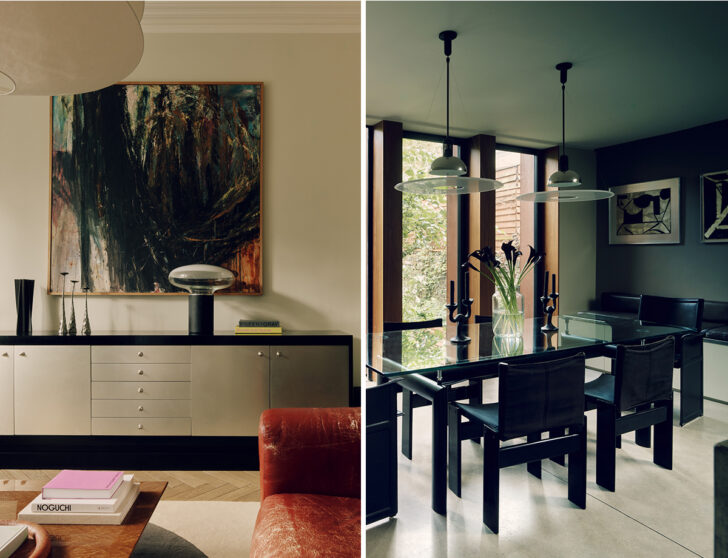 We’re gagging over this London townhouse, from the teal-and-steel bathroom to the vintage paintings in the dining room to how Italian classics meld perfectly with works by up-and-comers. Photos: Michael Sinclair
In one of the best interior briefs I’ve heard, the clients of this late-Victorian home in London wanted something “edgy, contemporary, and a little bit raw” — the diametric opposite, basically, of the Pinterest aesthetic. They certainly came to the right person: Max Radford, who not only runs an eponymous gallery for new talents working under pretty much the same directives, but also designs interiors as such, often incorporating pieces from his roster. Likeminded clients are every designer’s dream, but the project has me thinking with pride about how far our little world has come. It’s hard to imagine clients with-it enough to hire a decorator this way 15, or even 10, years ago. Or if they did, to give them both carte blanche and a budget (rather than either/or).
Working atop an existing renovation by Atomik Architecture, Radford came through in spectacular fashion, but took care not to abuse his mandate; he added in the requisite 20th-century icons like sofas by Pierre Paulin and Alessandro Becchi, lights by the Castiglionis and Mario Botta, and a bed by Carlo Scarpa before wilding out with more directional new British talents — and that scrumptious teal-walled bathroom. The living room features a zigzag steel chair by Grace Prince, the entry hall a custom radiator cover by Radford himself, the bedroom a cabinet by EJR Barnes, and the bathroom a chair by LS Gomma as well as a mirror by Radford and Eddie Olin. The best thing about projects like this one is how they can help make a case for both next-gen furniture design as well as what a contemporary interior can (and should!) look like. As Radford puts it, “you have all these quite hardcore, radical pieces of design. But when they’re set within a beautiful London family house, they’re softened down a lot and become much more liveable.” Preach.
A Former Government Chamber Became a Parliament of Experimental Design in Belgium
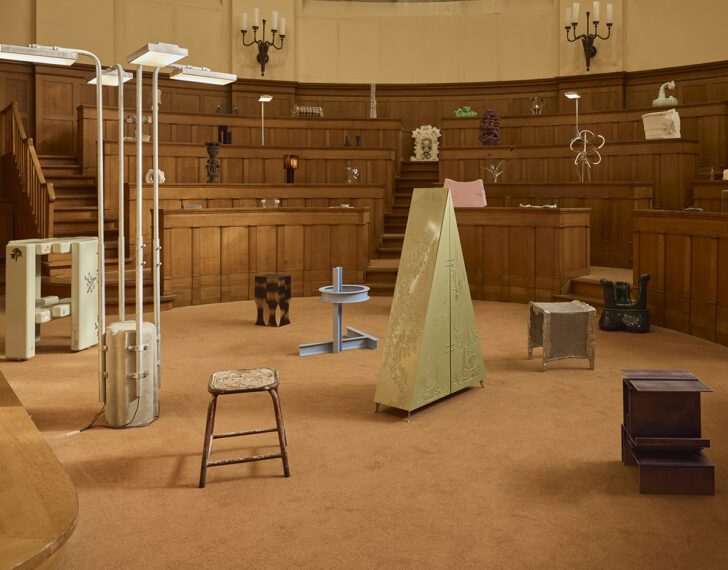
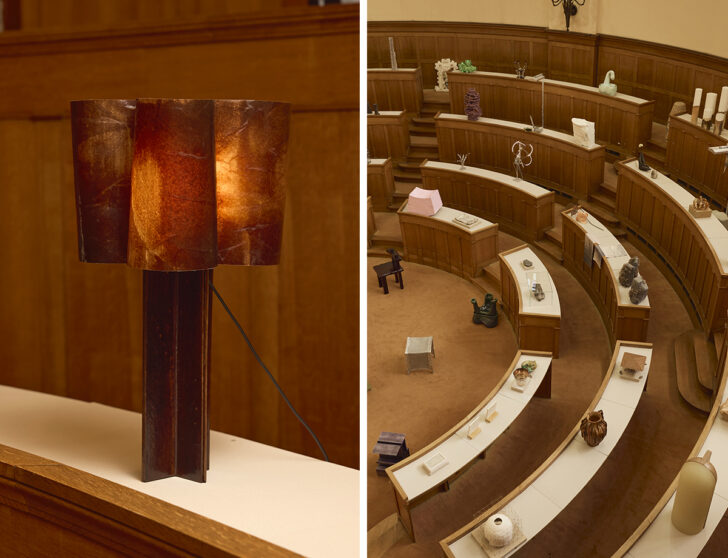 The long desks of Ghent’s former Government House became exhibition plinths during last week’s Cavea exhibition (lamp by Charlotte Jonckheer). Photos: Alexander Popelier
Last week in Ghent, Belgium, BRUT Collective and the curatorial platform DesignUnDisciplined took over the historic council chamber of the city’s former Government House for Cavea, an exhibition that imagines the room as a kind of “non-conformist parliament” for people and objects. The name refers to the tiered seating of ancient amphitheaters, which was historically divided according to social class; here, instead, everyone — and everything — gets an equal seat at the table. (In one indicative piece, by Guillaume Slizewicz, a lamp decides whether to turn itself on by holding a democratic vote among five microcontrollers every ten minutes.)
It’s a high-minded premise, but the work was weird enough to keep things fun. Théophile Blandet’s Fluid Dynamics lamps are made from rejected components sourced during a residency at a laboratory-instrument factory and controlled using syringes, as though light itself were a liquid. Matthijs De Block puts genetically modified bacteria into a luxury-style box for a project called Gucci, imagining a future in which genes can be designed, patented, and sold. Marie Caye stuck a sculpture made from a Michelin tire inside a volcano for four months until mineral-rich water covered it in crystals, while Studio CoPain made a vase from pâte morte, the unleavened dough traditionally used for decorations in baking competitions. There were more conventionally desirable objects on view, too, including Laurids Gallée’s cedar bar cart carved with symbols of intoxication, Linde Freya Tangelder’s rough-hewn wood furniture and glass sculptures, and a fuzzy-looking aluminum stool by Nicolas Zanoni that starts as handwoven metal wire before being cast in aluminum. In this unexpected location, it all looked not only provocative, but really nice — who knew parliament tables could function so well as exhibition scenography?
Two Paris Apartments Mix French Heritage With Contemporary Design
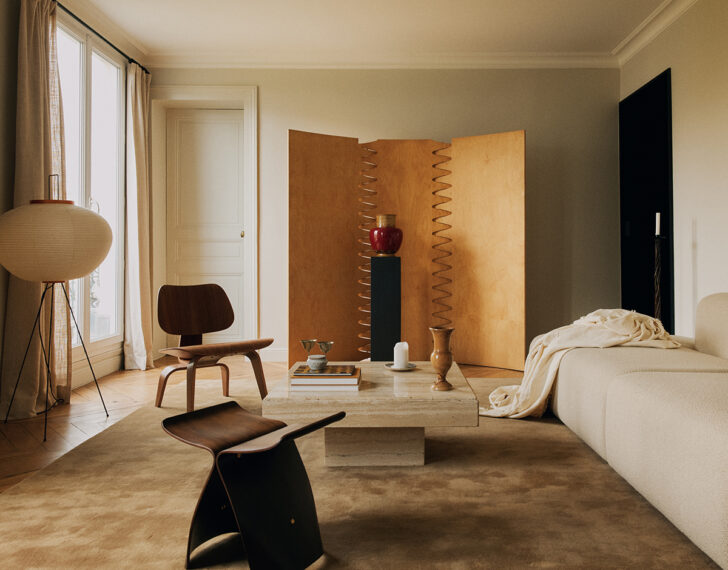
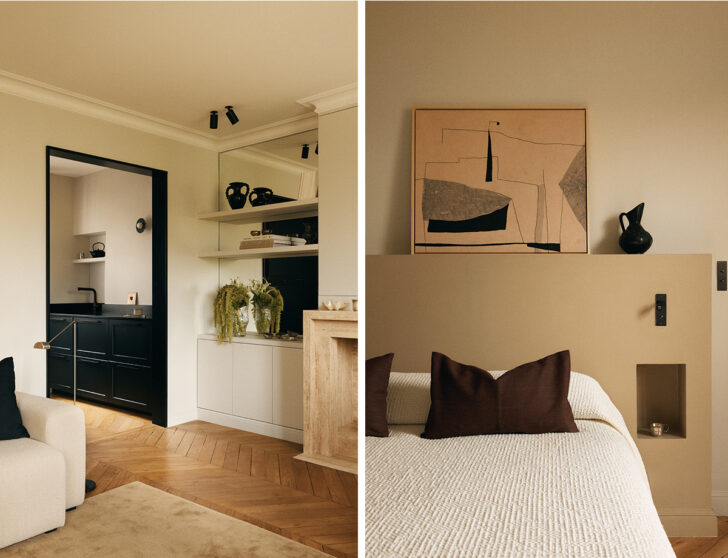
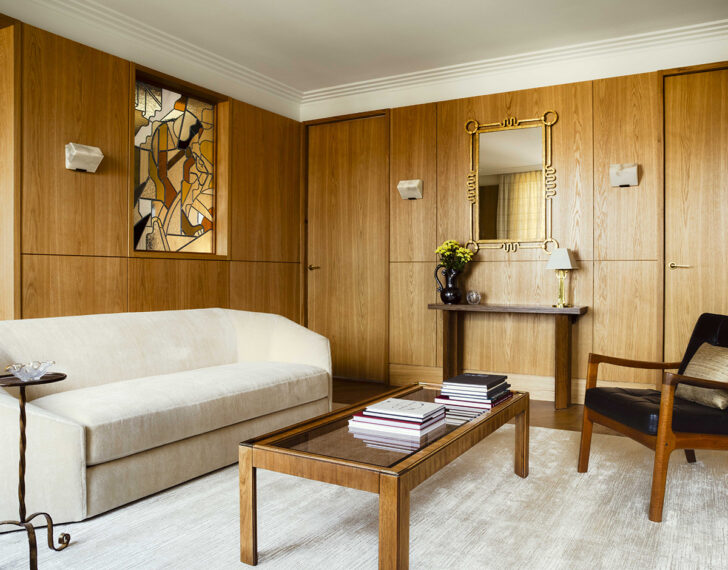 Top and middle left: The Voltaire apartment by Diettert Collet, photos: Clément Gérard. Middle right and bottom: The Cherche-Midi apartment by Claves, photos: Alice Mesguich.
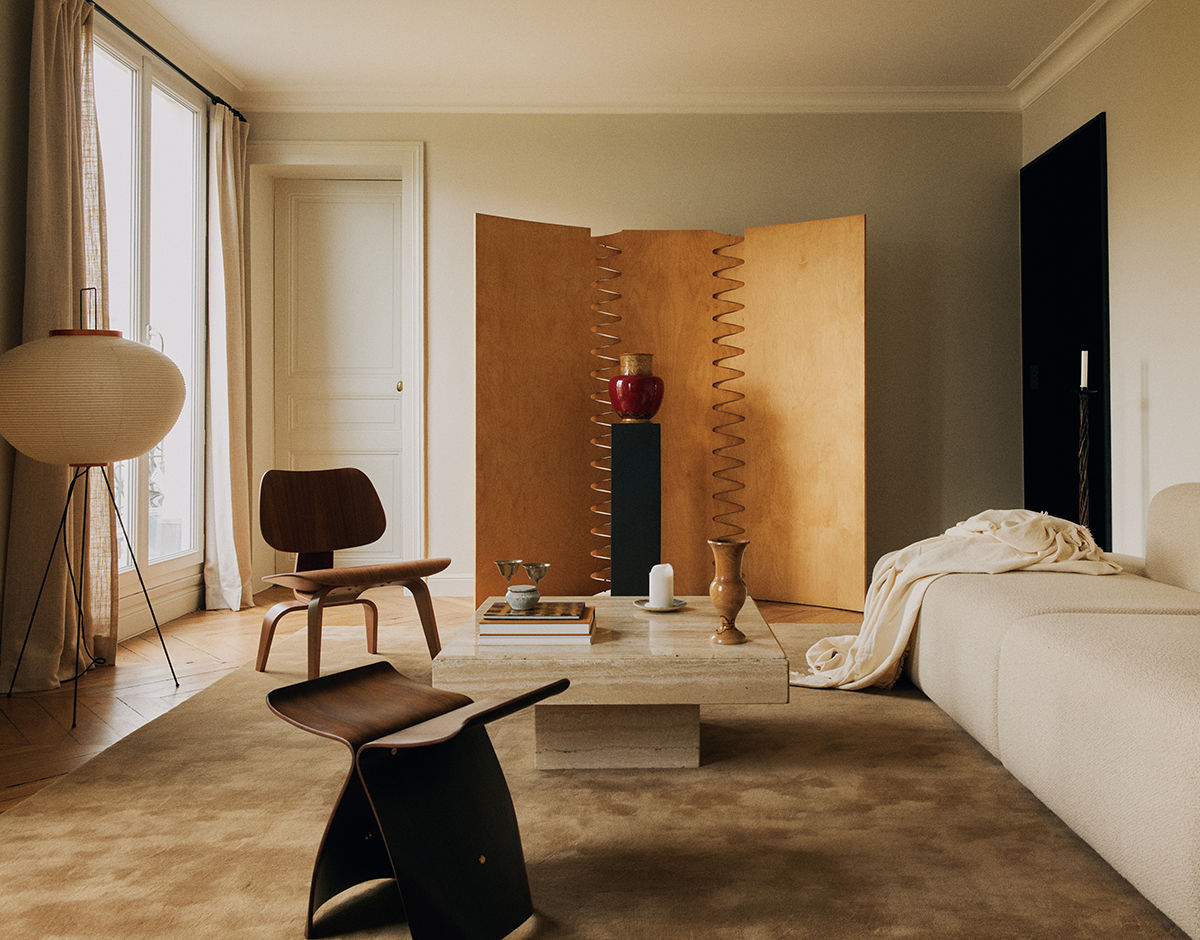
Considering how many Paris apartments we’ve published lately, you can’t help but start to see a recurring contemporary Parisian interior language — one in which a new generation of French designers feels comfortable drawing on the city’s decorative traditions without producing rooms that feel like pastiche. Two recent projects take very different approaches to that idea (in somewhat similar material/color palettes). For a Haussmannian apartment that hadn’t been renovated since the 1970s, the young firm Diettert Collet kept the colors restrained: cream walls and upholstery, pale stone, warm woods. The living room is anchored by a blocky custom travertine fireplace and matching vintage coffee table, and backdropped by the project’s standout piece: a vintage sculptural wood screen by Cappellini, sourced from House of Barcia, whose three panels are joined by giant zigzagging stitches. Against all those sandy neutrals, black is used almost architecturally: lining a doorway, enveloping the kitchen cabinetry, and reappearing in objects throughout.
The second apartment above, by Claves, leans more explicitly French. Set in a 1930s building on Rue du Cherche-Midi, it riffs on the work of the greats — André Groult, Emilio Terry, Jean-Michel Frank — without trying to recreate it. Oak paneling runs throughout and incorporates bookshelves, banquettes, and headboards, an approach the designers nicely describe as “cabinetmaking on an architectural scale.” There’s a pretty coffered ceiling over the dining room, and interesting visual pops like deep burgundy velvet banquettes, patterned wallpaper, and a stained glass window by Atelier Toporkoff stationed between the living room and kitchen. The apartment was also designed around a serious collection of pieces by the likes of Aristide Maillol and Fernand Léger, with the architecture often quite literally framing the art. It’s more decorative than the Diettert Collet project, but they share a sensibility: neither is trying to modernize Parisian tradition out of existence. They’re just figuring out what it looks like now.
Georgia Merritt’s Second Collection Translates the Language of Music Into Furniture
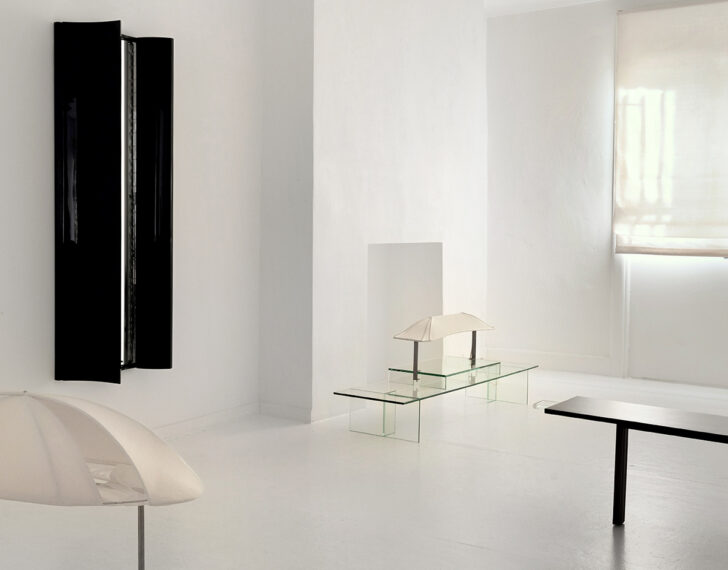
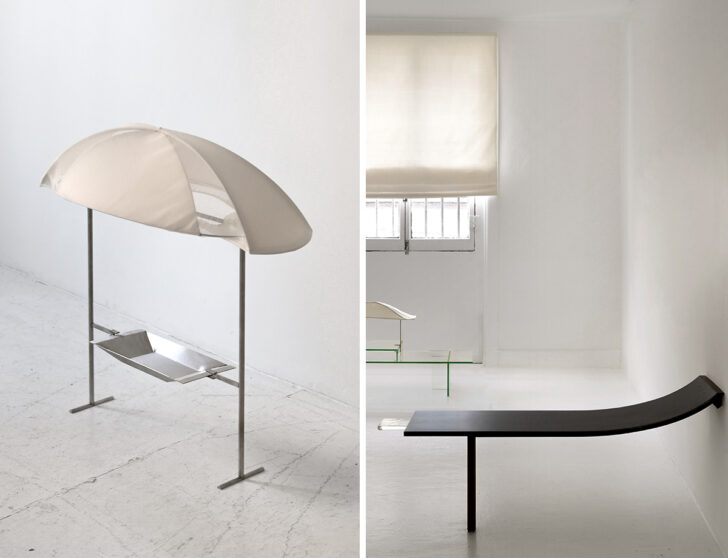 Georgia Merritt’s second solo show at M. Kardana in London is now on view. Photos: Tazy Jessett Nash
After graduating from art school in 2020, Georgia Merritt took a job as a specialist decorator, expanding her personal painting practice into the realm of traditional trompe l’oeil faux-marbling for interiors. Ever since, her work has occupied that much-trod space between art and design, with objects that look like they could be functional but aren’t always, and decorative details that seem to have as much conceptual weight as the forms themselves. We first came across Merritt’s work through Vague Precision, her debut exhibition at the gallery of East London vintage dealer M. Kardana — and Kardana’s first foray into contemporary — which included a pair of faux-marble side tables, a cross-shaped chair, and a stainless-steel stool with a little fabric skirt. Now she’s back at the gallery with Refrain, teasing out her multi-disciplinary viewpoint with a new collection of five pieces that takes music as its starting point.
The references aren’t necessarily literal, though there are a few obvious ones: Two mirrors, one full-length and the other more compact, are concealed behind sculpted doors attached with piano hinges and finished with a baby grand–like black lacquer; the smaller of the two, hand-painted inside with that same faux marbling, is named for the 19th-century composer Clara Schumann. Elsewhere, a sweeping piece of carved sapele wood evokes the sliding notes of a glissando, as well as the parallel lines of a musical staff, in an object that could function as either a bench or a console. Two lights introduce a softer material vocabulary, pairing ivory silk with stainless steel and glass; one has a delicate, layered shade of silk gazar and organza and vaguely evokes a parachute, while the other has a planar glass base that could double as a coffee table. The show is both ambiguous and self-assured, airy yet grounded in strong, stable shapes, and it’s on view through the end of this month.
Ian Collings Channels Moonlight and Darkness Through Rippled Pewter, Basalt, and Wood
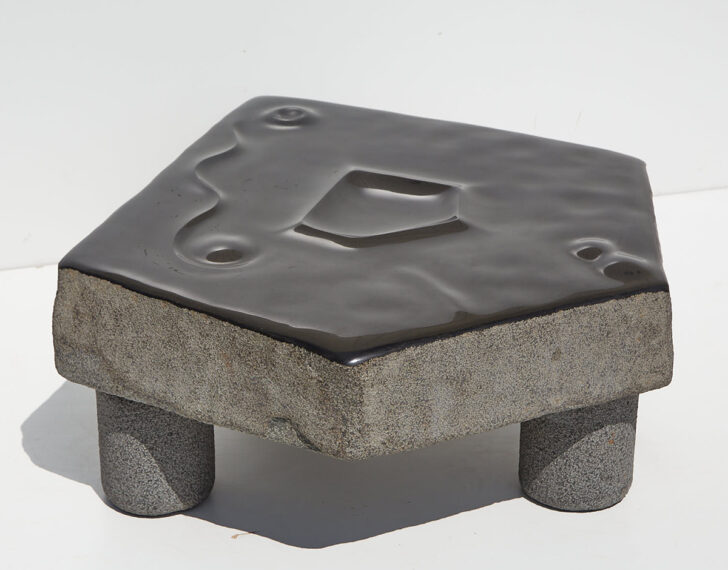
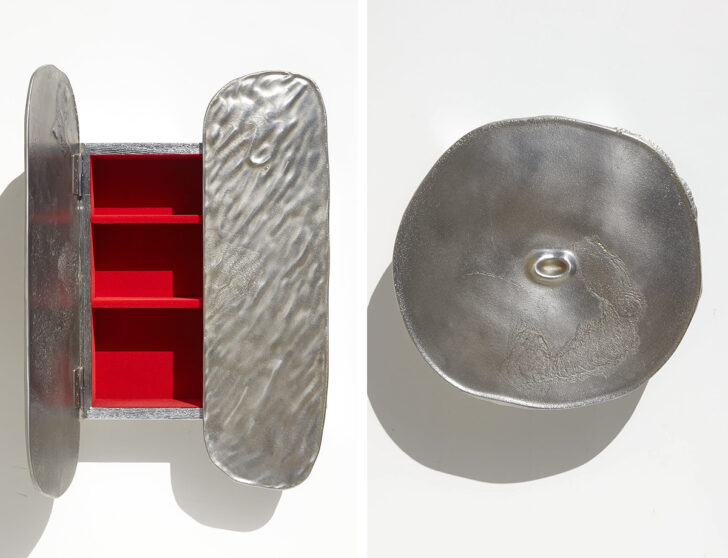 For his new solo show at The Future Perfect in L.A., on view through January 1, sculptor Ian Collings expands his palette to wood and metal.
When we first met Ian Collings 15 years ago, he was living in Brooklyn and had co-founded a fairly functional and straightforward commercial furniture brand, Fort Standard. Then, in 2018, he surprised us all by doing a complete 180: He left the brand to pursue an abstract sculpture practice, first while living off the grid in Costa Rica and then in the sleepy town of Ojai, California. He essentially retreated to the forest to carve stone in solitude, popping up every now and then to show at the Future Perfect; his world became reoriented around his relationship with nature, his favorite days, as he was describing to me just last winter, spent by his favorite river, communing with his favorite trees. While his pieces — which since have expanded to encompass wood, and now, with his latest solo show at The Future Perfect in L.A. metal — do retain a design sensibility, at times provisionally functioning as seats or tables, they are primarily meditations on his time spent outdoors.
In the case of that new show in L.A., the title — Dark Forest, Silver Moon — puts all of the works immediately in context. Their forms are meant to be softened with the haziness of struggling to see in the dark, and many of the surfaces evoke either the moon or its reflection in a body of water, like a series of cabinets with rippled, cast-pewter doors or basalt tables with slick, high-gloss tops. Even wooden stools are inset with poured metal, like a natural pooling after a nighttime rain. Collings “invites us to take notice of the quality of light present in the dark night,” the gallery writes. “In this he suggests new ways to sit, gather, store, and dwell within the threshold between illumination and obscurity.”
Editor’s List
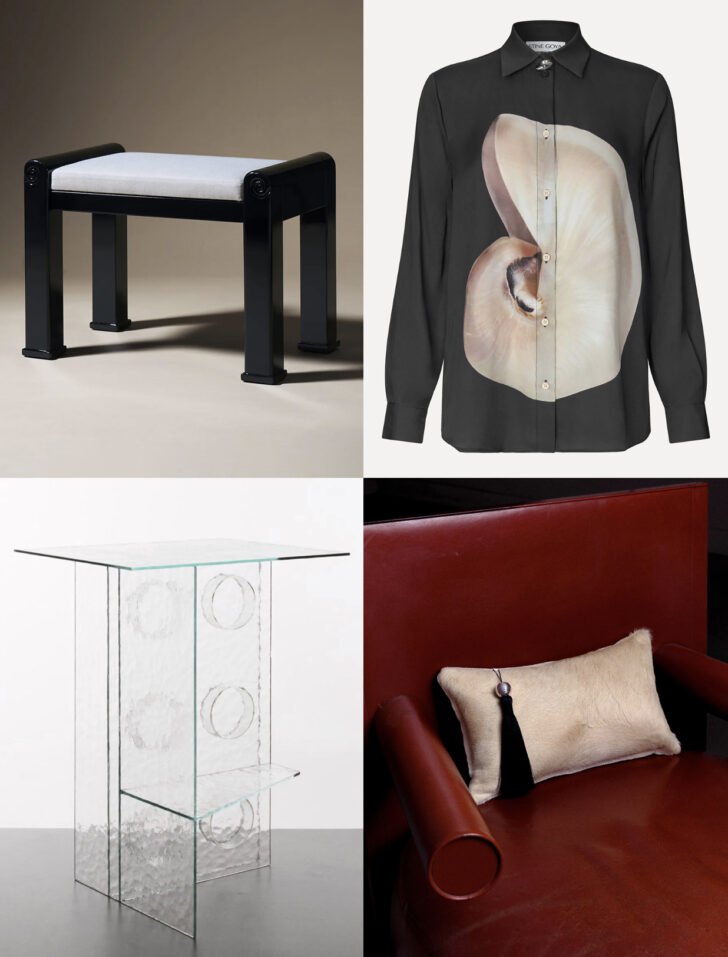 CLOCKWISE, FROM TOP LEFT:
–
Well I sure thought I was sick of nautilus forms, and shell forms in general, until I stacked up two of them for this week’s Editor’s List. The heart wants what the heart wants! First up is the Nautilus Stool by French designer Astrid Houssin, whose black lacquer frame is punctuated by subtle spirals that don’t read very trendy at all, especially when balanced with those little platform feet. Houssin also offers a faux tortoise finish for her pieces that’s particularly good, and there’s a bar stool version as well.
–
On the other hand we have this button-down from Danish boutique brand Stine Goya, in which the shell motif goes so hard that it gets points just for making a statement. Not only does it have the nautilus graphic on the front, it has a cute metal shell-shaped button tucked up under the collar. I happen to be a minimalist with a closet full of black clothing, so I’m always looking for pieces like this that are striking without losing that overall chic simplicity that I prefer. Stine Goya is known for hand-painted illustrations and other bold prints; I have a few of their floral dresses, too.
–
Extra shocked that I’m including a pillow line, because I am such a hater of decorative pillows in general — they’re fussy, ruin photo shoots, and if you have a nice sofa, you shouldn’t even need them! But then I saw interior designer Nicholas Gilbert’s new collection and I thought, okay these are nice. Gilbert is based in Noosa, Australia, just north of Brisbane, and his cushion offshoot is called Soft Service; in addition to this tassel cutie it also includes tufted blue-moiré pillows with decorative buttons, linen pillows with blood-red bows trailing from their upper corners, and mohair velvet squares with pretty embroidered Schumacher trims.
–
I would absolutely live with this side table by Theo Charasse, part of the Paris designer’s Cellular Glass collection. It’s constructed from recycled glass made from industrial bottles in two forms: wavy sheets, and cylinders that help give the pieces strength and stability. Charasse’s practice in recent years has revolved entirely around designing for discarded or marginalized materials, and he’s doing an excellent job at making them look covetable.
News
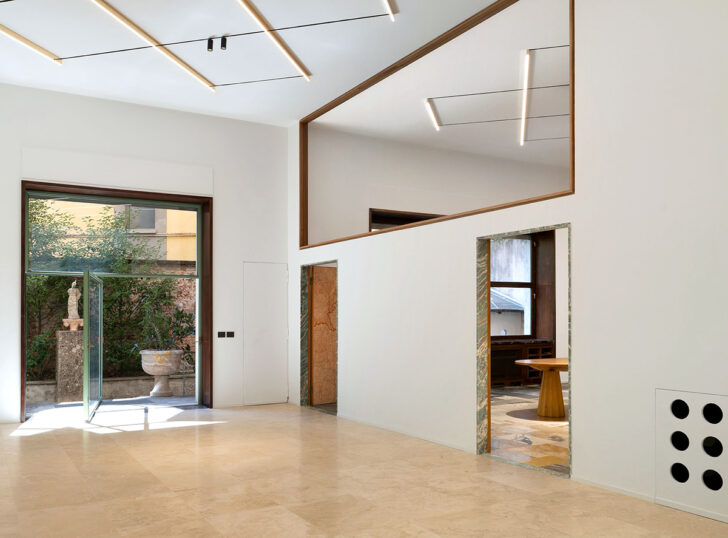 Piero Portaluppi’s former studio building in Milan has been renovated and reopened as his grandson’s architecture firm, as well as a research platform founded in his honor. Photo: Jasmina Martiradonna
–
The beautiful space above is the former Milan studio of architect Piero Portaluppi, completed in 1939 as his private offices and later used as the headquarters of his foundation until it closed in 2024. It has now reopened, after a major renovation, as the studio of Filippo Taidelli Architecture, which is run by Portaluppi’s grandson. The atrium, meeting room, courtyard, and repurposed underground bunker have also become home to Studio Portaluppi, a research platform dedicated to the OG icon’s interests in sustainability and human relationships. This space is too short to talk more specifically about what Taidelli’s team did in the space, but you can read more about that (and see more photos) here.
–
The 2026 edition of Open House New York starts tomorrow! Have you snagged any tickets yet? The annual festival flings open the doors of public and private spaces for an architecture and design–loving crowd, and while some of the tours and gatherings are intimate and sold out pretty quickly after they were announced, about half of the weekend’s 300 activities allow drop-in guests for free: everything from loft tours in Midtown to historical buildings in Queens and Staten Island. There’s even a tour of something we’ve never heard of and never THOUGHT we’d hear of: the Brooklyn Seltzer Museum? We won’t be seeing you there, lol, but if nothing else maybe take advantage of free admission to the Frick tomorrow morning!
–
Hot on the heels of the opening of the V&A Storehouse in London, where the museum’s storage archives have been redesigned for public perusal, the New York design gallery R & Company has debuted a miniature version of its own open storage with Building 86, a 16,000-square-foot space in the Brooklyn Navy Yards. When you have all that work in your archives, why not share it? You don’t want those Katie Stout lamps and Luam Melake chairs to go to waste just because they’re not in a current exhibition. Anyone can book a viewing of the collection via this handy online calendar.
–
More books – paul barbera, post company, sam cochran. Two weeks ago I wrote a roundup of fall design books I’m looking forward to, and since then I’ve heard about so many more! Open up those wallets (or if you’re lucky, expense accounts) and add these three to your list. First is Where They Live Japan, in which photographer Paul Barbera visits the homes of artists and designers in Kyoto and Tokyo, out next month. Second is Character Studies, the new monograph of Post Company, the NYC design firm best known for being the go-to designer for all your favorite boutique hotels. And finally the latest book by Architectural Digest editor Sam Cochran, American Designers at Home, which surveys the private spaces of top interior designers like Nicole Hollis and Andre Mellone. You’ll have plenty of time to read them all during the boredom of the holidays!


