10.22.26
The Weekly
Our new, go-to ceramics talent + the best interiors book we’ve read in years
Welcome to the new Sight Unseen, a weekly newsletter that delivers the best of the design world — news, trends, shopping advice, interviews, travel recs, and more — straight to your inbox. If you’re not subscribed, follow this link to sign up. Want to partner with us, advertise, or submit your work (guidelines here)? Email us at hello@sightunseen.com.
Su Wu’s Mesoamerican Modern Made Us Rethink the Meaning of Home
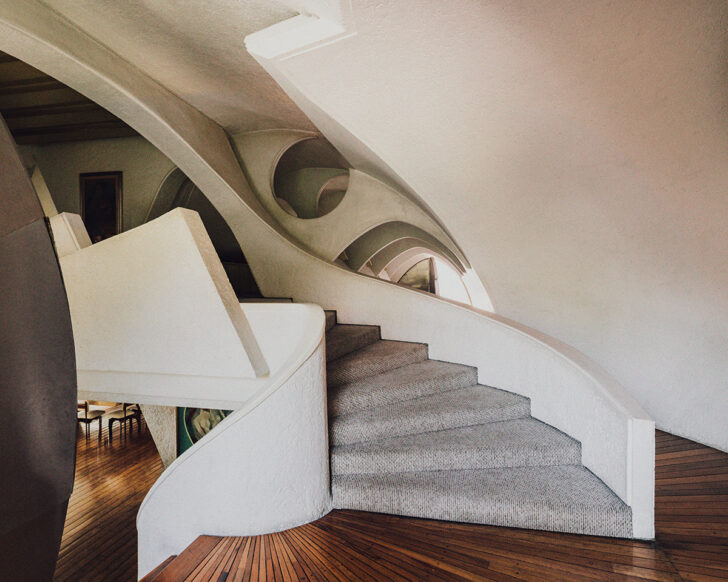
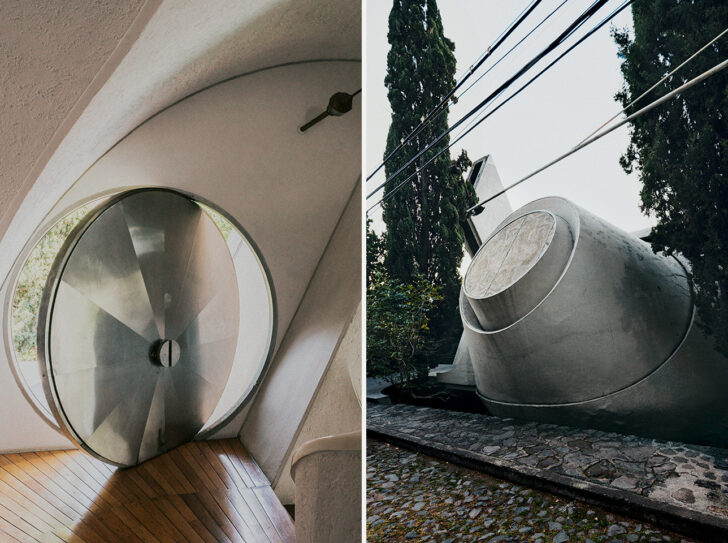
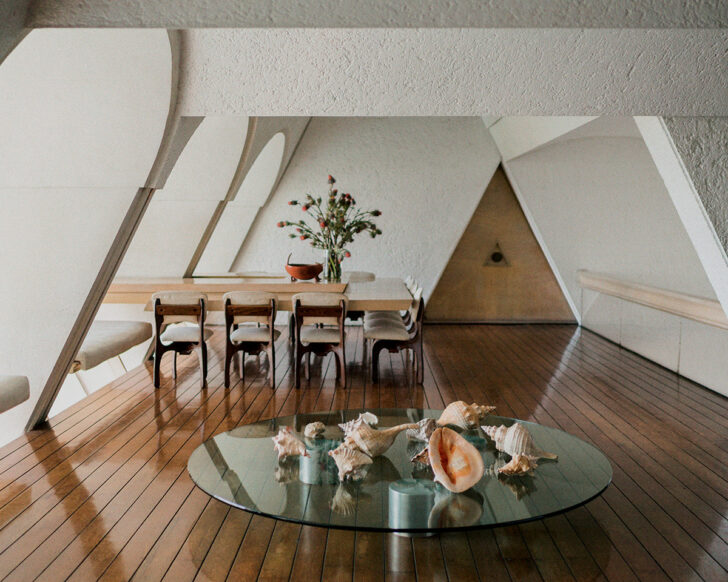
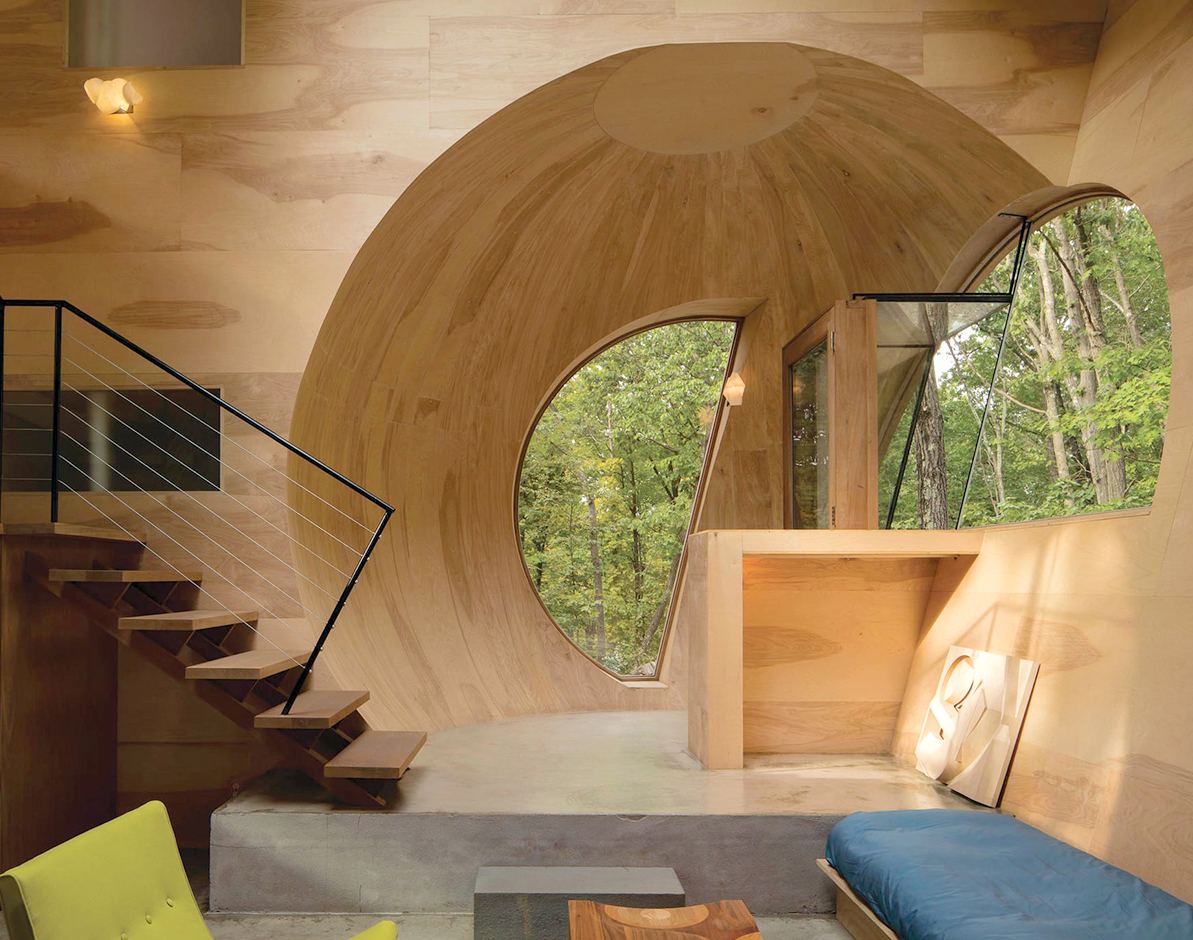
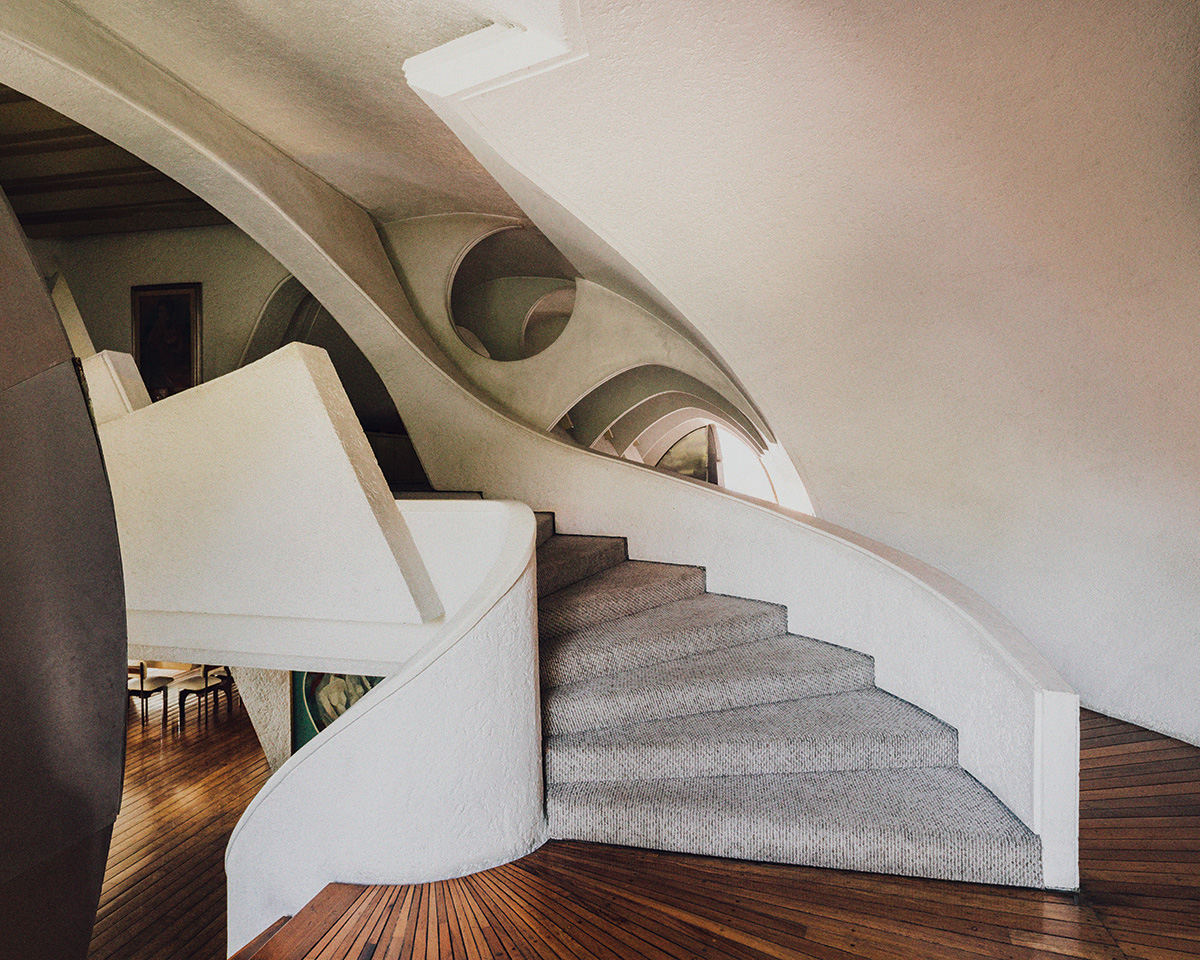
Casa Amalia, designed by architect Agustín Hernández for his sister, is one of the 16 homes in Mesoamerican Modern by Su Wu. Photos: Luis Garvan
Admittedly I’ve only been to Mexico a few times — an Acapulco wedding, a trip to Tulum at the height of its reign, a whirlwind jaunt photographing homes for How to Live With Objects — but I don’t think I’ve ever learned as much about a place from reading an interiors book as I did with Mesoamerican Modern by Su Wu, the California-born curator and artist who moved to Mexico more than a decade ago and began inhaling the country’s customs and culture. Wu has always been a wonderful thinker; it’s what led us to her work all those years ago. Here she’s thought deeply about her adopted home and how its nuances have often been flattened or erased in our post-colonial world, but she’s also exposed how slippery a beast the very concept of home can be.
The book is separated into unexpected rubrics — there’s a whole section devoted to “Unsquared Rooms” — but at its heart is a willingness, almost an imperative, to embrace different ways of living. In one section, there’s a circular house sunk into the ground, whose windows look out onto an interior courtyard; in another, there’s a house that remains forever unfinished, as its owner chips away at stone, forming sculptural reliefs. The book encourages painting everything pink, or allowing a tree to grow through the wall, or emptying a house of nearly all its furniture, leaving a bed that can be moved from room to room, depending on the season. One of our favorite projects in the book (featured in the photos above) is Casa Amalia, which the architect Agustín Hernández — widely regarded as the progenitor of contemporary Mesoamerican architecture — built in 1973 for his sister. The house takes its form from the aquiline profile of an indigenous person; “the cranial area… holds the radiating bones of the house, leading up spiral stairs to an eye-shaped window peering out across the valley.” It’s an old pre-Hispanic idea, that a space ought to look towards the cosmos, mixed here with elements of modernism, like Hernández’s use of reinforced concrete. In other words, it’s a perfect encapsulation of the idea of the book itself.
An Iconic 1960s Lamp, Notoriously Difficult to Produce, Gets a New Lease on Life
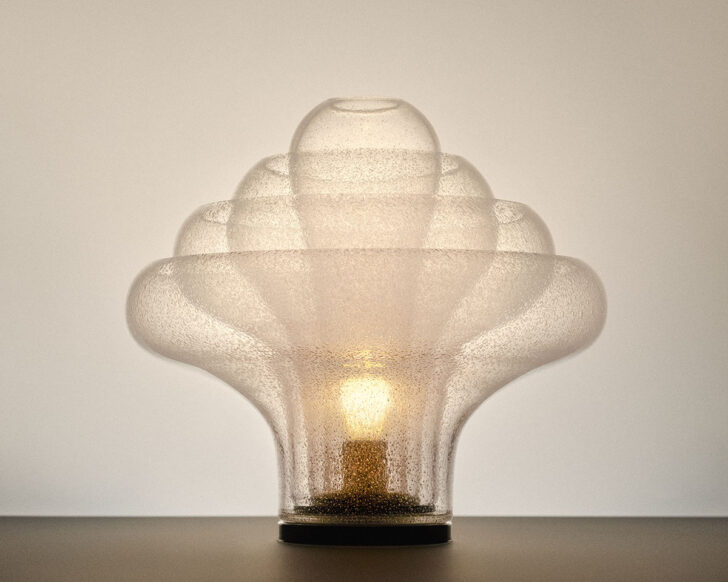
The retooled Lotus lamp by Carlo Nason, reissued by Gubi and available through Design Within Reach.
Did you know that the iconic Lotus table lamp, by the late Italian designer Carlo Nason, once had a much more technical name? It started life in 1969 as the nominally challenged LT305, and it was only after early collectors — whom I’ll heretofore refer to as “Lotus-heads” — began poetically referring to it by the flower it resembles that the name took hold. Despite its initial popularity, the Lotus lamp soon went out of production and remained so for nearly 50 years — until now. As of this week, the Lotus is available once again through Design Within Reach as a reissue from the Scandinavian furniture company Gubi, who have retooled some of the light’s peskier parts but retained its ineffable beauty.
The futuristic light, which nestles four graduated “petals” of mouth-blown glass inside one another, has always been challenging to make. Fabricated by expert artisans in Murano, each layer undergoes a traditional “pulegoso” process, in which hot glass is rolled in fine granules, initiating a reaction that suspends thousands of microscopic air bubbles inside the glass’s clear layers. Each layer is then carefully mouth-blown to ensure the same thickness, clarity, and bubble distribution; even in their uniformity, however, no two layers are alike, making the light an interesting early example of how to produce something on a mass scale yet still retain the hand of the maker. When illuminated, the glass becomes increasingly transparent, bringing the lamp’s lotus-like form into sharper focus, layer by layer.
Garrett Morin’s Fledgling Ceramics Practice is Our Favorite New Source for Smalls
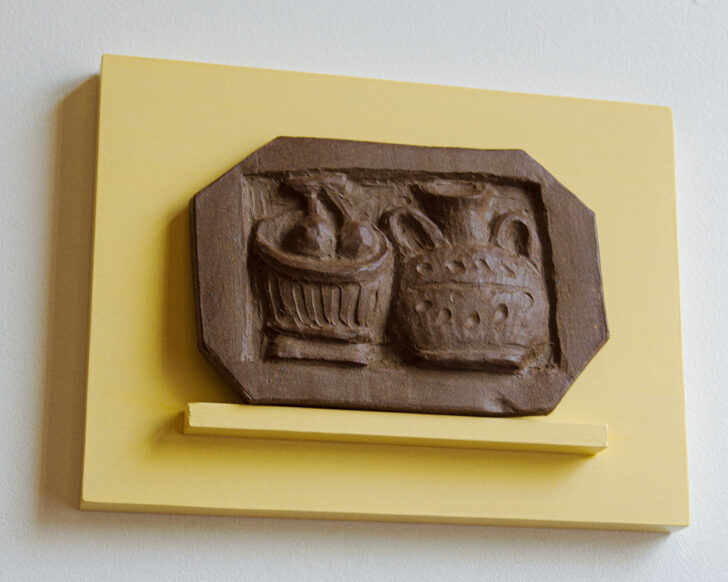
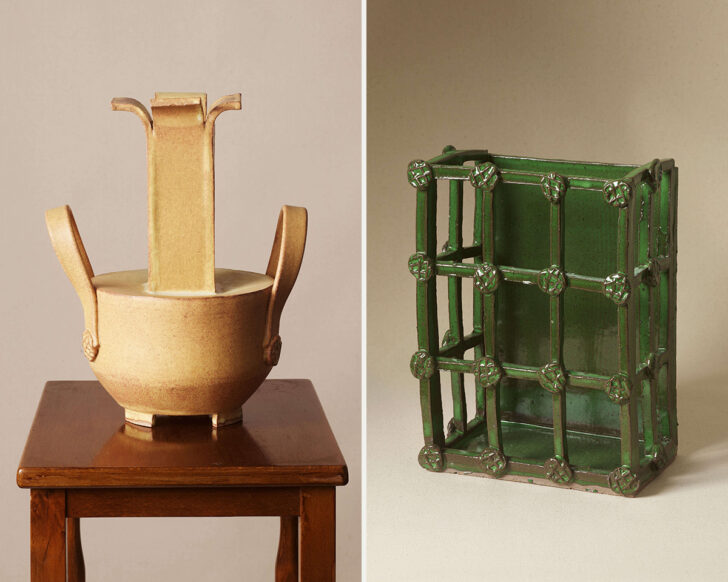
A few favorite pieces by Garrett Morin, our new go-to for excellent, under-the-radar ceramics. Photos: Joanna McClure
Do you know — like really know — what your friends do for a living? Sometimes you think you do and then they pull out a talent you didn’t even see coming. That’s how it was for me with Garrett Morin, who I first met as curator of the excellent design week exhibitionThe End is Now but know primarily as one-half of the graphic design duo behind the branding of my Substack, Counter Space. In April, Morin started dropping images of his fledgling ceramics line on Instagram and while my first question to him was How many of these can I reasonably buy?, I soon began to wonder, Is the goal to have a fully sustainable art practice?
“I’ve had an art practice for a very long time,” says Morin. “Drawing is the foundation: It’s a gestural, stream-of-consciousness approach to mark-making that hints at figuration but is often simply expressive. From there, I’ll often see an opportunity to explore an idea through another medium. When I started working with clay, I quickly realized how close it felt to drawing, with the added benefit of the material having a will of its own, which I often let take over. There’s a kind of energy transfer that makes the work feel intuitive and deeply gratifying.”
For now, Morin has been riffing on a few different forms — vases whose long necks erupt and flop open like a cardboard box, baskets whose gridded forms recall everything from playground equipment to the radiator covers of Copenhagen, ceramic reliefs, propane tanks, and figural forms that Morin says were inspired by hours of playing the video game Zelda. His work often emerges not from looking at ceramics of the past but from envisioning how the forms would logically fit into a certain place — he cites Geoffrey Bawa’s No 11 in Sri Lanka as hugely inspirational, as well as Paul Rand’s Connecticut home. Luckily for me, I no longer have to envision how the forms would fit into my own home; Morin’s website is here if you’d like to grab a piece for your own.
In a New Exhibition, Yumo Yuan’s Blurred Textiles Help Reframe Pieces From the Modernist Canon
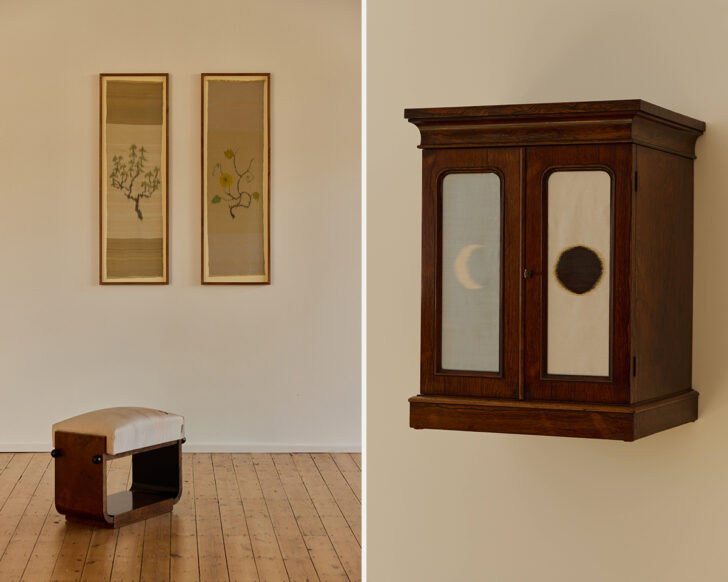
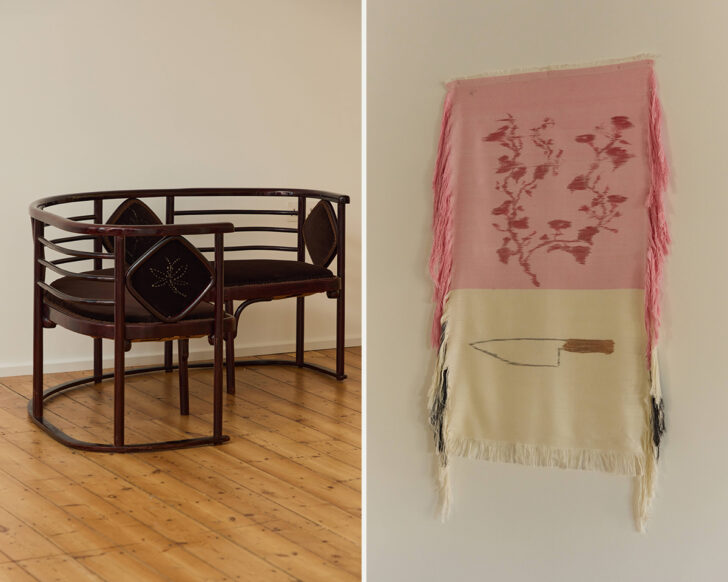
For an exhibition at Spazio Leone in London, Yumo Yuan made woven wall hangings and engaged with pieces from the gallery’s archive.
Like much of the design world, I first encountered the work of Yumo Yuan in Milan this year, at a small exhibition inside the offices of design consultant Ambra Medda. A Chinese designer who discovered textiles as an art form via an Anni Albers exhibit at the Tate Modern and moved to London to complete a degree in textile design at Central Saint Martins, Yuan has an immediately identifiable style. Inspired by 18th-century loom-painting techniques, he creates images with dye directly on a silk warp before weaving his weft threads, creating a kind of blurry, half-disintegrating effect. At Medda’s office, the textiles mostly depicted traditional folklore motifs — florals, grapes, ships, fish. At a new solo exhibition at Spazio Leone in London, though, Yuan has exploded the lens of his work, expanding his vocabulary of symbols and widening his methods of application.
There are hanging textiles, of course, but some of the most compelling works are where Yuan has engaged with Leone’s deep historical archive — a rare, early 20th-century bench newly upholstered in brown cotton velvet and hand-embroidered with lotus flowers and dragonflies; an antique Edwardian jewelry cabinet whose doors are inset with silk tapestry panels depicting a solar eclipse; an Art Deco stool upholstered with a spare floral motif. Yuan also partnered with Tessa Vermeulen of the fashion brand Hai to create a series of opera coats, made from silk and edged with the antique textiles that Yuan has collected since he was a teen. As a whole, the works not only contemporize traditional Chinese narratives but also announce Yuan as a serious talent to watch.
Editor’s List
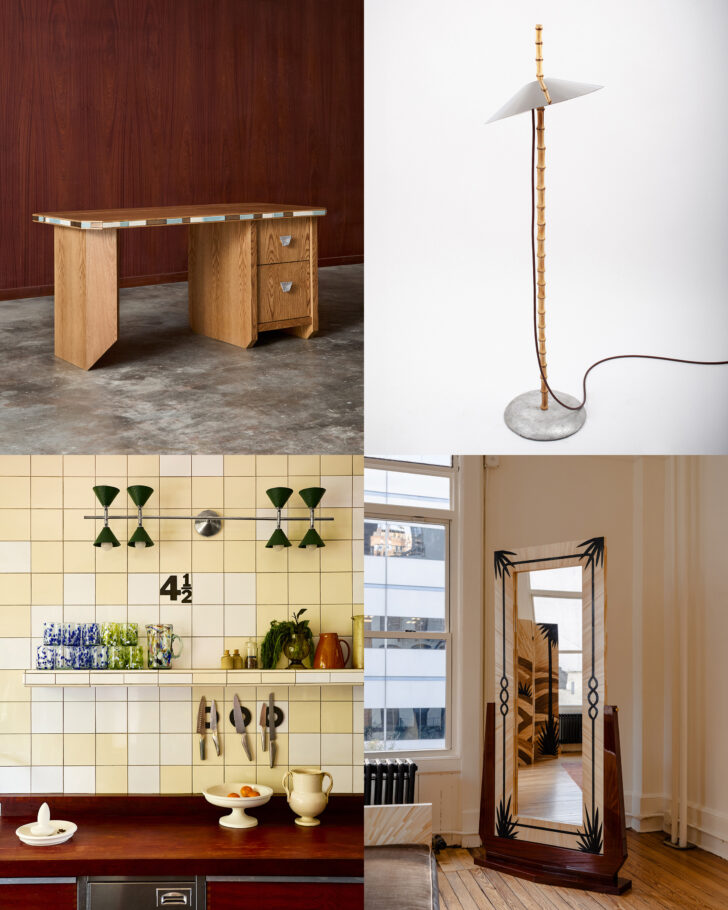
CLOCKWISE, FROM TOP LEFT:
–
It has come to our attention that some people don’t know that in addition to being your favorite design newsletter, Sight Unseen also sells furniture by designers you love. So today’s Editor’s List is themed around news from designers who we currently sell in our collection or whom we’ve platformed over the years. First up is the continuation of a collab between Danny Kaplan and Lesser Miracle, who expanded their tile-studded Delf collection this week with a desk, nightstand, low console, and chess board. Our collection of works by Danny can be found here!
–
We don’t currently sell anything by the Vancouver designer Calen Knauf, but he’s been part of the Sight Unseen family dating all the way back to 2014, when he showed with his former partner in the first-ever Sight Unseen Offsite. (Please excuse our decade-old show photography!) His new 7Plates floor lamp pairs a stainless-steel shade with a bamboo stem, whose nodes allow the lamp to be height-adjustable.
–
The London studio Palefire — whose collaborative lighting collection with 8 Holland Street we sell here — this week introduced the Gala collection, inspired by flags and bunting. The cone-shaped lights use the same paper-pulp shades Palefire’s become known for, but here they’re painted inside and out, increasing the saturation as well as the lights’ presence in a room.
–
Lastly, Sunfish debuted a new collection of pieces in straw marquetry at Assembly Line Annex this week. I wrote about the studio for Curbed earlier this month, and you can read much more about the collection there, including the incredible, Jean-Michel Frank–designed room that inspired the collection.
News
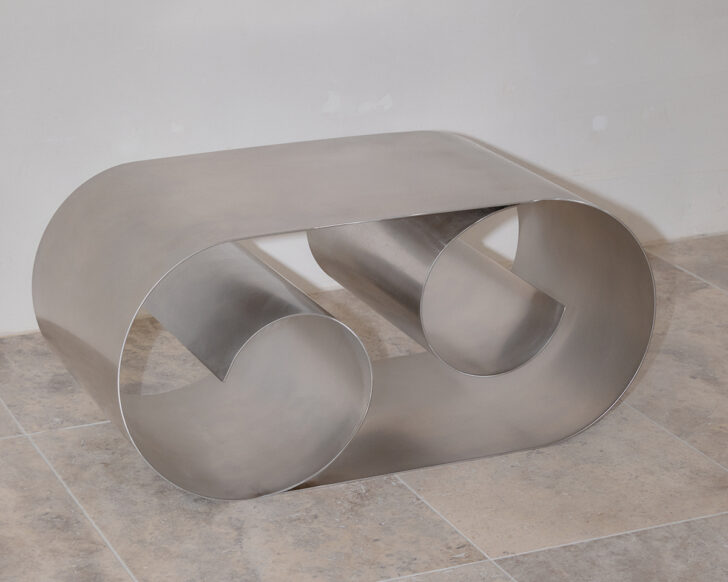
The Parenthesis Bench by Australian designer Anna Varendorff of ACV Projects, on view at Oigall Projects in Melbourne through November 7.
–
The artist Anna Varendorff, who trained as a metalsmith and has cycled through sculpture, jewelry, design, and art, opened a new exhibition called Women and Fiction at Oigall Projects in Melbourne this week. She describes her work as beginning with a familiar proposition, but then moving “deliberately away from the shape we expect those things to take.” I especially love this swirling bench, which reminds me of these classic mid-century coiled metal bookends.
–
Speaking of metal, the jeweler Mary MacGill recently opened a showroom upstate in Germantown, New York. It’s filled with MacGill’s beautiful jewelry, inspired by the likes of Art Smith and Vivianna Torun, plus personal mementoes and a jewelry case designed in collaboration with Of Enso that’s also for sale. (Kind of obsessed with the fact that it’s actually called an Earring Stage.) If you’re not upstate, MacGill is doing an NYC pop-up November 5-9.
–
As a flatware obsessive, I love trying out new sets, so when the Australian brand Hommey asked to send me one, I said yes. The jury is still out on this one — they’re very cute (and come in all my favorite colors, including espresso and boysenberry), but lighter in the hand than I would like. For each color flatware, there’s an accompanying dishware and textiles set, for the completists around here.
–
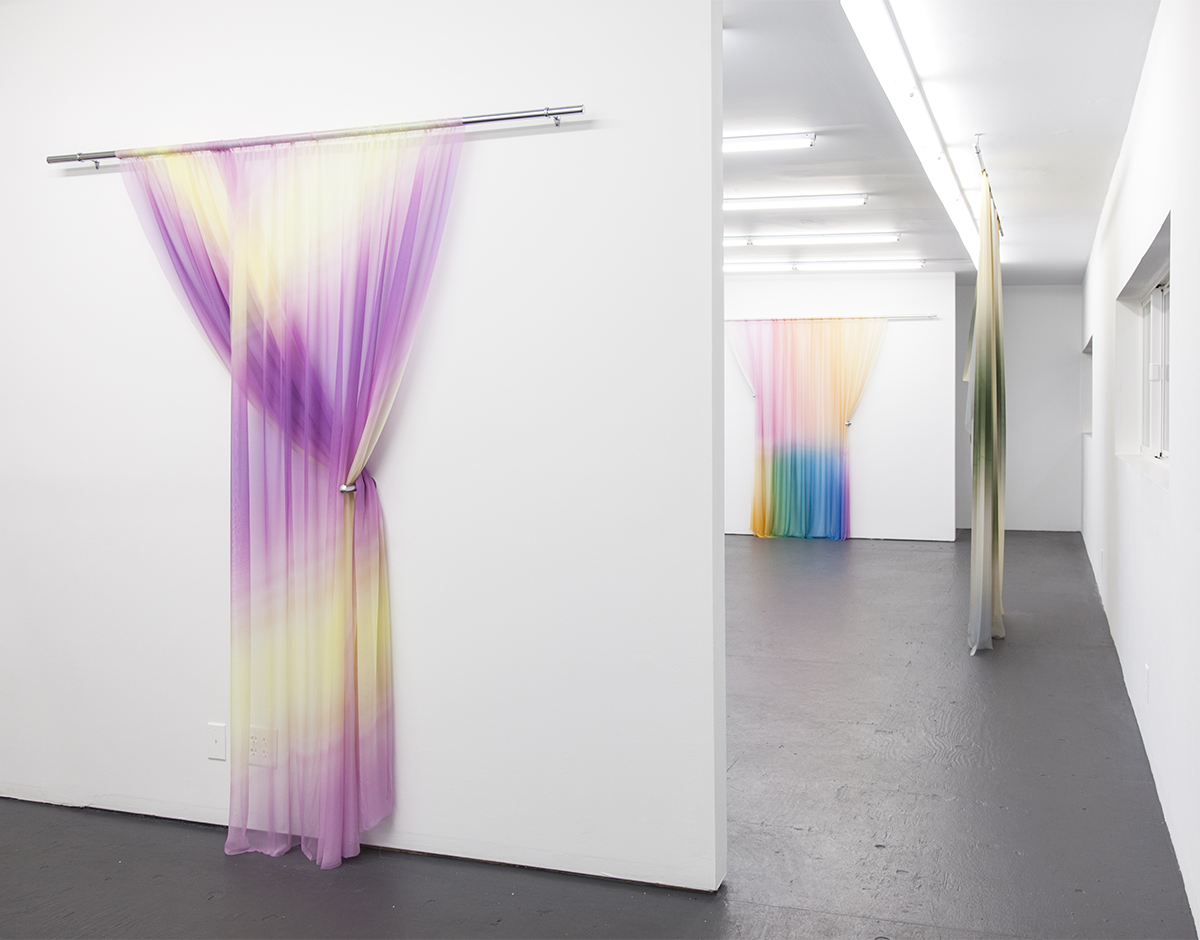
I probably don’t need to be the one to tell you to go see Taryn Simon’s Father Country I Do Love You at the Guggenheim — it’s this season’s juggernaut New York art exhibition, along with Pollock and Krasner at the Met. (Although some reviews were harsh! Don’t let that dissuade you.) I spent more than two hours going through the exhibition with a friend and found it incredibly moving and, frankly, necessary viewing for being an American. I also spent an inordinate amount of time looking at the colored curtains, admiring their precise ripple and the way they exactly match up with the carpets. I follow the Guggenheim’s exhibition designer on Substack and am hoping she devotes a newsletter to the Simon exhibition soon!