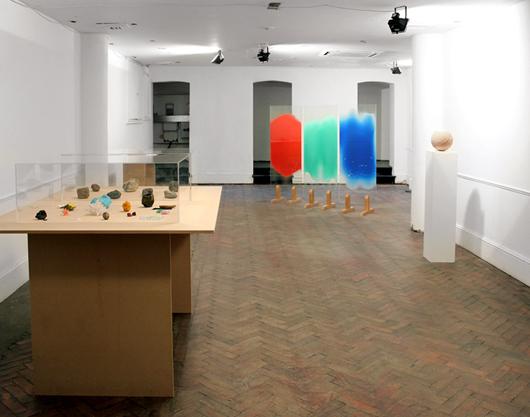
Ian McDonald, Artist and Ceramicist

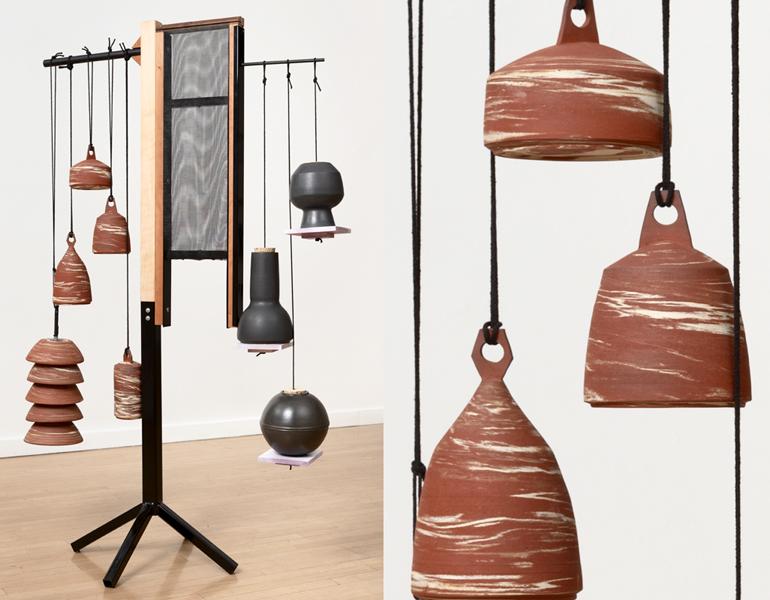
To understand what it was like for Ian McDonald growing up in California’s Laguna Beach, it helps to refer back to one of the greatest television dramas of all time. Not, mind you, MTV’s reality show of the same name, but the heart-wrenching high-school football epic Friday Night Lights — McDonald’s hometown being pretty much the diametrical opposite of Dillon, Texas. “Laguna was founded as an artists’ colony,” he says. “Our school mascot, The Artist, ran around with a brush and palette and a beret. Even the football stars took art classes.” In fact, one of McDonald’s earliest run-ins with the medium that would eventually become his life’s work happened when his own sports-star brothers brought their ceramics projects home from school, where their art teacher was a local studio potter.
More

Ryan Wallace, Artist

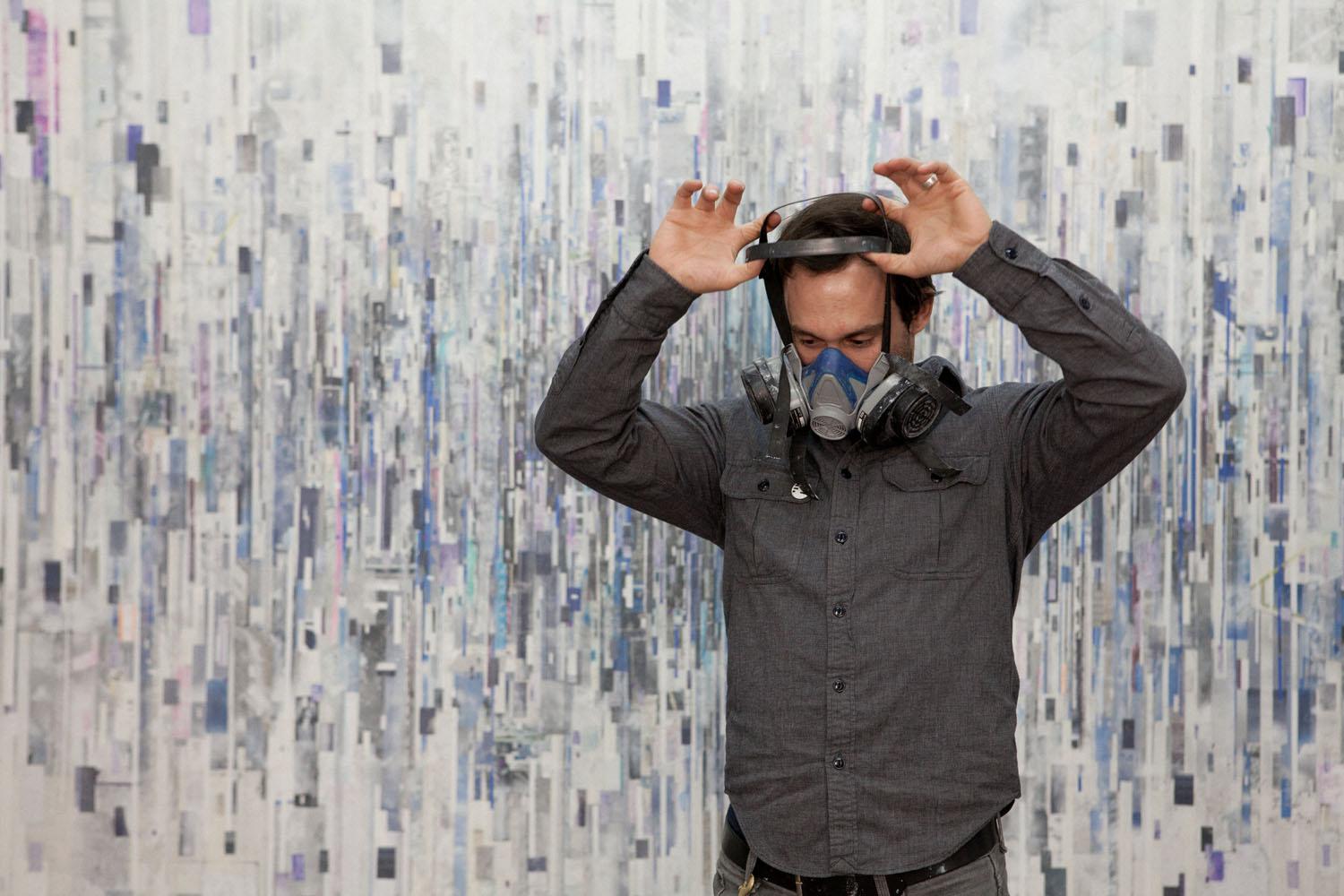
To get an idea of how Ryan Wallace approaches materials, look no further than one of the walls of his studio, paneled with the kind of slatboard that a Chinatown souvenir shop might use to stack metal shelves full of I ♥ New York T-shirts. When Wallace found the studio last year, it was perfect otherwise — a clean, well-lit space above Paulie Gee’s pizza in Greenpoint, Brooklyn, right near his apartment. “At first I thought the wall was kind of gross,” he says. But he slowly began to accept it on a purely functional level; the way things could be hung at different heights was ideal for a painter. “I thought, ‘What can I do with this?’ A thing like that gets planted in my head, and eventually it finds its way into the next thing I’m doing.”
More

mono.kultur #32: Martino Gamper, All Channels Personal

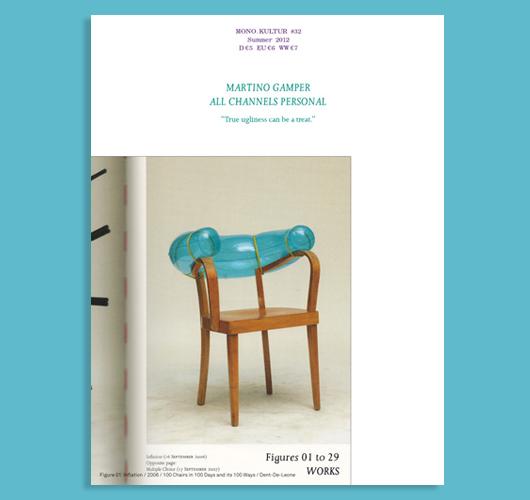
It took me 16 issues (Miranda July) to discover the Berlin-based magazine mono.kultur, after seeing its pull-out poster on my friend's wall a few years back. "Dear life," it read, "do you want to hang out tonight? I should warn you that I will not be wearing any make-up and my hair is dirty. If you can handle that, call me. Yours, Miranda July." Five issues later (Tilda Swinton), I was obsessed: Here was a publication that, with each issue dedicated to a single long-form interview, was less about collecting personalities for front-cover bragging rights and more about truly, painstakingly, and intimately getting to know them. Which is all any of us dream about when it comes to our cultural idols, even those of us who, from time to time, have the honor of crossing their paths ourselves. So even though we've profiled Martino Gamper on Sight Unseen before — our lovely London contributor Claire Walsh having toured his home garden and secured us his favorite pasta recipe — we still jumped at the chance to excerpt mono.kultur's new sit-down with the Italian RCA grad, who talked to its editors about his latest public design projects, his feelings about Ikea, and the use of humor in his work. The interview runs to 10,000 words and — in print — comprises three booklets hand-assembled into one exhaustive artifact that stretches far beyond the small sample presented here. After reading it, scroll down to learn how to get your own copy before it — like most of the issues this cult favorite has produced — sells out forever.
More

A 20th Century Palate in The Gourmand Issue 00

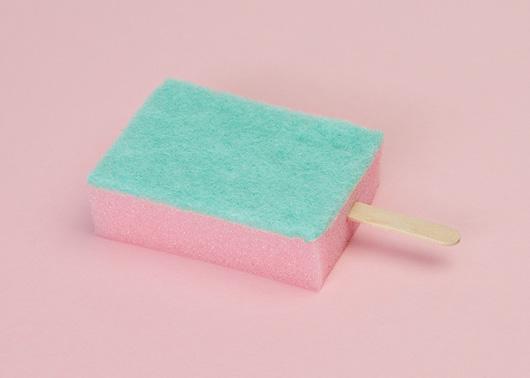
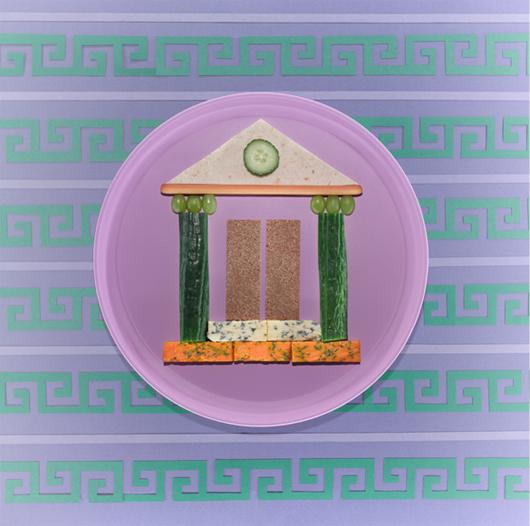
In the summer before starting Sight Unseen, one of us had a very brief flirtation with the idea of attending culinary school. Along with design, food is our great love, so we were pleased this week — and maybe even a little bit jealous — to stumble upon a new magazine out of London that unites the two disciplines in the most fantastic of ways. Called The Gourmand, the first issue tackles subjects ranging from David Shrigley's new cookery-themed opera to Jeff Koons's recipe for apple dumplings. But our favorite feature — plucked from the site's website, which has a sprinkling of teasers for the print edition as well as practical food recommendations from artists, contributors and London's culinary cognescenti — has to be this collaboration between art director Jamie Brown and photographer Luke Kirwan, which depicts 20th century art and design movements in foodstuffs like American cheese and pink wafer cookies.
More

Study O Portable’s Neon Alphabet

Whereas most of us may never fully grasp the meaning behind the testicular descension metaphors and self-referential glyphs woven throughout Matthew Barney's Cremaster Cycle, the message behind his Drawing Restraint series — which has seen the artist challenge his creation process with obstacle courses and 270-pound dumbbells — couldn't be more relatable: creativity flourishes in any struggle with limitations. Many designers, for example, profess to do their best work under the pressure of client briefs; then there are those, like the London duo Bernadette Deddens and Tetsuo Mukai of Study O Portable, who in the absence of such briefs will invent their own rules to work around. Since they started their studio in 2009, the couple have been using the alphabet as a testing ground for aesthetic and material experiments, producing letter sets in various combinations of wood, leather, and plastic that must conform to strict, self-imposed standards of size and legibility. "It's really satisfying to work on the puzzle an ABC poses depending on one's materials and techniques," says Deddens. Their most recent is the Neon Alphabet, "a cross between signage, jewelry, and a font" that debuted at Design Miami/Basel this June with Belgian gallerist Caroline van Hoek.
More

Lauren Kovin, Clothing Designer

Lauren Kovin had one of those creatively privileged childhoods we all dream about: Her father was a graphic designer, her mother an interior designer who stocked their New Hope, Pennsylvania, home with Memphis furniture and modern art. Kovin spent more time in galleries than in shopping malls. An Avedon portrait of a nude Nastassja Kinski hung over the family’s dining room table. Heaven, right? Wrong.
More

Hilda Hellström, Swedish Sculptor and Designer

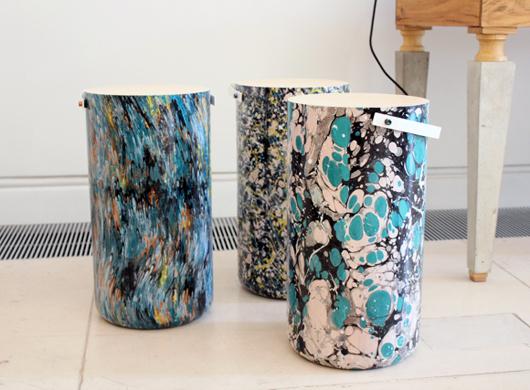
In any designer’s career, there are hundreds of split-second decisions that conspire to create the precise conditions under which good work can emerge. For the Swedish-born, London-based designer Hilda Hellström, it came down to this one: When she was asked to create a project for this year’s Royal College of Art exhibition at the Milan Furniture Fair, she says with a laugh, “the wood workshop was quite busy, but the resin workshop was nice and quiet.” Of course, there’s more to the recent grad's breakout Sedimentation vases than that; Hellström is obsessed with the idea of imbuing her objects with a myth and narrative of their own. But in many ways the vessels — which are made from layers of pigmented Jesmonite, a non-toxic acrylic-based plaster often used in ceilings and restoration work — are a reaction against something else. “My father was a carpenter, so I was used to working with wood, and I was bored of how you have to consider that it’s a living material,” she says. “Wood tells you what to make, but working with a moldable material like Jesmonite is almost like playing God.”
More

Office by Studio Swine

Things are winding down here at Sight Unseen HQ, where as of tomorrow we'll be on a much-needed summer holiday for two weeks. So today, we bring you an appropriately tiny story about a very tiny project: an office by Studio Swine in London's Soho neighborhood where three people share a 100 square-foot space. We first learned about the duo — RCA product-design grads Azusa Murakami and Alexander Groves — during this year's Noho Design District, where they showed a series of golden geometric button covers in the Once Removed show at our 22 Bond space. We were further intrigued by works like their recycled-plastic Sea Chair. But if you read our story yesterday on Kent Fonn Skåre, you already know why we find this simple office scheme particularly endearing — not only does it take advantage of pegboard to maximize wall space, but it's also inspired by "New York Art Deco meets Memphis," say the designers, and it uses a freewheeling mix of contrasting materials like marble, colored steel, linoleum, and reclaimed wood. After reading a bit more below from Murakami and Groves about how they constructed the various elements of the office, stay tuned for your chance to purchase their geometric marmoleum wall pouches, coming soon to the Sight Unseen shop!
More

Kent Fonn Skåre, Artist and Graphic Designer

Being that he's still a student at Konstfack in Stockholm, you've probably never heard of Norwegian artist and graphic designer Kent Fonn Skåre. But his work, even at first glance, is ridiculously easy to love: It's got a heavy focus on materials, lots of marble, and a whiff of Memphis — yes, the three "M"s, the golden trifecta of the current avant-garde, or at least the little corner of it that we're obsessed with, which also includes folks like Clemence Seilles and Jens Praet. We discovered Fonn Skåre via a fleeting image on Pinterest, but found surprisingly little information on him and the ideas behind his work, so we did what we do best, harassing the poor man until we were able to tease out a bit of insight into his practice. Check out the interview and accompanying photos here, then bookmark Fonn Skåre's Flickr feed to browse more of his graphic design work and follow his future projects.
More

Lex Pott’s True Colours Series

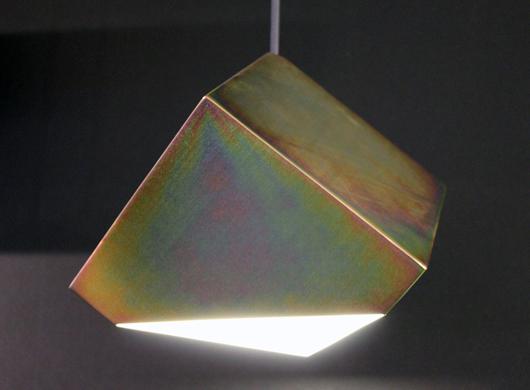
In some ways, it seems fate that Dutch designer Lex Pott would end up working in a studio housed in an old shipyard in the northern precincts of Amsterdam. As a child growing up in Hilversum, 30 miles outside the city, Pott was obsessed with boats, constantly crafting miniature ones from the natural debris he’d find in the forest around his house, and using old plastic bags as sails. And in the short time since he set up his studio, after graduating from Design Academy Eindhoven in 2009, he’s built up a small body of work centered around the very phenomenon that’s known to wreak havoc on seafaring vessels: oxidation. Pott has shot to fame in recent months on the basis of Transience, a series of silvered geometric mirrors designed in collaboration with fellow Eindhoven grad David Derksen. But the project that started it all, True Colours, was less a product than an investigation into the nature of color: Pott took standard sheets of industrial metals — copper, brass, steel, and aluminum — and played with oxidizing them by various methods, in the process creating a highly individualized palette he could, in theory, apply to any metal object.
More

The 2012 Parsons Thesis Site

As curatorial hunter-gatherers, we're always on the lookout for new and unseen talents, and there's no better place to spot them than at school thesis shows. But as workaholics who seldom have time to leave our home offices, much less attend these shows, they all too often remain off-limits to us. It's a rare yet celebrated occasion any time we're either sent a clear, comprehensive accounting of projects by graduating students, or become aware of a website that successfully catalogs them. Last week, we received an email from Parsons with just such a treat — the new multi-disciplinary Parsons thesis site, part of the two-year old Parsons Festival which flings open the doors of the school to the public each May for three weeks of exhibitions, workshops, and fashion shows. Grateful to have access to the event's couch-potato version, we sifted through all the projects on the site and found the six we liked best: humorously cloying photographs of weird dollar-store finds by Antonia Basler, a series of poured-concrete side tables made in fabric molds by Isaac Friedman-Heiman, dresses that pay homage to Muybridge and Noguchi by Kaoru Oshima, photos by Charlie Rubin that blur the line between the real and the artificial, and minimalist versus maximalist origami garments by Yingshi June Lin and Si Lu. Have a look at the slideshow here, which is annotated with selections from the students' thesis statements, then clear your calendar for next May so you'll have no excuse not to join us at next year's festival.
More

International, furniture designers

Brian Eno is playing, green tea is brewing, and there are half-finished projects and prototypes stacked up ’round the place. I could be in any East London live-work space. But as I talk more to my hosts — Marc Bell and Robin Grasby of the emerging London design firm International — I realize there’s something simple that sets these two Northumbria grads apart from the thousands of hip creatives populating this corner of the city. They started the studio a year or so back, with the intention of doing something a little out of fashion in the design world: “Our approach is quite commercial,” admits Grasby. “We are looking to create a mass-produced product.” Yes, he’s used the c-word — and it wasn’t crafted. By opting for production, rather than taking advantage of London’s buoyant collectors’ market, the two are aware they’re taking a tougher route. Bell puts it plainly: “Rather than shapes we enjoy making or colors we like, our designs really are function-led.” Their work always seems to boil down to intended use, and at this stage they aren’t interested in seeing their pieces in galleries. But while there have only been a handful of designs released to date, International have been getting the right kind of attention.
More

Roanne Adams, Founder and Creative Director at RoAndCo

If you've been to one of her fashion presentations or received one of her elaborate invitations in the mail, you might be surprised to hear graphic designer and art director Roanne Adams describe her business as "not the edgiest design firm." This, after all, is a woman who's so well known for her career-launching work for emerging fashion stars like Abigail Lorick and Timo Weiland that brands often come crawling to her for infusions of downtown cool. Yet if she's managed to turn RoAndCo into one of the most up-and-coming boutique firms in New York at the moment, it's because her little-known clients like Rachael Ray and Zappos have just as much respect for her work as folks like TenOverSix do, which has a lot to do with Adams's instinctive approach to design: Rather than competing to be the most avant-garde kid on the block, she prefers putting new twists on familiar ideas from the past, researching a brand's history or creating narratives around those who don't have one. Her inspirations, as enumerated in the pages of our book Paper View and elaborated on here, run to the likes of Guy Bourdin and '70s advertising icons. "I''ve always been more into Paul Rand and Herb Lubalin than contemporary designers," Adams says.
More