When Reineke Otten visits a new city, it feels a bit like looking at Richard Scarry‘s children’s books, their pages crammed with the minutiae of daily life. As a “streetologist,” her job is to scrutinize the often mundane details of places like Paris or Shanghai, photographing dozens of window shades, doorbells, and flea market stalls until she’s put together a revealing portrait of the local culture. Though most of Otten’s clients pay her for her sleuthing skills, her new website Urban Daily Life offers the rest of us a glimpse into what it’s like to see the world through a magnifying glass. “The website is a way for me to come out of the closet with my obsession,” she says.
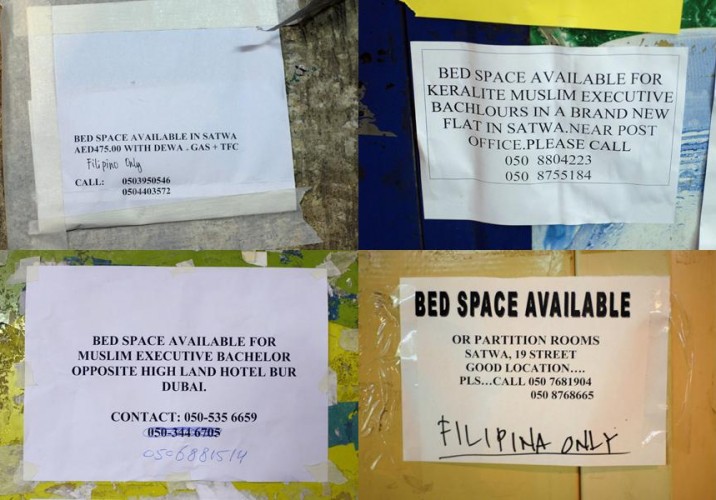
It’s also a way for her to demonstrate how what she does is different from your run-of-the-mill sociologist or urban planner. Having trained as a designer, Otten’s able to not only gather and analyze information, but also to present it in a visual way that’s both striking and easy to understand — it’s one thing to write reports about the realities of impoverished workers in Dubai, but quite another to document the ads they leave in supermarkets seeking strangers to share their beds. “Sociologists think in bigger patterns,” the Rotterdam native explains. “They see people as herds and study how those herds react to each other in a city. They’re not focused on the visual details of what that interaction really looks like.”
While Otten has taken sociology classes at her local university in Rotterdam, it’s having studied at the Design Academy Eindhoven — where her thesis project, undertaken shortly after 9/11, profiled the changing racial makeup of countries by way of gorgeous skin-colored pixel grids — that most informs her practice now. (Not to mention Scarry, whose books she’s loved since she was two, plus a childhood habit of categorizing things that led her to buy dozens of colored nail polishes just so she could line them all up in a gradient.) Since she graduated in 2002, Otten’s done streetology for architecture firms including Greece’s Point Supreme, which hired her to investigate a local Athens neighborhood “with new eyes” before it began a residential project there, and Rem Koolhaas’s research arm AMO, after Dubai’s government asked the firm to visualize the city’s future for a 2008 exhibition. She was once hired to go around photographing and interviewing unsuspecting picnickers for a Dutch cooler company, as a kind of in-situ guerilla focus group. And at the moment she’s working on a project sponsored by the Dutch government, for which she, a documentarian, and a designer are developing an experimental tool that could process crime scene data in a visual way, allowing police to see connections they might miss amidst a huge stack of paperwork.
But no matter what she’s doing professionally or where she travels to do it, she’s always taking pictures, either for Urban Daily Life or for its sartorial offshoot, Uniformals. We asked her to dissect some of the photos from Urban Daily Life for Sight Unseen, explaining how she got the shots and what they told her about the people whose lives she was peering into.
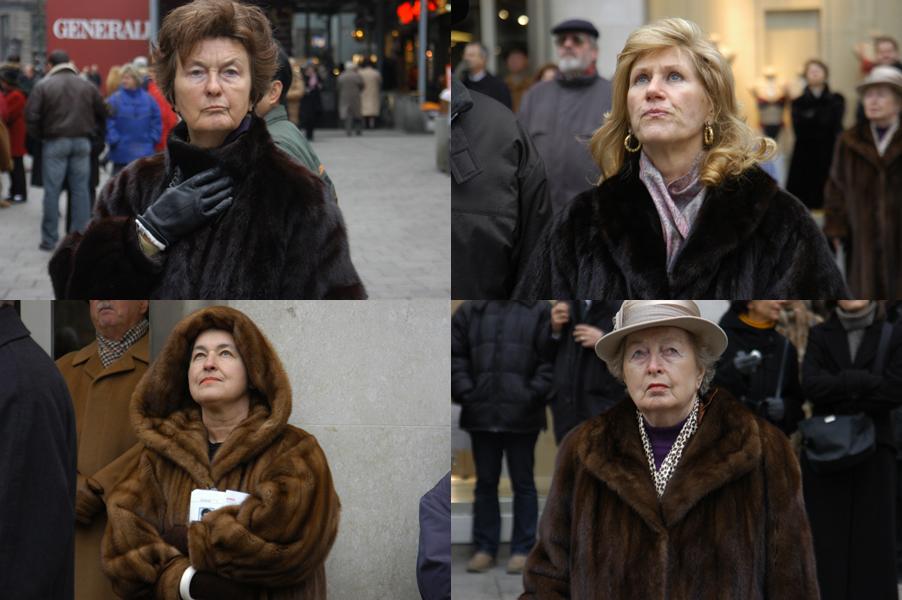
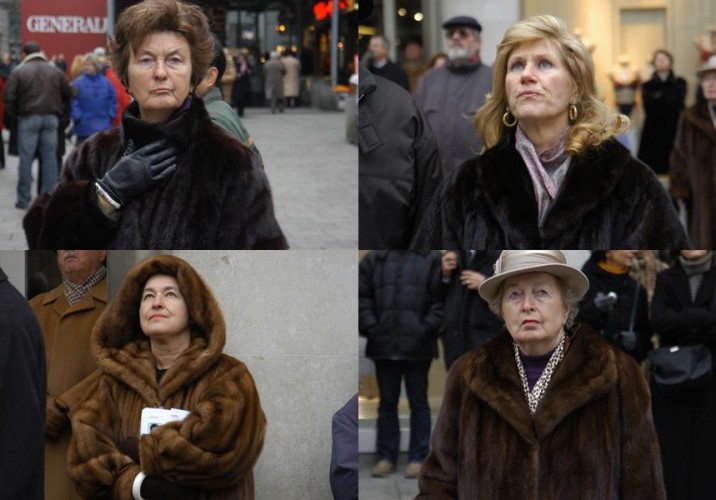
On a recent trip to Vienna, Otten quickly noticed a difference in the local custom — Austrian women weren’t afraid to wear fur in public like their retribution–fearing Dutch counterparts. After she complimented an older lady on her coat in a cafe, the woman told her a tale about just how many furs any well-to-do Viennese woman will acquire in a lifetime: one upon graduation, one at her wedding, one later in adulthood, and if she’s still alive after her husband dies, a final coat as a gift to herself. The story inspired Otten to do this series. “Most of them don’t even know I’ve taken their picture, because as a street photographer you can’t ask everyone,” she says. “Sometimes you just shoot.”
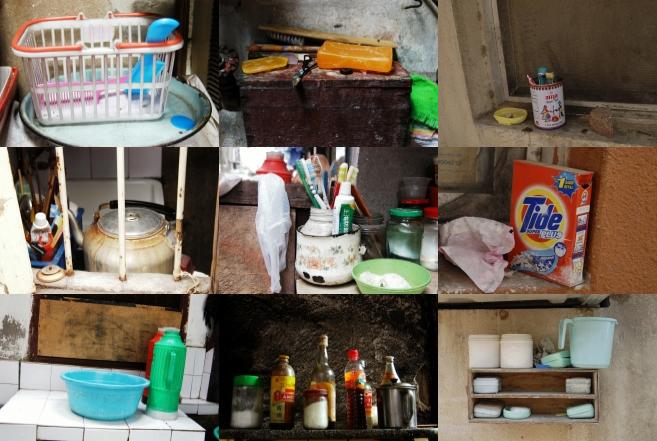
Shots of “daily care” items in Shanghai and Dubai — everything from Tide laundry cleaner to toothpaste, toothbrushes, and eating utensils all crowded around the same sink — are among the simple observations that always hum in the background of Otten’s work. “I’m attracted to normal, everyday things, like different kinds of street furniture and different colors of tiles on the pavement, and the kinds of bikes people ride or the kinds of shopping bags they carry,” she says.
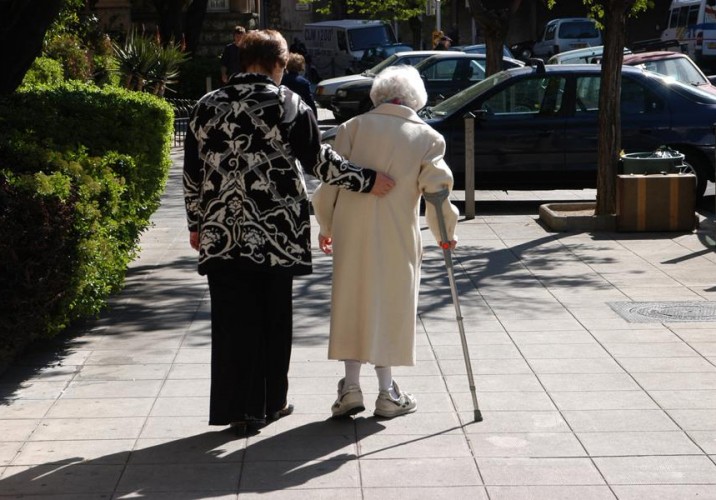
Otten’s shots of elderly women in France, Spain, and the UK typify her interest in documenting the people and things that most of us overlook. She explains that in the Netherlands, grandmothers are typically kept out of sight, stowed away in homes for the aged; seeing them in the streets of cities like London and Lyon reminded her of how powerful and independent they can be, and how different their tempo is from that of their surroundings. “This image is really moving to me,” she says, while noting that in most of her other shots, “no matter how old the granny is, and no matter how crooked she walks, she always carries a lot of groceries.”
More serious observations include the aforementioned roommate ads, in which Dubai’s itinerant workers — most from India, China, and Pakistan — tend to be curiously specific about who they’re willing to bunk with. “They’ll offer space for a Muslim or an African only, or even for a Muslim executive bachelor only,” Otten says. The specificity arises from the fact that the workers are likely to be sharing not an apartment, but half of a bed in a room that sleeps 12. “I heard a story where two men shared not only a bed but shoes, so when one came back from work, the other put on his pair while he slept. If you know nothing of Dubai, you know rich people there live in very expensive apartments, while workers end up sharing a mattress.”
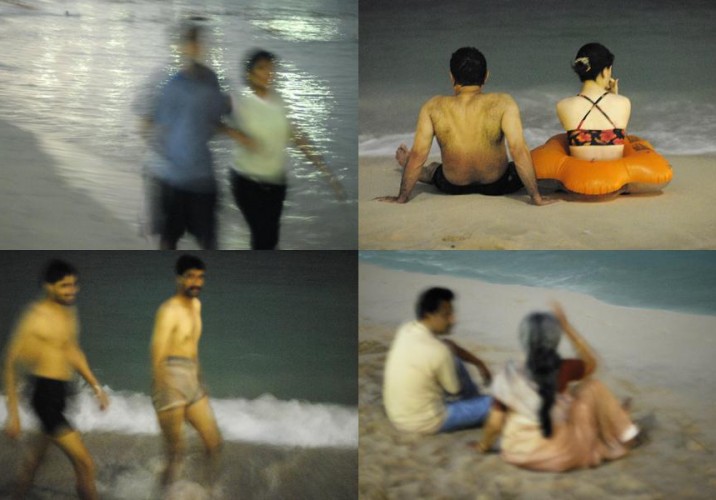
A tipoff from a local led Otten to visit Dubai’s public beach in the middle of the night, when on Fridays, all the workers and their families get together and swim in the dark, after the tourists have gone home. Otten used a high ISO and the magic of Photoshop to enhance these images, but in real life, passersby wouldn’t be likely to notice the ritual. “There’s something really pure and intimate about these pictures,” she says. “In Dubai there’s so much stress and obedient behavior in the service industry, to the point where it’s almost too much sometimes. These people wear uniforms all day long, but here they were in such a relaxed atmosphere, they literally dropped their costumes. You’re able to see everyone for who they really are.”
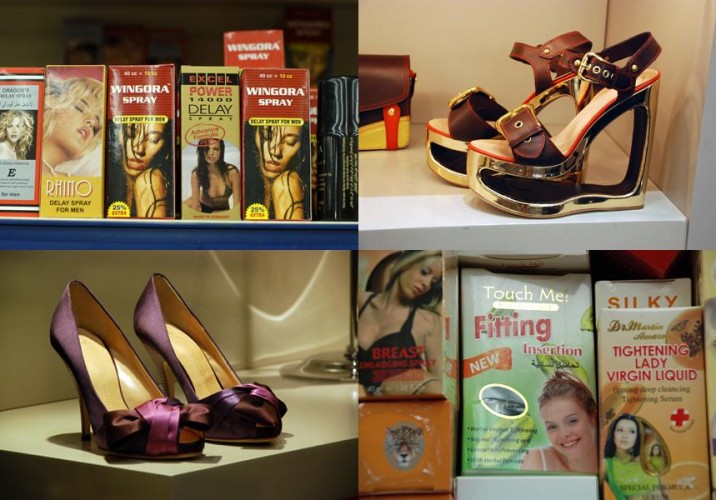
The buttoned-up nature of Dubai’s workers made Otten and her colleagues — who were analyzing the city at the time for an exhibition co-curated by Rem Koolhaas — especially curious about the nature of sex there. “It’s not that I was looking for sex, but you hardly saw any evidence that anyone was doing it or thinking about doing it,” she says. Except, that is, when it came to what was on the shelves at the malls and drug stores, which pointed to both the city’s high concentration of foreigners and its underground nightlife: super-high-heeled shoes and bizarrely named sexual snake oils. “Tightening lady virgin liquid? How do you use it? I don’t even know what that is.”
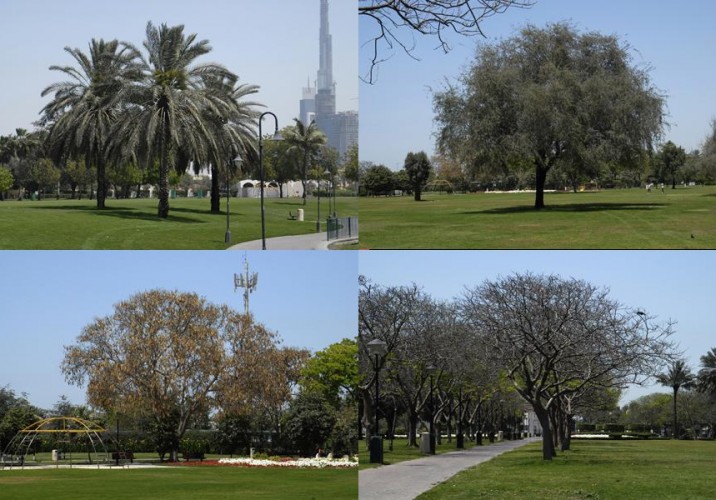
Like Las Vegas, Dubai is a giant desert mirage of sorts, its greenery all grown by drip irrigation rather than divine will. “I visited a park near my hotel, and it all looked so normal and so perfect, like Central Park,” Otten says. “When I saw the pipes I was amazed; it looks so good and so real, you’d almost overlook how fake it is.” The illusions in Dubai, she notes, tend to be a tad more obvious, like a 32,000-sq.ft. indoor ski slope lined with 6,000 tons of artificial snow.
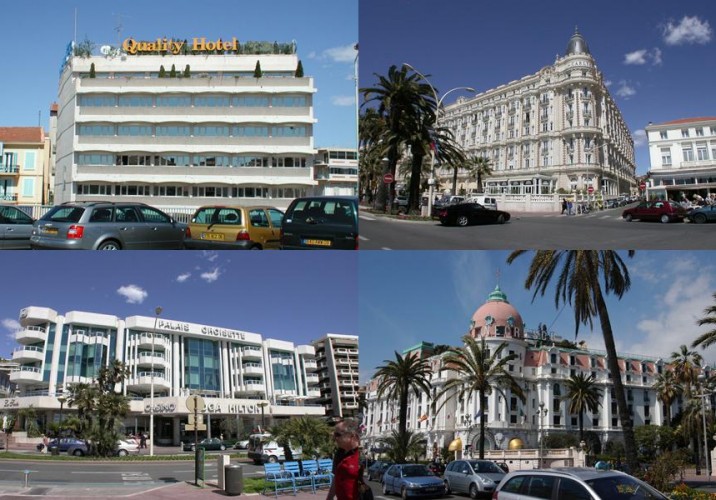
For her first professional assignment, a Dutch real estate company sent Otten and a friend to France to study 15 cities as potential investment sites. “We slept in a different hotel every night,” she says. At 22, however, her instincts weren’t as refined as they are now — wanting to photograph the sea from above, Otten snuck into the penthouse of the hotel on the upper right. When the maid returned, she slipped out, taking what she thought was a peppermint from the maid’s supply cart; it turned out to be toilet cleaner. “At the same time, the manager came and asked what I was doing. I had to run away down the stairs and spit the cleaner out. After escaping I tried to puke and flushed my mouth out 20 times. I felt like I was being punished for my brutal way of photographing. I would never do that now.”
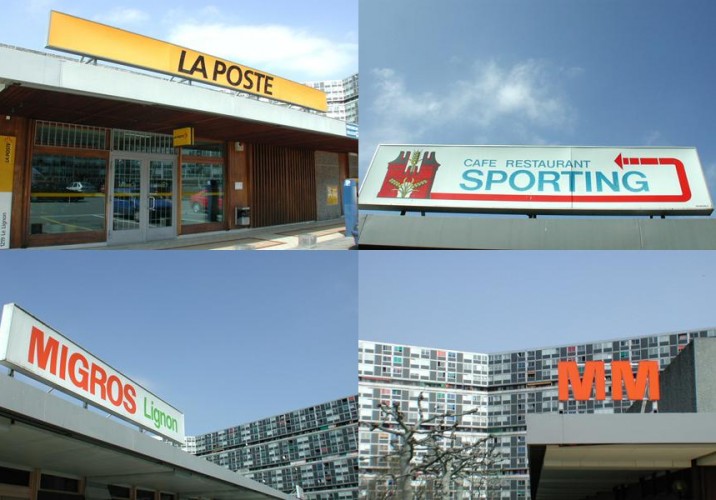
On the same trip to France, she was photographing these social housing projects when she happened upon a barbershop in which 10 men were sleeping. Naturally, she took out her camera, but when its flash accidentally went off, one of the men woke and came after her, cursing and hurling a Coke can at her as she took off down the street. The photos here some of the other mundane realities of life in the French projects. “What fascinates me is that they always have the minimum people need to survive — a post office, pharmacy, bakery, gym, restaurant, and barber shop. They’re completely self-sufficient, but the way they’re self-sufficient is so grey and beaten-down and generic. The money tap has really closed on this area.”
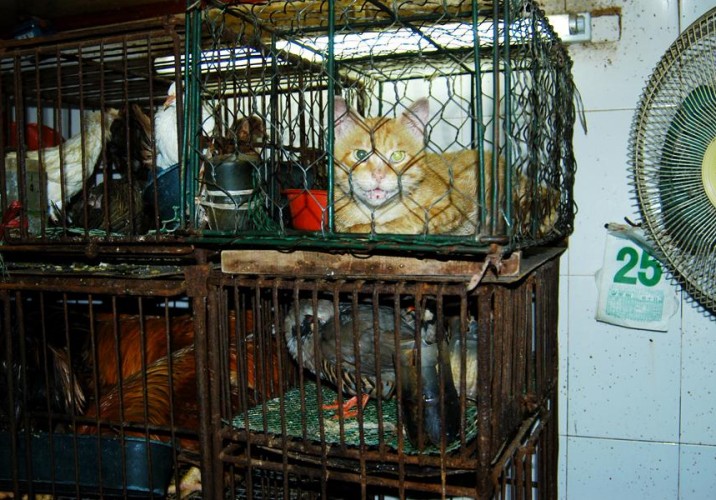
Otten spent nearly two months in China in 2004 with a group of researchers from the Dynamic City Foundation, a research platform that enlisted 160 freelancers over five years to compile a book about China’s rapid urbanization. “I had what I call a tourist gaze, so things a normal Chinese man might not have noticed were attractive to me,” she says. While there, she visited dozens of markets, some which were more orderly and clean, and a few which were like this one: raw and fairly disturbing. “I had never seen so many weird species in my life — snakes, frogs, turtles, pigeons, plus you also had cats and chickens. I heard this was actually the market where SARS broke out.”
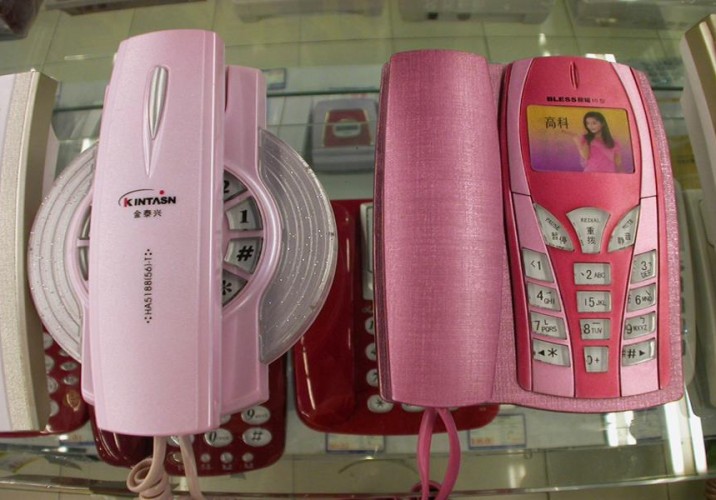
One of the sections on Urban Daily Life is devoted entirely to electronics, shot all lined up on store shelves. In Dubai, the sun fades their packaging into a sea of “bluish cardboard,” and here, in China, someone has appropriated the shape of a Nokia cell phone for a cheap landline handset. “If you were stoned you might draw something like this,” Otten says. “It’s the weirdest design I’ve ever seen — so brilliant and so typically Chinese. I can’t get my head around it.”
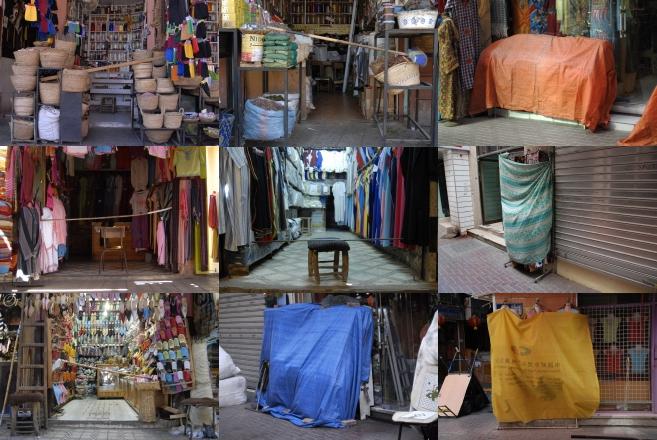
Another telling detail Otten noticed amidst local commerce was the way Muslim shop owners in the markets of Morocco (upper left) and Dubai (lower right) vanished during prayer time, leaving their wares virtually unprotected. “In Morocco there’s a trust and respect in the community that nobody enters the store when a broom is placed across it like this,” she says. “I found the same principle in Dubai, though there the technique is slightly different. They cover their items with fabric while they’re gone.”
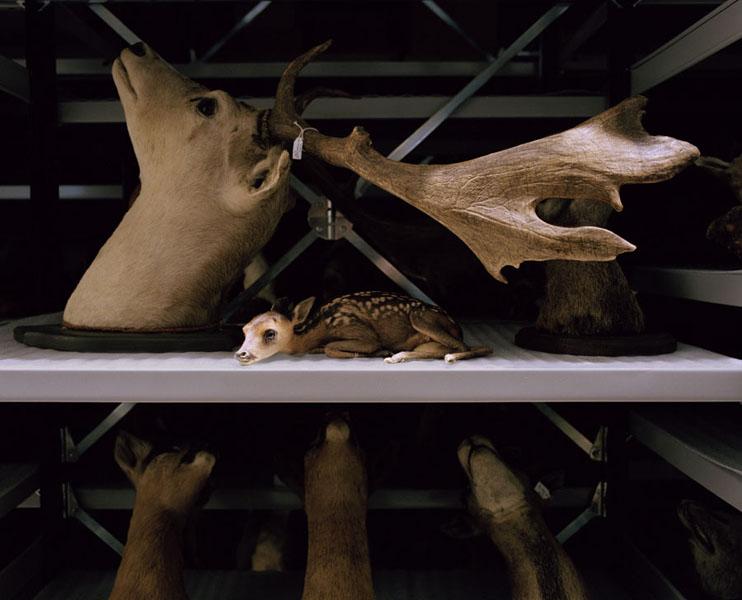
It started with a dead hamster. In the late ’90s, Dutch photographer Danielle Van Ark was living in Rotterdam, reacquainting herself with the charms of the grain-eating, wheel-chasing starter pet. Her hamster expired right around the time the Beastie Boys were coming out with a single called "Intergalactic". “The cover of that single was basically a giant hamster attacking humanity, and it inspired me to have my hamster stuffed,” Van Ark says. “I found someone in a village near Rotterdam who does it, and I loved the place instantly.”
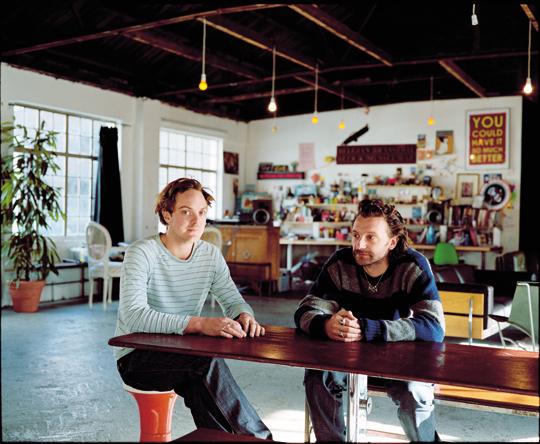
Francesca Gavin is a London-based writer, editor, and blogger, and, like you and me, she’s a major voyeur. For her book Creative Space: Urban Homes of Artists and Innovators, she traveled the world, slipping inside the studios, apartments, and houses of designers, artists, photographers, stylists, curators, writers, and filmmakers to document the chaotic interiors she found there.
Atelier NL’s Nadine Sterk and Lonny van Ryswyck keep a studio in the airy loft of a ’70s-style church in Eindhoven. They live there, too, but you wouldn’t exactly say that’s where they work. More often than not, the designers can be found doing fieldwork, whether that means scouring the area’s secondhand shops for mechanical knickknacks to inspire their more analog designs — like van Ryswyck’s hand-cranked radio — or digging up clay in the Noordoostpolder, an area of reclaimed farmland north of Amsterdam that until the 1940s was submerged under a shallow inlet of the North Sea.