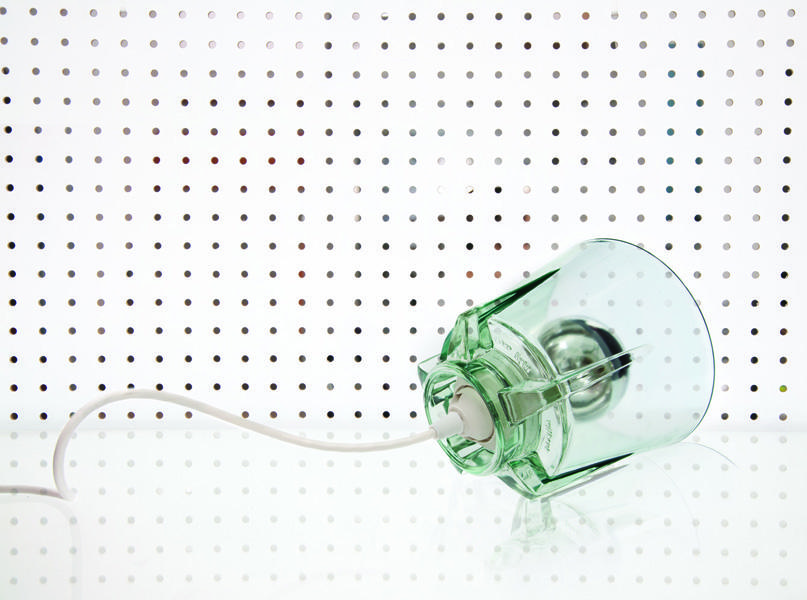
If there’s one thing that’s defined a Rich Brilliant Willing product since the studio’s three members graduated from RISD in 2007 and banded together to make furniture, it’s the idea of the mash-up. In most of their pieces, seemingly disparate materials and odd colors come together in a sort of joyful schizophrenia — a lamp with differently colored, awkwardly placed dowel legs, a wood-and-metal coat rack with copper, steel, and plastic pegs, and even a candle holder crowded with tapers, birthday candles, and fat, number-shaped votives. But a funny thing happened this spring: The trio released a series of cast-glass pendant lights with the Los Angeles–based design company Artecnica that were notable not only for their pretty, industrial aesthetic but for their adherence to a single, monochromatic material. “It’s unusual for any object to made of a single part these days,” says Theo Richardson, who with Charles Brill and Alex Williams makes up the trio, their surnames forming the basis for the studio’s cheeky name. “Most of the time, things are glued together, screwed together. But for us, this was going from assemblage work to something that’s made of a single piece.”
It’s another sign of maturity for a group who, while there’s nary a thirty-something among them, has been fortunate enough to produce work with four different manufacturers in the past year alone. But don’t expect it’s a signal they’re letting go of the loose-limbered quirkiness that made them famous in the first place. “We’re constantly trying to balance growing a creative business while retaining some of the specialness of what we’ve done so far,” says Williams.
So far, the balance has worked. The trio has pieces in production with Areaware and Roll & Hill in New York, and Innermost and SCP in London, but for the most part, those companies have taken on works that the three initially developed and produced in-house. It’s a process that’s left RBW with a surprising amount of creative control; for them, hooking up with a manufacturer has often come to mean they can expand their product line — a table upturned to become a pendant light, for example, or a floor lamp adapted into a sconce — and not that they are beholden to someone else’s vision.
So even as they’ve begun a ginger courtship with companies from Marset to De La Espada, they’re still tinkering and experimenting in the fifth-floor studio and workshop they share in a Lower East Side building that’s been home to everyone from John Derian to The Talking Heads. They recently invited us over to tell us what they’re working on next and to share with us a few of the inspirations that have informed their work so far.
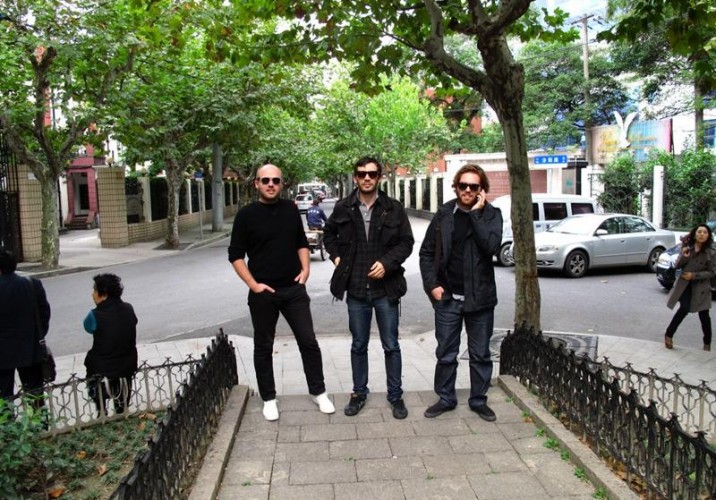
China: Like most young design studios, Rich, Brilliant, Willing lacks the funds necessary to travel the world visiting factories or checking in on production anywhere that’s much further than Brooklyn. Luckily, last month the trio (pictured above, in Shanghai) was invited to China to exhibit their Branch lighting collection at the Get It Louder festival, a showcase of emerging talent held every two years. The lights were displayed in their standard configurations in Beijing, and when the exhibition traveled to Shanghai, the designers reshuffled the lamps’ components using locally sourced materials as a way to make obvious their process and their affinity for found objects.
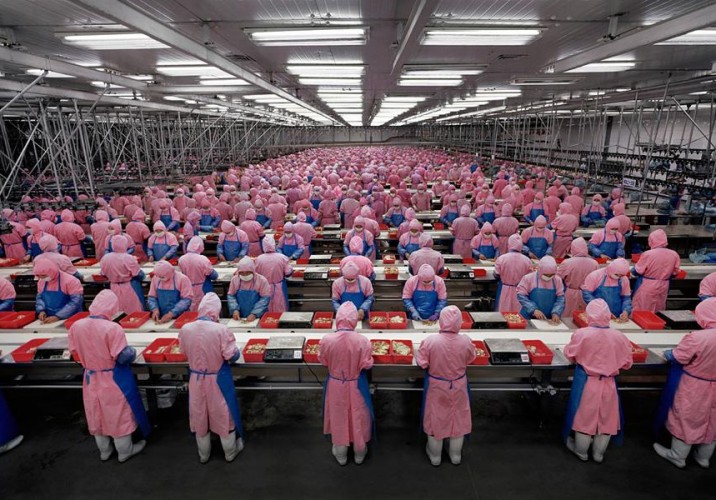
China: In many ways, China is RBW’s ideal inspiration destination, as there are manifestations of the trio’s obsessions at every turn: Strange, beautiful pops of color (as in the Edward Burtynsky factory photograph above), natural forms, an overwhelming sense of randomness, and obvious nods to the tools and processes of industry. “We took this amazing video along the highway, where they’d parked all of this brand-new construction equipment,” says Brill. “An endless line of Caterpillar front-end loaders and diggers — right off the factory floor.”
China: “There’s also an amazing sense of ingenuity there,” says Williams. “For example, these are used chopsticks from a street barbecue. In Shanghai they’re constantly working to keep the streets tidy, and these women with whisk brooms pick all the stuff up and put it in trash barrels. It ends up creating these beautiful random patterns.”
China: “We were also fascinated by what seems like a lack of organization there,” says Richardson. “The traffic lines are perceived as not fixed but flexible, and you constantly have cars driving into oncoming traffic, overtaking vehicles, and left-turning into pedestrian crossings. It seems disorganized to us, but for them, it’s a different system that works just as well.”
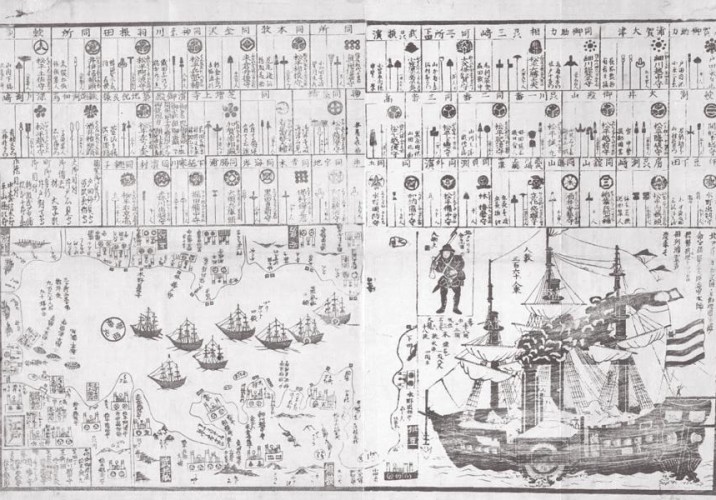
The Black Ships: The theme of Get It Louder was something termed “Sharism,” which refers to collaboration and connectivity in the age of cloud computing, Netflix, Twitter, and blogs. At the other end of that spectrum is this 1970 film by Charles and Ray Eames, which tells through a series of drawings and prints the story of Commodore Perry’s 1853 voyage to Japan to open trade lines after Asia’s nearly 200 years of isolation. “It’s so crazy in the age of globalization to think of two highly developed cultures meeting after one has been isolated for so long,” says Richardson. “That sort of thing will never happen again unless we meet Martians.”
The Black Ships: The trio has long been interested in diagrams and schematics — their popular Excel floor lamp was inspired by bar graphs, for example. The film, beyond presenting likenesses of the Japanese and American negotiators, is filled with drawings of ships and their fittings, plus sketches of everyday objects made by the Japanese upon encountering Perry’s fleet. “They’re sort of precursors to the idea of technical drawings,” says Richardson. “I also love that you can see the different artists’ hands.”
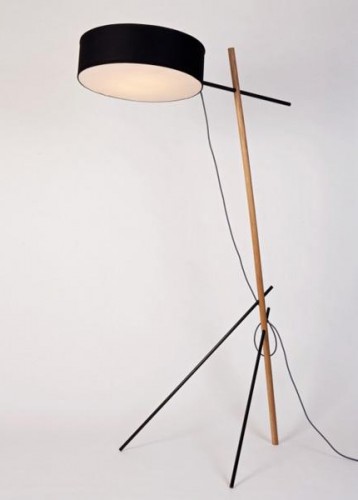
The group’s Excel lamp was launched by Roll & Hill during this year’s ICFF after being produced in-house for two years. “One of the reasons it’s successful is that while it made a splash when we first introduced it, we then continued to refine it into something that would sell and was economical to ship,” says Williams. “We’re trying to make things more universally applicable,” adds Brill. “Originally we thought, ‘Let’s offer it in copper and orange,’ because that excites us. But now it’s all black because that appeals to a greater number of people.”
Color: Not that the trio’s unorthodox use of color is going to disappear anytime soon. The three find inspiration for their palette everywhere: “When we first started developing the Excel perch and floor lamp, we didn’t come together with sketches or technical drawings,” says Brill. “It was just random images we printed out and threw up on a wall — a scientist holding a molecular model, a football team winning the Super Bowl, a diagram of a volcano, a Mexican blanket.”
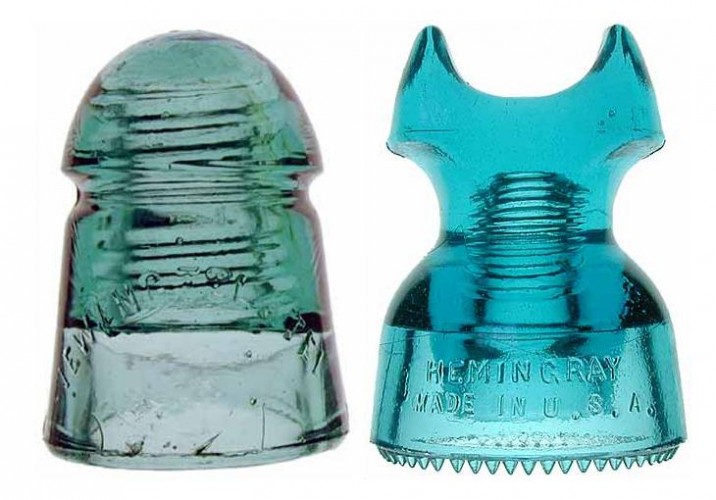
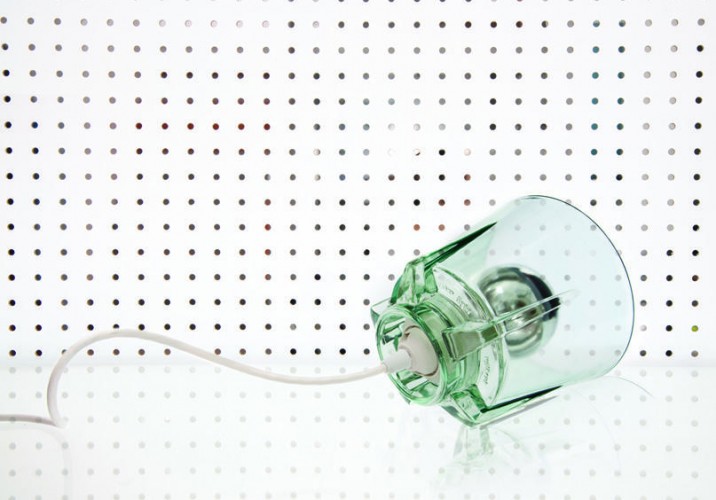
Glass insulators: All of RBW’s members are inspired by found objects, but they hadn’t figured out a way to channel that love into pieces for production until they began working last year with Artecnica. Their cast-glass Bright Side Lights, which debuted earlier this year, were inspired by the electrical insulators that adorn the side of Williams’s family cottage in Maine and that can often be found along old railway lines. “In the old days, power lines would come in off the street and these would insulate the connection from the wooden frame of the house,” explains Williams.
Glass insulators: “They’re made out of a single material, but they have all these interesting textures. They often have a thread and text cast into them. Plus they’re usually beautiful colors. We looked at a lot of these when we were designing our Bright Side Lights (above),” says Williams. “People have had a really emotional reaction to the lights — they say it reminds them of an old appliance or a blender, or it makes them think of other experiences they’ve had, which I think is the mark of a successful object.”
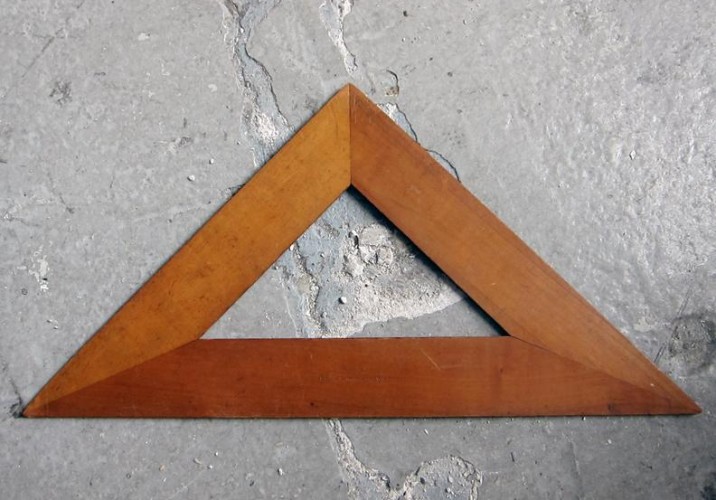
Drafting triangles: “Charlie has a passion for drafting triangles in general,” says Williams. “In our old studio, you’d go to pull a book off the bookshelf and six of these would fall out.” This particular one, though — which Brill figures was made from pearwood — seemed to fascinate the whole group as they searched for clues as to its joinery and provenance. “I don’t know how old it is, but the fact that it’s just glued miters together and someone’s cared for it for so long? I could easily break this thing just by twisting it,” says Brill. “It’s a live material that moves, and yet someone decided to make a precision instrument out of it.”
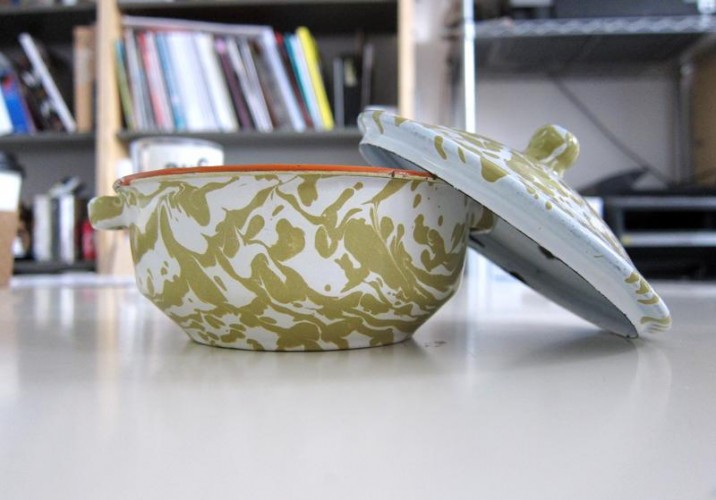
Enamelware: Williams found this tin sugar bowl, originally part of a larger set, at a junk shop on the Jersey Shore. “Tin is such a cheap and often crudely formed material, but the coating gives it a sense of longevity and beauty that it wouldn’t otherwise have. Enameling is an interesting process because it allows for such randomness and variation.”
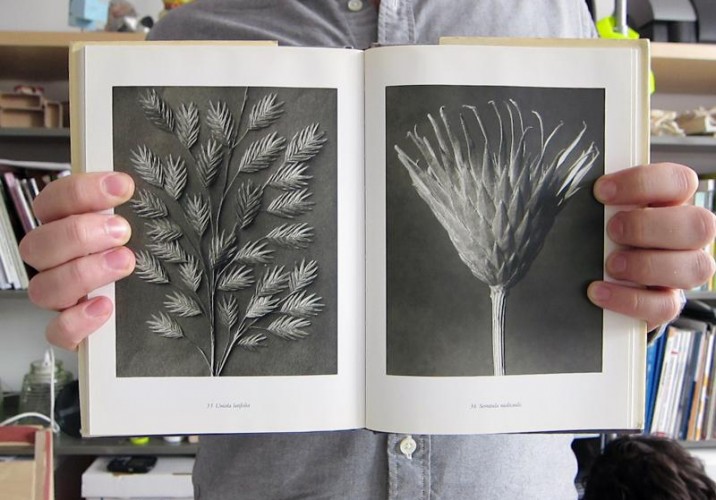
Natural forms: The German photographer and sculptor Karl Blossfeldt — who Richardson jokingly refers to as “the Robert Mapplethorpe of the natural world” — is a major source of inspiration for the trio. “It’s pretty easy to flip through a book like The Alphabet of Plants (above) and gain inspiration,” says Williams, “whether you’re thinking about how two parts connect or how things curve, or just trying out different textures. There’s a wealth of information to be found in just looking at organic forms.”
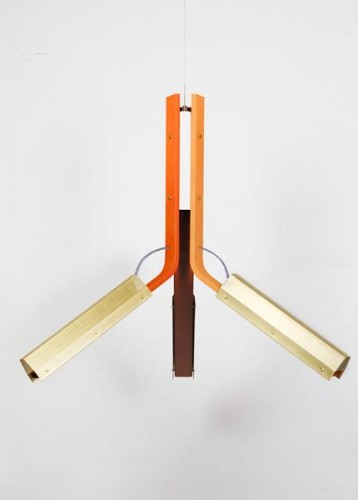
Natural forms: RBW’s Branch chandelier, made from bent plywood and perforated sheet metal, is meant to resemble the limbs of a tree; a new series, in development with Roll & Hill, is based on the idea of barnacles.
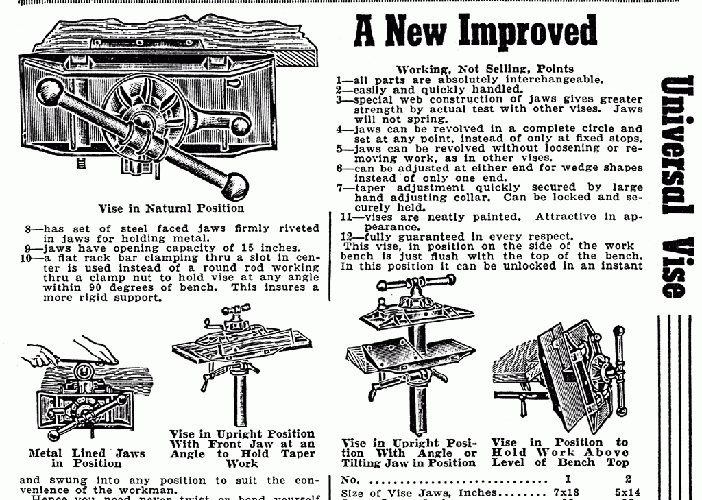
McMaster-Carr: The New Jersey–based industrial parts supplier’s thick catalog is a bible for most industrial designers, and RBW is no exception. Though as Brill points out, “It might be beneficial to browse the book sometime rather than just looking for the specific part we need.” In 2009, the trio created a coat rack for Sight Unseen’s ICFF exhibition McMasterpieces from the catalog’s black tripod, maple dowels, and copper and steel tubing; it was later adapted by Areaware for production. “That’s how a lot of our products start out,” says Richardson.
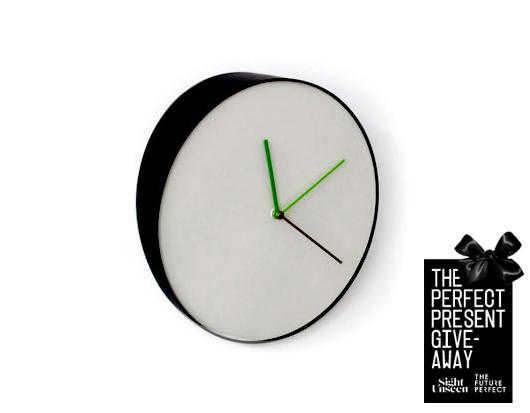
This week only, you can enter to win Rich, Brilliant, Willing’s new Bias Clock for Areaware as part of Sight Unseen’s Perfect Present Giveaway, for which we’re giving away one product from the shelves of The Future Perfect each week for four weeks. Click here to visit the sweepstakes entry page, and don’t forget to come back daily to increase your odds of winning!
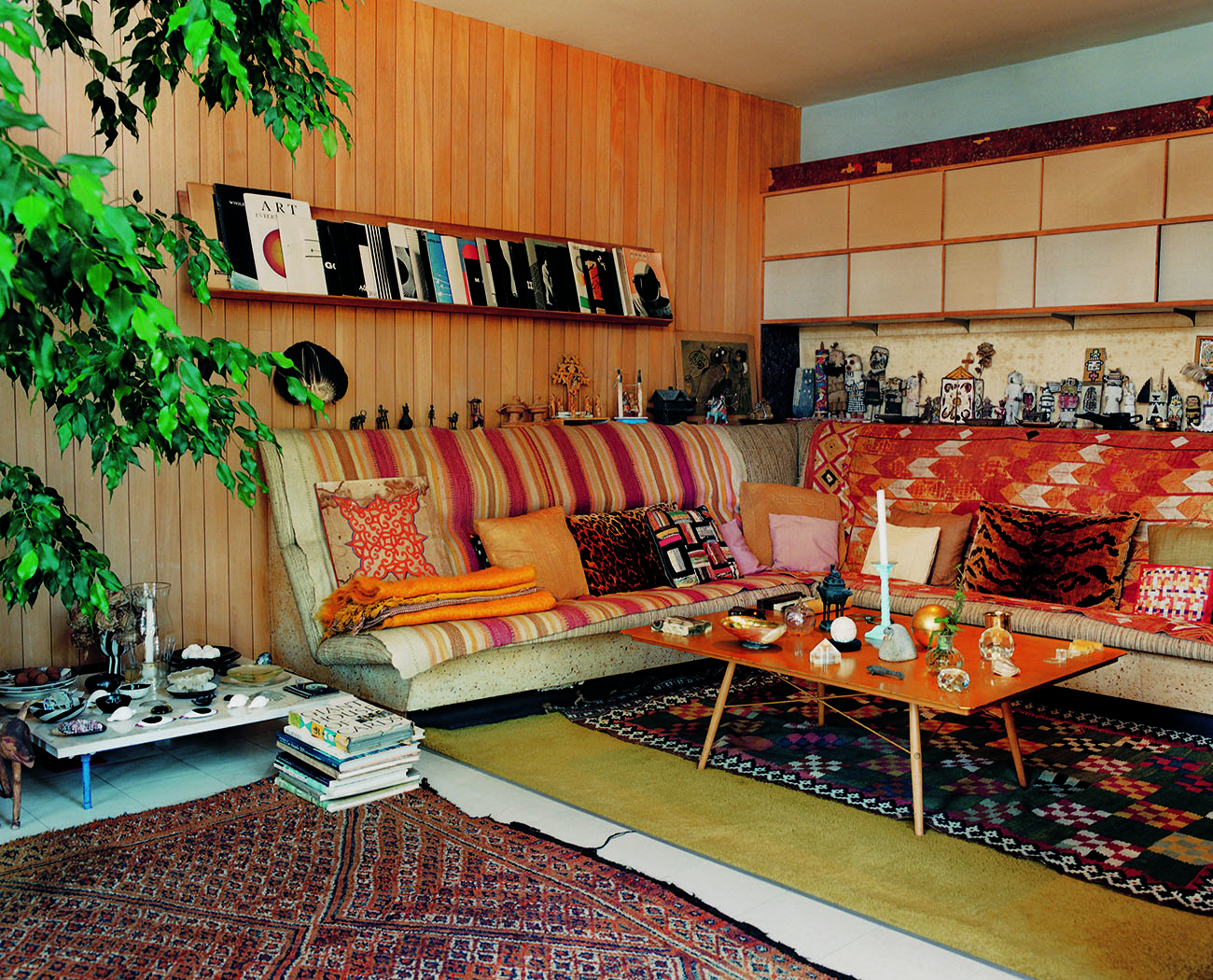
It’s possible you’ve spent hours foraging flea markets, wondering how a Russel Wright pitcher or an Eames shell chair or a Jens Risom credenza might fit into your home décor. But did you ever stop to wonder how those pieces may have figured into the homes of their own makers? Leslie Williamson, a San Francisco–based photographer, did — and the result is Handcrafted Modern, a new book that offers an intimate glimpse inside the houses of 14 of America’s most beloved mid-century designers.
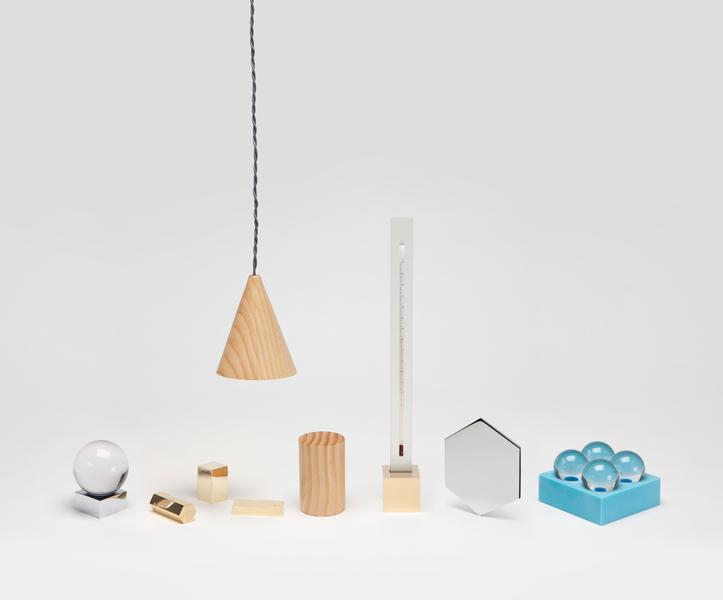
Australian wine capital Adelaide has a population of 1.3 million, putting it on par with Dallas or San Diego. But as native Daniel To sees it, it’s a big city with a small-town mentality — one that nearly consigned him and his wife Emma Aiston to a life designing laundry lines. “We met at the University of South Australia, where our design program was heavily engineering based and suited to what’s required for the city's industry,” explains To. “Adelaide has three main manufacturing companies: one making garden sheds, one light switches, and a third clothes-drying lines.” Rather than learning about mid-century modern, Memphis, or the Bauhaus — all of which would later inform their work as the independent studio Daniel Emma — the pair were taught to perfect their technical-drawing skills and gear up to become cogs in the local wheel. Just as they were starting their final projects in 2006, though, they had a kind of mutual awakening.
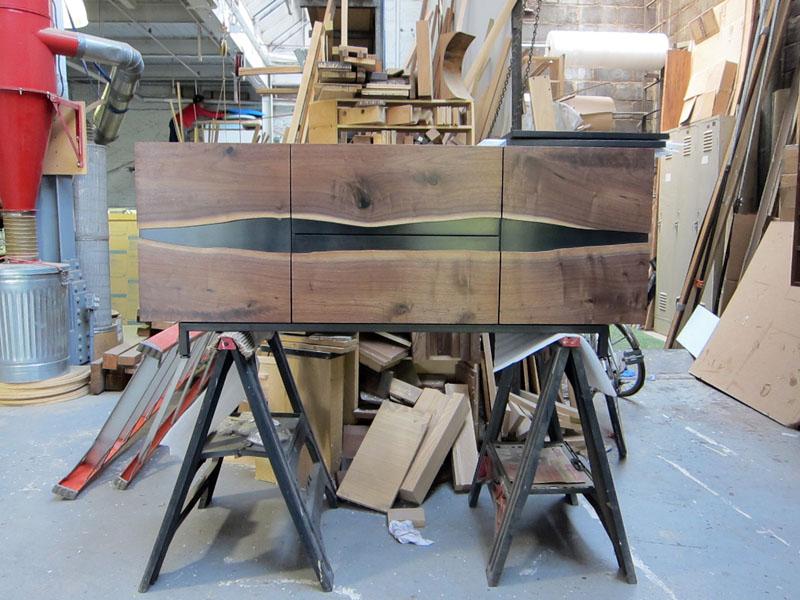
If you were familiar only with Uhuru’s work, it would be enough to surmise that the Brooklyn-based furniture designers are experts at creating something beautiful from practically nothing. (The formal term for this, we’re told, is up-cycling.) In the half-decade since RISD grads Jason Horvath and Bill Hilgendorf have been designing their own line, they’ve produced chairs from Kentucky bourbon barrels, loungers from the Ipe wood planks of a demolished Coney Island boardwalk, and scrapwood stools so stylish they were recently picked to decorate the café at New York’s SANAA-designed New Museum. But while it's true Uhuru are a resourceful bunch, step into their sprawling Red Hook studio and any assumptions you might have about their bootstraps process all but disappear.