There’s a lot that’s hard for Westerners to understand about Adriaan Hugo and Katy Taplin, the husband and wife who make up the South African furniture and fashion duo Dokter and Misses. First, there’s the fact that they hail from Johannesburg, a city whose art scene has held sway in the international market for years but whose few industrial designers are hardly household names. Then there are their references, which remain resolutely sub-equatorial: In our interview, we talked about game reserves, braais (the South African term for barbecue), a Nigerian dancehall/reggae musician named Dr. Alban, and an artist who uses the techniques of the Ndebele tribe, from the Mpumalanga region of the country. Perhaps most confounding is their name, which mixes English and Dutch honorifics and calls to mind everything from sci-fi movies to secretaries — and which the two refuse to explain. It’s lucky, then, that their work is so instantly likable and wonderfully easy to grasp: cheerful, poppy pieces of furniture with angular lines, monoprint T-shirts, and cardboard clutches, all influenced by their surroundings but exportable to the rest of the world.
The two met through a mutual friend years ago while still in school. After graduating, Hugo apprenticed with the South African designer Gregor Jenkin and Taplin was working for a magazine doing layouts. “I moved to New York for a year to do branding, and when I came back, I didn’t really know what I wanted to do,” says Taplin. “Adriaan and I had made a few things together — these cardboard handbags we used as press packs for South Africa’s fashion week — and Adriaan had designed some things on his own. We somehow decided that we should open a shop and produce our first collection at the same time. I came back in August of 2007, and we opened at 44 Stanley in November of that year — with no price tags or anything. I don’t know what we were thinking.”
The response at home, though, was immediate, and in the past few years, as South Africa’s stature has grown in the international community, so too has the reputation of Dokter and Misses, which now shows up regularly in design blogs and magazines around the world. They’ve also recently set up shop in Cape Town and collaborated with that city’s Whatiftheworld Gallery to open up larger digs in Braamfontein, the up-and-coming hipster area of Johannesburg, where they can host exhibitions jointly. But Hugo and Taplin aren’t in any hurry to explode the business, in part because it would be beyond their means to do so. “Industry in Joburg is quite big and old school, and there’s not a lot of high-end technology,” says Hugo. “So every single product needs to come through our workshop at some stage.” Sight Unseen caught them on a rare break, having just finished with the Cape Town opening, to chat more about the effects of industry, influences, and inspirations.
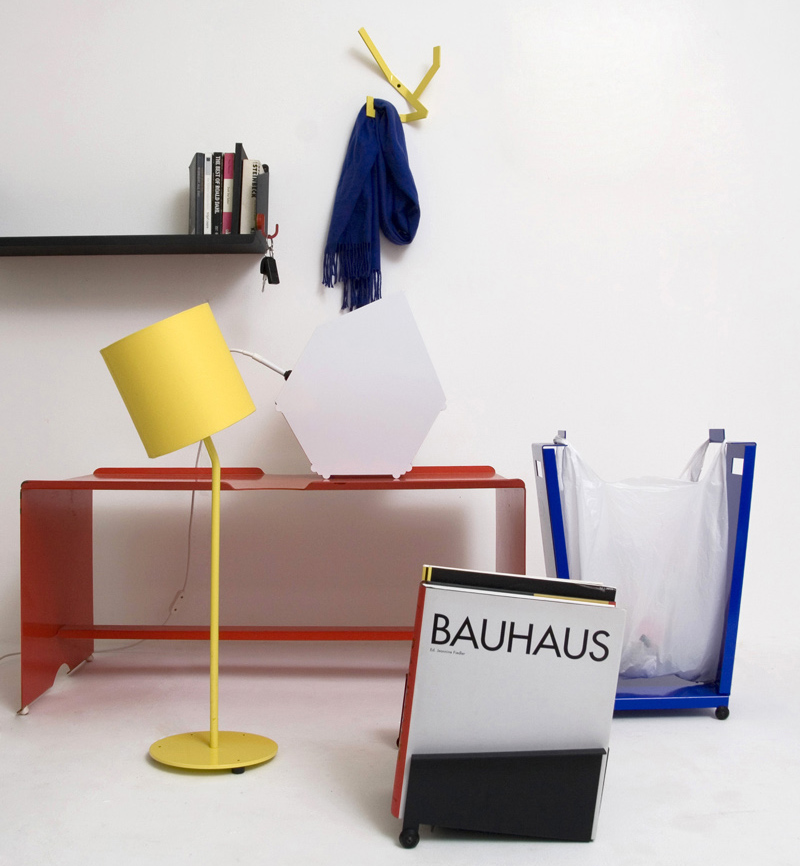
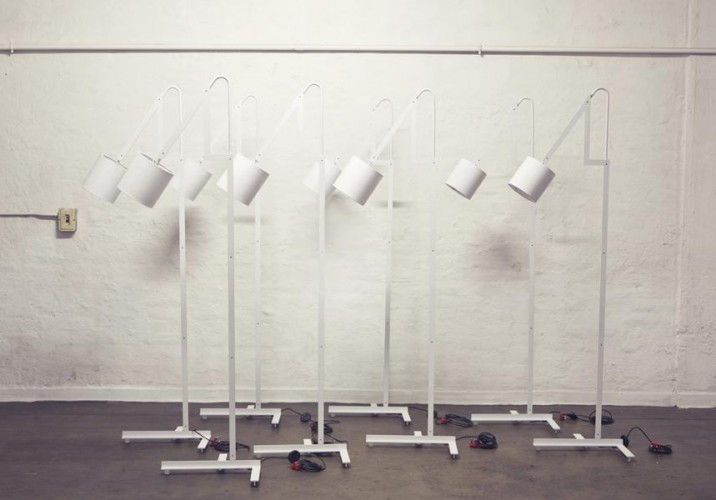
The powder-coated Heartbeat lamp shown here, part of Dokter and Misses’ Series A collection, was one of the first furniture pieces Hugo ever designed, and it’s still one of their most popular. A custom version sits behind the front desk of Johannesburg’s 12 Decades art hotel, for which the duo was commissioned to design a room last year.
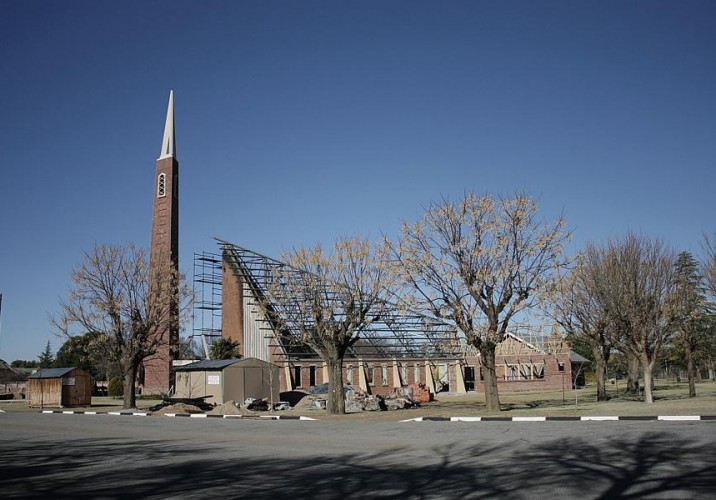
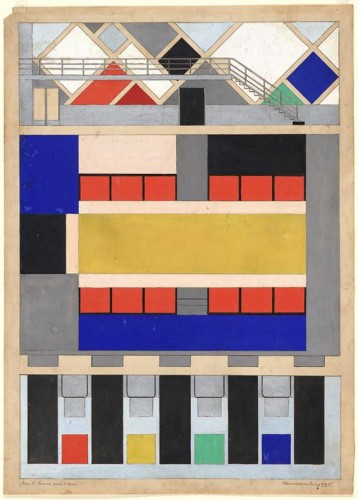
NG Kerk: The Series A collection bears evidence of Hugo and Taplin’s many influences, from the Bauhaus to the 1970s-style churches that Hugo grew up going to. (NG Kerk stands for Nederduits Gereformeerde Kerk, which is Afrikaans for Dutch Reformed Church.) “For me, these buildings, with their straight lines and aggressive sharp shapes, were attempting to communicate modernist ideas about authority and progress,” says Hugo. “But I suppose they could also be seen as a symbol of South Africa’s apartheid past, which is definitely not inspirational to me.”
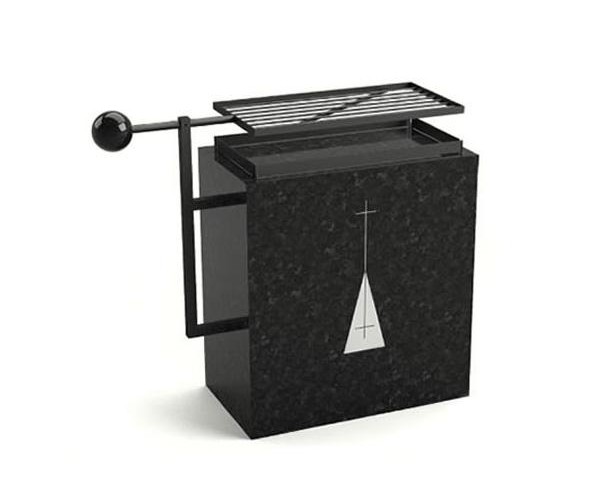
NG Kerk: Religion appears in a more tongue-in-cheek fashion in Die Laaste Braai, a black granite and stainless-steel barbecue/sculpture that Hugo designed in collaboration with artist Zander Blom. “A braai is a real cultural thing in South Africa,” says Taplin. “We even have a national heritage day called Braai Day. In Brixton, we’d always braai out of a trash can lid, and Adriaan had this idea to design the braai of all braais — sort of the last braai you’d ever need. It ended up with this religious/rock band symbol on it, which makes sense: By the end of the night, everybody is sitting around the fire, almost worshipping it.”
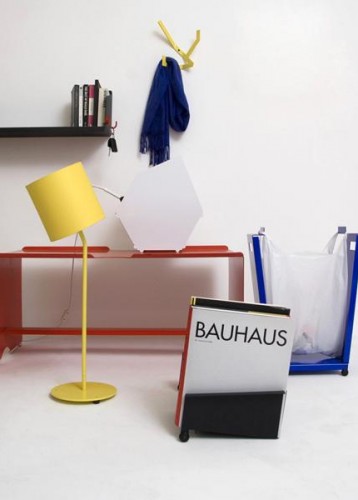
Bauhaus: But perhaps nothing inspired their early work more than the color, geometry, and design of the Bauhaus. “We actually call our first era Bauhaus-meets-Dr.-Alban,” says Taplin. “When we first opened the shop, everything was very graphic, very colorful. We were listening to a lot of Talking Heads at the time.”
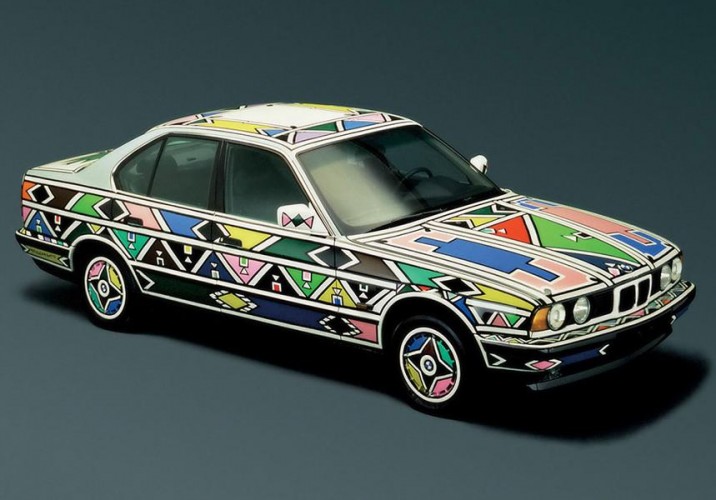
Bauhaus: “This 1991 BMW art car by Ndebele artist Esther Mahlangu also really inspired the early work, the use of solid color and basic shapes,” says Hugo.
Bauhaus: “I suppose it’s also a very African aesthetic though,” says Hugo. “When we started, Katy had just come back from New York and we really embraced it. My stuff started out all black and white, and when Katy came back we moved into the primary colors.”
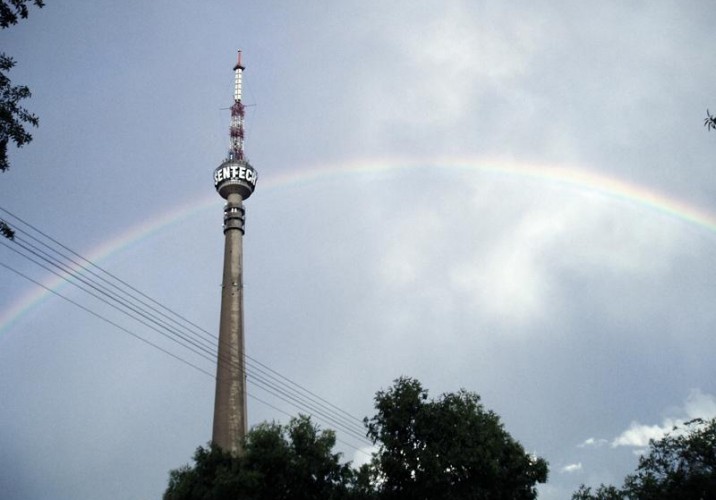
Johannesburg: The two are obviously inspired by South Africa’s cultural traditions, but living in Johannesburg has affected their work in more subtle ways. “It’s not like the skyline makes us make lampshades,” Hugo points out. Even so, the two have always loved this 1960s reinforced concrete Sentech radio tower, which hovers above their home in Brixton. “It’s the first thing I look for when I come home from far away,” says Hugo. “This picture was taken from our backyard, and I’ve lived in the same house for 10 years. My whole career as a designer has happened here.”
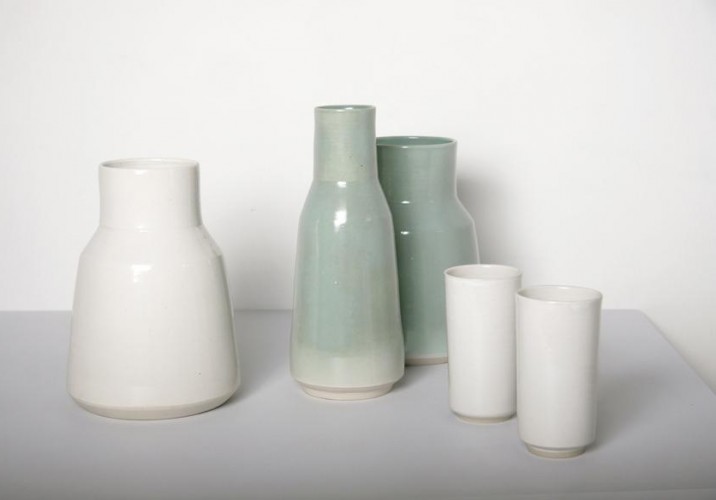
Johannesburg: Their recent line of Chimney Ceramics, a collection of handmade, modular stoneware pots and vases, was likewise inspired by the concrete chimney stacks leftover from Joburg’s mining and industrial past (though they also owe a debt to Hugo’s mother, a ceramicist). “We’ve been quite limited in our color palette with the powder-coated steel, so it’s been fun to play with other colors,” says Taplin. “This is definitely the beginning of something new.”
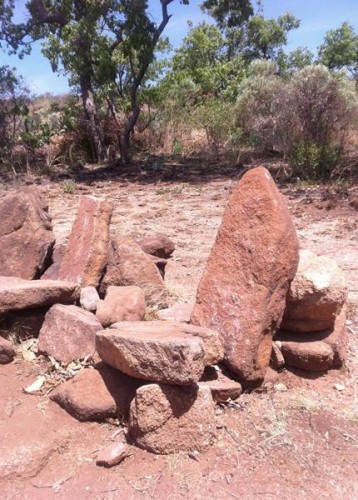
Rock chairs in the Magaliesburg: “These chairs are at a campsite we go to in the Magaliesburg mountain range, two hours outside of Joburg,” says Taplin. “What I love about them is their simplicity. These few things have been grouped together to make a chair; it’s a human intervention in nature. It’s sculptural, but organic. There are about seven chairs, and each one is completely different: One’s more a lounge chair, one is small and sort of uncomfortable, and you can change them around to suit you.”
Rock chairs in the Magaliesburg: “A lot of our initial designs were very much about the 2-D silhouette,” says Hugo. “Now, more and more we’re looking at things like rocks, which have depth and shape and form. That’s the next thing we want to move into — the idea of looking at nature a bit.” “People want another yellow light, and you get a bit tired of it,” says Taplin. “But I think once we’re done with the rocks, we’ll run straight back to the 2-D shapes.” Above, a recent T-shirt design inspired by the Magaliesburg range.
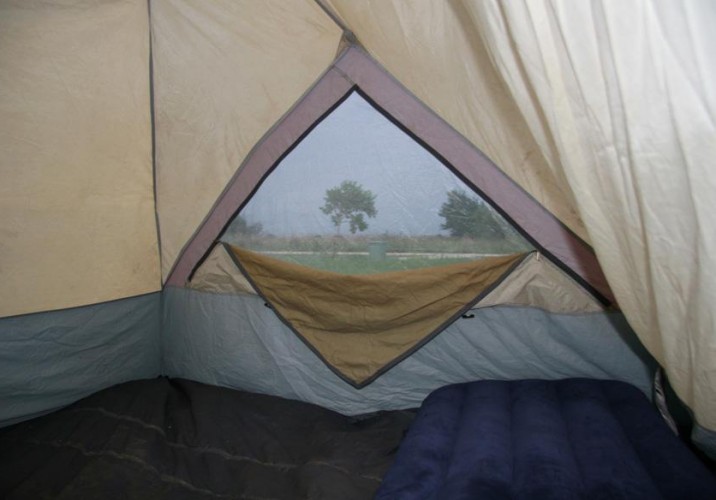
Camping: “We really love camping, everything about it,” says Hugo. “The place, the gear, the dark confusion, the early mornings. The smell of stored equipment reminds me of the freedom that comes from improvising, living with less, and being away from humans.” “You’re constantly solving problems, figuring out the best possible way of doing things with least amount of stuff,” says Taplin. “For me, I like this image on two levels — the emotional level of just liking camping, and aesthetically. Although we actually have a much nicer tent. This is someone else’s.”
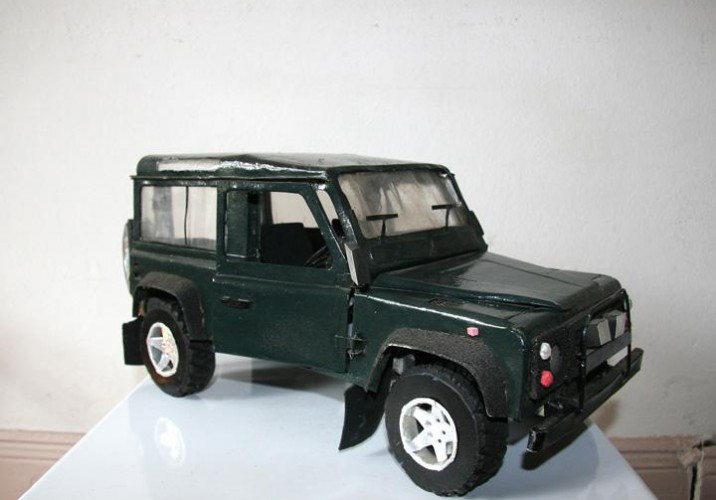
Camping: The couple picked up this Land Rover replica, made from scrap materials, on a camping trip in Mozambique. “I was brought up in a Land Rover–obsessed family,” says Taplin, “and I find the detail on this replica astounding, right down to the materials and color-matching. I think it’s quite beautiful.” “Whenever I drive past a Land Rover, it feels like a holiday,” Hugo adds. “It says freedom to me in a weird way.”
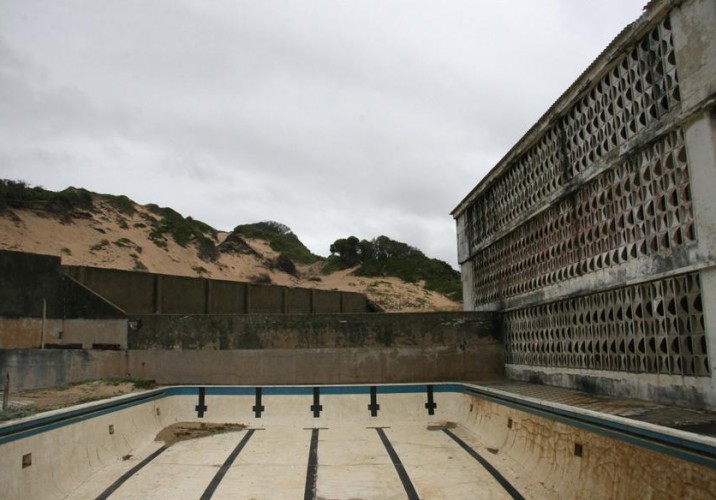
Xai Xai swimming pool: “This was taken at an abandoned beachside hotel in Xai Xai, Mozambique,” says Taplin. “During the civil war they poured cement down all the drainpipes and the pool was just left like that. It used to be the place to holiday and it’s still very beautiful in its state of disrepair. Walking through it you can only imagine it in its former glory, though a lot of it is still intact. There are these beautiful wrought-iron gates and a sea-themed wallpaper from the 1950s. It has this feeling of what it could have been.” “It’s difficult to comprehend how beautifully crafted things can become nothing,” says Hugo. “I guess life always wins.”
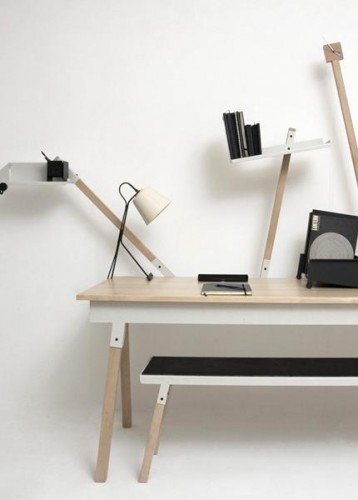
Dokter and Misses’ Easy Now range, released in 2009, focused on more natural materials like wood and cork that would show their age and patina over time, unlike the powder-coated metal. “Our early stuff was very stark and monochromatic,” Hugo says. “We wanted a break from that and — especially after seeing our new products age — we decided to do a range that was about how things get worn over time.”
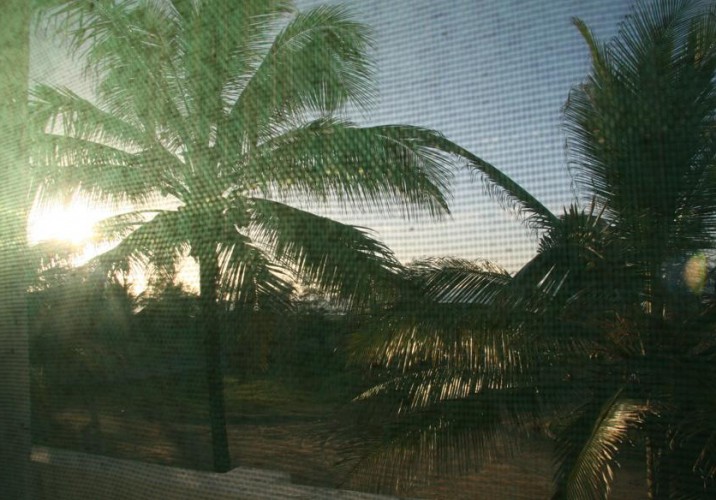
Palm trees: “Palm trees have become an obsession and a recurring theme for us,” says Taplin. “It’s a holiday tree, it’s iconic, and we have two giant ones in our front garden. When we were on holiday in Mozambique, Adriaan had this meter-high one carved specially for us by a sculptor in Tofo. We also release a ‘Summer Holiday in Joburg’ T-shirt with a burned dead palm tree on it. It’s sort of a cheesy holiday idea, but it’s become a real icon for us.”
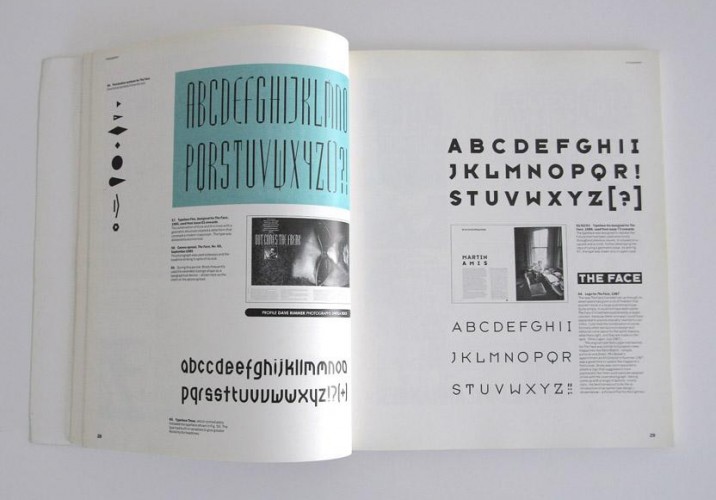
Neville Brody: Though Taplin is the more typography-oriented of the two, both say they grew up obsessed with The Face, where Brody served as art director from 1981–1986. “His shapes definitely inspired some of our jewelry,” Hugo says. “But while we do respect a lot of designers, we try not to get too obsessed with any one in terms of inspiration. We’d rather look at weird interiors of tents.”
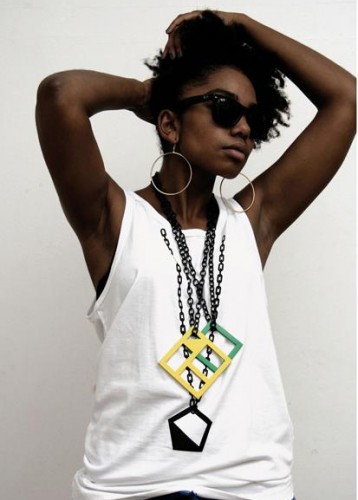
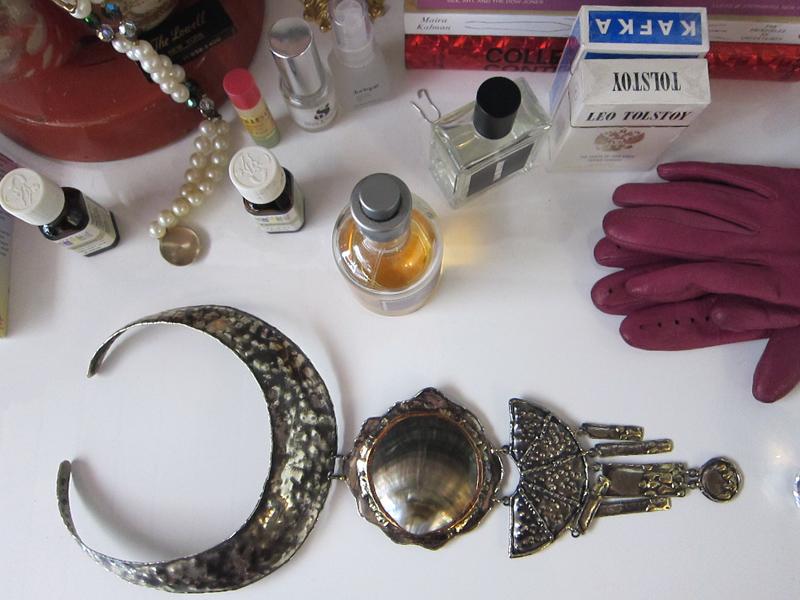
Dokter and Misses’ heavy-metal pendants.
It’s hard enough to be a young American designer. The lack of government funding means that prototypes must often be self-financed, and the difficulty in working with most European manufacturers means that young design studios frequently end up handling their own production as well. Now try doing it all in Seattle, a city that’s not exactly famous for its flourishing industrial design scene.
If you were familiar only with Uhuru’s work, it would be enough to surmise that the Brooklyn-based furniture designers are experts at creating something beautiful from practically nothing. (The formal term for this, we’re told, is up-cycling.) In the half-decade since RISD grads Jason Horvath and Bill Hilgendorf have been designing their own line, they’ve produced chairs from Kentucky bourbon barrels, loungers from the Ipe wood planks of a demolished Coney Island boardwalk, and scrapwood stools so stylish they were recently picked to decorate the café at New York’s SANAA-designed New Museum. But while it's true Uhuru are a resourceful bunch, step into their sprawling Red Hook studio and any assumptions you might have about their bootstraps process all but disappear.
Most people, if given the luxury of a third bedroom in a house they share only with a spouse, might choose to turn it into a guestroom, or a studio, or maybe a study. Kristen Lee, a stylist and co-owner of L.A.’s fashion and design emporium TenOverSix, turned hers into a walk-in closet. Step inside and you’ll discover rolling racks of designer and vintage, scarves tossed carelessly around a dress form, shoes lined up in neat little rows, a steamer in the corner, and accessories spilling out over the dresser. And yet for someone so clearly attuned to and obsessed with fashion, it’s not the clothes you first sense when you enter the Ed Fickett–designed, mid-century, Nichols Canyon home she bought last year with her husband and then “renovated the shit out of,” as she says. It’s the incredible proliferation of art. Stephen Shore, Banksy, Leopold Seyffert, Nan Goldin — and that’s just in the living room.