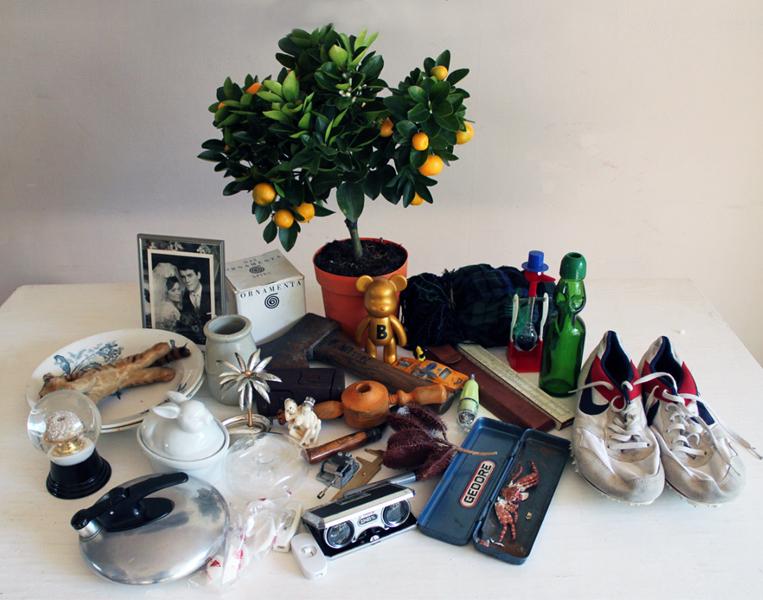
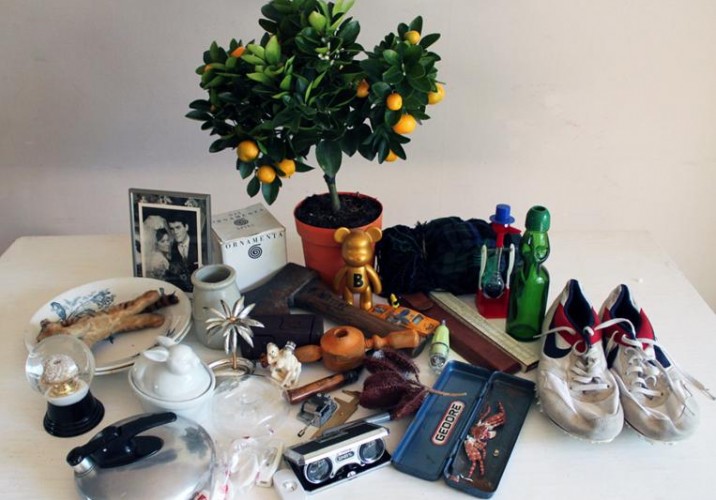
There were thousands of exhibitions going on in Milan two weeks ago, when the annual furniture fair took over the city, stuffing its subway cars and panini shops full of hungover design tourists. But in terms of sheer number of designers represented per square foot, one emerged a clear winner: “Achille is Watching Us,” for which the young Maastricht-based designer and journalist Matylda Krzykowski and architect Marco Gabriele Lorusso managed to corral no less than 32 marquis names — Nacho Carbonell, Peter Marigold, and Bless among them — into an empty shopfront no larger than the average New Yorker’s bedroom. That’s because the pair, after being offered the space for free by the building’s wealthy and culturally savvy owner, decided not to show any design inside it all. Instead, they asked the talents Krzykowski had befriended through her blog, Mat&Me, to each contribute one small personal belonging and tell the story behind it. “Milan is so commercial — it’s about retailing and selling,” Krzykowski explains. “You get so caught up in looking at what’s new that you get lost in it. This year we decided to turn it around, to look at the things that are really important.”
It was Krzykowski’s experience visiting designers’ studios for Mat&Me that gave her insight into just how important everyday objects can be to designers, who not only cherish them and look to them for inspiration, but tend to jump at the chance to wax poetic about them. “Whenever I see one of these meaningful items in a designer’s studio and ask about it, they always tell me a nice precious story about why they got it, why they kept it, and why they have it on display.” When she and Lorusso realized that everyday objects were just as pivotal to the practice of legendary Milan-based designer Achille Castiglione, whose collection-filled studio is now a museum not far from the space they were invited to show in, the curators contacted Castiglione’s daughter Giovanna for permission to name their project in his honor.
That turned out to be the easy part; she said yes almost immediately. Much harder was getting the designers involved to actually pony up an object for the show. Though they were surrounded by personal possessions in their homes and studios, some of them felt they had begun to take them for granted and couldn’t quite see them clearly anymore, and others were simply overwhelmed by the prospect of choosing just one personal story to tell. “I visited Chris Kabel in his studio, and even though he knew I was coming two days before, he still said he didn’t have anything yet because he had to think about it so hard,” Krzykowski recalls. “The two girls from Bless said they’re not really attached to objects, even if they design shitloads of them” — and yet their selections, posted at right along with 13 others from the exhibition, were among the most intriguing of the bunch.
Then there was the collective nervousness everyone involved felt about the vulnerability of the items on display, which were tied down with fishing wire over the course of the show. Some of the designers called Krzykowski wondering if they would ever get their treasured possessions back. “I was so worried in the beginning that I told Marco I wanted to sleep in the exhibition,” she says, though luckily, her worries ultimately proved unfounded. “You can’t replace these things with money. It’s memories.”
For “Achille is Watching Us,” Krzykowski and Lorusso collected personal objects from 32 different European and American designers, displaying them in the ground-floor storefront of a small historical building in Milan where the marble used to make the Duomo was once polished. Each item was accompanied by a story written by the designer about how they had acquired it and why they had hung onto it. Fifteen of those stories are posted in the following slides.
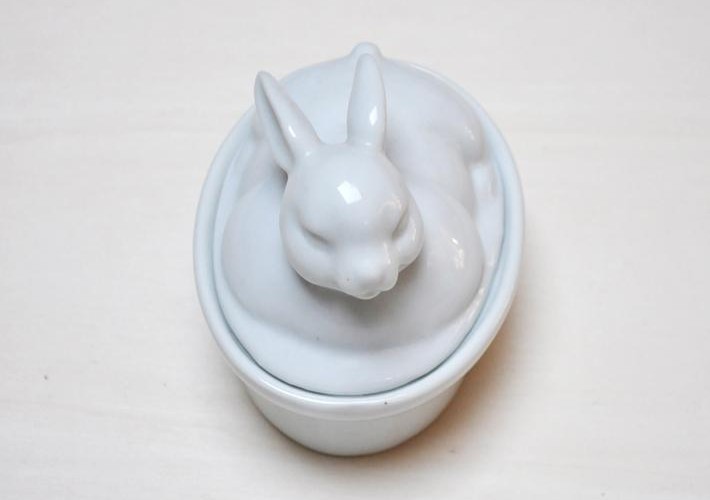
Bcxsy: “We bought this rabbit butter box at one of our favorite secondhand shops. Being totally white is quite a nice balance to the ‘kitschy’ appearance, so we were happy to have it join our (mostly secondhand) tableware collection. Since it doesn’t have any stamp, we do not know where it comes from. It’s anonymous and imperfect because the rabbit-lid doesn’t really fit on top of the container, which is exactly the reason why we like it. Furthermore, we like the idea of having Q, our pet rabbit, under the table and another rabbit on the table.”
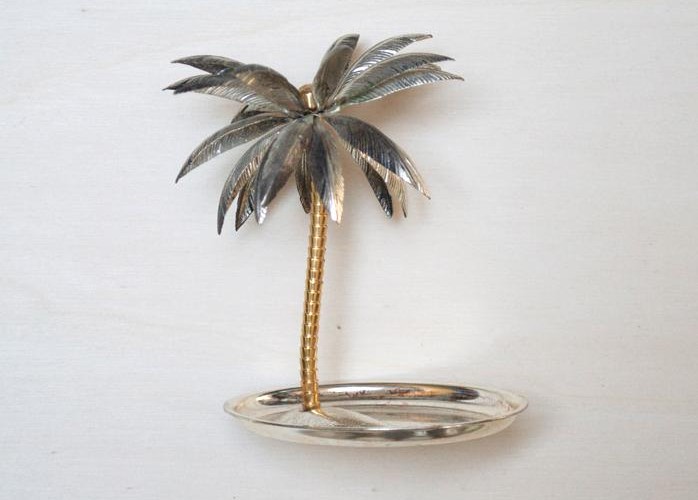
Desiree Heiss, Bless: “I found this item at a very bad flea market in Castellammare di Stabia, a city close to Naples. Everything there was so cheap and disgusting, but this item was an exception. When I saw it, I instantly had an association with the book title The Possibility of an Island. It was indeed my island on that depressing day (the book is not very positive, but the title is).”
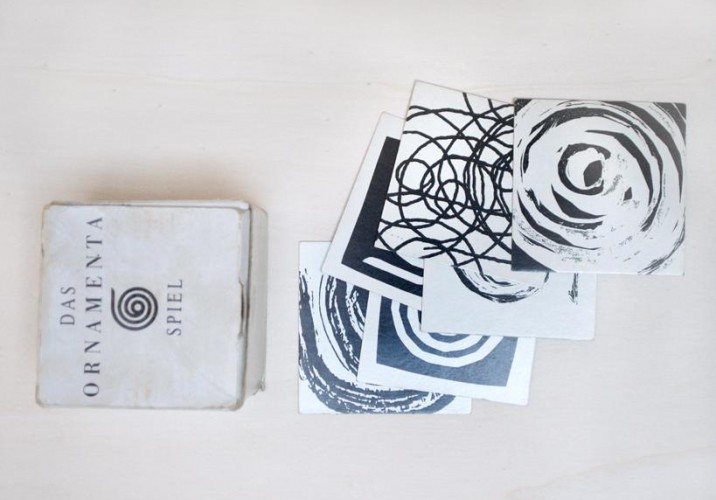
Ines Kaag, Bless: “I got this game as a present from a very good friend long time ago. She brought it from a jewelry fair. Some of the card pairs look quite similar to other pairs. This makes it the most difficult memory game I have ever played. When I met Desiree, we found out that we share a passion for memory games. We used to play this a lot to relax from our business we had just started. At that time we learned about the importance of balancing hard work and leisure time, and how to relax through ultimate concentration.”
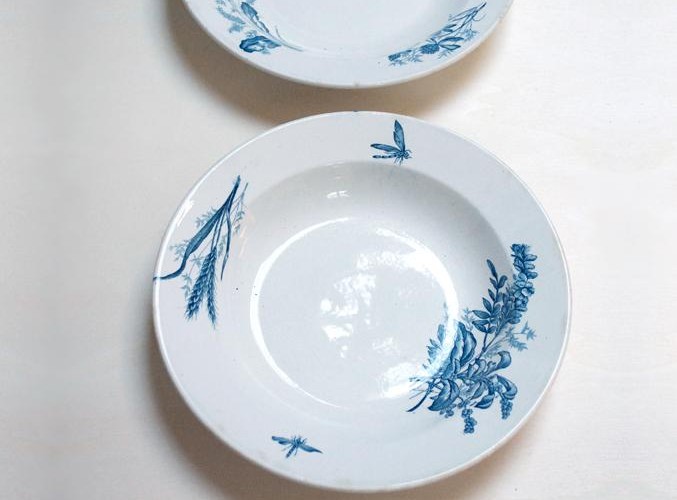
Formafantasma: “These are the two plates we use every day. We like them because they are similar but not equal, the surface is glossy but a bit stained, and the white of the glazing is not too bright. More than designed, they look as shaped by time. We have been using these two beautifully imperfect plates daily for four years during our dinners.”
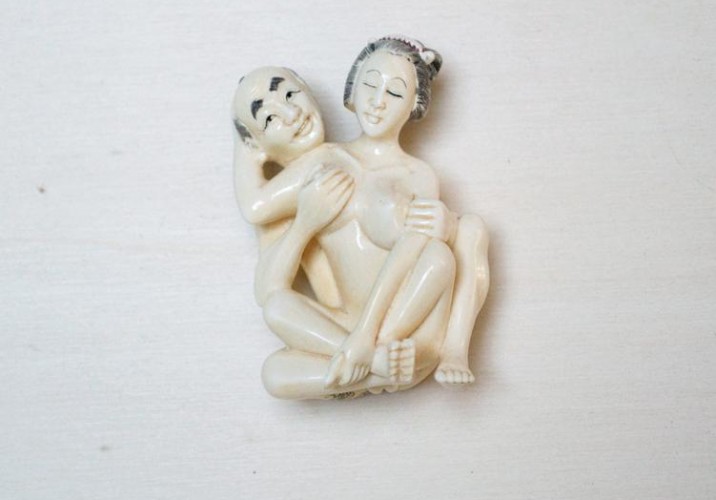
Jens Praet: “‘Euhm,’ you’d probably say! My mother gave me this wonderful Shunga Netsuke carved from Mammoth Ivory as a gift a couple of years ago. It has been around in my studio ever since. To me, this object has the strong dualistic power to transform an initial rather shocking feeling of embarrassment into admiration – the subtle attention to its miniscule details and craft are truly a joy for the eye.”
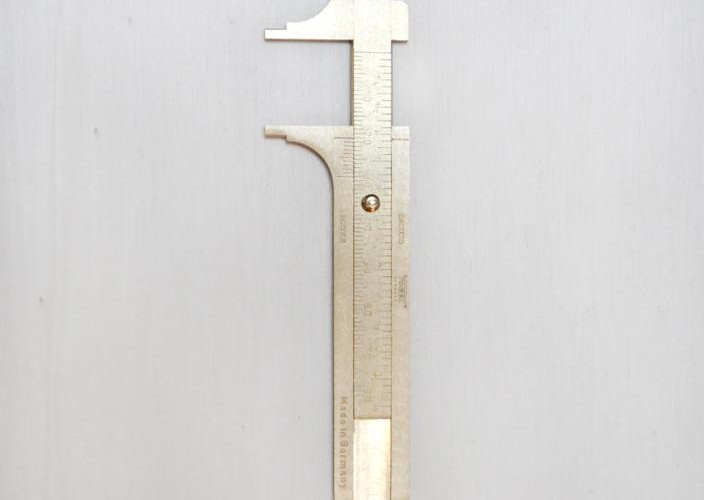
Jo Meesters: “Since I was a teenager, I have always had a thing for measuring instruments. When I saw this little caliper I just fell in love with it. Its size, use of material, and usefulness makes it an object that I always carry with me. Measuring is knowing.”
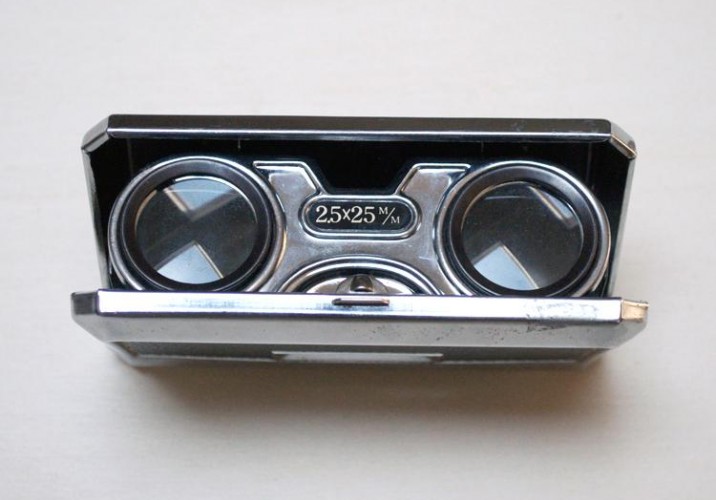
Lee Broom: “These Binoculars hold a fond memory for me. It was my 14th birthday and my father took me to the Cotswolds out in the country for the day. My parents were separated and this was a birthday day out. When we passed this antique store, I saw these in the window and just fell in love with their elegance and also their clever functionality. My father bought them for me for my birthday gift. It was a very untypical gift for a boy of 14, for which my father never batted an eyelid. The binoculars sit on a shelf next to my desk in my studio, and as well as feeling like my father is looking over me, they very much signify his acceptance of who I was and who I am now.”
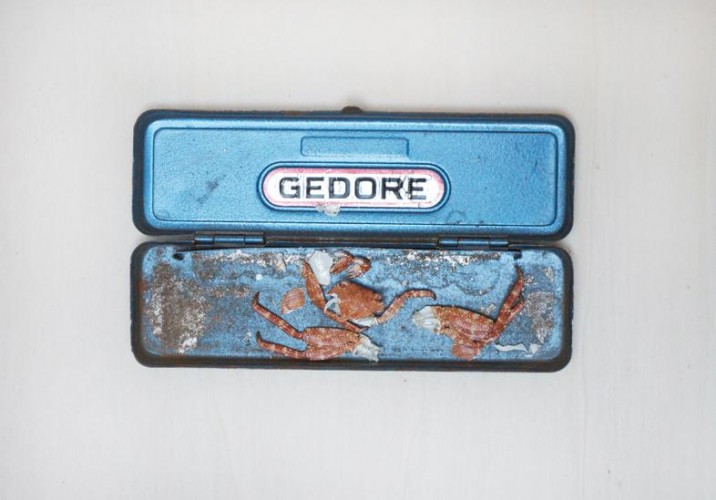
Nacho Carbonell: “The crab and box belong together. I found the crab in the sea on top of a rock in Tenerife. It looked so real and full of life, I thought when I approached it, that it could run away. Then I realized it was dead and empty inside. I took it with me and protected this delicate empty shell in the box where I usually have my pens. I kept it safe during my entire journey until I showed it in an exhibition and someone touched it and broke it.”
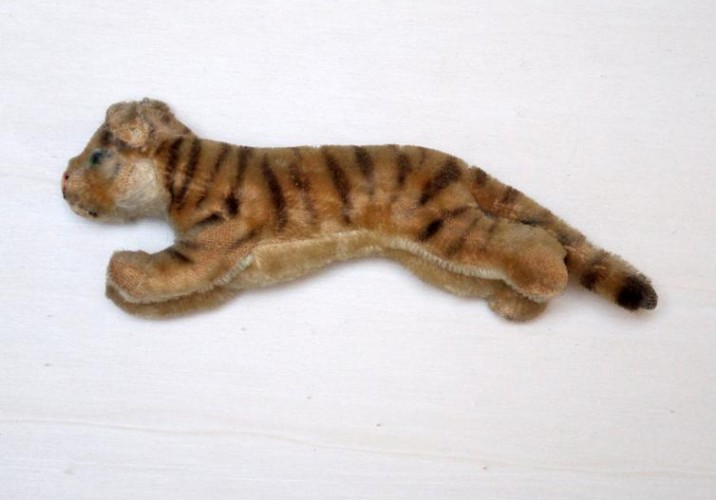
Paul Loebach: “Given to me by a very special friend, Hans is a Steiff Tiger made in Germany between 1965-67. I like collecting German objects – I think they remind me that as an American I have no authentic cultural history, which must be very liberating. Another friend once described Hans as ‘in the Tiger Balm pose!’”
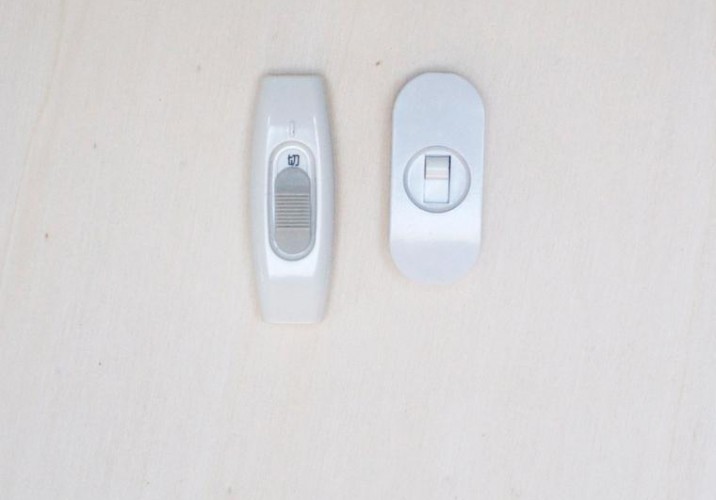
Peter Marigold: “Since I was a boy I have always collected things, especially switches and buttons. So when I visited Castiligoni’s studio I was very happy to hear Daniella Gobberti say that one of his favorite objects he designed was a light switch! (Very kindly, she gave me this one.) This is one of my favorite switches in my collection. As well as being beautiful and having a perfect action, I think it reflects the notion that things in Japan are ‘the same but different.’ It’s familiar, but strange. A curiosity.”
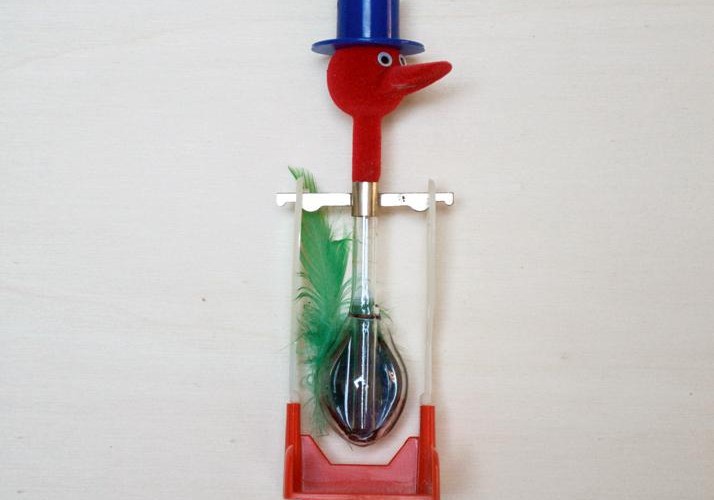
Philippe Malouin: “The bird was given to me by my partner Alex. I once mentioned that I was obsessed with this object when I was a kid, and I received in on Christmas morning. At 28 years old, I still find the object as fascinating as before. Even though it’s ridiculously kitsch, it’s a pure exercise in balance and science. Its mechanism is deceitfully simple. Just like clockwork, a movement is created by dipping the beak of the bird into a glass of water. Afterwards, the water glass will fuel the bird to balance back and forth until the water runs out. It’s a great, simple, funny, and ugly object.”
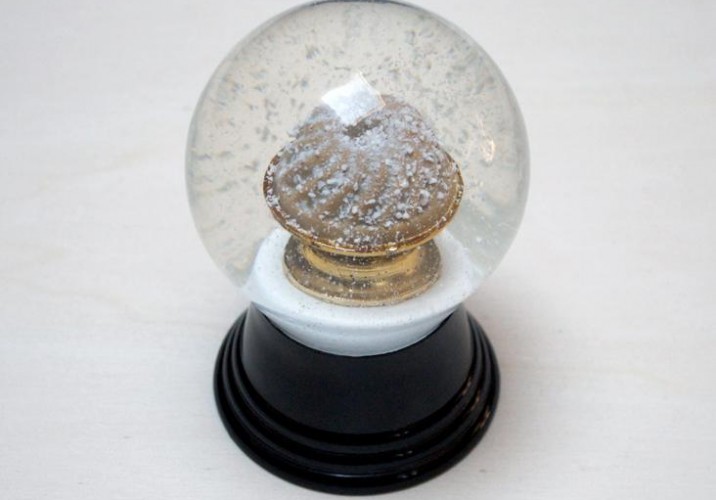
Marie Rahm, Polka: “The Snow Ball was invented in Vienna. You can buy this special snow globe with a ‘Gugelhupf’ ring at Cafe Sperl, at an old Viennese coffeehouse around the corner from our office. We go there often together in order to work, drink coffee, think, devise, discuss, outline, and watch the world.”
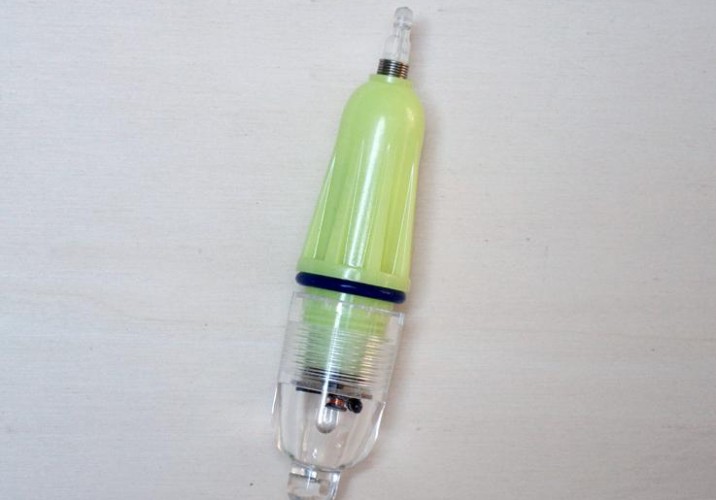
Simon Heijdens: “This is a fish float which has been lying on my desk for a long time. I found it in a fisherman’s store on an island between Japan and Korea and took it back for my modest collection. I love the fact that with a life destined for dark oceans, meant to be seen by no one but an unfortunate octopus’s final gaze, not a single decision in its conception was made to regard aesthetics — yet it’s the most beautiful object. While it lies on my desk, it tempts me nearly every day to go fishing. Not that I’m a fisherman.”
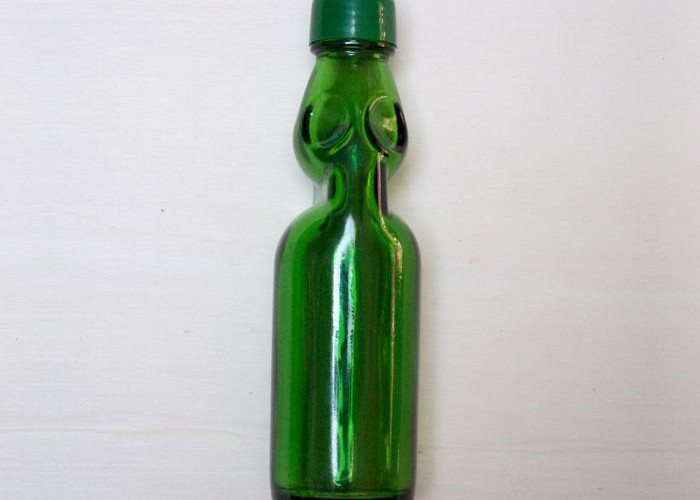
Sylvain Willenz: “This Japanese soda bottle is part of my small collection of glass objects. While visiting a temple in Japan, I bought a drink at a stall and was amazed by the bottle. Although usually consigned, the stall owner gave it to me. It is surprising because the bottle is sealed by a glass bead, which one manually forces inwards to open it. One should drink holding the bottle with the two dips pointing towards him/her; this will prevent the bead from rolling back and closing it as you drink. The bottle is used again and the bead also seals it over and over.”
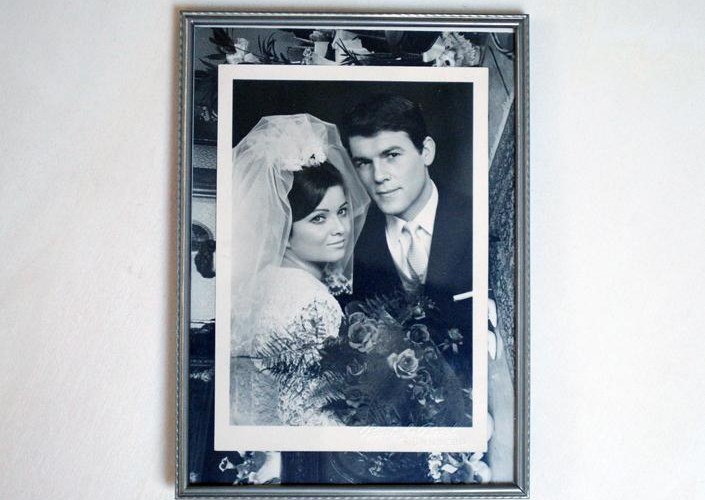
Tina Roeder: “On a stroll through a flea market in Antwerp I came across this old picture frame with an original black-and-white photograph of an anonymous bridal couple. Back home, I overlaid the horizontal photo of this anonymous bridal couple with the slightly smaller, vertical wedding photo of my parents – a couple I’m familiar with. Every time I look at the picture now it makes me smile, since — if you take a closer look at the border — you can still recognize the unknown groom’s hairdo and the bride’s high heels.”
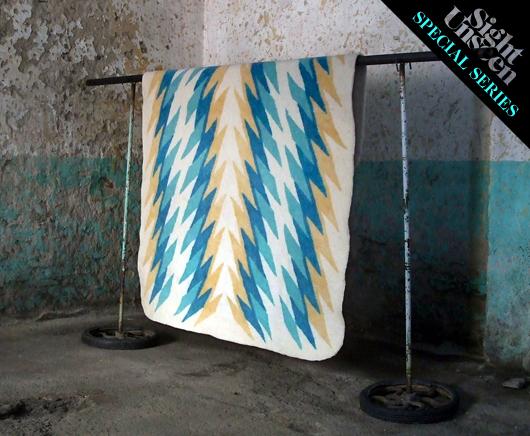
Through today, Sight Unseen is showcasing the work of half a dozen designers and design firms exhibiting together at the Milan Furniture Fair under the umbrella of the soon-to-launch Carwan Gallery in Beirut. Here, Nicolas Bellevance-Lecompte, one quarter of the Montreal and Milan–based design studio Samare and the co-founder of the Carwan gallery itself, tells us about the group's new and strikingly geometric felted-wool rugs, made in collaboration with the Belgian textile designers Antonin Bachet and Linda Topic. The project is the latest addition to Samare's ongoing Pays d’en Haut Legacy series, which investigates and then reinterprets the vernacular forms and decorative motifs of Canada's upper country, home to its logging and fur trades. Since their studio launch in 2008, they've worked with local snowshoe craftsman, weavers, and furriers in an attempt to show the world — and their fellow Canadians — how these longtime traditions and crafts can still prove relevant to contemporary culture. After the Milan fair, the rugs will travel to New York, where they'll be presented by the design store Matter during ICFF.
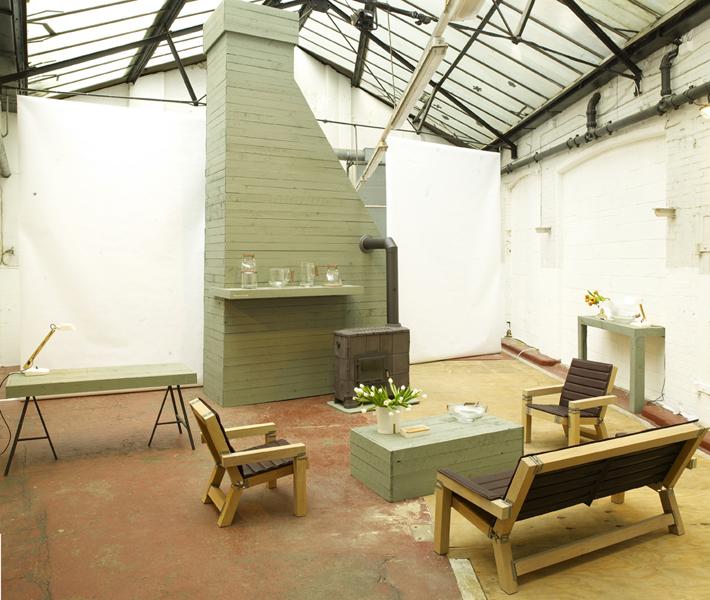
Had you peeked into London gallerist Libby Sellers's diary for the week of the Milan Furniture Fair earlier this month, you would have seen all the requisite stops on the circuit: Rossana Orlandi one afternoon, Lambrate and Tortona the next, plus a stop at Satellite and a time out for breakfast at the Four Seasons with Alice Rawsthorn, her former boss. There was time made for shopping — Sellers is a self-admitted clothes horse, having transformed most of her London apartment into a walk-in closet — and for a visit to the 10 Corso Como gallery and bookstore. But despite what you'd expect from one of the world's most respected supporters of emerging design, who for the past two years has commissioned work from and produced pop-up exhibitions with talents like Max Lamb and Julia Lohmann, Sellers did not walk away from the fair with an arsenal of new relationships to pursue. Her scouting is done before she even gets there, in graduate degree shows and over the internet, so that in Milan — unlike the rest of us — she gets to relax and enjoy the show.
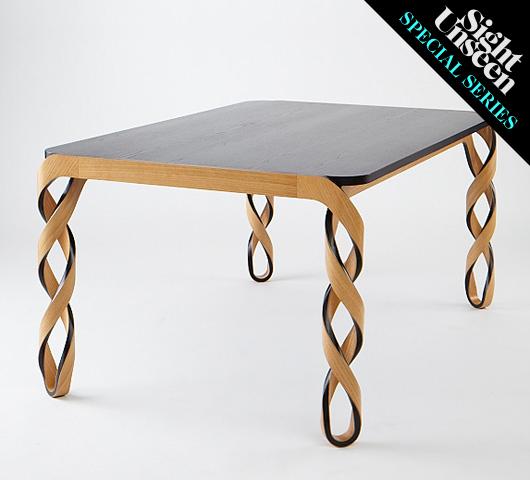
Through April 15, Sight Unseen will be showcasing the work of half a dozen designers and design firms exhibiting together at the Milan Furniture Fair under the umbrella of the soon-to-launch Carwan Gallery in Beirut. When we asked Brooklynite Paul Loebach which of the four products he'll bring to the show had the most intriguing backstory, he immediately nominated his Watson table, a sandwich of carbon fiber and wood with double-helix legs that took him two and a half years to develop. Like the rest of Loebach's oeuvre, the table reinterprets historical craftsmanship techniques using cutting-edge technologies, evoking yet another novel property from a material as old and as simple as wood. "I named the table after the guy who discovered DNA," Loebach says. "I felt like a scientist doing this project, so I named it after one."