02.04.26
American Design Hot List
Announcing the 2025 American Design Hot List
Welcome to the 13th annual American Design Hot List, Sight Unseen’s unapologetically subjective award for the names to know now in American design. Founded in 2013, the ADHL serves as a guide to the US (born or based) talents influencing the design landscape in any given year, whether through standout launches, must-see exhibitions, or just our innate sense that they’re ones to watch.
Considering we’ve recently changed almost everything else about the way we present Sight Unseen to the world, we decided to do things a little differently this year. We’ve whittled our list down to 12 of-the-moment designers, who we’ll be covering both here and on Instagram over the next few days. And we’ve retired the interview portion of the Hot List, in favor of a more straightforward approach. The list also changes organically every year as trends wax and wane; we’ve seen handicraft go in and out of fashion (you could call this the YEAR of craft with how foregrounded it is now), and we’ve seen aesthetics shift from colorful geometry to experiments in untraditional materials to, now, something a little more classic.
To chart these trends for yourself, you can view all of our past winners on our American Design Hot List page, which also serves as an ongoing resource for those who want to learn more about the American design scene and who its key players have been over the years. But first, without further ado, meet our 2025 honorees!
DEVIN WILDE
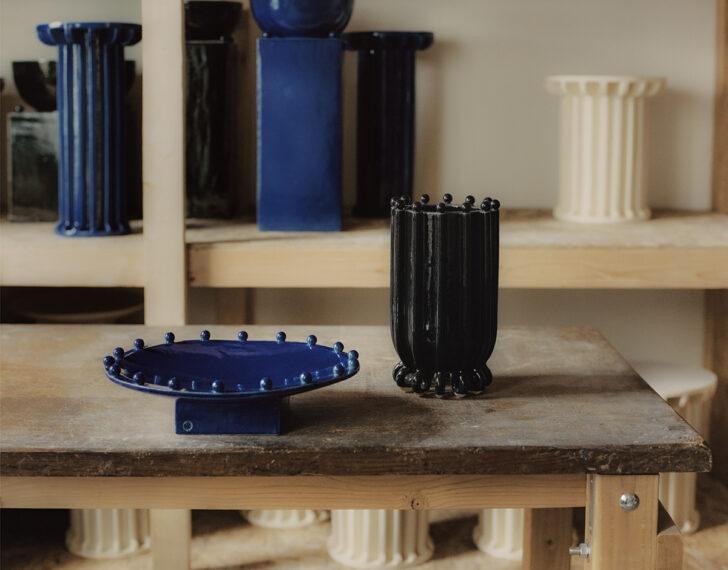
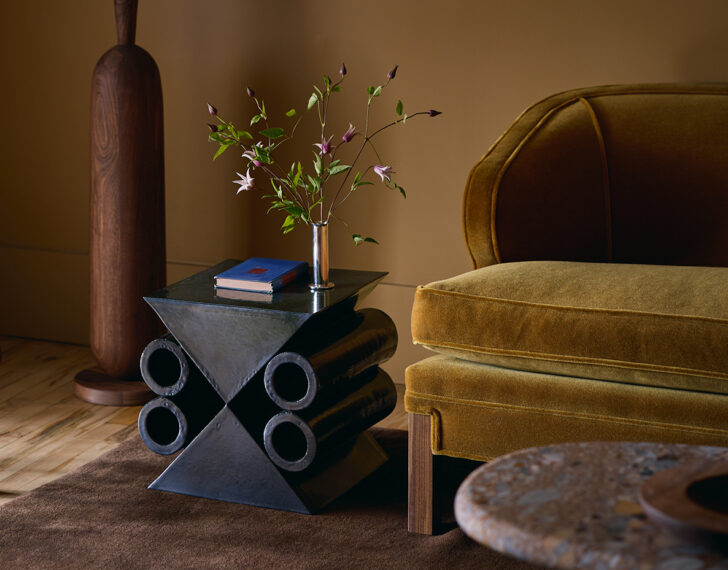
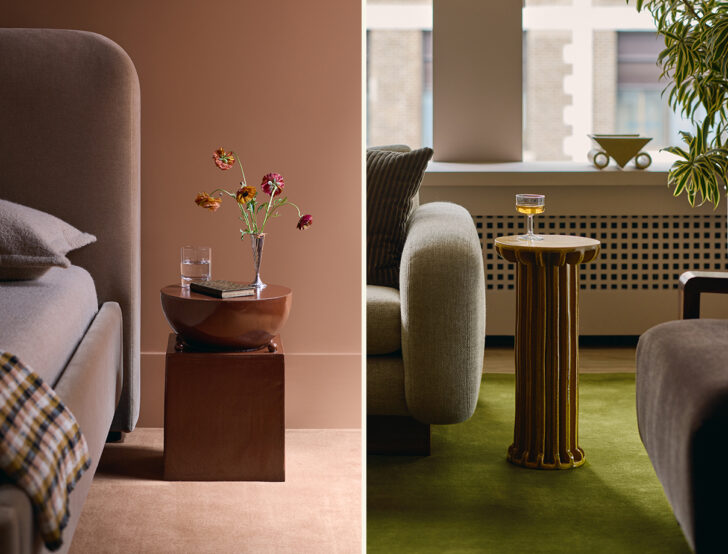
Devin Wilde studied architecture at Stanford before founding his Red Hook ceramics studio in 2023. And while the architectural eras that get referenced most often when talking about his wildly popular work include classical (columnar forms, tables that look like vessels for ritual washing) and Art Deco (repetitive geometries), we see a subtle nod to Modernism in his pieces’ delicate visible ribs, X-frames, and structure–turned–ornamentation. In his most recent launch, an 11-piece collection for Design Within Reach, Wilde had occasion to draw upon that era once again, with deeply saturated, high-gloss garnet and cobalt glazes inspired by the palette of the Eameses and Alexander Girard. But part of the appeal of his work, which we’ll see this spring when he collaborates with another former ADHL honoree on a collection of lighting, is that you never know from where his next inspiration will strike.
EMILY THURMAN
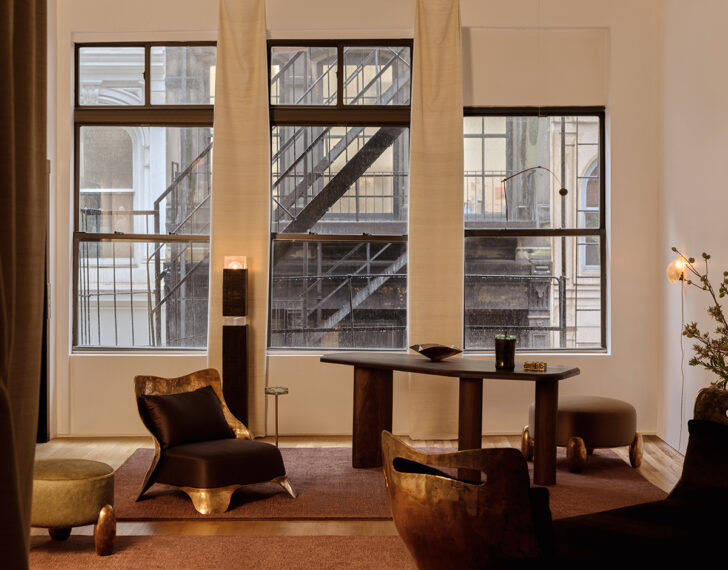
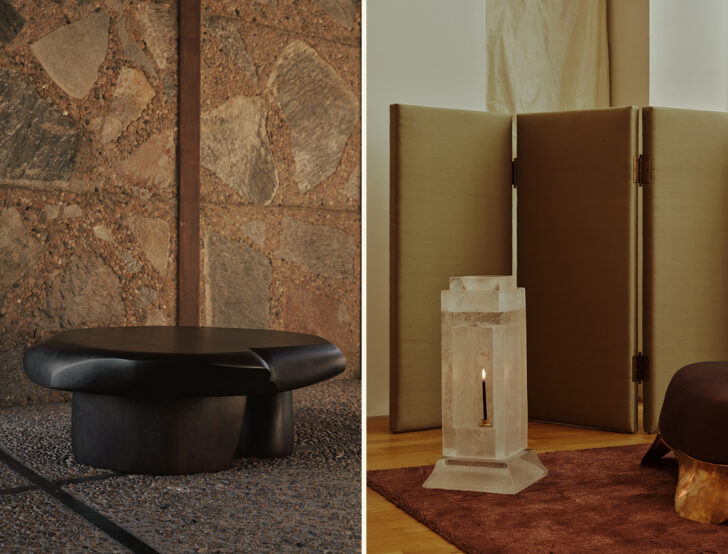
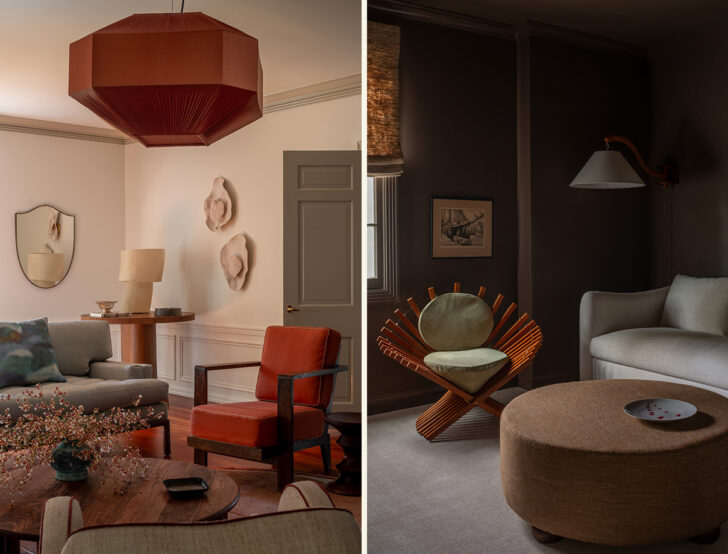
Emily Thurman seemed to appear on the scene last spring from out of nowhere. One minute, she was quietly building a successful interiors practice from her home base in Salt Lake City, and the next she was in New York launching Hundō, a spectacularly assured debut furniture collection, realized in collaboration with a handful of friends and international fabricators in rich materials like bronze, onyx, ebonized cherry, and cast glass. Thurman’s work is often personal; for her debut collection, she reworked a daybed that once belonged to her grandmother in horsehair and bronze. But she’s primarily interested in how objects exert their influence upon us — how they affect daily ritual, imprint upon memory, and invite spontaneous interaction. This year will see Thurman debut larger experiments in cast glass, as well as a hardware collection with Petra and her first collection of jewelry, a natural extension of her deeply sculptural practice.
JAMES CHERRY
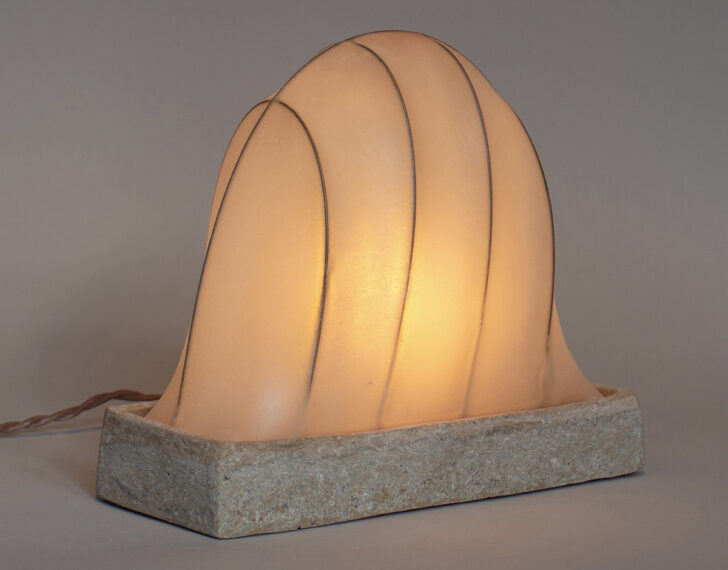
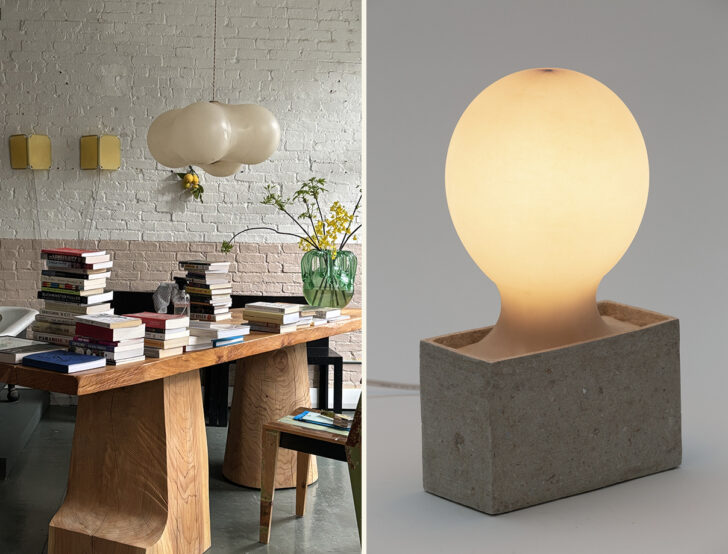
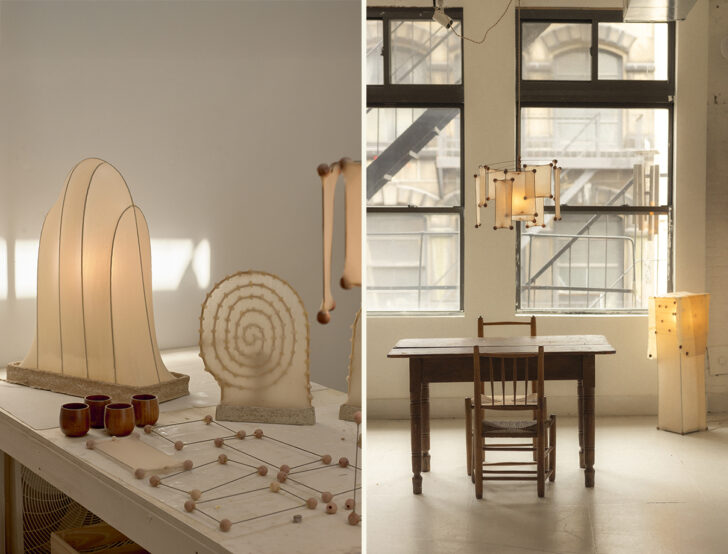
If you went anywhere that was generally considered cool this year, you probably bathed in the soft glow of one of James Cherry’s lights. The LA- and New York–based maker kicked off the year with a solo exhibition at Tiwa Gallery in New York and didn’t let up from there. Those were Cherry’s delicately-sheathed grids dangling above the schoolhouse chairs at downtown darling Ha’s Snack Bar; his spindly, spider-like floor lamp illuminating a corner of Cabana’s presentation in Milan; and his snail-like spirals complementing paintings by Daniel Evan Long at Duet, a new art fair in NYC last fall. No wonder his lights — which typically pair a conspicuous internal structure with resin-coated fabric and tiny cedar accents — have been commissioned by interior designers from Jamie Bush to Studio Shamshiri. A new collection with Lawson-Fenning is forthcoming this spring.
KIKI GOTI
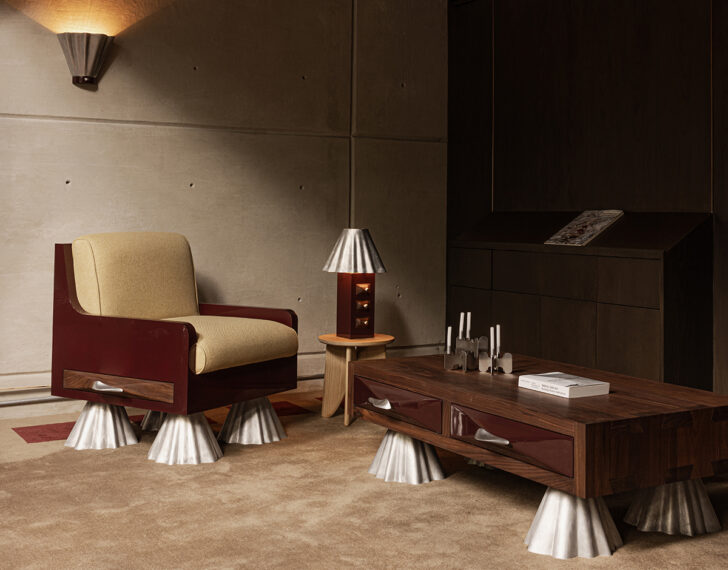
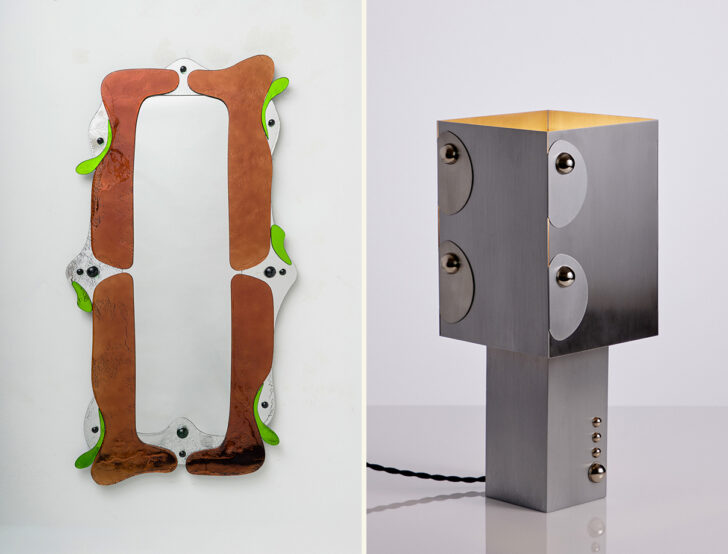
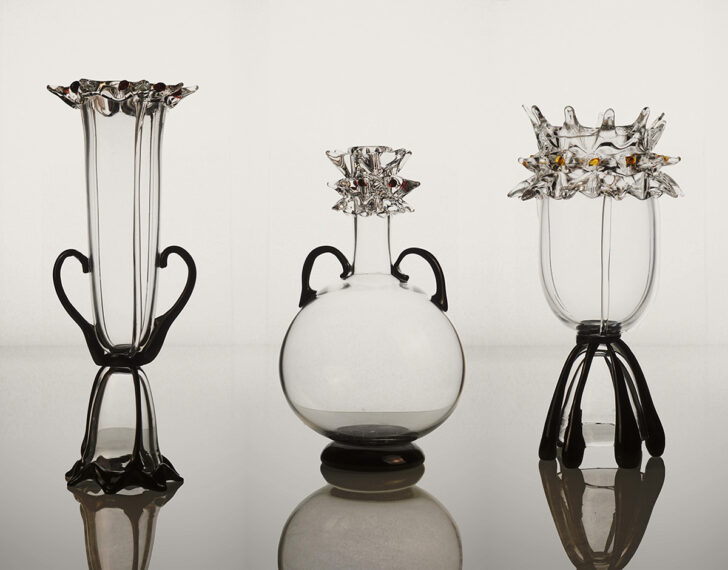
Kiki Goti was born in Thessaloniki, Greece — a culture where, she says, matriarchs rule the roost — so perhaps it’s unsurprising that much of her work can be seen through the lens of femininity. In one of her first collections, called Buttoned Up, Goti made futuristic aluminum lights fastened with spherical bolts, inspired by women’s accessories from the Victorian era; in another, made from Murano glass, she took inspiration from the Graces, Greek goddesses of beauty and creativity. Her Bells & Whistles collection of furniture and lights, which debuted at Collectible in lacquered walnut and cast aluminum, recalled pleated skirts as much as they did bell founding. And her most recent series of mirrors and lights, launching with Todd Merrill at Bergdorf Goodman, is inspired by a Botticelli painting celebrating seasonal cycles and femininity. This year will see Goti dedicating her practice to the further exploration of natural materials by reimagining traditional techniques with a contemporary, and decidedly womanly, twist.
LLEWELLYN CHUPIN
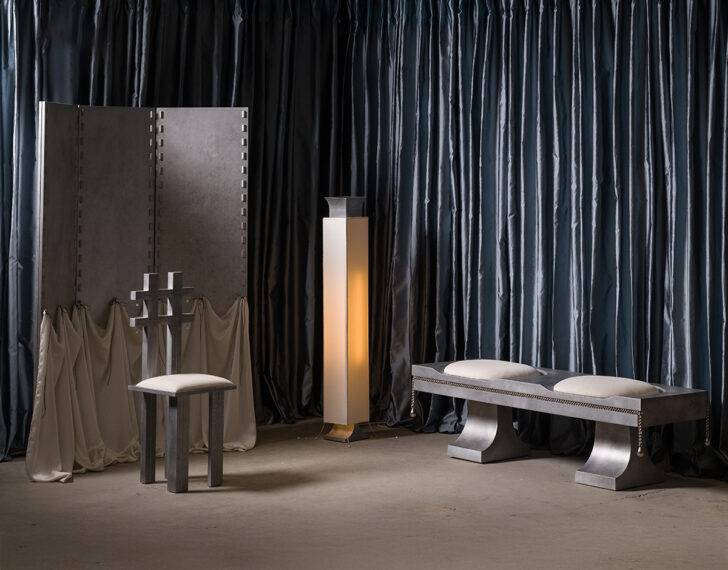
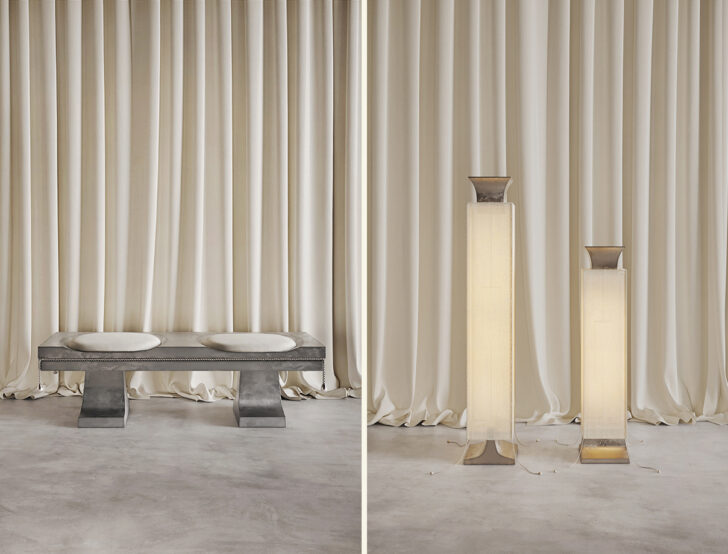
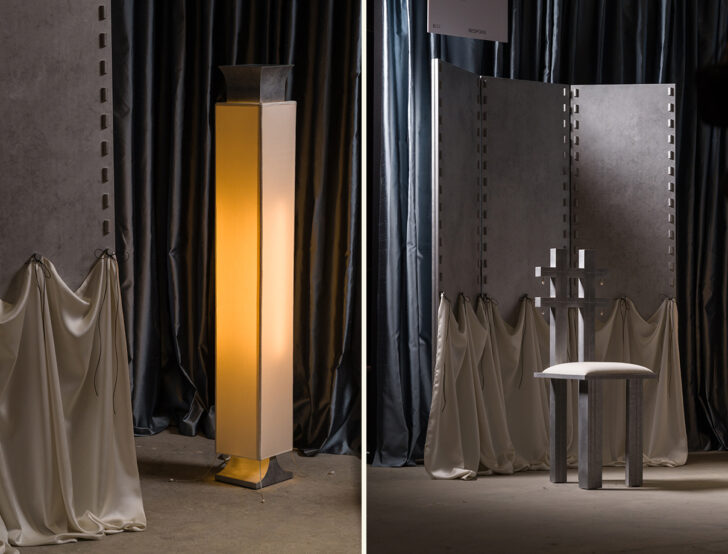
There’s been a flattening between the worlds of jewelry design and furniture in recent years, and nowhere is that more apparent than in the work of Llewellyn Chupin, who has studios and homes in both New York and Paris. Her Rituals of Adornment collection, which debuted at Collectible last fall, features five pieces made from patinated aluminum and silk, embellished with little flights of folly like a silk skirt covering the bottom half of a three-panel room divider, or silver chains hung with pearls running down the corner seams of two floor lamps. (The effect being very Haim sisters in Louis Vuitton at the Grammys, IYKYK.) This year, Chupin will continue to explore the material and formal language she established with that collection, but at the moment, she says, “I’m diving deeply into the symbolism of votive offerings and how they might be translated into contemporary objects. Sacred places and ritual gestures are recurring points of reference in my work, and this research is currently taking shape through experiments with embedded silver, cast glass, and silk, alongside what has become an abundance of sconce prototypes (but can we ever really have too many sconces?).” Small decorative objects, as well as a residential interiors project in New York, are also in the pipeline.
MADELINE COVEN
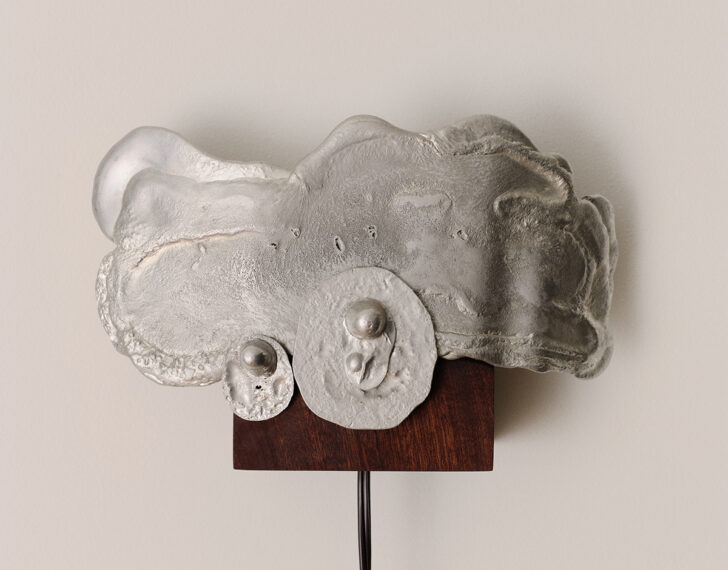
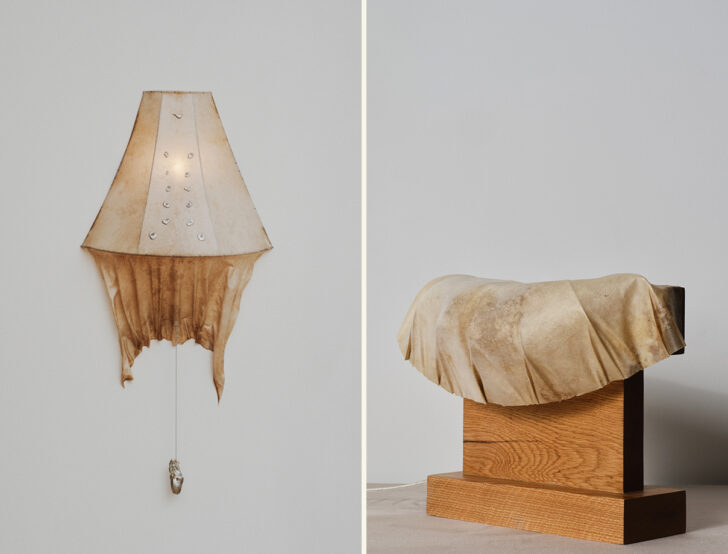
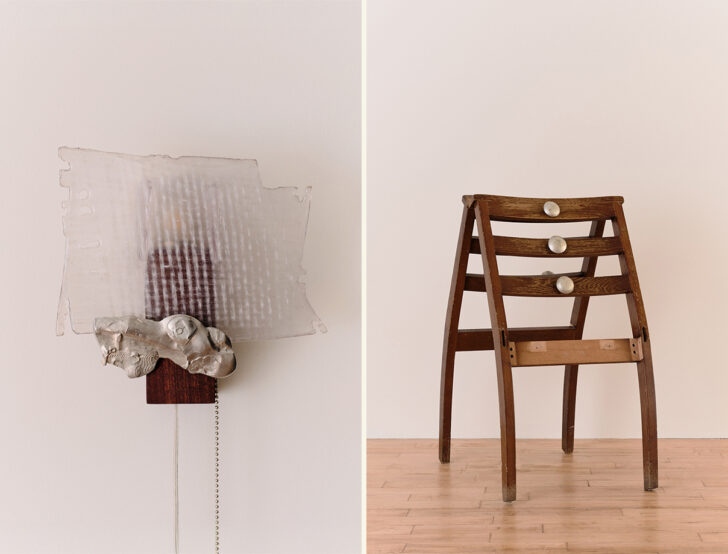 Madeline Coven might have the youngest practice on our list — she only recently started working on her own full-time after apprenticing in the studio of Minjae Kim — but her growing collection of pewter sconces and rawhide leather lamps have the sophistication of a designer with twice her experience. Coven grew up in Albuquerque, New Mexico, a place in clear dialogue with the landscape around it, and it imprinted a sort of otherworldly aesthetic on her while teaching her the importance of viewing her work as an ever-changing ecosystem. “I see materials as in flux and part of a broader cycle that relies on all of its parts,” Coven told gallerist Jacqueline Sullivan last year in an interview on the occasion of her Library exhibition. “I aim to have a similar sensibility in my work, not to impose form upon objects and material, but to observe and collaborate with its natural behavior.” Coven sees her work as a kind of alchemy, so it makes sense that pewter — which is able to be manipulated and re-formed on a whim, and has the appearance of a lunar surface — is one of her preferred materials.
22RE
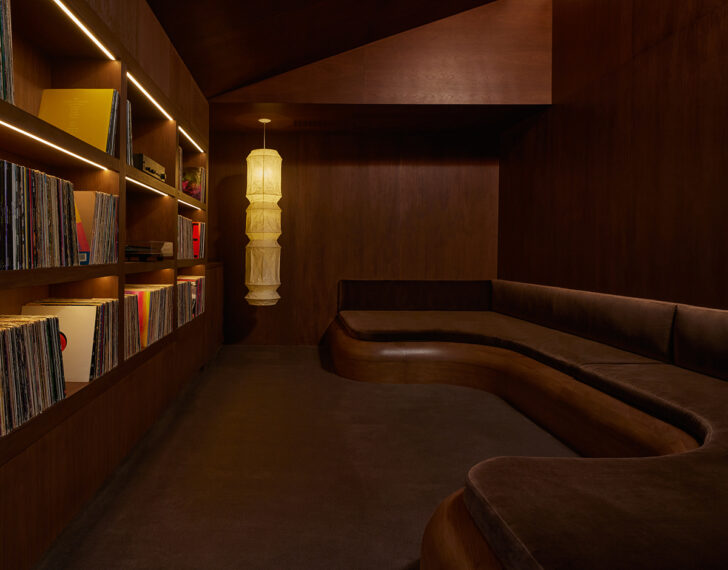
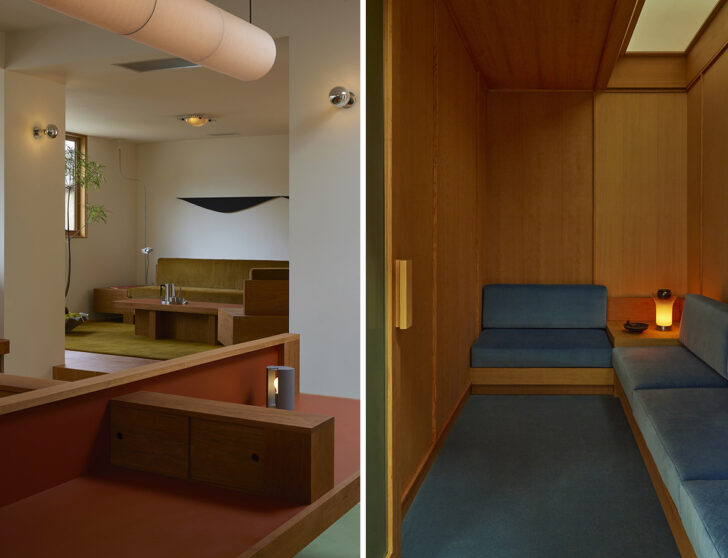
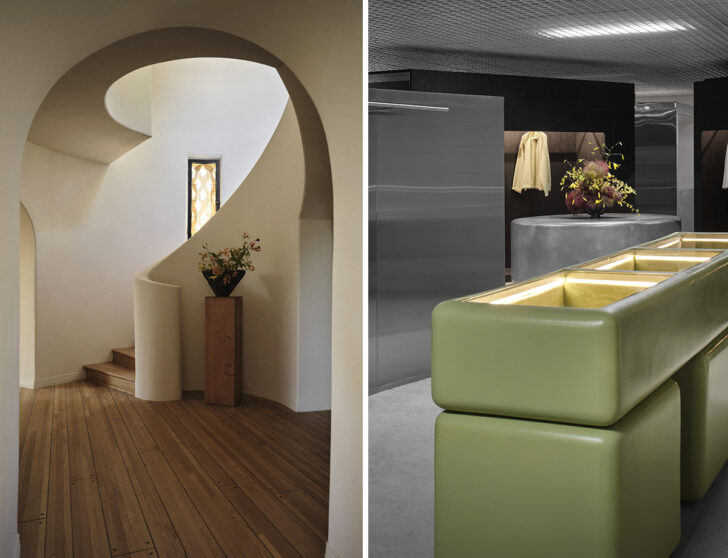 The first time we featured the Los Angeles architecture and design studio 22RE, founded by Dean Levin in 2021, we marveled over how unexpected it was that they’d somehow made us fall in love with the interior of a golf store (Malbon, in Miami). But it quickly became clear that it doesn’t matter whether the client is a sporting-goods giant, a creative agency, a menswear shop, or a private homeowner. Levin’s vision is so strong, and so precise, that he can bring his elevated taste, and his finely choreographed sense of visual harmony, to pretty much any context. His firm’s projects are marked by a balance between strong lines and soft curves, a contrast between industrial materials and natural ones, and a liberal use of color blocking. This year, they’ll bring those vibes to a brand new category — hospitality, designing their first restaurant and bar — while doing a little hosting of their own at their new studio in LA, where they’ll offer their street-facing window vitrines to a rotating cast of artists and makers.
OFFICE OF BC
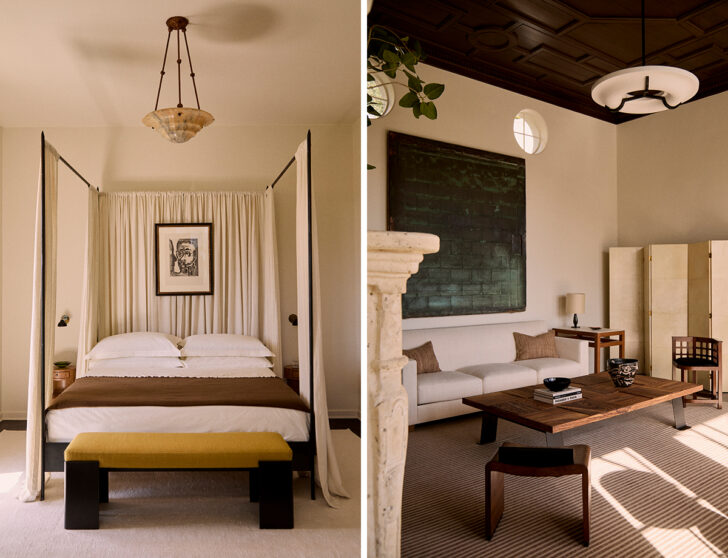
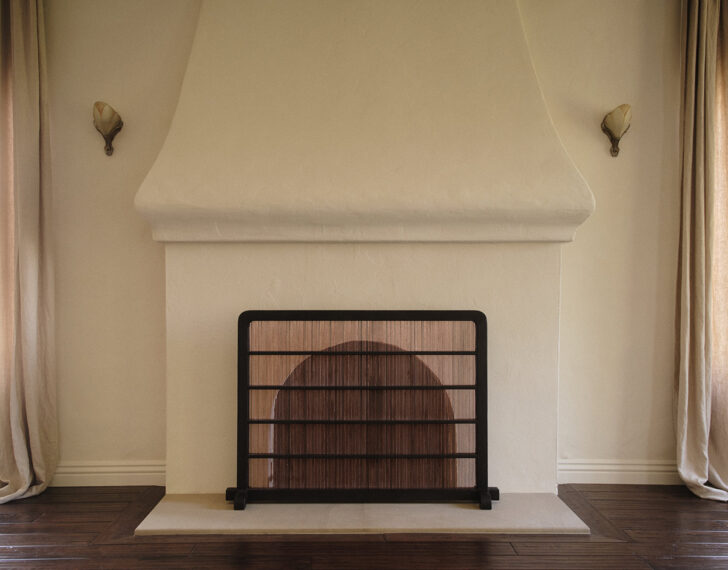
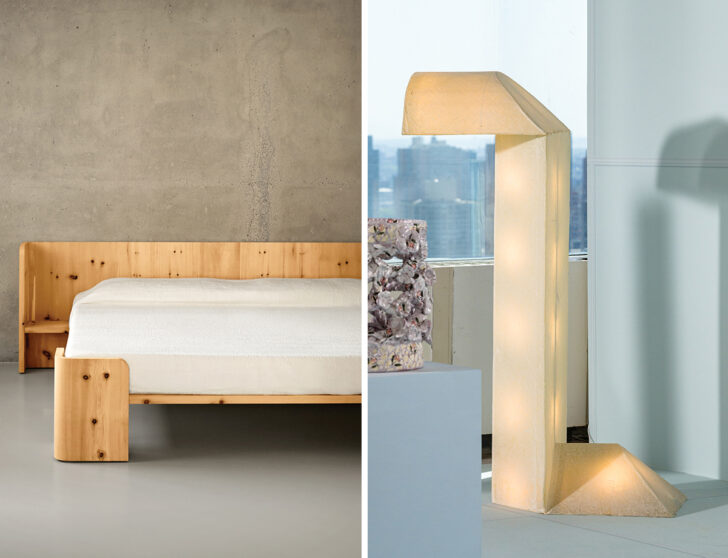
In the sense that our favorite design practices have always been the ones that span multiple disciplines — the theory being that the most creative people can’t help themselves from having their hands in too many pots — we were pretty much fated to love Office of BC. The studio was established six years ago in Los Angeles when Lindsey Chan, an interior and furniture designer who’s worked for Anna Karlin and Willo Perron, teamed up with Jerome Byron, an architect and furniture designer who’s exhibited with Carpenter’s Workshop, to focus on joint interiors projects like the LA bar Stir Crazy, the art gallery Francis Gallery, and several private homes. Both have kept their individual practices, though; Byron’s now centered in Berlin and Chan’s still in LA. Byron recently showed a fiberglass and washi paper lamp in Hannah Martin’s Curated section for Collectible NYC this past fall, while Chan made a fire screen for a recent project and consults for fashion brands on the side. Somehow they still have energy left to devote to everything on BC’s docket for 2026: a Neutra house in LA, a Brutalist apartment in NYC, a beach house in the Hamptons, and several hospitality projects. Sleep when you’re dead, they say.
MAMBO JAMBO
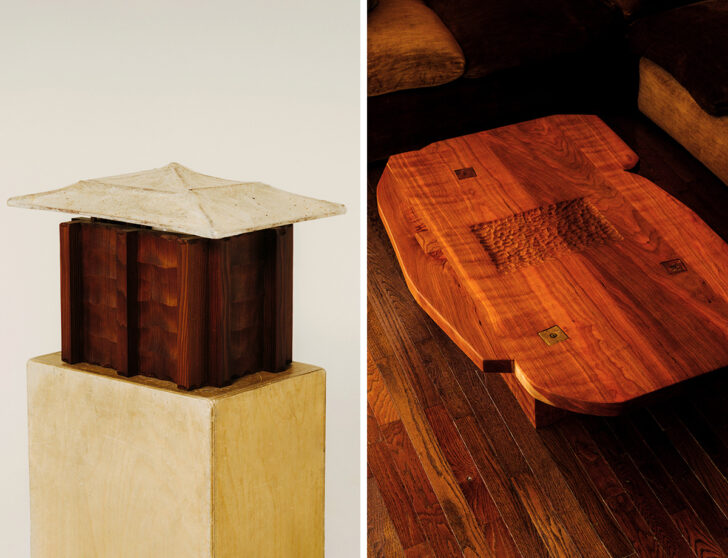
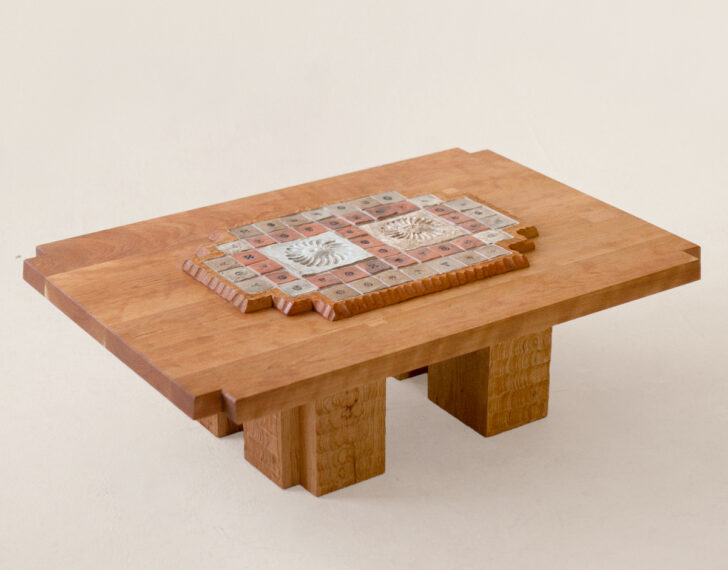
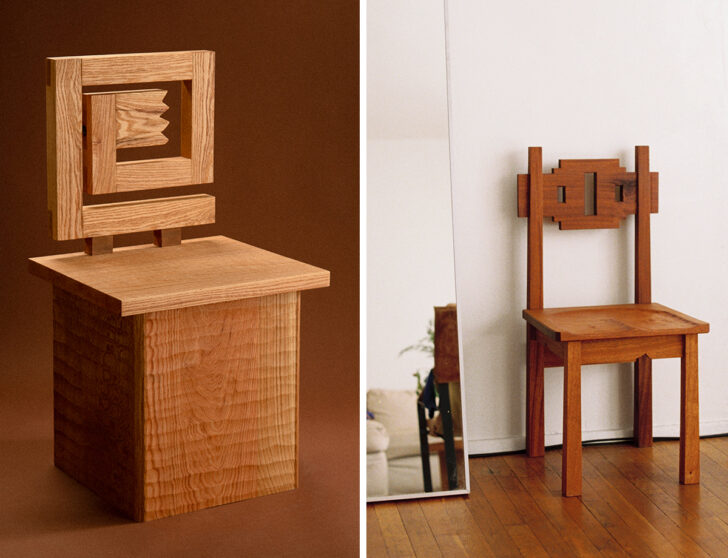
Mambo Jambo, the furniture and lighting practice of LA craftsman Kelby Lee Singhaus, is still relatively under the radar; we discovered Singhaus’s pieces kicking around on Instagram, and though he hasn’t hit the exhibitions circuit quite yet, we had no hesitation turning the spotlight on his work. Woodworkers crafting furniture that shows the hand of the maker is a long and well-trod tradition (even in this Hot List alone!) but when someone does it well, you just know. Singhaus says his particular take on the genre “materializes in nonsensical forms with heavy emphasis on texture and tactility,” and is inspired by California as well as made with its trees. We love its little details, like spiral chair backs, ceramic inlays (made in collaboration with Studio Mano), plus its charming asymmetries and off-kilter proportions, as in a blocky lamp with a squat paper shade. Singhaus says his 2026 got off to a great start with a table commission made from old-growth redwood — “felled in the 1940s and used in the construction of the Monterey Peninsula Country Club, until a fire required its partial demolition” — and he hopes the rest of the year will bring more of the same.
MILES LAWTON GRACEY
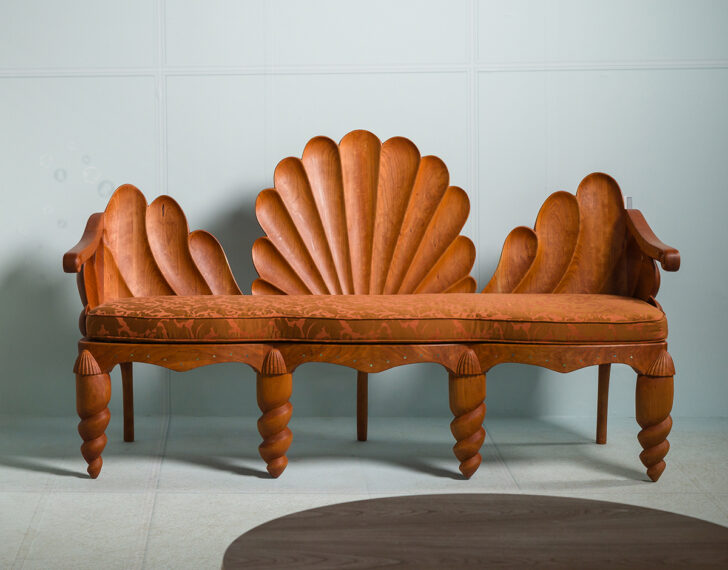
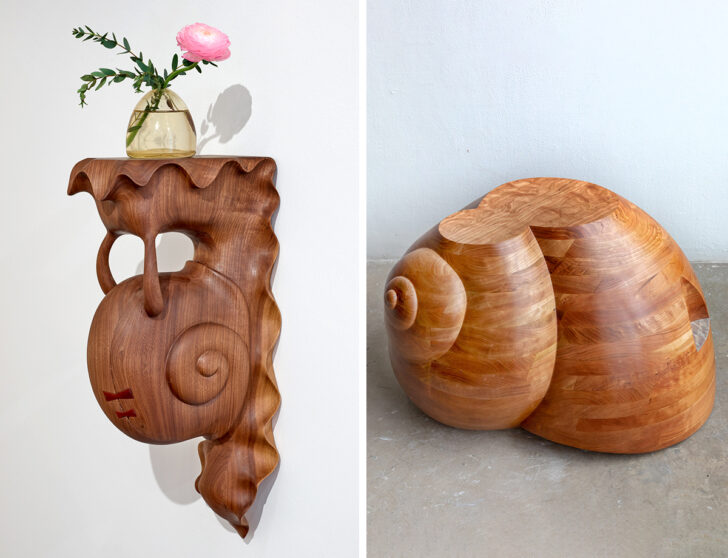
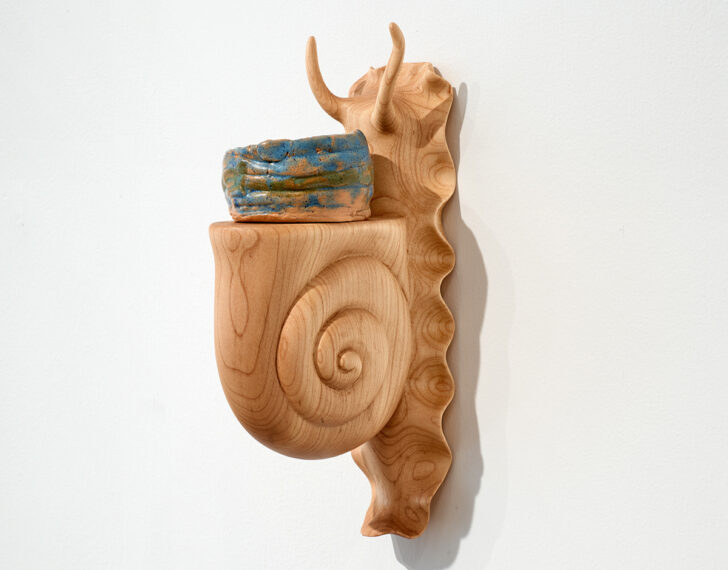
Snails. Bless his heart, Miles Lawton Gracey has made several other wonderful works, like the incredible shell-themed, brocade-upholstered bench pictured above, also exhibited in Hannah Martin’s Curated section at Collectible, and some very interesting hand-carved boxes and storage pieces. But real talk, it’s the snails that have truly spun heads around, making the 2025 Cranbrook MFA grad an instant one to watch this year. What’s even better about his hand-carved shelves in the form of lasagna-footed gastropods — plus an adjacent snail-shell table with mother of pearl inlays — is the mythology that drove him to 180 from the work he was making and turn to snails instead: an homage to his grandmother, who, he explains, “said she was going to be reincarnated as a snail. My grandmother said many things, often only half true, but I still think about her every time it rains and I see snails crossing the sidewalk.” (Shells were also a common motif in her home.) Gracey, who grew up in California but now resides in upstate New York, will soon unveil the largest snail shelf he’s made to date, for a private home in the Hamptons, where he’ll also introduce a new animal into his repertoire. He’ll then take up residency in Wendell Castle’s workshop this spring, and debut new lights as well, which may or may not be in the mollusk family, though we secretly hope so.
STUDIO VALERIE NAME
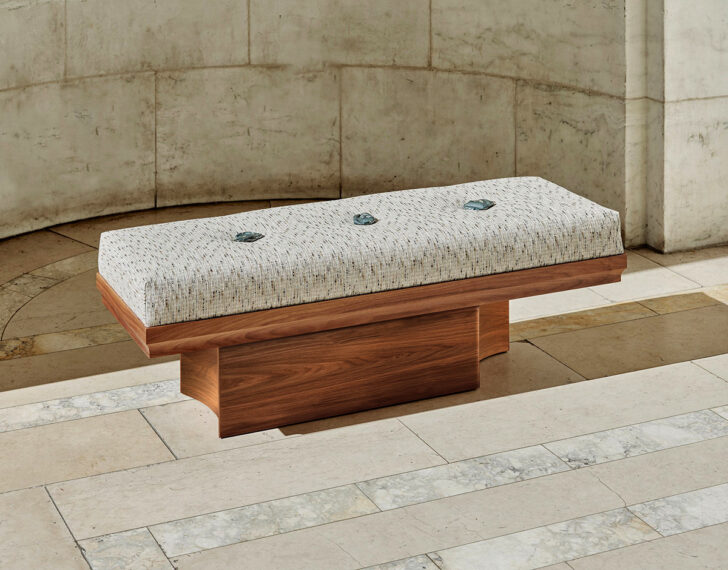
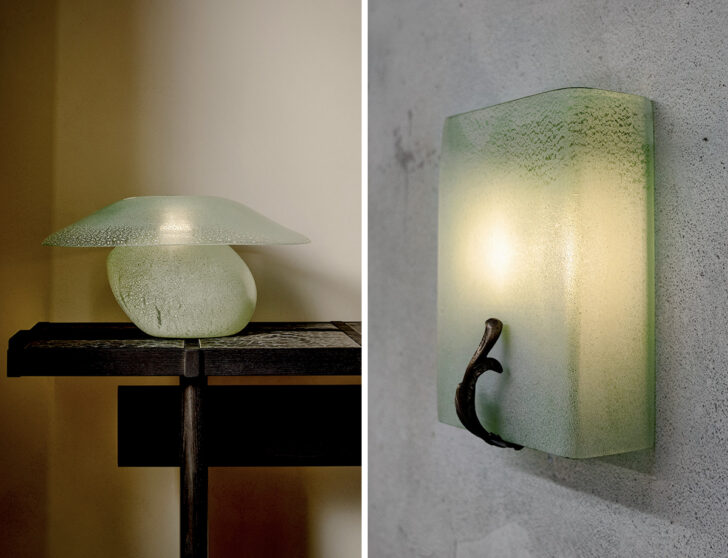
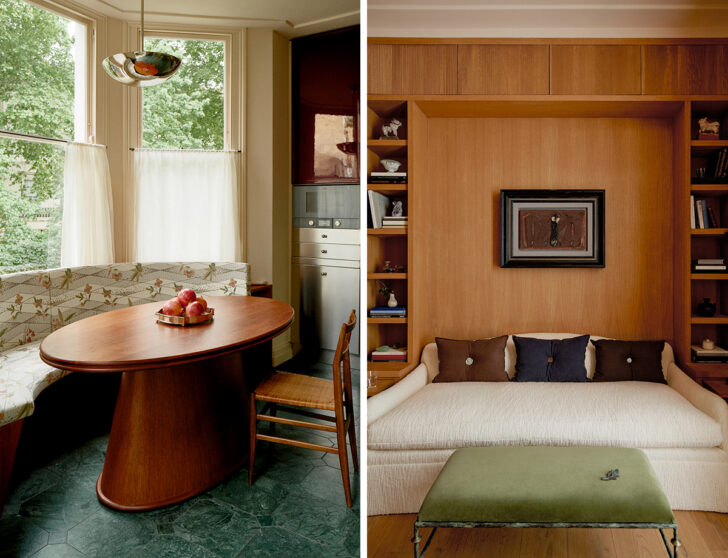 We can certainly appreciate, and award, the work of a talented designer even if we don’t ache inside to personally own it, but that ache has always accompanied our attraction to Valerie Name Bolaño’s oeuvre, from our first introduction to her scavo (“weathered”) glass collection to the first time we saw one of her Spolia bags, which are hand-carved out of solid blocks of walnut. Bolaño is the classicist of this list, trafficking both in pure, unabashed beauty — hence our covetousness, her pieces are ones you just really want to live with — as well as the use of traditional, old-world making techniques, which she filters through her contemporary formal sensibilities. Her Scavo pieces explore a midcentury process developed in Murano, while her Naos stools and benches are inspired by Greco-Roman architecture, their stamped-clay buttons referencing ancient reliefs. Her interiors feature many of her handcrafted pieces, and are rich with natural materials like wood, marble, and silk. Object-wise, her work with glass will continue this year, and she’ll add metal to the mix; she’ll also unveil a high-end jewelry atelier she’s designed in London, which is, fittingly, located inside a historical building, but made new with her singular point of view.
VINCE SKELLY
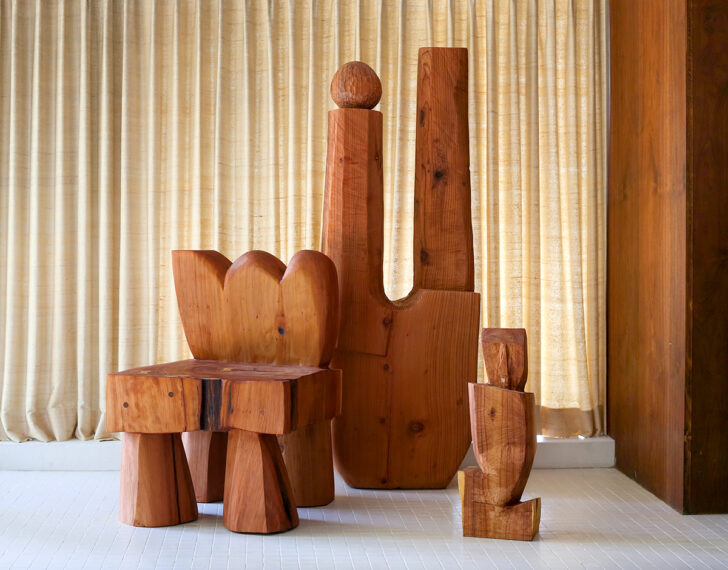
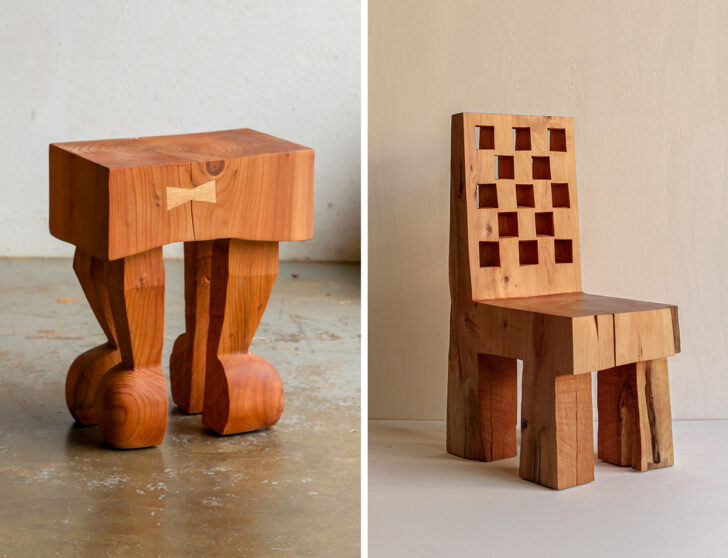
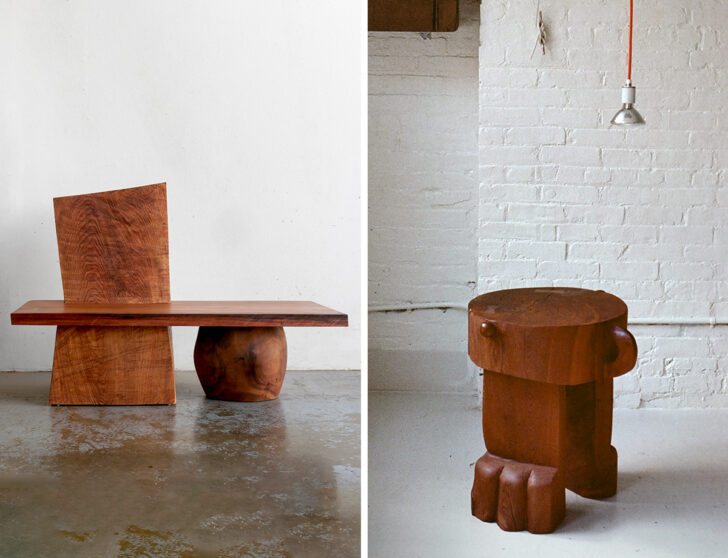 When we were kids, we all thought of a “sculptor” as someone like Michaelangelo, chiseling away furiously until a masterpiece emerged out of a chunk of stone. Swap that chisel for a chainsaw, and you’d have Vince Skelly, a consummate California woodworker who whittles his creations from solid blocks of local redwood, cedar, or fir. The LA-based designer — who’s had a big year, with a solo show at Tiwa gallery, a commission for the Burberry store on Rodeo Drive, and an exhibition he curated at Marta — specializes in chunky volumes, asymmetry, imperfection, and charmingly wonky, at times almost zoomorphic shapes that reference disparate influences like “megalithic dolmens, ancient figurines, the sculptures of Brancusi, and the figures found in the paintings of Phillip Guston,” he notes. You might recognize a piece as his by some of the aforementioned characteristics, but his work is elemental enough, and shape-shifting enough, that you might not, which in a way we really appreciate. Staying open means staying interesting, and we’ll be on the lookout for his latest attempts to do so at two exhibitions coming up this year, the first a group show in Arizona next month and the second a solo show of outdoor works in Oregon, in July.