05.08.26
The Weekly
Our Favorite Floral Ceramics, a New Handmade Hardware Line, and More
Welcome to the new Sight Unseen, a weekly newsletter that delivers the best of the design world — news, trends, shopping advice, interviews, travel recs, and more — straight to your inbox. If you’re not subscribed, follow this link to sign up. Want to partner with us, advertise, or submit your work (guidelines here)? Email us at hello@sightunseen.com.
From Paisley Fronds to Melted Florals, Two Ceramicists Embrace Botanical Themes
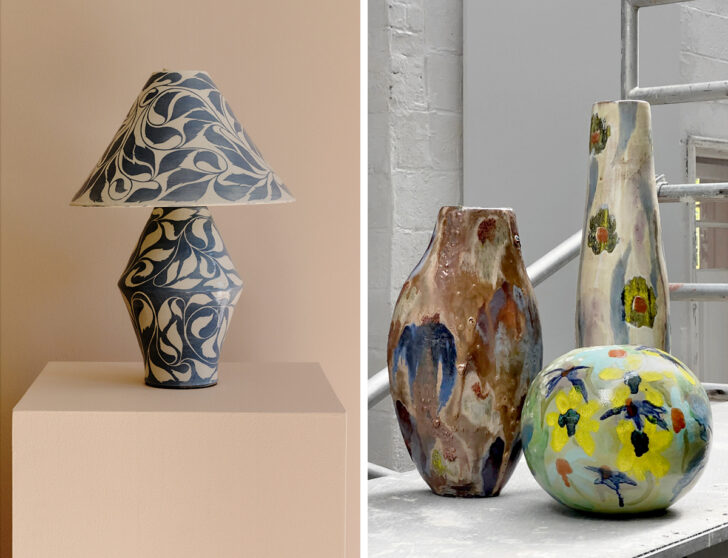 At left, a lamp by Gordon Moore that’s currently on view at Jacqueline Sullivan Gallery; at right: three new vases by Antwerp-based Harvey Bouterse
Technically speaking the works above have nothing to do with each other, but I chose to marry them here as a celebration of both a loose theme — botanical ceramics — and the fact that I can still fall in love with relatively simple explorations of a medium that’s been all but ubiquitous in the past decade. The Paisley lamp on the left was the hit of a group show that opened last week at Jacqueline Sullivan Gallery in New York, called Fancy & Flourish, and its maker, Gordon Moore, was a new discovery for us (Sullivan herself recently found him on Instagram). Moore grew up on Martha’s Vineyard, where he’s based now; he fell in love with ceramics after making a film for his thesis in animation at RISD that featured spinning pictographic pots as proto-zoetropes. His Paisley lamps are interesting in how they’re reminiscent of old Americana, something you’d find at a quaint antiques barn upstate, yet they feel reinvented with a contemporary shape and that clean-lined, inverted pattern.
Then, on the right, we have a new series by Harvey Bouterse out of Antwerp. In the nearly ten years we’ve been writing about his ceramics, they’ve almost always featured uniform, single-color glazes — sometimes with multicolor adornments in the form of zigzags, stripes, suns, people, or animals, but always in his signature bold, graphic style. Hence why these melted, impressionistic florals stopped me in my tracks the other day when I spotted them on Bouterse’s feed. “Close to our atelier is a beautiful village called Sint Martens Latem,” he told me. “In the first half of the 20th century it had a great painters’ community called De Latemsche Schole that blended symbolism, expressionism, and landscapes. My new works are zoomed-in brushstroke studies from these Belgian garden and landscape paintings, but instead of oil paint, I used all archival glazes dating back to the 1950s.” Maybe, with the onslaught of design fairs and newness right now, it’s the objects transcending eras that somehow stand out.
Petra’s New Hand-Cast Hardware Line Draws on Ancient Forms and Modernist Sculpture
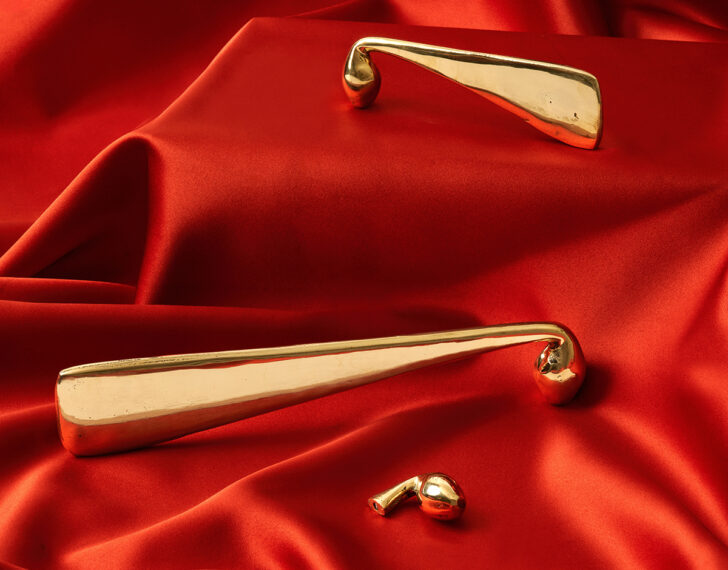
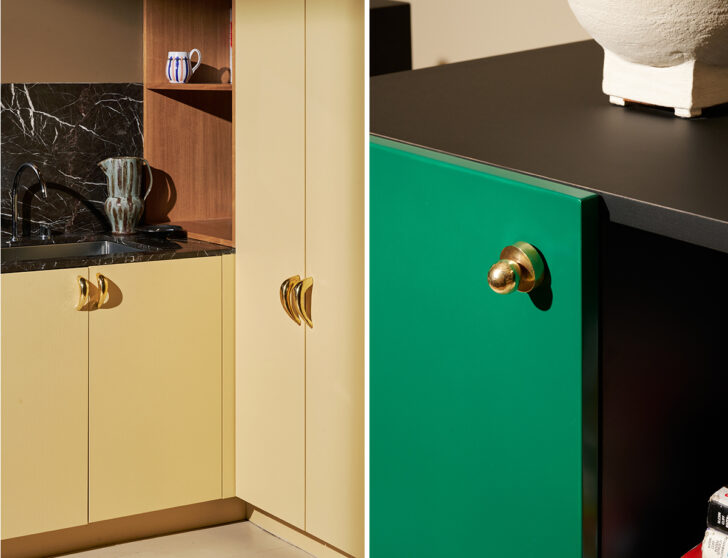 Petra’s new Fundamentals line includes 12 brass knobs and pulls designed by Bower and Alexis & Ginger, all hand-cast in an artisan workshop. Photos: Matthew Gordon
You’ll need to pardon the unavoidable conflict of interest here, but this week was my week to write our newsletter, and yesterday marked a huge turning point for my other business, Petra, the boutique hardware showroom I founded in 2024 as an antidote to a market crowded with mass-produced sameness. Two years in the making, our first in-house line, Petra Fundamentals, is finally live, with contributions from Alexis & Ginger and Bower Studios: 12 solid-brass knobs and pulls, all hand-cast in India at the artisan workshop founded by my friend Gabriela of Anastasio Home. The idea was to create a collection of what I like to call basics with a twist — foundational pieces that are understated enough to be deployed en masse in a kitchen or other living space, but that also have a design detail that makes them more interesting.
The first drop includes three mini collections by the New York design duo Alexis & Ginger, who started by conducting research at the New York Public Library into ancient object and architecture forms, and combined those findings with influences from modernist sculpture. Their Russo series pairs a triangular profile with a bulb shape inspired by oil lamps, while Barbara and Stalos are both variations on the standard arc pull, but with a more robust profile that’s skewed to one side (Barbara) or with an excavated texture that’s hand-carved into the marble form used to make the mold (Stalos). For Bocce, meanwhile, Bower Studios looked to the Bauhaus movement to create simple compositions of intersecting geometric forms. What unites all of these designs under one umbrella is their subtly imperfect finishes that show the hand of the maker, giving each piece a warm, lived-in feel that you just don’t get with factory production. Keep an eye out for more to come later this year!
Bergdorf Goodman Gets a Design Shake-Up Courtesy of Gabriela Khalil
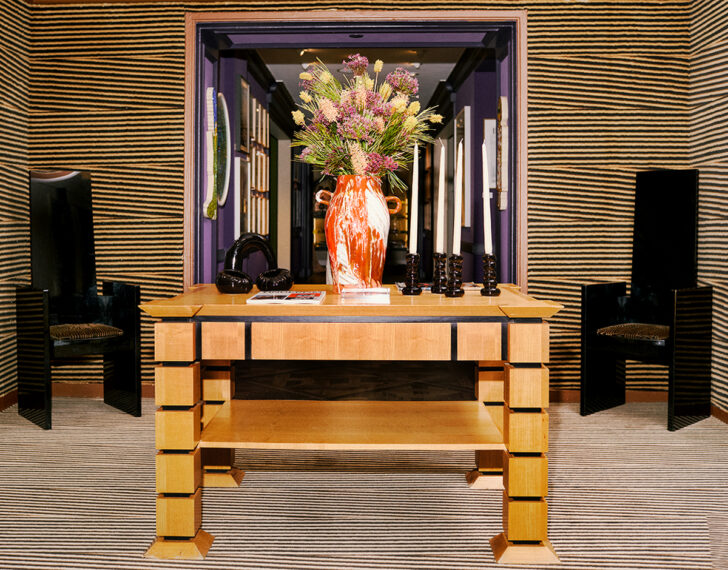
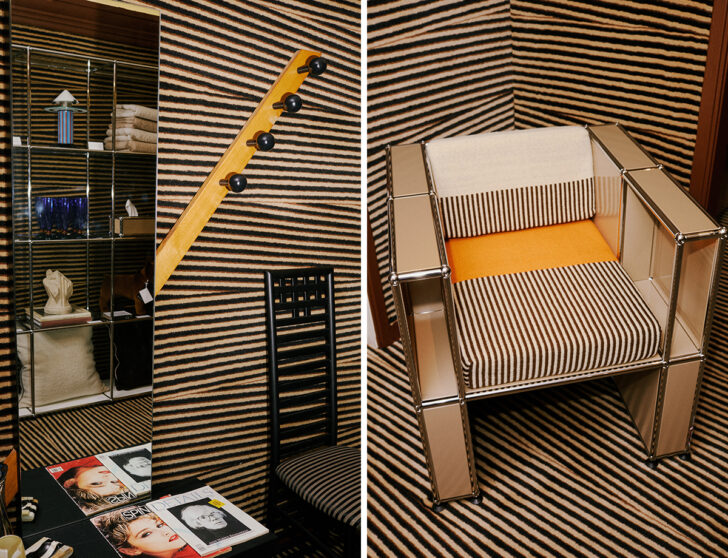 Gabriela Khalil’s new shop-in-shop at Bergdorf Goodman with USM features contemporary and vintage design and runs through August 3.
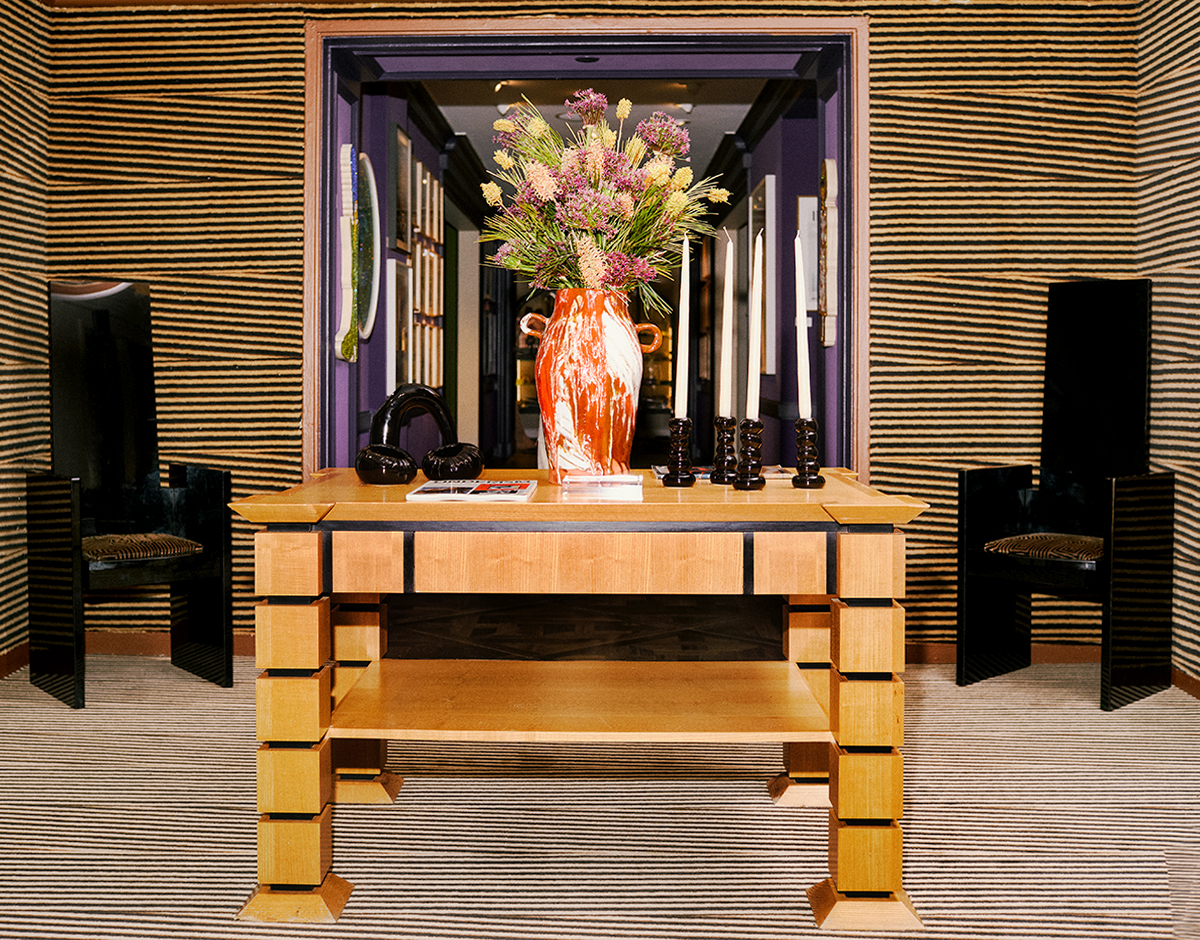
I can’t remember the last time I set foot inside Bergdorf Goodman — the century-old Fifth Avenue department store that caters to New York’s wealthy Uptown crowd — but when it comes to the store’s new collaboration with designer Gabriela Khalil, I’m assuming that’s the point? Khalil, in partnership with USM, recently opened a shop-in-shop inside the retail landmark that looks pretty much nothing like its standard fare. I would love to imagine Khalil as the vessel through which the Real Housewives might be turned onto postmodern furniture or the work of Eny Lee Parker, but the vibed-out display, which is lined in Khalil’s stripey new rugs for Ege, is probably one of the few things that could get someone like me to venture through the store’s hallowed doors. There comes a time when every heritage company decides to do new and unexpected things to attract a new and unexpected audience, and in this case, they did it right — in addition to pieces by Parker, the curation includes work by Platform Studios, Ursula Futura, Completedworks, and Armando Cabral, including a chair from his stellar collab with USM last year. Throw in a few Mackintosh and Kazuhide Takahama chairs, and I’ll see you there for a browse and a $75 afternoon tea. “In Good Company” runs through August 3.
Yuri Iwamoto Brings Finnish Whimsy and Japanese Precision Together in Glass
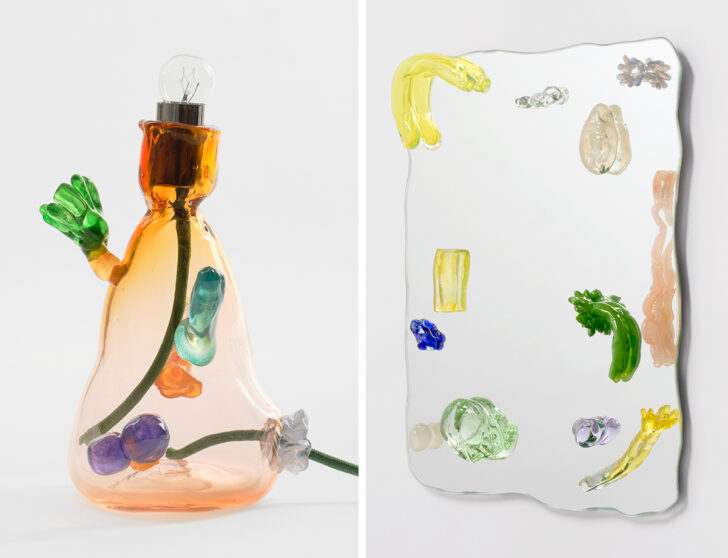 Selections from Yuri Iwamoto’s show at Atla include the Growing Plant Lamp, left, and the Spring Delight Mirror #2, right.
If the most interesting people are often the ones with the most diverse backgrounds and experiences, the same can be said of design objects. By that measure, the expressive glass works of Yuri Iwamoto — whose solo show at Atla gallery in Los Angeles runs through the end of this month — are fascinating indeed, not least because they combine wonky, child-like, painterly forms with abstract faces and what look like pieces torn from flowers and vegetables. Iwamoto’s influences are wide-ranging; she’s based in Toyama, Japan, which is known for its 300-year-old history of pharmaceutical production, and she attributes the rigorousness of the technical side of her work to the local lab glassware industry that grew in parallel alongside it. The artistic side draws on the aesthetic of Moomins, the midcentury Finnish cartoon series, but also Finnish glass legends like Oiva Toikka, inspirations acquired during Iwamoto’s time at Aalto University outside Helsinki. And then there’s the obvious nod to Murano glass traditions in many of her pieces, especially the footed sculptures that look like ghosts and anthropomorphized plants. The overall feeling is of something frenetic yet fun, messy yet meticulous, and made especially exciting by the fact that Iwamoto’s output is diverse in typology, as well — with bowls, lamps, vases, wall panels, mirrors, and hanging mobiles, there’s something for everyone.
You Could Fill a House With This Six Dots Collection, But We Suggest Starting In the Bedroom
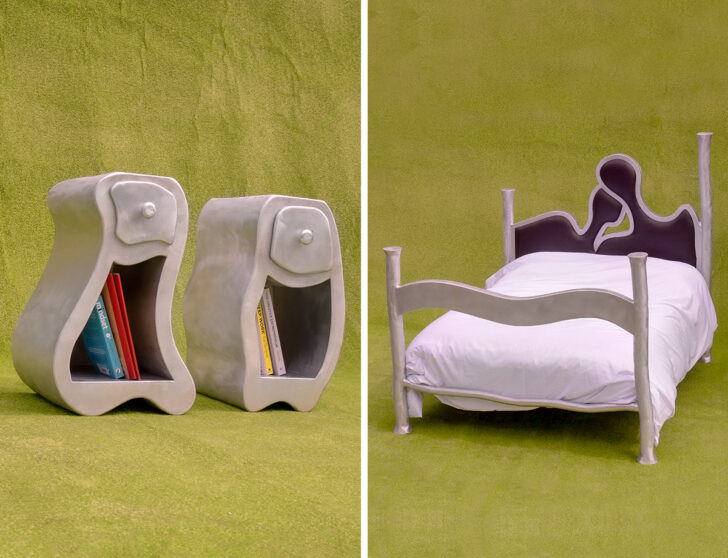 The latest release from London’s Six Dots Design includes bedside tables and a bed inspired by a Dalí painting.
When we first featured the aluminum furniture of London’s Joe Ellwood, better known as Six Dots, the direction was basically just “squiggly” and the production method focused on flat, laser-cut sheet-metal. Four years later, with the release of Ellwood’s largest collection to date, the evolution in both concept and construction is obvious — the work still has the designer’s signature wobbly aesthetic, but leveled up to something that’s more intentional, more grounded, and ultimately more livable as well. While it comprises nearly 20 pieces as wide-ranging as a bar cart, a desk, a floor lamp, and a wall-mounted shelf with a drawer and a matching sconce — all with more robust, three-dimensional forms — at the collection’s heart is a bedroom suite that “reflects on the bedroom as a formative creative environment, a space that encourages expression, thought, and making.” The bed’s headboard is a reference to Salvador Dalí’s pair of 1936 paintings A Couple with Their Heads Full of Clouds, which are set in head-shaped frames, and it has matching bedside tables with irregular cutouts to hold inspirational reading materials — a great starting point for both dreaming and scheming. See the full release here.
Editors’ List
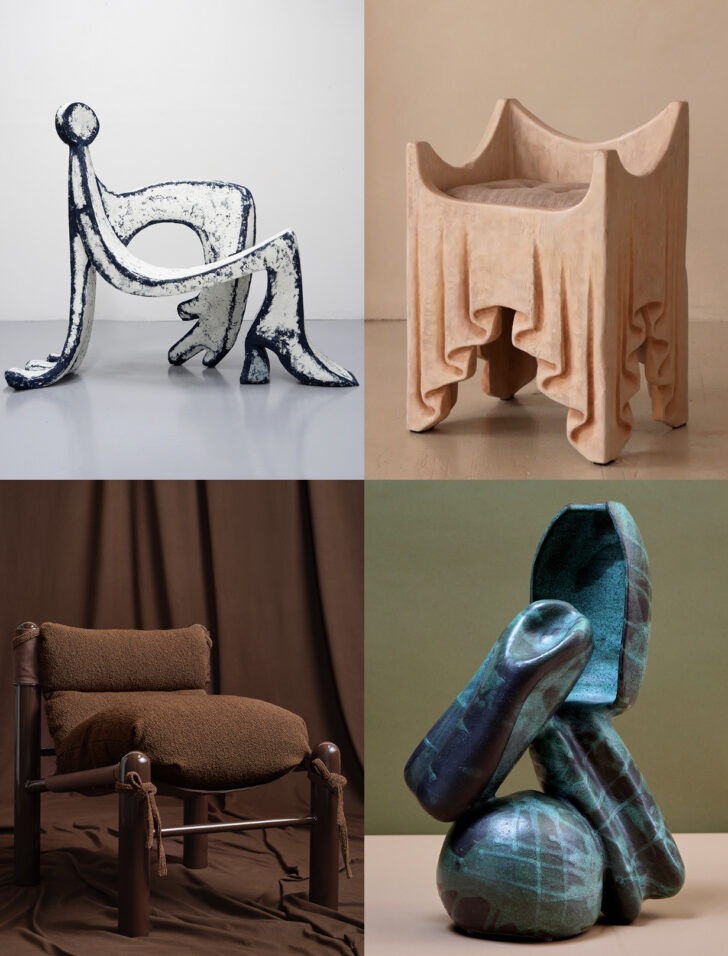 CLOCKWISE, FROM TOP LEFT:
–
When I saw that longtime favorite Barbora Zilinskaite had created this figural piece for a group show at Brussels’s Galerie Christophe Gaillard, pairing contemporary works with historical ones, my first thought was that she might have been matched with Jean Dubuffet. In fact, the show rounds up pieces from a seminal exhibition in 1976 of young European-based talents and pairs it with those by the Bardof collective, founded two years ago around a multidisciplinary shared studio space also in Brussels. I’m not sure what actually did inspire Zilinskaite to create a more angular work in black and white, rather than her usual soft-edged single colors, but I, for one, want to see more.
–
You may have spotted this chair in our Instagram Stories earlier this week, a carved-wood trompe l’oeil delight by Australia’s Oliver Wilcox, on view this month at Abbotsford Convent in a Melbourne Design Week show called 100 Chairs. You’d think by now we’d be tired of wood made to look like fabric, but alas we are not, and particularly in this case when the chair has a lovely crowned shape up top and a blush upholstered cushion. It’s all in the details! Wilcox made it with wood salvaged from a remodel of his studio, too.
–
There are a million and one things on view in New York right now — it being New York design month and all — but some of them luckily extend into June, including Boom Beach, an exhibition of new sculptures by David Haskell at Donzella. Haskell has created organic works in glass, ceramics, and bronze, including some funny slumped “cake stands” that look like they’d hold a cookie at best, which is fine by me and anyone else who’s never used an actual cake stand in their lives.
–
It’s a shame I only had space here to include one colorway of this new collaboration between LA designer Sam Klemick and producer Rad Furniture, the Post Collection, which launches tomorrow and will debut IRL at next week’s Afternoon Light fair. It’s a riff on Klemick’s Bell Series (which we sell here!), but machine-made, and with more streamlined proportions; metal takes the place of carved wood frames, upholstery is done in corduroy or canvas, cushions can be mixed and matched with powder-coated and brushed finishes in tonal or contrasting colors. The bow-tied details remain.
News
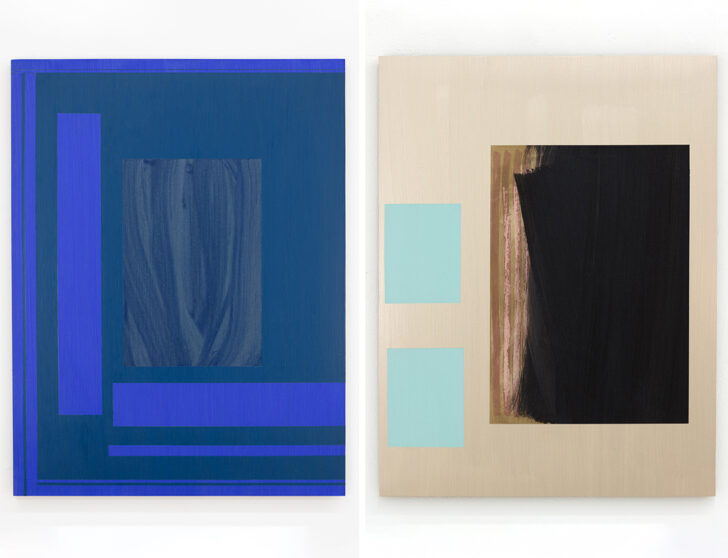 Two acrylic on aluminum color-field paintings by Ann Pibil, currently on view at Halsey McKay gallery in East Hampton, New York.
–
Currently wishing I had an excuse to escape to East Hampton before May 17, because there’s a really nice exhibition on view until then at Halsey McKay gallery: color field paintings by Ann Pibal. These have particularly beautiful palettes — a neon aqua paired with brown and black, tonal bright blues, tonal bright pinks paired with olive — and well-balanced contrasts between flatter areas and more textured brushstrokes. The 12-year-old in me appreciates Pibil’s use of metallic and iridescent surfaces, too.
–
If I could travel at all this month, after the Hamptons I’d head up to Woodstock, where the Ohayo Mountain House, a project designed by Amin Tadj Studio, is currently hosting a design exhibition called A Sense of Place. It’s curated by the duo behind the Tivoli gallery Available Items, and it includes pieces, installed in the house as if to furnish it, by Jackrabbit Studio, Jesse Groom, Katie Stout, and Tadj himself.
–
Did you enjoy Michael Bargo’s show with Yves Salomon at this year’s Milan fair? Were you partly entranced by the apartment it was held in, designed by Gio Ponti acolyte Eugenia Alberti Reggio in the late ‘50s? If so, I suggest you follow this link to a story by Adam Štěch published in World of Interiors two weeks ago — it divulges the history of the space, alongside photos of its original, pre-Salone state, and it’s nice to see the original in all its glory.
–
If you’re in Tribeca before May 23, definitely pop into 125 Newbury — the project space by the founder of Pace Gallery, Arne Glimcher — to see the Chair Show, which catalogues chairs that are more art than actual chairs; pieces like Alicja Kwade’s monobloc stuffed to bursting with solid granite or David Byrne’s wisp of an unuseable, seat-free seat made from glued-together macaroni. It’s a moment of levity reminding you that you don’t always have to take this design week stuff so seriously.