Jason Rosenberg, Artist

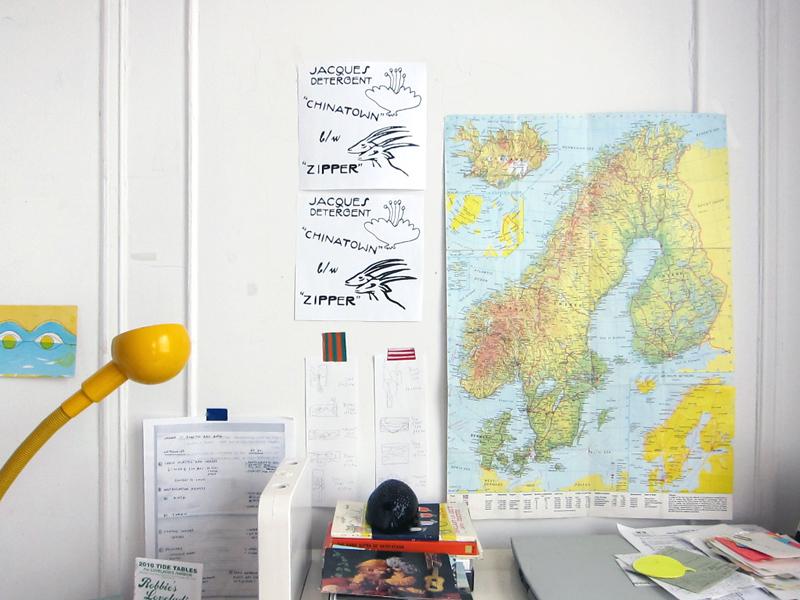
The first time I met Brooklyn artist Jason Rosenberg, I brought him a present. It was nothing fancy. Earlier that day, I’d gone to the doctor and left with a prescription tucked inside a tiny plastic pharmaceutical bag, printed with a picture of a pill and the name of a generic medication. Lest my gift-giving skills be called into question, I should explain that I was headed that night to Kiosk, the New York shop where Rosenberg was hosting a Plastic Bag Happening: The idea was to bring a bag and either exchange it for one of the many Rosenberg has collected over the years, or to have the artist, equipped with his vintage White sewing machine, transform the bag into something totally different — a hat, a pencil case, a coin purse, a wallet. I walked away with two slim sacks from Systembolaget, Sweden’s chain of state-sponsored liquor shops; Rosenberg, when I visited him in his Greenpoint studio last month, was still holding on to the bag I’d brought, though where to find it in his heaps of pseudo-organized boxes, bins, and file folders was another story.
More

Art in the Age

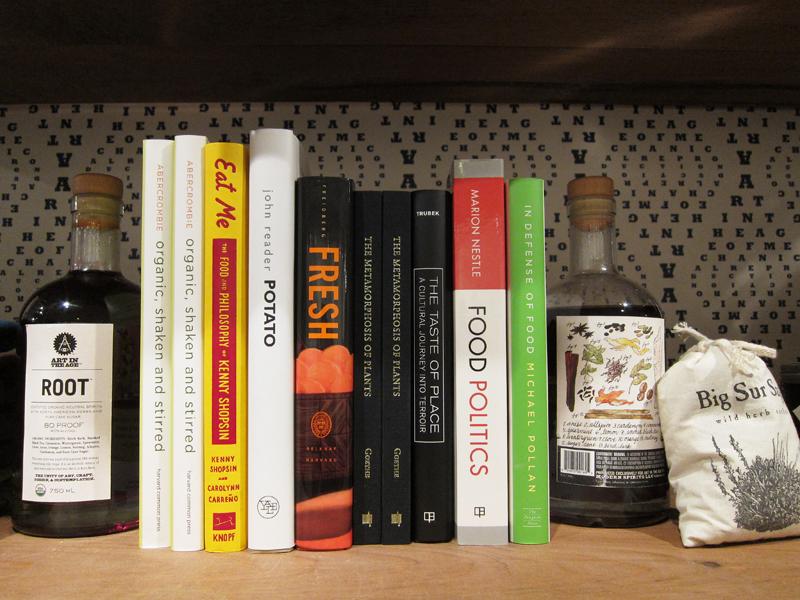
When Philadelphia adman Steven Grasse talks about his 20 years at the helm of Gyro Worldwide, the successful agency he shuttered in 2008, his assessment is as blunt as you might expect from the man who invented Bikini Bandits, a video series about strippers, guns, and hot rods: “I was the asshole who did the Camel ads,” he says. “At Gyro, we had this ‘I’ll fuck anything that moves’ philosophy.” That all changed in 2008, when he sold Sailor Jerry — the rum brand he created before going on to help develop Hendrick's Gin — to William Grant & Sons for “more money than I ever made in advertising,” he says. Grasse quickly changed the name of his agency to Quaker City Mercantile, and transformed its mission completely. “Now we only work on brands that we create and own or with clients I truly like personally,” he says. The most personal of those projects is Art in the Age, the Old City store and liquor brand Grasse began working on the day he sold Sailor Jerry.
More

Plastic Dreams: Synthetic Visions in Design

There are several somewhat shocking things about Plastic Dreams: Synthetic Visions in Design, the first book out from a new eponymous imprint by ex-Taschen impresarios Charlotte & Peter Fiell. First and most arresting is its bright orange, webbed half-slipcover, designed by the Brazilian shoe company Melissa and infused with that company’s signature scent: It’s somewhere between a piece of tutti-frutti chewing gum and a bottle of Designer Imposters fragrance. Second is the reminder that some plastics aren't wholly synthetic — a fact that’s easily forgotten — but rather the descendants of various amazingly named rubber plants, like Gamboge, Gutta Percha, and Caoutchouc. And third is the realization of just how many products would never have been possible, or would at least have been dramatically altered, without the material’s development: dental plates, curling irons, vinyl LPs, and more.
More

Jonas Damon’s iPad Case and Fruit Bowl

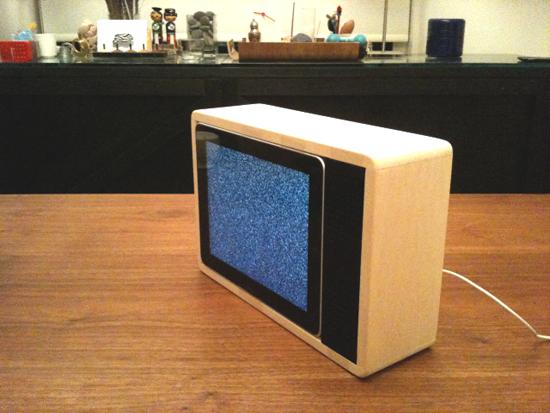
The way Jonas Damon sees it, designers these days fall into two camps: those who hold fast to the principles of legendary German industrial designer Dieter Rams and those who are partial to the camp and kitsch of pop artist Jeff Koons. It’s a theory Damon, creative director at New York's Frog Design office, picked up from his friend and fellow New York designer Ross Menuez — both of whom often produce work for Areaware, a design company that moves expertly back and forth along the Rams-Koons continuum. Damon is decidedly a Rams guy, which is perhaps why he feels so conflicted about the retro wooden enclosure he made for his iPad, one of the many things he’s built in his spare time for use around his apartment.
More

Amy Helfand’s Garland Rugs

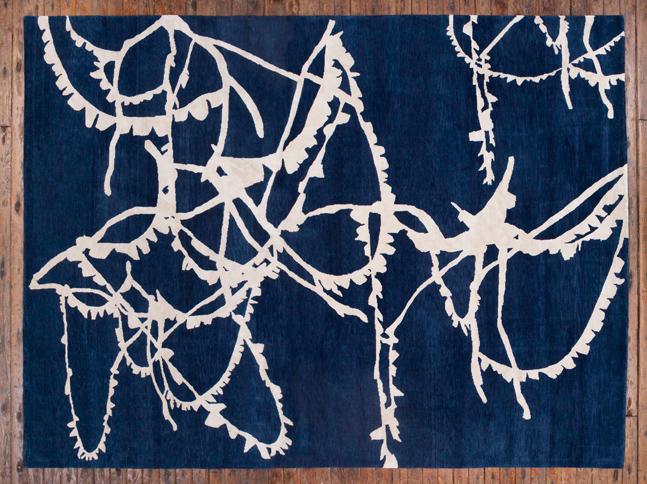
Even though Brooklyn-based artist Amy Helfand has been designing rugs on commission from her Red Hook studio since 2004 — hand-knotted wool rugs, it should be mentioned, that sell for at least $125 a square foot — she still has trouble defining herself in those terms. “Up until recently, I never really thought about rugs,” she says. “I thought about making my artwork, and some of that artwork I’d make into rugs. But it was never like ‘Ok, this one comes in 5x7 and 6x9.’
More

Ron Gilad, Designer

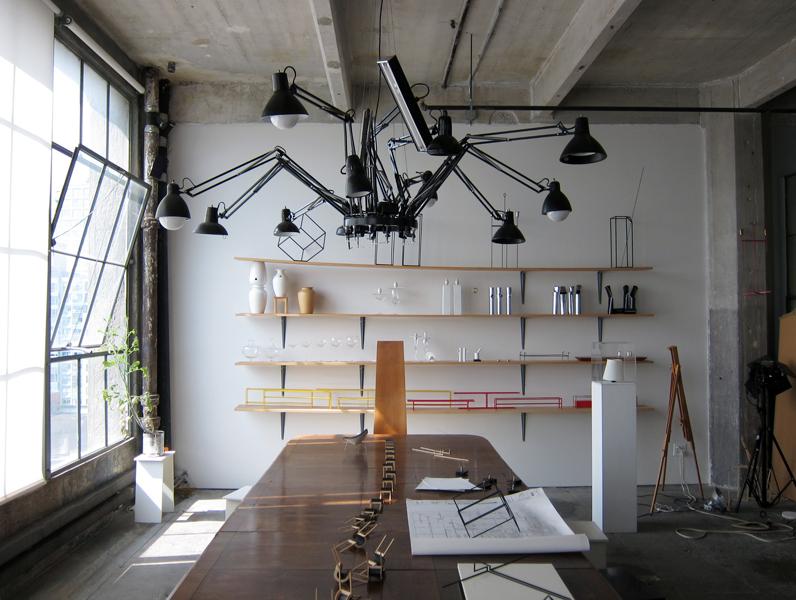
One of the turning points in Ron Gilad’s career came late on a Sunday evening in January 2008, one of the coldest nights of the year. That’s when the designer, along with nearly 200 other artistically minded tenants, was evicted from his live/work loft building in South Williamsburg, Brooklyn — the result, the New York Fire Department claimed, of an illegal matzo operation being run out of the basement by the building’s landlord. No matter that the Tel Aviv–born designer was out of the country at the time. “I extended my trip a week, but then I came back to nowhere. For three and a half months, I was homeless. And that’s when I started really playing with the idea of spaces and homes, and what, for me, a home really is.”
More

Julian Faulhaber, photographer

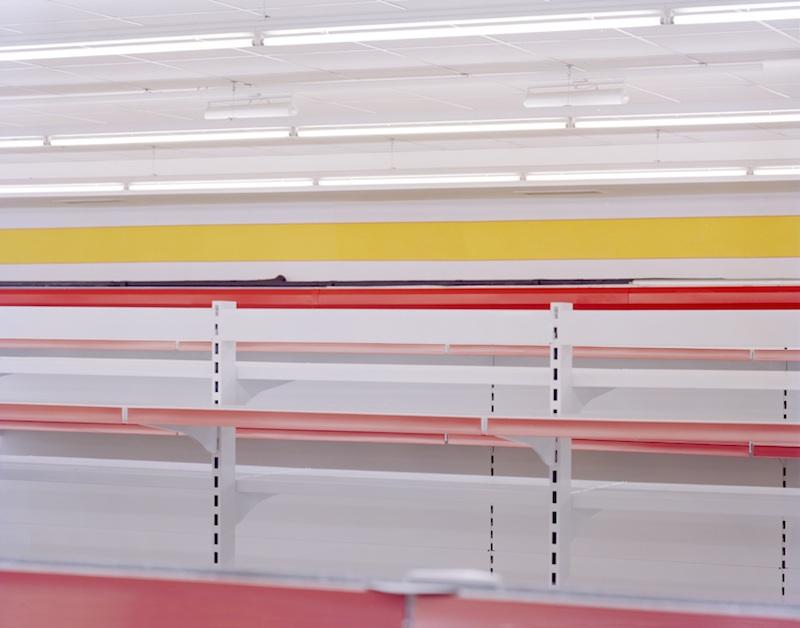
Sighted this week on The Morning News: "German photographer Julian Faulhaber captures public spaces — supermarkets and parking garages — in the moments between their construction and when they are opened for public use. His long-exposure photos, which remain untouched after developing and for which he uses only available lighting, look unreal and Photoshopped. But what does it mean to say that reality looks Photoshopped?"
More

Markus Linnenbrink, artist

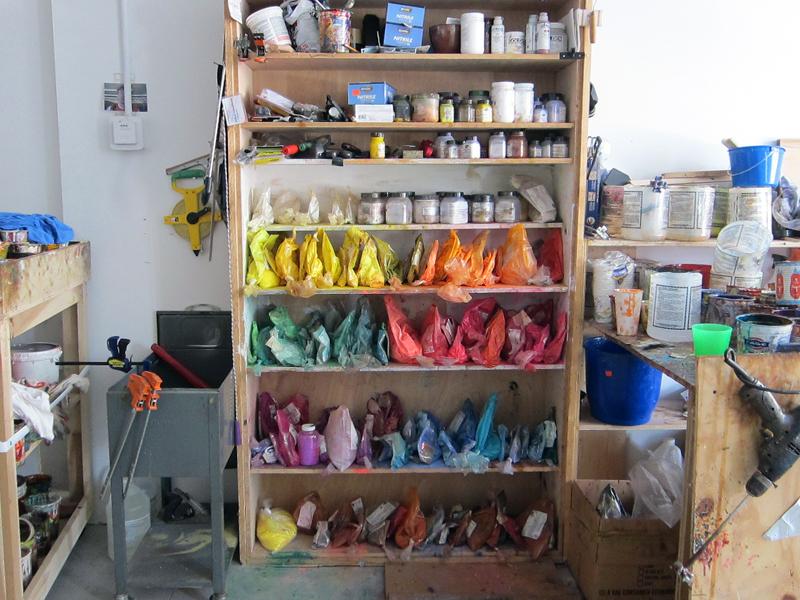
When he was an art student in the '80s — in Kassel first, and then Berlin — Markus Linnenbrink worked primarily with grays and blacks. “I had no idea what to do with color,” he admits. “And honestly, I was a little afraid of it.” Which is ironic, considering that for more than a decade, the German-born, Brooklyn-based artist has built a body of work that centers around thick streaks of color — painted in stripes on gallery walls, poured in puddles on the floors of art-fair booths and installations, and dripped in lines down the face of his canvases. “Somehow a field trip to Italy where we spent three weeks painting outside got me into the idea of color, but I had a long period where I would mix, like, red and green. I feel like I had to walk through a lot of dirt and mud to get to the brightness.”
More

To Draw Every Person in New York, by Jason Polan

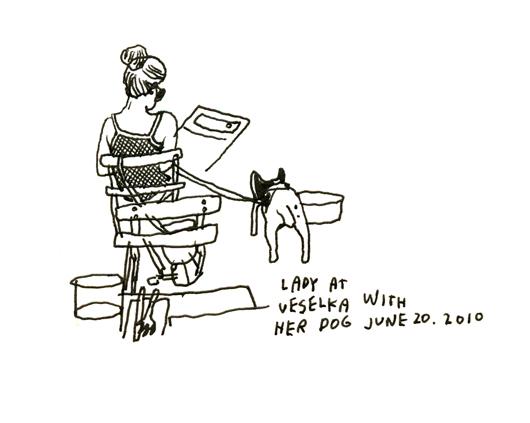
In March of 2008, Jason Polan set off into Manhattan armed only with a white notepad and a black Itoya Fine Point .6 pen. He had one goal: to draw every person in New York. It would seem an insurmountable task if not for Polan’s habit of documenting most anything that crosses his path, tagging each conquest with a thick scrawl detailing its circumstance, such as “Plant outside of a medical center on Orange and Magnolia Streets, April 25, 2010, drawn right after I tripped on the sidewalk,” or “Philly Cheese Steak, Pat’s Steaks, June 4, 2010.” In the service of his blog Every Person in New York, Polan — whose illustrations often appear in The New York Times and Esquire — has over the past two years drawn more than 10,000 of the city's residents.
More

Vienna’s Mühlbauer Hats

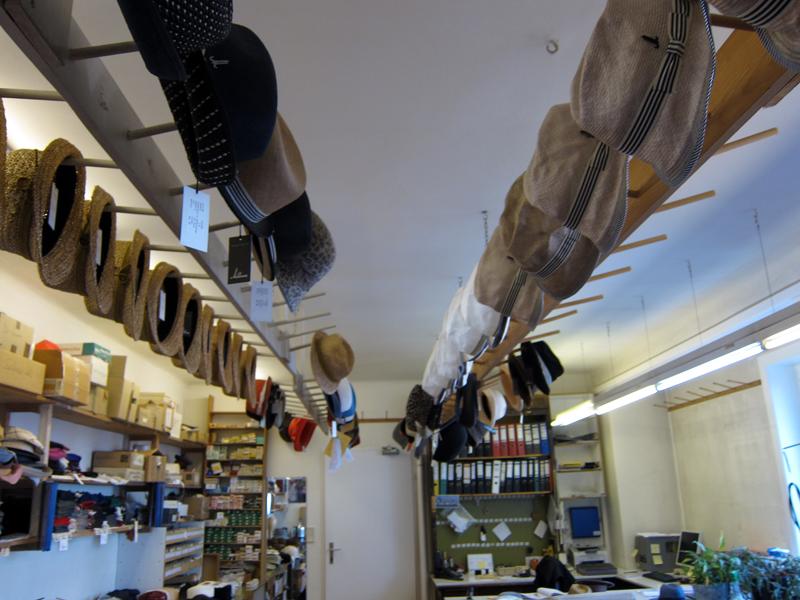
If you’ve recently strolled through the streets of Vienna’s city center, chances are you’re familiar with Mühlbauer, the 107-year-old hat-maker whose two flagships, tiny jewelboxes designed by the German-Italian architect duo Kühn Malvezzi, are located just a stone’s throw from Adolf Loos’s infamous American Bar. Ditto if you’ve been paying attention to the ever-changing hat wardrobe of Brad Pitt — who’s a fan — or if you’ve been shopping for accessories in chic department stores from Bergdorf’s to Le Bon Marché. The millinery has made such a name for itself in the past few years, collaborating with cult fashion labels like Fabrics Interseason and outfitting the likes of Yoko Ono and Meryl Streep, it’s hard to believe that in 2001, when Klaus Mühlbauer took over the company with his sister Marlies, “nobody even knew that Mühlbauer was related to hats,” he says.
More

Inside Mattiazzi’s Udine Headquarters

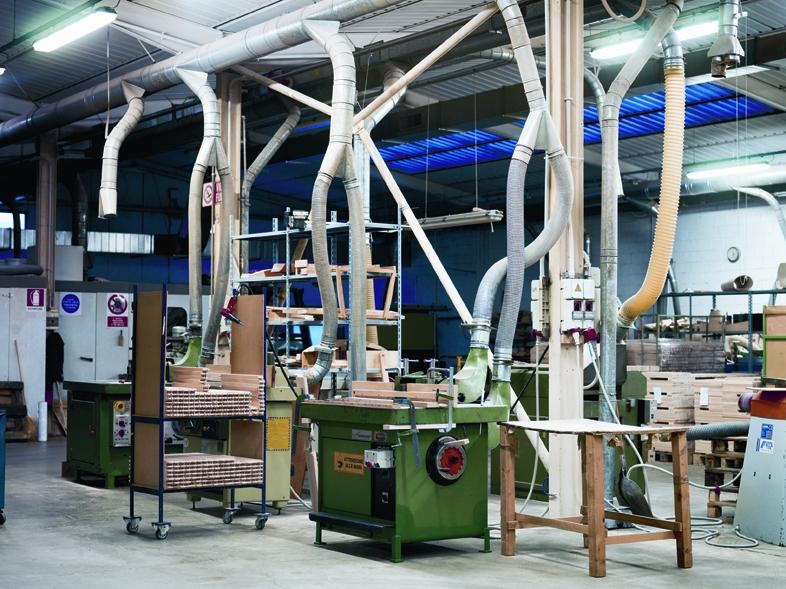
An hour east of Venice, in the province of Udine, Italy, three small outlying villages make up an area quaintly known as “The Chair Triangle.” For centuries, the municipalities of Manzano, Corno di Rosazzo, and San Giovani al Natisone have been home to workshops and factories, woodworkers and artisans, tool-makers and sawmills, all devoted to producing the more than 40 million chairs that emerge each year from the region. The city of Udine itself is no slouch in the manufacturing department — it’s home to Moroso, one of Italy’s most storied brands — but the chair triangle is known more for its specialized production and for manufacturers who do anonymous, subcontracted work for the big brands.
More

The Campana Brothers, Furniture Designers

This story was originally published on June 9, 2010. Veuve Clicquot's renovated Hotel du Marc is set to open this fall. // In their most famous works, Fernando and Humberto Campana construct by a process of accumulation, looping yards of sail rope around seat frames or folding velvet tubing in on itself to create amoeba-like sofas. So it's fitting that visitors to the brothers’ São Paulo studio should find behind its unremarkable metal grate rooms and shelves stacked high with stuff — weird material experiments by the studio’s half-dozen in-house artisans, miniature models and prototypes, artifacts the brothers picked up on their travels, miles of scrap, and dozens and dozens of sketches. In some ways, it all seems an extension of São Paulo itself, a city of 20 million that in the last century has sprawled so far and wide it’s annexed, at last count, five different downtown areas.
More