Renate Müller at R & Company

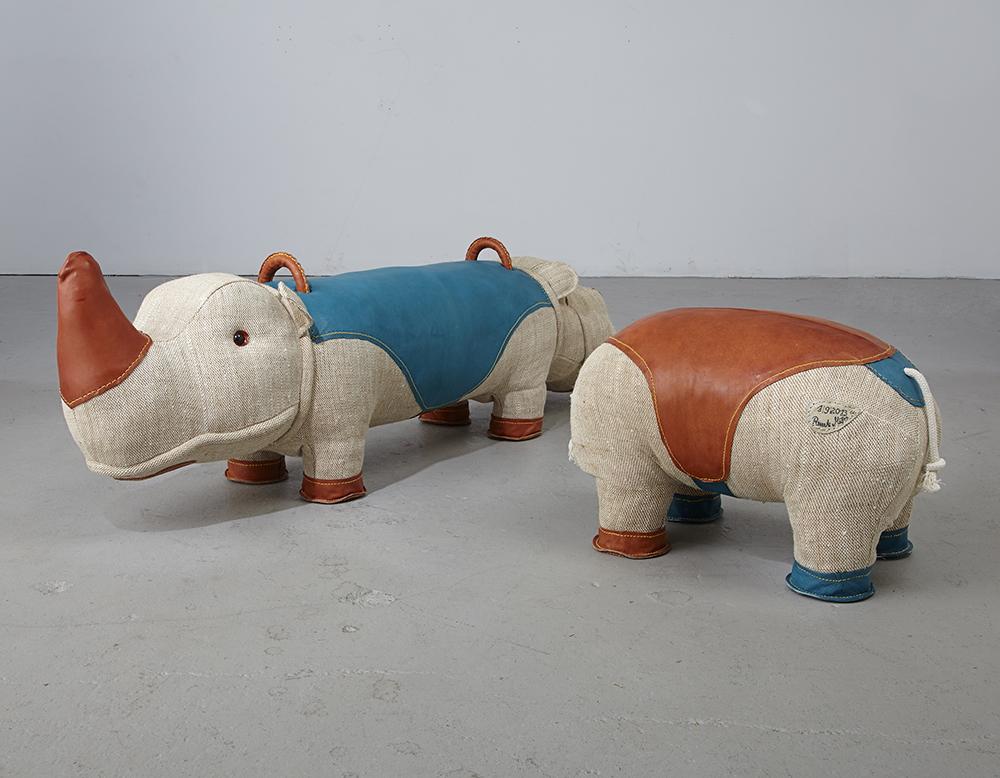
Renate Müller is 68 years old and has been designing children's toys for half a century, some of which she created for her family's toy factory in Sonneberg, Germany, in the '60s and '70s, and the rest of which she still makes by hand in her nearby studio, as part of the personal line she began in 1978. The materials she uses for that line have stayed exactly the same ever since (jute, wood, leather), as has her process and her policy of working alone, save for the occasional hand lent by her daughter. Many of her animal typologies have remained perennial, too. Yet when it came time to create 26 new pieces for her second solo show at New York design gallery R & Company, which opened yesterday, Müller decided to bust out a pretty major — and amusing — twist: Surrealist creatures with two heads, or no heads, that only someone with a very vivid, childlike sense of imagination could possibly dream up.
More

Sam Baron on Fabrica’s Extra-Ordinary Gallery Collection

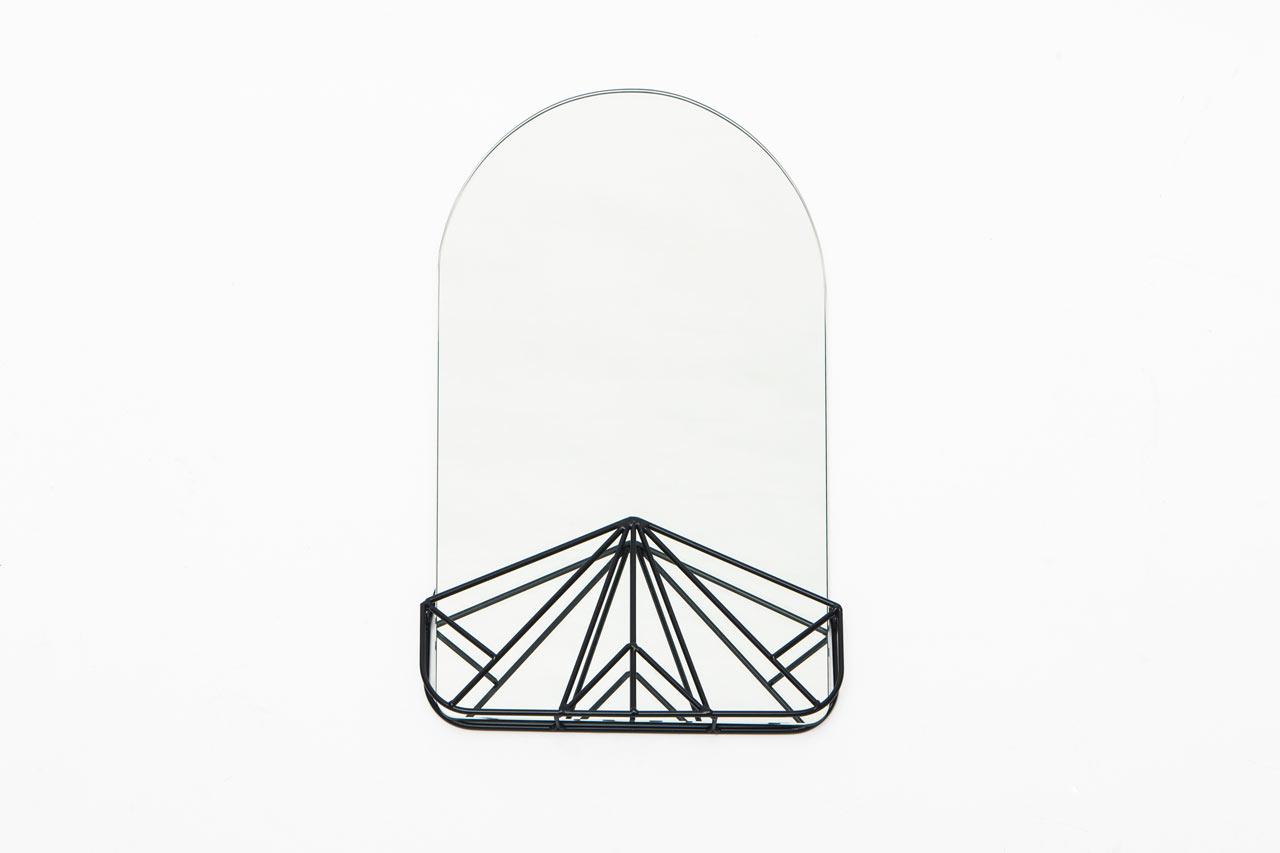
When we found out that Fabrica, the Italian design studio and research center, had just launched its striking new Extra-Ordinary Gallery collection in its online shop earlier this month, the pieces were so intriguing and beautiful that we thought we'd struck editorial gold — turns out we weren't the only ones! The collection has been all over the design blogs in the past two weeks, and deservedly so. Yet we couldn't pass up the chance to share it with our readers anyway, so we got in touch with our old friend Sam Baron, creative director of Fabrica's design department, and asked him for some special insight into the collection, which he curated. The result is a fun little personal diary, featuring five of the line's standouts as they relate to Baron's daily routine.
More

Week of March 10, 2014

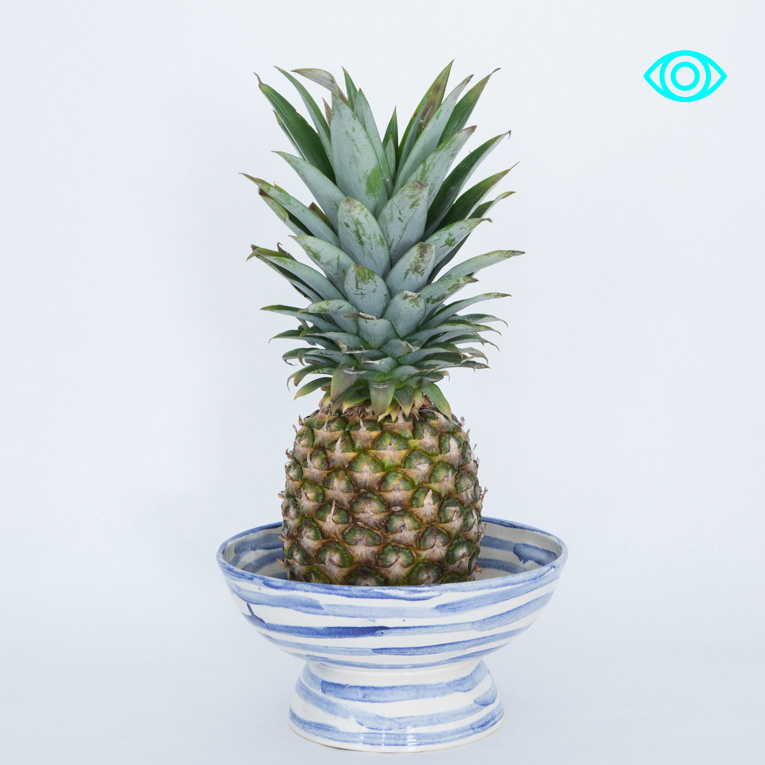
A weekly Saturday recap to share with you our favorite links, discoveries, exhibitions, and more from the past seven days. This week was, weirdly, all about fruit (perhaps it's the influence of the unstoppable pineapple?). We also said a (temporary) goodbye to a beloved New York retailer and a hello to the best Ikea collection in years.
More

Francesca Capone, textile designer

Francesca Capone creates work that experiments with textile processes and language. The RISD-trained designer employs traditional textile processes such as hand-weaving, jacquard, machine knitting, marble printing, screen-printing and various dyeing methods such as shibori. But an MFA in "cross-disciplinary writing" at Brown has also led her to explore what happens when she distorts words and meaning through photo-manipulation, scanning, and digitally layering books. Combined, these methods result in unique and striking geometric patterns on fabric and painterly compositions of abstracted textual fields.
More

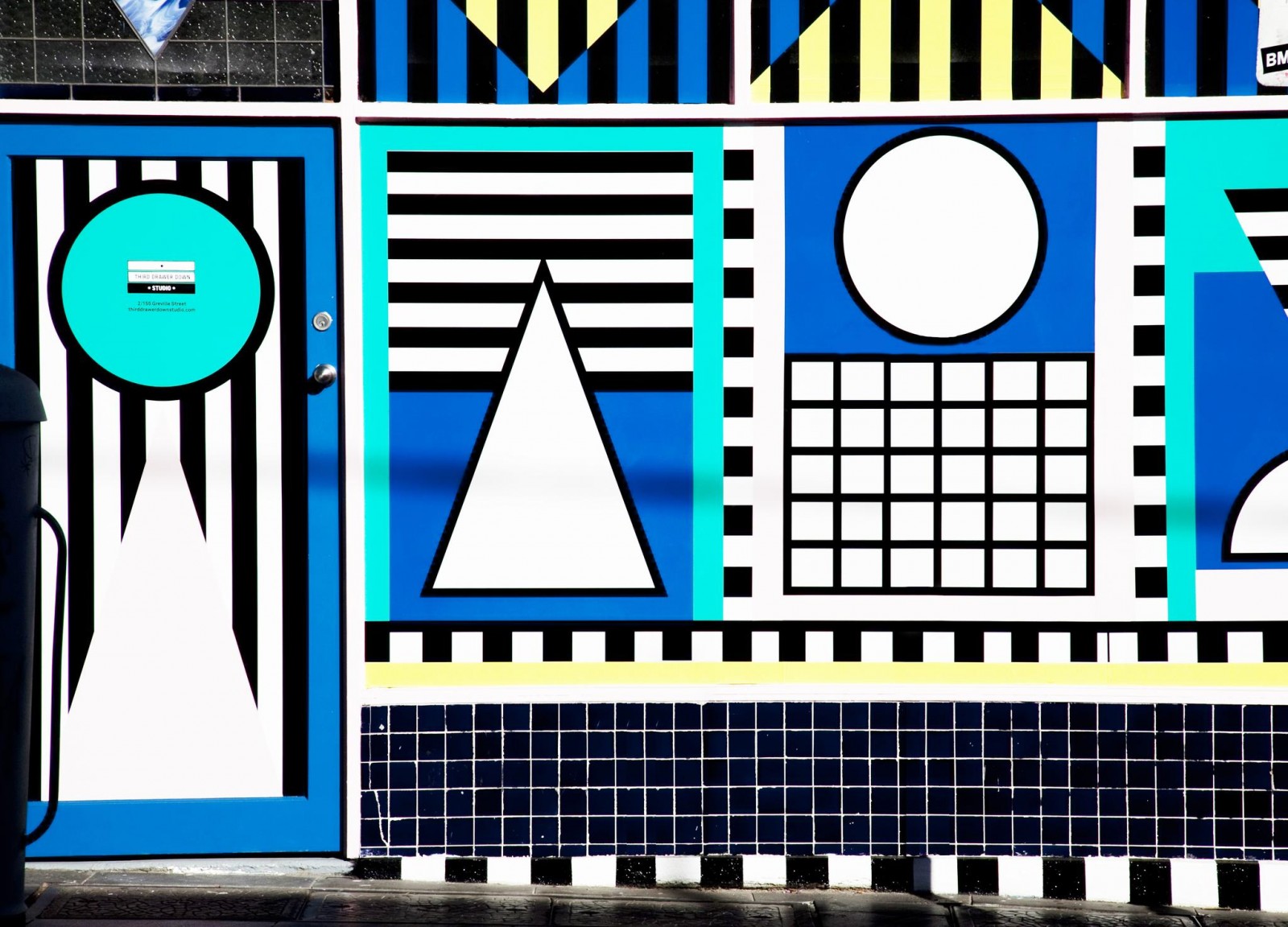
Totokaelo Art—Objects’s Spring Campaigns

The cult Seattle boutique Totokaelo already carries clothing and objects so beautiful that each new season wreaks havoc on the wallets of aesthetes around the country. The only way the store could possibly improve on that game? By shooting those new collections in scenarios designed to make said aesthetes even crazier. To promote its spring Art—Object catalog, the store's creative director Ashley Helvey masterminded two such campaigns: a photo shoot shot by Robin Stein and styled by Margaret Macmillan Jones in the technicolor plaza of Seattle's King County Correctional Center (designed in the '80s by Martha Schwartz and Benson Shaw), and a video, also in collaboration with Stein, that features Cameron Mesirow of Glasser along with music from her latest album, Interiors.
More

Clemence Seilles in PIN-UP #12

Berlin's many charms are hardly lost on your editors. After a sunny, weeklong trip five summers ago, we both fell in love with the German capital — the wide open spaces, the well-situated swimming pools, the way clubbing unfolds as an actually enjoyable activity. But while my partner in crime has returned to the German capital each consecutive summer, I've never been able to find the time to go back. This summer, then, I was lucky enough to visit by proxy through the eyes of Felix Burrichter and his staff of Berlinophiles over at PIN-UP Magazine, which devoted its entire Spring/Summer issue to the changing metropolis. "For very long, Berlin was this one thing: You went when you had no money," says Burrichter, who serves as both editor and creative director of the architecture biannual. "But there’s a cultural elite — a moneyed elite — that has developed there over the past 10 years. Mostly people from out of town or in the art world. So there's an interesting friction right now. When that moneyed elite takes over, the city will lose a lot of its charm. But right now it still feels very raw and budding." The issue was in some ways a homecoming — Burrichter grew up in Düsseldorf — but in the end, the Berlin depicted in the magazine's pages bears more of a resemblance to Burrichter's adopted home in New York. "What fascinates me about Berlin right now is that it's very international," he says; hence the features run to a British architect who recently remade the city's Neues Museum (David Chipperfield), a West African transplant (Francis Kéré), and Clémence Seilles, a Frenchwoman who arrived in Berlin with a singular goal — to assist in the studio of designer Jerszy Seymour — and who never left. We've been fans of Seilles' work for some time now, and her conversation in the magazine with fellow Sight Unseen friend Matylda Krzykowski was too good to confine to print. Burrichter has graciously allowed us to excerpt it today on Sight Unseen.
More

Fort Standard’s Gregory Buntain on his Tombstone Chairs

From an outside perspective, the Brooklyn furniture-design studio Fort Standard exudes the aura of a successful business with a clear DNA. Yet that wasn't always the case: When co-founders Ian Collings and Greg Buntain first joined forces in 2011, after graduating together from Pratt, they had no idea what direction to take — they simply dove headlong into the making process. “We had one goal: to do our own thing,” Buntain said in a recent interview. Their stock may have risen since then, but behind the scenes, the pair still make an effort to keep things loose; to maintain a sense of discovery in their shared practice, they both do separate solo work on the side, little personal experiments and objects they create for their own homes. Occasionally these prototypes are developed into Fort Standard products, but most of the time they go unseen, as was the case for Buntain's marble Tombstone chairs before we spotted them on Instagram. When we approached the designer to ask him if we could share them with you in the interview after the jump, it turned out he had a home full of personal pieces he'd made but also never shared with the public, which he was kind enough to walk us through in the second half of this story.
More

Alyson Fox

When you consider the range of projects designer Alyson Fox has carried off, you might wonder if there’s anything she can’t do: prints, illustration, jewelry, clothing, textiles, not to mention a book of portraits. While Fox has degrees in photography and sculpture, she says she never really had a preconceived idea “of what I wanted to do or what it would look like.”
More

Week of March 3, 2014

A weekly Saturday recap to share with you our favorite links, discoveries, exhibitions, and more from the past seven days. This week: foam that looks like marble, a digital print that looks like a painting, and the hot new decor trend that borrows from the gym, of all places.
More

Mel Nguyen’s Desktop Deposits Series

Earlier today we posted a studio visit with the young Minneapolis artist Mel Nguyen, shot by photographer Debbie Carlos. But it only featured a small selection of Nguyen's work, in which each project is typically disassembled and morphed into three more. "If you look at a single project of mine and only associate me with that project, it will be not a complete representation of my practice," Nguyen says. We figured it was worth showing you one more example from her portfolio: her recent clay Desktop Deposits series, made for the Kansas City, Missouri, project Objet Boutique curated by Dean Roper.
More

Mel Nguyen, Artist

As an artistically inclined teenager feeling bored and marooned in the suburbs of Minnesota, Mel Nguyen did what any millenial in her situation would do: She turned to the internet for creative stimulation. “Even as a high schooler I was looking at all these graphic design blogs, seeing how the field was changing, and thinking, wow,” she says. As soon as she enrolled as an art student at the Minneapolis College of Art and Design, she started her own tumblr, showing off her experiments sliding from 2-D into to 3-D and back again. She managed to build such a following on the site that her work went viral in certain online art and design circles — so much so that it’s hard to believe she’s only 21, and won’t graduate until this spring.
More

The Fruit Shop by Hsian Jung

Taiwan-born, London-based Hsian Jung works as a curator and interior stylist, but in his spare time, he recently started a hand-formed ceramics line called The Fruit Shop, through whose website he releases collections inspired by individual fruits and vegetables. "Friends were describing my pottery as reminiscent of sweet melons and pumpkins, an insight that inspired this project," explains Jung. To launch his first series, based around the cantaloupe, he styled a series of photographs using "cheap objects from daily life that have similar color tones as the ceramics but totally different textures," he says.
More

The 2014 Whitney Biennial

Perhaps the most telling moment regarding this year's Whitney Biennial came when we posted an image of Dutch artist Peter Schuyff's spiral-carved pencils on Instagram. "Where is this craft show?" joked Mondo Cane's Patrick Parrish. "Bedford Ave?" he asked, referring to Brooklyn's main hipster thoroughfare. Yep, this biennial feels decidedly different than years past. There are still inscrutable videos, and works we simply slid by for lack of interest, but this year had moments that felt smaller, more tactile, more intimate — and for us, more compelling — than in years past.
More